After hours office cleaning is the better choice for most workplaces, and the reason is simple: your cleaners get the whole floor to themselves, so nothing gets skipped and nobody trips over a mop bucket at 2pm. Book a scoped night or early morning clean, and go into that first conversation with a short list ready so the quote you get back actually matches what you need.
A typical after hours session runs somewhere between one and three hours depending on floor size, and most providers work inside a standard evening to early morning window. Before you ring anyone, have these ready:
- Building access details — who holds keys, alarm codes, and whether a security escort is required.
- Scope highlights — which areas get a nightly reset and which need periodic attention (carpets, glass, high dusting).
- Preferred time window — after hours, before hours, or weekends only, and how firm that window is.
- Key contacts — a site manager or facilities contact the cleaning supervisor can reach if something's wrong.
- Security rules — any sign in/sign out process, restricted zones, or induction the crew must complete first.
- Proof of credentials — ask upfront for police checked staff and a current public liability insurance certificate.
Key Takeaways
After hours office cleaning delivers a deeper result than daytime cleaning because crews get full, uninterrupted access to every zone in the building.
| Point | Details |
|---|---|
| Zero disruption is the main benefit | Cleaning happens when staff are gone, so nothing gets rushed or skipped. |
| Standard window runs evening to early morning | Most crews work inside a six pm to six am style window, though this varies by building. |
| Frequency changes total cost | Weekly suits high traffic offices; fortnightly can suit lighter foot traffic but may cost more over time. |
| Verify credentials before booking | Confirm police checked staff and a current public liability insurance certificate upfront. |
| Run a trial before committing | One to three cleans against a defined checklist de-risks a new provider before a regular contract starts. |
| ACT Cleaning by Demand fits this model | Offers police checked staff, eco friendly products, and no lock in contracts for after hours office scopes. |
Table of Contents
- What is after hours office cleaning, exactly?
- How much does after hours office cleaning cost?
- What's included in a standard after hours clean?
- What should you check before handing over the keys?
- How do you choose the right provider?
- What do you need to give a provider for an accurate quote?
- Why after hours cleaning is worth building your process around
- Book a scoped after hours clean with a local team
- Useful sources for further reading
- FAQ
What is after hours office cleaning, exactly?
After hours office cleaning means a crew works your premises once staff have left, typically in the evening, overnight, or before the first person arrives the next morning. Before hours cleaning is the same idea run in reverse: the crew finishes just as the doors open. Both differ from daytime cleaning in one crucial way. Nobody's sitting at the desk being cleaned around.
That access changes what's actually possible. A crew working a vacant floor can move furniture, get under desks properly, run a floor scrubber without dodging foot traffic, and let a disinfectant sit for its full dwell time instead of wiping it off in a rush because someone needs the boardroom back in ten minutes. Vacant building access is what turns a surface wipe into an actual clean, and it's also what cuts down on repeat visits because jobs get done properly the first time.
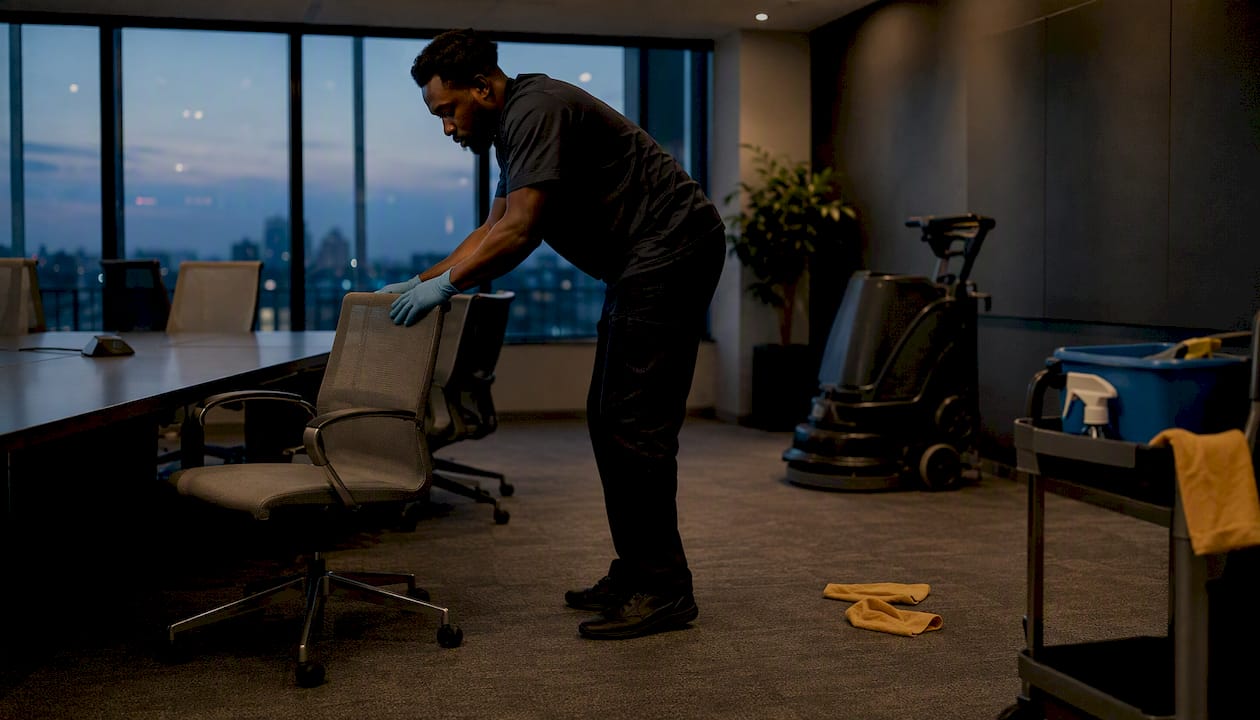
Industry practice tends to sit around a six pm to six am window, though this varies a lot by building and by what the tenancy agreement allows. Some CBD towers restrict after hours access to specific gates; some suburban offices have no restriction at all. A typical nightly visit follows a rhythm: arrival and sign in, a walk through the zones in sequence (kitchens and bathrooms first while chemicals are fresh, then open plan, then boardrooms), wet mopping and any floor machine work timed so surfaces dry before anyone arrives, equipment packed down, and a final alarm set and sign out.
| Daytime cleaning | After hours cleaning | |
|---|---|---|
| Disruption to staff | High. noise, blocked walkways, wet floor signs mid meeting | Minimal to none |
| Drying time for wet work | Rushed, often wiped before fully dry | Full window to dry properly |
| Access to desks and under furniture | Limited, staff present | Full, unrestricted |
| Equipment use (scrubbers, extractors) | Awkward, disruptive | Straightforward, no foot traffic conflict |
Pro Tip: Arrange one site induction with building security before your first clean. Walk through the alarm sequence together and confirm exactly which doors and lifts the crew can use. Skipping this step is the single biggest cause of false alarm call outs in commercial buildings.
How much does after hours office cleaning cost?
Pricing generally works one of two ways: an hourly rate for smaller offices, or a per square metre or per visit rate for larger tenancies with a set scope. Either way, expect the figure to move based on how often you book, how much floor space you've got, what's underfoot (carpet costs more to maintain than polished concrete), how many bathrooms need servicing, and whether the site needs an escort or badge access that adds time to every visit.
A late start premium is common too. A cleaner who has to wait until 9pm because your office runs late meetings will usually charge more than one starting at 6pm.
Here's a rough example of how a quote might break down for a mid sized office, purely to illustrate what's inside the number rather than as a fixed price:
| Line item | What it covers |
|---|---|
| Labour (per visit) | Crew hours for the scoped nightly tasks |
| Machine use | Floor scrubber or carpet extractor time, where scheduled |
| Consumables | Bin liners, paper products, chemical use |
| After hours loading | Premium for evening/night access versus a standard daytime rate |
The main levers that move your price up or down:
- Frequency — nightly, three times a week, or weekly all carry different unit economics.
- Floor area and layout — more square metres, more time, more cost.
- Floor finish — carpet needs vacuuming and periodic extraction; hard floors need mopping and occasional stripping and sealing.
- Number of washrooms and kitchens — these are the highest labour zones per square metre.
- Access requirements — escort or supervised access adds time that gets billed.
Frequency deserves a closer look because it's where a lot of offices overpay without realising it. Weekly cleaning suits high traffic offices where dirt and wear accumulate fast, while fortnightly can work for smaller or hybrid workplace teams with lighter foot traffic. The catch is that fortnightly often costs less per visit but more over a year, because grime that sits for two weeks needs harder scrubbing and finishes wear faster. Weekly schedules tend to protect flooring and reduce how often you need a full deep clean, which is worth factoring into any long term comparison between quotes. Bundling a regular nightly clean with a periodic deep clean or carpet extraction every quarter also tends to bring the per visit rate down, since the provider isn't mobilising a separate crew for occasional work.
What's included in a standard after hours clean?
Most nightly visits cover a consistent core, with periodic tasks layered on top depending on your scope agreement.
Standard nightly tasks typically include:
- Emptying bins and replacing liners.
- Dusting and wiping high touch points (door handles, light switches, shared equipment).
- Vacuuming carpeted areas.
- Mopping hard floors.
- Wiping down kitchen benches and communal areas.
- Resetting and restocking bathrooms.
- Wiping glass partitions and meeting room doors.
Beyond the nightly reset, common add ons that get billed separately or scheduled periodically include carpet extraction (usually quarterly), high dusting above eye line, detailed window cleaning, and hard floor recoating once finishes start to dull. These aren't corner cutting when they're billed separately. They genuinely need different equipment and longer dwell times than a nightly visit allows.
Chemistry choices matter more than most managers think about. Electronics near desks need alcohol based, streak free wipes rather than anything that leaves residue on a keyboard. Neutral pH cleaners protect stone and timber finishes that an acidic bathroom cleaner would etch over time. HEPA filtered vacuums matter in offices with dust sensitive staff, since a standard vacuum just recirculates fine particles back into the air.

Pro Tip: Ask your cleaner to log periodic tasks with a timestamped photo and a short issue note sent to facilities each morning. It's the easiest way to track what's actually been done without you needing to inspect the office at 6am yourself.
What should you check before handing over the keys?
Handing a stranger the keys to your office overnight is a genuine trust exercise, so the paperwork matters as much as the price.
Ask for these before you sign anything:
- Police or background checks for every staff member who'll be on site, not just the supervisor.
- Public liability insurance, with a current certificate of currency you can actually sight.
- Professional indemnity cover, if the scope includes any advisory or specialist work.
- References or testimonials from other office clients, ideally ones you can call.
Facilities managers who've been caught out generally point to the same gap: nobody walked the building with security before the first clean, so nobody agreed on alarm bypass steps, escort rules, or which zones stay locked. A formal site walkthrough before the first visit fixes almost all of it.
Red flags worth walking away from: a provider who can't produce an insurance certificate on request, one who won't give you a direct line to a supervisor, vague answers about how access works, or no offer of an onboarding walkthrough at all.
Practical access items to lock down before the first visit: badged entry versus key handover, who controls spare keys, the exact alarm set and disarm sequence, whether an escort is required for any part of the building, and a formal induction with your building manager. A quick document checklist for the quoting stage: insurance certificate sighted, police checks confirmed, a written method statement for how the crew handles chemicals and equipment, and emergency contact details exchanged both ways.
How do you choose the right provider?
Run the decision like a short structured process rather than picking whoever answers the phone first.
A selection checklist worth working through:
- Is the scope written clearly, task by task, rather than a vague "general clean"?
- Are security protocols spelled out (access, alarm, escort) rather than assumed?
- Is insurance current and sighted, not just claimed?
- Are staff vetted with police checks, and is that documented?
- Does the provider bring its own equipment, or expect you to supply it?
- Can they provide references or testimonials from similar sized offices?
- How quickly do they respond when something goes wrong?
Questions worth asking at the quoting stage: how does the site induction work, what's the wet work drying window they plan for, does a supervisor check the site regularly or only the cleaning staff, and what's the substitution policy if a regular cleaner is sick.
The smartest way to de-risk a new provider is a short trial: one to three cleans with defined checks before you sign anything ongoing. Set a cleanliness checklist, an inspection pass rate you're comfortable with, and a response time for issues raised. No lock in contracts make this easier because you're not stuck if the trial doesn't work out.
When you're comparing proposals side by side, look past the task list. A provider promising "vacuum, dust, mop" tells you nothing about outcome. One offering an inspection pass rate and a defined issue response time is telling you how they'll be held accountable, which is the comparison that actually matters.
What do you need to give a provider for an accurate quote?
Providers can only quote accurately with the right detail up front, and vague requests are how you end up with a quote that balloons once someone actually walks the floor.
Information worth including in your first enquiry:
- Floorplan or approximate square metres.
- Preferred service window (after hours, before hours, or weekend).
- How often you want the clean (nightly, three times weekly, weekly).
- Number of toilets and tea points or kitchens.
- Carpark and lift access constraints, including any booking requirements for after hours lift use.
- Site contact details and security requirements.
A typical onboarding timeline runs in five steps:
- Discovery walkthrough of the site with a provider representative.
- Written scope document covering nightly tasks and periodic add ons.
- Trial cleans against the agreed checklist.
- Supervisor check in after the first week.
- Monthly review of inspection results and any adjustments.
If you'd rather email than call, a short template works well. Subject line: "Quote request — [office name], after hours office cleaning." Body: your square metreage, preferred nights, number of bathrooms, any access restrictions, and a request for their insurance certificate and staff vetting process upfront. That last part alone filters out anyone not set up to handle commercial premises properly.
Why after hours cleaning is worth building your process around
The strongest argument for after hours cleaning isn't really about cleanliness at all. It's about certainty. When a crew has the whole floor to itself, you stop hoping the job got done properly and start knowing it did, because there's nobody around to interrupt the work halfway through.
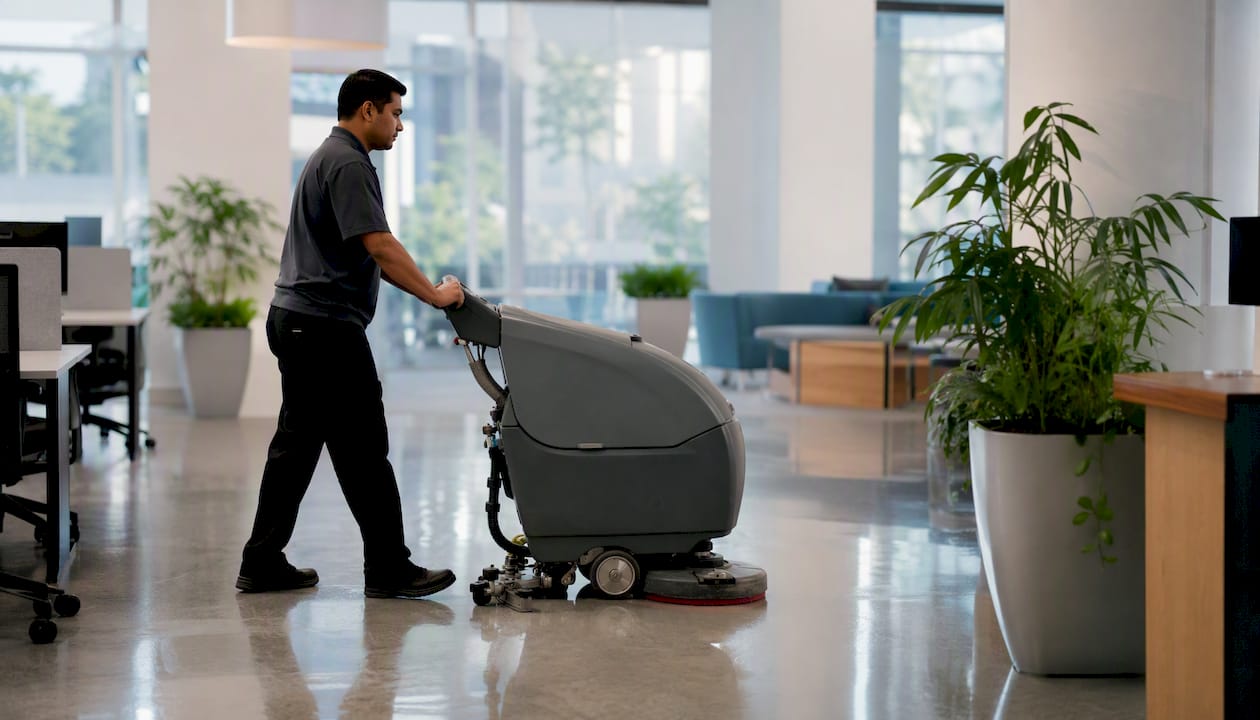
What surprises most first-time managers is how much of the value sits in the boring logistics. A crew that can run a floor scrubber without dodging staff, or let a disinfectant sit its full dwell time instead of wiping it off early, is doing measurably better work than one squeezed into a lunch break. That's not a marketing line. It's just what vacant access actually allows.
ACT Cleaning by Demand builds its office scopes around exactly this logic: police checked staff, eco friendly products that are safe around electronics and shared kitchens, and flexible scheduling that adapts to your building's access rules rather than forcing your office into a generic time slot. Clients who've moved to a proper after hours rhythm consistently mention the same thing: they stopped noticing the cleaning altogether, which is precisely the point.
Book a scoped after hours clean with a local team
ACT Cleaning by Demand is the alternative to juggling multiple contractors for office upkeep. One provider handles your nightly reset, periodic carpet and floor work, and any deep clean you need bundled in, all under one flexible schedule with no lock in contract tying you to it.
Every office clean starts with the same checklist this guide walks through: access details, scope, preferred window, and security rules confirmed before a single quote goes out. Staff are police checked, insurance is current and available on request, and the eco friendly products used across every job are safe around electronics and communal kitchens. If your office is also due for a periodic deep clean or you're weighing up an end of lease clean for a separate property, the same team can scope both under one conversation.
Request a free, obligation free quote today and arrange a scoped site walkthrough for your building. It's the fastest way to see exactly what an after hours clean would cost for your floor, with no pressure to sign anything until you've run a trial.
Useful sources for further reading
- Office Cleaning – ACT Cleaning by Demand — covers how the provider scopes and schedules office cleaning work.
- Office Cleaning portfolio – ACT Cleaning by Demand — real examples of completed office cleans and booking flow.
- After Hours Office Cleaning Services – City Wide Cleaning Services — background on access benefits and drying windows.
- Out of Hours Cleaning Services UK – Valley Cleaning Services — detail on scheduling and security procedures for out of hours work.
- Why after hours HVAC cleaning boosts air quality — a partner explainer on why vacant building access helps ventilation work too.
- Bi-Weekly vs. Weekly Office Cleaning Service – Class A Clean — frequency comparison relevant to budget planning.
FAQ
How much should you charge or budget per hour for office cleaning?
Hourly rates vary by frequency, floor finish, and access requirements, so the fairest comparison is a like for like quote covering the same scope, frequency, and time window rather than a single hourly figure.
What is the 20 minute rule in cleaning?
There's no universal industry standard called the "20 minute rule." If a provider mentions it, ask them to define exactly what task or dwell time they mean before you rely on it in a scope document.
How do you clean an office quickly without cutting corners?
Work in a fixed sequence, kitchens and bathrooms first while products are fresh, then open plan desks, then meeting rooms, and let wet work sit in its drying window rather than wiping it early. Batching machine use like this is exactly how a well run after hours crew keeps a nightly visit efficient.
How much does a one hour clean typically cover?
A single hour usually covers the core nightly reset only, bins, touch points, and light vacuuming, for a small office footprint. Anything involving carpet extraction, detailed bathroom work, or larger floor areas generally needs a longer scoped visit.
Is after hours cleaning more expensive than daytime cleaning?
It can carry a late start or after hours loading premium, but many offices find it's worth it because the deeper access reduces repeat visits and protects finishes over time, which offsets some of that premium.