This article gives you a ready-to-use, room-by-room Airbnb cleaning checklist built for Australian hosts and the cleaners they hire. Every section follows a top-to-bottom, dry-to-wet order so nothing gets re-dirtied, and the whole thing is editable and printable. Download the PDF version from the ACT Cleaning by Demand blog, print it for your cleaner, or open it on a phone during the turn.
Three things this checklist guarantees:
- A top-to-bottom, dry-to-wet cleaning sequence that cuts rework time and stops cleaners walking across freshly mopped floors
- Restocking par levels for every consumable so you never get a "no toilet paper" review
- A photo-verified sign-off step that creates an auditable record for every turn
Key takeaways
A reliable Airbnb turnover requires a room-by-room checklist, photo-verified sign-off, and a deep clean every 3–6 months to maintain the standard guests expect.
| Point | Details |
|---|---|
| Top-to-bottom, dry-to-wet order | Always clean high surfaces before low ones and dry tasks before wet to avoid rework. |
| Par levels prevent bad reviews | Set minimum consumable quantities per property size and reorder at 50% of par. |
| Photo sign-off is non-negotiable | Photograph each room after every turn to create an auditable record for disputes. |
| Deep clean every 3–6 months | High-turnover or pet-friendly properties need a deep clean closer to every three months. |
| ACT Cleaning by Demand | Police-checked, eco-friendly Airbnb turnover and deep-clean service across Canberra and the ACT. |
Table of Contents
- What does a good Airbnb cleaning checklist cover?
- Pre-clean walkthrough, safety, and supplies
- Kitchen turnover checklist
- Bathroom turnover checklist
- Bedroom checklist: linen, presentation, and inventory
- Living areas and common spaces checklist
- Entry, outdoor spaces, and specialty features
- Final walkthrough, staging, and photo sign-off
- Supplies, restocking par levels, and inventory management
- How often should you deep clean an Airbnb?
- Property-specific checklist add-ons
- How to make the checklist enforceable across multiple cleaners
- How this checklist maps to Airbnb's enhanced cleaning steps
- A practical note on cleaning Airbnbs in Canberra and the ACT
- ACT Cleaning by Demand handles your Airbnb turnovers in Canberra
- Sources
- FAQ
What does a good Airbnb cleaning checklist cover?
A reliable vacation rental cleaning checklist combines a room-by-room core with short property-type addenda, separates turnover cleans from deep cleans, and includes restocking par levels in a printable format cleaners can actually follow. That structure, used by Hostfully's 242-point editable template, is the baseline this guide builds on.
The checklist below covers every area guests notice: kitchen, bathrooms, bedrooms, living areas, entry, and outdoor spaces. Property-type add-ons for cabins, condos, luxury homes, and large group houses follow the core list.
Pre-clean walkthrough, safety, and supplies
Before a single surface gets wiped, do a walkthrough. This step catches damage, forgotten guest items, and maintenance issues before they become disputes. AskYourStay's room-by-room guide stresses this pre-clean check as the moment to document anything that needs a photo and a note to the host.
Walkthrough checklist:
- Photograph any new damage (walls, furniture, appliances) before touching anything
- Bag and photograph guest items left behind; store in a labelled container for 30 days
- Note any maintenance issues (dripping taps, blown globes, faulty locks) and message the host
- Check rubbish bins and recycling — sort according to your local council's rules before the cleaner starts
Supplies to assemble before you begin:
- Microfibre cloths (minimum six, colour-coded by area)
- Spray bottles: all-purpose cleaner, glass cleaner, bathroom disinfectant, and a food-safe surface sanitiser
- Toilet brush, scrubbing pads, grout brush
- Mop and bucket, vacuum with attachments
- Rubber gloves and, where chemicals are used in enclosed spaces, a disposable mask
- Bin liners, paper towel, and a caddy to carry everything room to room
For Australian hosts, look for products carrying the Australian Environmental Labelling Association (AELA) certification or the Good Environmental Choice Australia (GECA) mark. Both indicate independently verified low-toxicity formulations that are safer in enclosed rental spaces.
Time estimates per property size:
| Property size | Estimated turnover time |
|---|---|
| Studio or 1 bedroom | a short time suitable for thorough cleaning |
| 2–3 bedrooms | a moderate period suitable for thorough cleaning |
| 4+ bedrooms | a longer period suitable for thorough cleaning |
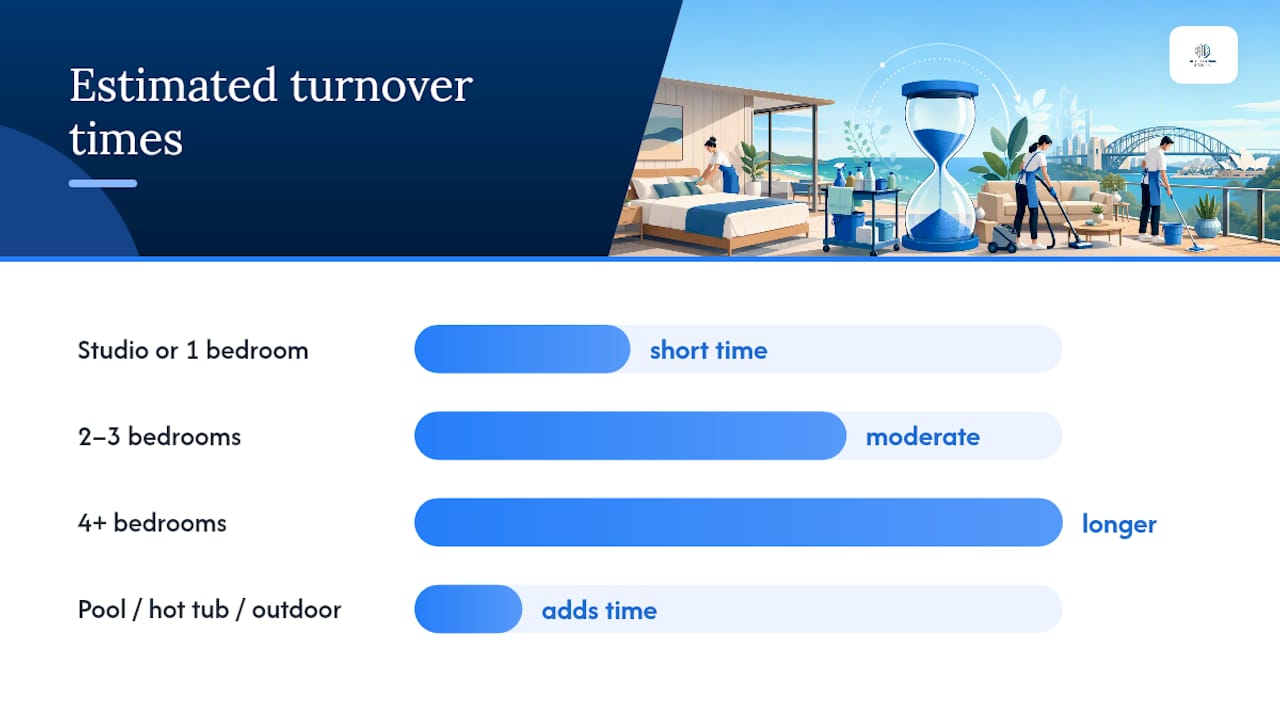
These are working estimates for a single cleaner. Add additional time for properties with a pool, hot tub, or large outdoor entertaining area.
Pro Tip: Never mix bleach-based products with ammonia-based cleaners. In a small bathroom with poor ventilation, the fumes are genuinely dangerous. Read labels before combining any two products, and open windows before you start.
The NSW Fair Trading Code of Conduct for short-term rental accommodation sets consumer-facing safety expectations that apply to hosts across the ACT and NSW. Reviewing it once gives you a clear picture of your obligations before a cleaner ever enters the property.
Kitchen turnover checklist
The kitchen is where cleanliness complaints are most costly. Food residue, greasy splashbacks, and a fridge that smells like last week's takeaway are the fastest routes to a one-star review. Work top-to-bottom and dry-to-wet: dust and wipe surfaces before you touch the sink or mop the floor.
Step-by-step kitchen tasks:
- Wipe down overhead rangehood filters and exterior surfaces
- Clean cabinet fronts and handles with an all-purpose spray
- Wipe benchtops and splashbacks; use a food-safe sanitiser on all food-contact surfaces
- Check and wipe microwave interior and exterior
- Clean oven exterior; open and check interior for spills or residue
- Wipe stovetop, burner grates, and drip trays
- Clean refrigerator exterior; check interior for guest food and odours; wipe shelves
- Run dishwasher empty on a rinse cycle if used; wipe door seal
- Scrub sink, taps, and drain; polish tap fittings
- Sweep and mop floor last
Restock checklist for kitchen consumables:
- Dish soap (minimum one full bottle)
- Dishwasher pods (minimum six)
- Tea and coffee (two serves per guest per night, minimum four serves total)
- Paper towel (one full roll)
- Bin liners (two spare)
- Sponge or dish brush (replace if worn)
A par level is the minimum quantity you keep stocked at all times. For a two-bedroom property hosting up to four guests, a sensible par for dishwasher pods covers typical usage for a multi-night stay with a buffer.
Pro Tip: If guests have left food in the fridge, photograph it before removing it. Bag it, label it with the checkout date, and leave a note for the host. Never assume it is rubbish — some guests ask for it to be kept.
For a quick oven check, run the grill element for 60 seconds. Any burning smell means residue that needs attention before the next guest arrives.
Bathroom turnover checklist
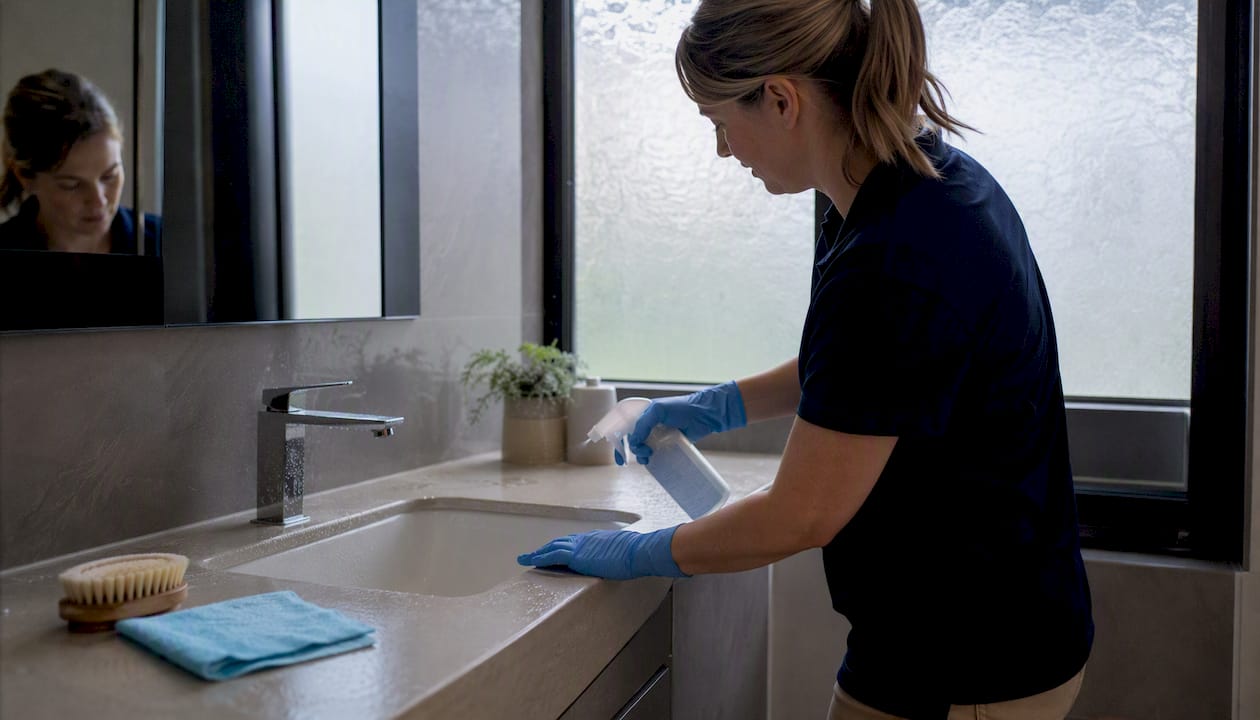
Bathrooms are the room guests inspect most closely. Mould, limescale, and a single hair on the shower floor can undo an otherwise perfect turn. Follow the same top-to-bottom, dry-to-wet sequence: mirrors and shelves before the toilet, toilet before the floor.
Step-by-step bathroom tasks:
- Remove all used towels and bath mats; bag for laundry
- Spray toilet bowl with disinfectant and leave to dwell (minimum two minutes)
- Wipe mirror and any glass shelving with glass cleaner and a dry microfibre cloth
- Wipe vanity, basin, and taps; descale tap fittings if needed
- Scrub toilet bowl, clean under rim, wipe seat, lid, and exterior base
- Spray and scrub shower walls, screen, and floor; check grout lines for mould
- Clean shower head; remove limescale with a descaling spray or white vinegar wrap
- Replace bath mat with a clean one; hang fresh towels in a hotel fold
- Sweep and mop floor; pay attention to corners and behind the toilet
Mould check and quick remediation:
- Check grout lines, silicone seals, and ceiling corners for black or pink mould
- Spot-treat with a bathroom mould spray; leave to dwell per label instructions
- Wipe clean and dry thoroughly; leave the exhaust fan running for 20 minutes after cleaning
- If mould covers more than a 10 cm patch or is behind tiles, flag it to the host as a maintenance issue
Restock par example (per bathroom, two-guest property):
- Toilet paper: minimum four rolls visible or accessible
- Hand soap: one full dispenser or bar
- Shampoo and conditioner: one full bottle each
- Body wash: one full bottle
- Spare rolls: present two spares in a visible holder or basket so guests know they exist
Pro Tip: Present the toilet paper with a triangle fold on the first sheet. It takes five seconds and signals to guests that the bathroom has been freshly cleaned — a small detail that consistently shows up in positive reviews.
Bedroom checklist: linen, presentation, and inventory
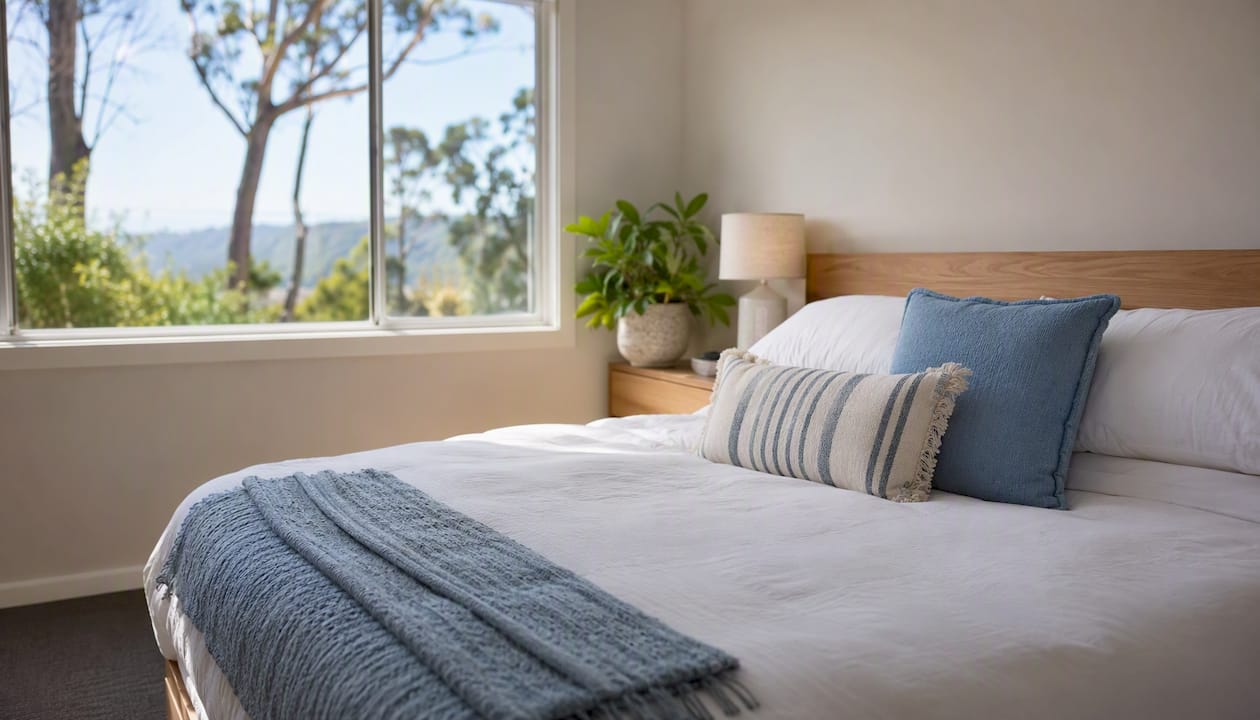
A guest's first impression of a bedroom is almost always the bed. A crooked duvet or a pillow that smells faintly of the last guest is enough to set a negative tone for the whole stay.
Linen inventory guidance:
Keep three full sets of linen per bed. One set is on the bed, one is in the wash, and one is clean and ready for a rushed turnover. For a two-bedroom property, that means six sets of sheets, six pillowcases per pillow, and six duvet covers minimum.
Step-by-step bedroom tasks:
- Strip all linen; inspect mattress protector for stains or damage before removing
- Check mattress for stains, odours, or structural damage; photograph any issues
- Fit a clean mattress protector; make the bed with fresh linen to a hotel standard (tight corners, centred pillows)
- Dust ceiling fan blades, light fittings, and bedside tables top-to-bottom
- Wipe bedside tables, lamps, and any surfaces; check drawers for left items
- Check wardrobe and under-bed storage for forgotten guest belongings
- Vacuum carpet or mop hard floors; move furniture slightly to catch edges
- Check that all power points, USB ports, and bedside lamps are working
Stain triage process:
If you find a stain on a mattress protector or sheet, photograph it immediately. Cold water and a small amount of enzyme-based stain remover (available from most Australian supermarkets) handles most organic stains if applied before the item goes into the wash. Hot water sets protein stains permanently.
Pro Tip: Flip and rotate mattresses every three to six months during your deep clean. It extends mattress life significantly and prevents the body impressions that guests notice and photograph.
Living areas and common spaces checklist
Living areas accumulate fingerprints, crumbs, and the kind of low-level disorder that photographs badly. The goal here is not just clean but staged: a space that looks welcoming in the listing photos and feels settled when guests walk in.
Step-by-step living area tasks:
- Dust ceiling corners, light fittings, and ceiling fan blades
- Wipe light switches, door handles, and remote controls with a disinfectant wipe
- Clean TV screen with a dry microfibre cloth only; never spray liquid directly onto a screen
- Check remote controls: replace batteries if needed, confirm the TV and any streaming devices are working
- Remove cushions from sofas; check under and between cushions for crumbs, coins, or forgotten items
- Spot-clean any marks on upholstery with an appropriate fabric cleaner
- Wipe coffee tables, shelving, and any decorative surfaces
- Vacuum sofa cushions and fabric surfaces; use the upholstery attachment
- Vacuum or sweep floors; mop hard floors last
Electronics checklist:
- Remote controls: wipe with a disinfectant wipe, check batteries, confirm function
- Smart TV or streaming device: confirm it is logged out of any guest accounts and reset to the host's default profile
- Wi-Fi router: confirm indicator lights are normal; note the password is visible for guests
- Any smart home devices (locks, thermostats): confirm they are reset and functioning
Pro Tip: Keep a cotton throw folded over one arm of the sofa and two neutral cushions arranged at a slight angle. It takes 30 seconds and makes the room look styled rather than just clean. Guests photograph it, and it shows up in their reviews.
Entry, outdoor spaces, and specialty features
The entry is the first thing guests see in person. Outdoor spaces are often the last thing cleaned and the first thing forgotten. Both matter more than most hosts realise.
Entry and security checklist:
- Test the key safe or smart lock; confirm the code matches the guest's instructions
- Wipe the front door, door handle, and door frame
- Shake and replace the doormat; sweep the entry path
- Check that the letterbox is clear and the property number is visible
- Confirm all keys are accounted for and any spares are in their designated spot
Outdoor tasks (suitable for Australian conditions):
- Sweep balcony, patio, or deck; remove leaf litter and spider webs from corners
- Wipe outdoor furniture and check for bird droppings or mould on cushions
- Check the BBQ: clean grill plates, empty the grease trap, confirm gas connection
- Check for pest activity (ant trails, wasp nests, possum entry points) and flag to the host
- Empty outdoor bins and replace liners; sort recycling per your local council's guidelines
Australian councils vary significantly in what they accept in recycling bins. The ACT's Resource Management and Circular Economy Act sets the framework for waste sorting in the territory. When in doubt, check the ACT NoWaste website for current bin rules.
Pool and hot tub protocol:
If the property has a pool or hot tub, a basic chemistry check is part of every turn. Test pH (target 7.2–7.6) and free chlorine levels, skim the surface, and wipe the waterline. If readings are outside range or the water is cloudy, escalate to a specialist rather than adding chemicals without knowing the current balance.
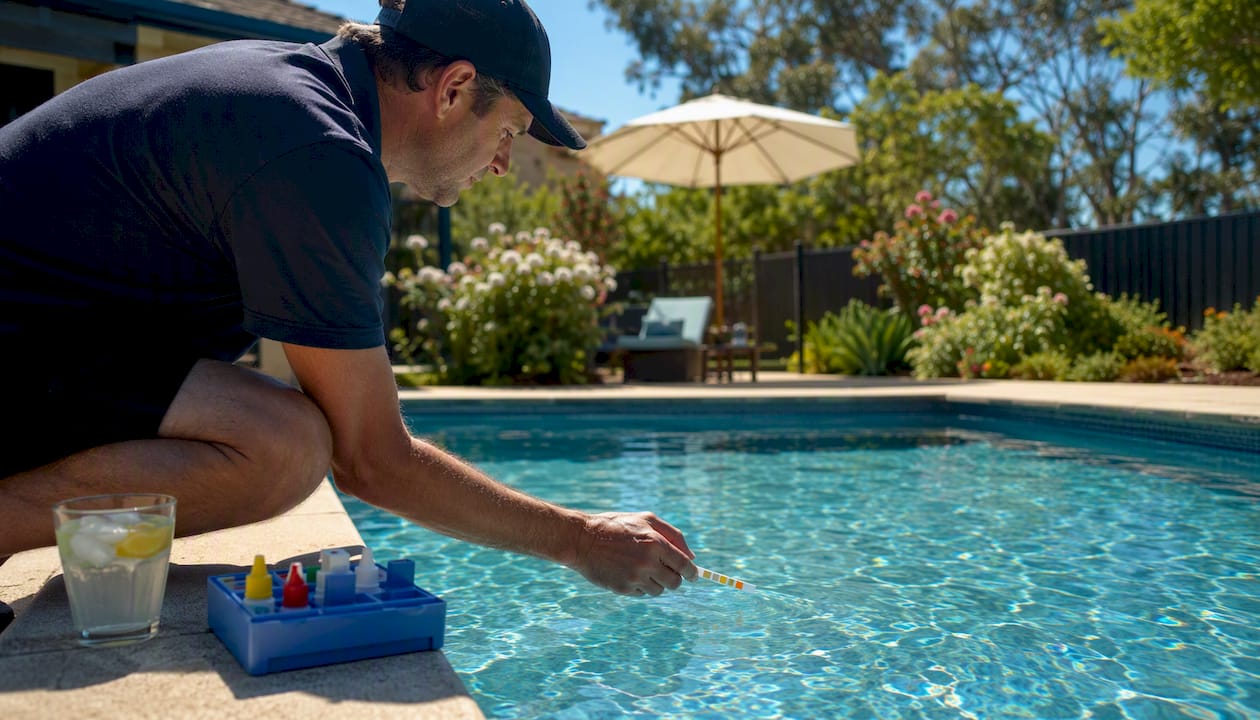
Pro Tip: In Canberra and the ACT, seasonal pollen in spring can coat outdoor furniture and pool surfaces overnight. A quick wipe-down of outdoor surfaces the morning of check-in, rather than the evening before, makes a visible difference.
Final walkthrough, staging, and photo sign-off
The final walkthrough is the quality gate. It is the step that catches the missed task, the unlocked window, and the bathroom that still smells of the previous cleaner's spray.
Photo checklist per room:
- Kitchen: benchtops, open fridge, stovetop, sink
- Bathrooms: toilet, shower, vanity, restocked consumables
- Bedrooms: made bed (full width shot), bedside tables, wardrobe open
- Living areas: sofa staged, TV and remotes visible, floor clear
- Entry: front door, key safe, welcome area
- Outdoor: furniture arranged, BBQ closed, pool/hot tub if applicable
Label photos with the property address and date. Store them in a shared folder the host can access. Photo-verified digital checklists convert a paper list into an auditable record — useful if a guest disputes the condition of the property at check-in.
Final walkthrough bullets:
- All lights working; test switches in each room
- All taps off; no dripping or running water
- All windows and doors locked or set to the correct position for guest entry
- No cleaning product smell lingering; ventilate if needed
- All consumables restocked and visible
- Rubbish bins empty and lined
- Welcome information (Wi-Fi password, house manual) visible and in place
Cleaner sign-off template:
Property: ____________ Date: ____________ Time completed: ____________ Cleaner initials: ______ Guest-ready: ☐ Yes ☐ No (note reason below) Notes: ________________________________________________________
Pro Tip: Walk the property in the order a guest would: front door, living area, kitchen, bathrooms, bedrooms. You will catch things a room-by-room clean misses because you are seeing the space the way a guest does.
Supplies, restocking par levels, and inventory management
Running out of toilet paper mid-stay is the kind of complaint that lands in a review. Par levels prevent it.
| Consumable | Studio/1 bed | 2–3 bed | 4+ bed |
|---|---|---|---|
| Toilet paper (rolls) | adequate supply for small properties | increased supply, proportional to property size | larger supply for bigger properties |
| Paper towel (rolls) | sufficient for a single bathroom | sufficient for multiple bathrooms | ample for larger properties |
| Hand soap (units) | one unit per bathroom | one unit per bathroom | one unit per bathroom |
| Dish soap (bottles) | basic supply | basic supply | increased supply for larger properties |
| Dishwasher pods | supply matching typical guest usage | supply scaled for larger properties | larger supply for more guests |
| Coffee/tea serves | amount to cover typical guest consumption | increased accordingly | sufficient for bigger groups |
| Bin liners (spare) | basic stock | increased stock | larger stock |
Eco-friendly product options for Australian hosts:
- Koala Eco (Australian-made, plant-based, widely available online and in health stores)
- Abode (Australian brand, certified by GECA, available in supermarkets)
- White vinegar and bicarbonate of soda for descaling and deodorising
Inventory management process:
- After each turn, count remaining consumables against the par table
- Record shortfalls in a shared spreadsheet or app (Google Sheets works fine for small portfolios)
- Set a reorder trigger at 50% of par — order before you run out, not after
- Store backup stock in a lockable cupboard at the property or in a central location if you manage multiple properties
Pro Tip: Buy consumables in bulk from Costco, Officeworks, or a wholesale cleaning supplier. The per-unit cost is meaningfully lower, and you avoid the mid-week emergency run to the supermarket.
How often should you deep clean an Airbnb?
HireLocal's comparison of turnover versus deep cleaning makes the distinction clearly: a turnover clean is fast and checklist-driven, scheduled between every guest. A deep clean is comprehensive, takes longer, and costs more. Hosts need both.
The standard cadence for a deep clean is generally every few months. Properties with pets, high guest turnover, or heavy use may require more frequent deep cleaning approaching the shorter end of that period.
Deep-clean task list:
- Scrub grout lines in bathrooms and kitchen with a grout brush and appropriate cleaner
- Clean baseboards and skirting boards throughout the property
- Pull out and clean behind and under all major appliances (fridge, oven, washing machine)
- Steam-clean or shampoo upholstered furniture and carpets
- Clean inside oven thoroughly, including racks and door seal
- Clear and clean drains in all sinks, showers, and bathtubs
- Wipe inside all kitchen and bathroom cabinets
- Wash curtains or wipe blinds; clean window tracks and sills
- Flip and rotate mattresses; inspect and replace mattress protectors if worn
- Clean light fittings and replace any blown globes
Budgeting for a deep clean:
Deep cleans take two to three times longer than a standard turnover and are typically priced at a higher hourly rate. Block a full day for a two-bedroom property rather than trying to fold deep-clean tasks into a regular turn. The end-of-lease cleaning standard is a useful benchmark: it covers most of the same tasks and gives you a realistic sense of what a thorough clean of a rental property actually involves.
Pro Tip: Schedule your deep clean to coincide with a gap between bookings, not a same-day turnover. Rushing a deep clean produces a result that is neither a proper deep clean nor a reliable turnover.
Property-specific checklist add-ons
One base checklist works across property types when you attach a short addendum for each. Hostfully's approach of separating a core list from property-type addenda produces far better consistency than a single generic template.
Cabin or bush retreat:
- Empty and clean wood-stove ash box; check flue damper is open
- Wipe down fireplace surround and hearth
- Check and clean hot tub (chemistry, filters, waterline wipe)
- Clear gutters and downpipes of leaf litter if accessible
- Check for insect or rodent entry points; flag to host
Apartment or condo:
- Check balcony for leaf litter and wipe furniture
- Confirm building amenity rules (pool, gym, rooftop) are noted in the guest manual
- Check intercom and building entry fob are working and accessible
- Dispose of rubbish in the correct building bin room; follow strata recycling rules
Luxury home:
- Polish all stainless steel and chrome fittings to a streak-free finish
- Arrange decorative items to match the host's reference photo
- Check and clean any wine fridge, bar area, or specialty appliances
- Inspect artwork and mirrors for fingerprints; use appropriate glass cleaner
Large group house (5+ bedrooms):
- Increase par levels by 50% above the standard table
- Assign a dedicated cleaner per floor or zone to maintain speed
- Check all bathrooms for adequate towel sets (minimum two towels per guest)
- Inspect outdoor entertaining areas thoroughly; group stays generate more outdoor mess
Pro Tip: Keep a laminated one-page addendum for each property type in your cleaning kit. When a cleaner is new to a property, they can read the base checklist plus the relevant addendum without needing a briefing call.
How to make the checklist enforceable across multiple cleaners
A checklist on paper is a suggestion. A checklist with photo verification and a workflow attached to each booking is a system. Properly's research argues this directly: photo verification not only enforces the checklist but creates a verifiable trail for disputes and a dataset to improve the checklist over time.
Recommended tools for Australian hosts:
- Breezeway: scheduling, task assignment, and photo-verified checklists; integrates with Airbnb and major property management systems
- Turno (formerly TurnoverBnB): automated scheduling triggered by bookings, cleaner marketplace, and photo proof per task
- TouchStay: digital guidebook and checklist tool that lets hosts attach cleaning instructions and house rules to each booking confirmation
- MadeComfy: Australian-focused interactive checklists and resource library designed for local hosts managing multiple properties
Onboarding a new cleaner:
- Walk through the property together before the first turn; point out problem areas (grout, appliances, outdoor features)
- Provide the printed base checklist plus the relevant property-type addendum
- Require photo evidence for the first three turns; review photos within 24 hours and give specific feedback
- After three turns, move to spot-check reviews (every third or fourth turn) unless issues arise
- Attach the checklist to every booking confirmation so the cleaner always has the current version
Handling missed items:
When a photo review reveals a missed task, message the cleaner with the specific photo and the task number from the checklist. Keep the feedback factual and tied to the checklist rather than general. If the same task is missed across multiple turns, revise the checklist to make that step more explicit, or add a photo requirement for that specific item.
Pro Tip: Require police-checked cleaning staff for every property. It reduces liability, builds guest confidence, and is increasingly expected by guests booking higher-end properties in the ACT.
How this checklist maps to Airbnb's enhanced cleaning steps
Airbnb's enhanced cleaning process follows five steps: prepare, clean, sanitise, check, and reset. The checklist in this article covers all five.
| Airbnb step | Checklist stage | Example tasks |
|---|---|---|
| Prepare | Pre-clean walkthrough | Damage check, supplies assembly, safety review |
| Clean | Room-by-room tasks | Dust, wipe, scrub, vacuum, mop |
| Sanitise | High-touch surfaces | Remotes, switches, taps, door handles, toilet |
| Check | Final walkthrough | Lights, locks, odours, consumables, photos |
| Reset | Staging and restock | Linen, consumables, welcome items, sign-off |
Listing copy hosts can use to reassure guests:
- "This property is cleaned to Airbnb's enhanced cleaning standard between every stay, with photo verification on completion."
- "All high-touch surfaces including remotes, switches, and door handles are disinfected after each checkout."
- "Eco-friendly, low-toxicity cleaning products are used throughout."
For disinfectant products used in Australian rental properties, follow the label's stated dwell time. The Therapeutic Goods Administration (TGA) lists hospital-grade disinfectants approved for use in Australia; these are appropriate for high-touch surfaces in short-term rentals where a higher sanitisation standard is warranted.
A practical note on cleaning Airbnbs in Canberra and the ACT
Canberra's climate creates a few cleaning challenges that hosts in other cities do not face at the same intensity. Spring pollen season, which runs roughly September through November, coats outdoor furniture, pool surfaces, and even indoor windowsills if windows are left open. Scheduling an outdoor wipe-down on the morning of check-in rather than the evening before makes a visible difference.
The ACT has specific waste sorting requirements that differ from NSW and Victoria. The ACT NoWaste programme separates general waste, commingled recycling, and food organics. Cleaners who are unfamiliar with the territory's bin system will make sorting errors that guests notice and occasionally photograph. A laminated bin guide inside the relevant cupboard door solves this quickly.
Sourcing eco-friendly cleaning supplies in Canberra is straightforward. Koala Eco and Abode products are stocked at most Canberra health food stores and online. For hosts who prefer a fully managed approach, using a local service with police-checked staff and their own supply of GECA-certified products removes the sourcing burden entirely.
The NSW Fair Trading Code of Conduct applies to operators across the ACT border region as well. Reviewing the safety and accuracy obligations it sets out is worth 20 minutes of any host's time.
ACT Cleaning by Demand handles your Airbnb turnovers in Canberra
Hosts who want the checklist done rather than managed can hand the entire turnover to ACT Cleaning by Demand's Airbnb cleaning service. The team uses eco-friendly, GECA-aligned products, every cleaner is police-checked, and each turn is completed with photo verification so you have a record for every stay.
Same-day and next-day turnovers are available across Canberra and the ACT, including the Inner South. Deep-clean add-ons are available when your property is due for a thorough reset. There are no lock-in contracts: book a single turn or set up a recurring schedule that syncs with your Airbnb calendar. Get a quote or book your next turnover directly at Actcleaningbydemand.
Sources
- Fairtrading
- Airbnb Cleaning Checklist (Free, 242 Points, Editable, Printable) | Hostfully
- The Complete Airbnb Cleaning Checklist (Free Template + How to Enforce It) | Properly Blog
- Airbnb cleaning checklist between guests: room-by-room guide | AskYourStay
- Deep cleaning vs Airbnb turnover cleaning — Who to call | HireLocal
FAQ
How long does an Airbnb turnover clean take?
A studio or one-bedroom property typically takes a short to moderate duration for a single cleaner. Larger properties with more bedrooms and amenities require proportionally more time, with additional time for pools or outdoor entertaining areas.
What is the difference between a turnover clean and a deep clean?
A turnover clean is a checklist-driven reset completed between every guest stay, covering all visible surfaces, linen, and consumables. A deep clean goes further, covering grout, appliance interiors, upholstery, drains, and behind furniture, and is recommended every 3–6 months.
What consumables should every Airbnb have stocked?
At minimum: toilet paper (four rolls per bathroom for a small property), hand soap, dish soap, dishwasher pods, paper towel, bin liners, and tea and coffee.
How do I make sure my cleaner follows the checklist?
Require photo evidence for each room after every turn. Tools like Breezeway, Turno, and TouchStay attach the checklist to each booking and collect photos automatically. Walk through the property with a new cleaner before their first turn and review their photos within 24 hours.
Can ACT Cleaning by Demand handle same-day Airbnb turnovers in Canberra?
Yes. ACT Cleaning by Demand offers same-day and next-day turnover cleans across Canberra and the ACT, with police-checked staff, eco-friendly products, and photo-verified sign-off included as standard.