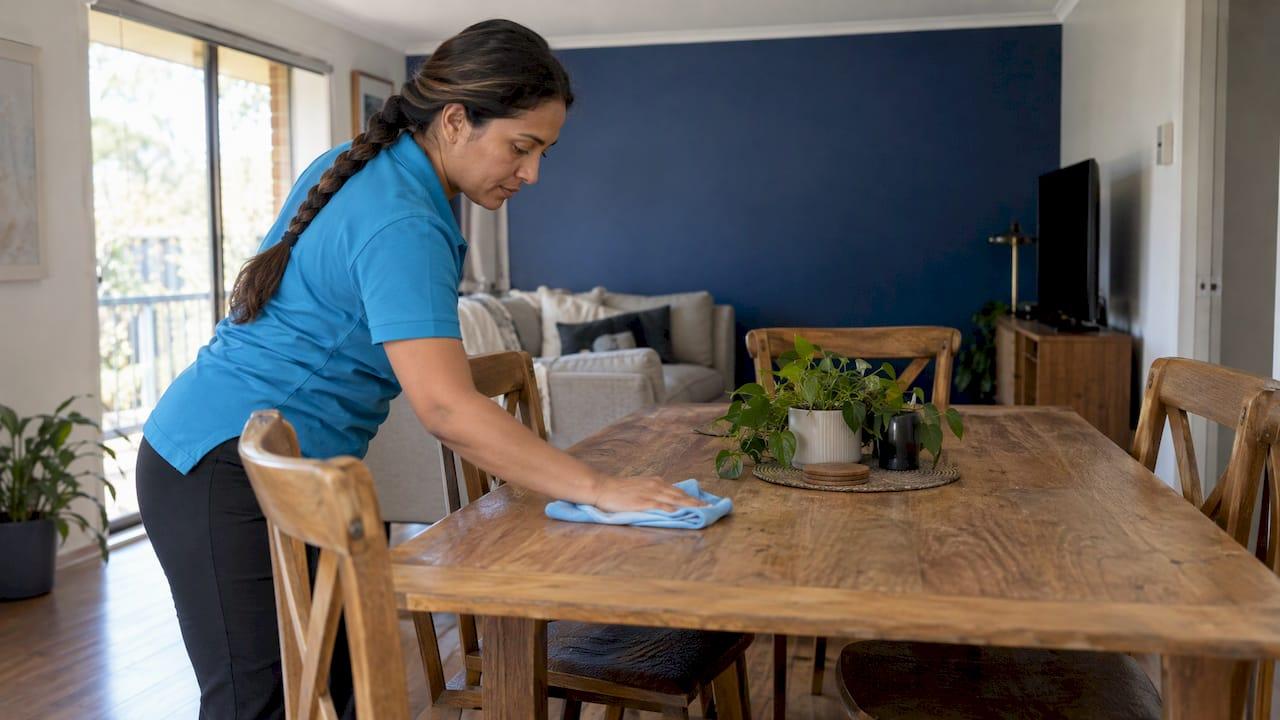
Airbnb expects every listing to be clean, hazard-free and ready before each check-in, and guests judge you on it in their reviews. For a Canberra host, the practical answer is a written turnover standard that a cleaner follows every time, covering bathrooms, kitchen, floors, linen, rubbish and restocking. We clean short-stay properties across Canberra and the ACT, and this guide sets out what the standard is, what it should include and how to brief a cleaner so it holds.
TL;DR
- Airbnb's host rules require a clean, hazard-free listing before every check-in, with cleaning between every stay, including laundry, rubbish, vacuuming or sweeping and wiping surfaces.
- Guests cannot be made to strip beds, vacuum or do laundry, so the turnover standard is yours to set and pay for, not something guests complete for you.
- A written checklist, enough time between bookings and a backup cleaner are what Airbnb itself advises hosts to put in place.
- Agree in advance how damage, missing items and stains are reported, because the turnover is when you find them.
- Deep cleans, larger homes and pets are agreed extras, so name them in the brief rather than expecting them in a standard turnover.
Table of Contents
- What Airbnb requires of a host between stays
- What a turnover clean should include
- Guest checkout tasks are not your cleaning standard
- How to brief a cleaner for turnovers
- Damage, stains and missing items found during a turnover
- Deep cleans, larger homes, pets and add-ons
- Canberra-specific points to plan around
- How we see turnover cleaning
- Book your turnover clean
- FAQ
- Sources
What Airbnb requires of a host between stays
Airbnb's host ground rules say a listing must be clean and free of health hazards before check-in. They name extensive dust, pet dander and dirty dishes as things guests should never find, and they require cleaning between every stay. That cleaning includes laundry, taking out the rubbish, vacuuming or sweeping and wiping down surfaces.
There is no separate Canberra rulebook for how clean a short-stay home must be. The expectation comes from Airbnb's standard and from what your guests write in reviews. Airbnb describes a clean space as the most important part of five-star hospitality, and notes that hair in the bathroom or dirty dishes can disrupt a stay and lead to a bad review or a shortened stay.
In practice, a Canberra guest arriving after a flight into the airport, a weekend at Parliament House or a stay around the Woden and city areas wants to walk into a place that looks and smells ready. Small misses, like a dusty skirting board or a used soap, are what end up in the review.

What a turnover clean should include
Airbnb publishes a 12-point standard in its Resource Centre article on keeping your place sparkling clean. Turned into room-by-room tasks, it looks like this.
Bathrooms
- Toilets, sinks, showers and bathtubs cleaned and disinfected
- Soaps refilled
- No hair, mould or stains
- Clean towels set out, one per guest
Kitchen
- Dishes and appliances clean
- No leftover food in the fridge
- Surfaces wiped
- Rubbish taken out and bins relined
Bedrooms and living areas
- Beds remade with clean, stain-free linen and lint-rolled
- Surfaces dusted and cleaned
- Floors vacuumed, swept or mopped
- No bugs, pests or cobwebs
- The whole space smelling fresh
Restocking
Airbnb's Prepare your space page lists the essentials guests expect: toilet paper, hand and body soap, one towel per guest, one pillow per guest and linen for each guest bed. Decide who restocks these. If the cleaner does it, say where the supplies are kept and what level triggers a reorder, so you are not discovering an empty toilet roll holder from a guest message.
Our own Airbnb cleaning checklist for Australian hosts goes through these tasks in more detail if you want something to adapt for your property.
Guest checkout tasks are not your cleaning standard
A common mistake is to lean on guests to cut the cleaner's workload. Airbnb's guest ground rules say guests should leave the place in a state that does not need excessive or deep cleaning, with examples like mouldy dishes, soiled carpets and pet stains. They also say the cleaning fee covers standard cleaning between reservations, and that hosts may not charge guest fees for skipped checkout tasks. You can still reflect poor cleanliness in a review.
The rule tightened in 2022. As reported by Money, hosts can no longer require guests to strip beds, vacuum or do laundry. Reasonable asks are things like turning off lights, putting food in the bin and locking up, and requests must be shown before booking.
The lesson for your brief is simple. Keep two lists:
- Guest checkout requests: a polite, light list in your house manual, with no fee behind it.
- The cleaner's turnover checklist: the full standard you pay for, written as if no guest does any of the tasks.
If the cleaner's scope quietly assumes the guests have stripped the beds, the first guest who does not will leave you with a gap.
How to brief a cleaner for turnovers
Airbnb's advice for hosts who hire help is to run through the cleaning process yourself once, schedule enough time between bookings for a thorough job and keep a backup cleaner in case the first cannot make it. Its busy-season guidance adds a written turnover checklist, extra linen to cut laundry between bookings and recurring delivery of cleaning products and essentials. Here is how to turn that into a working arrangement.
Step 1: Walk the property and write the checklist
Do one full clean yourself and time it. You will find the spots that take longer than they look: the shower screen, the oven door, under the couch cushions. Write the checklist in the order the cleaner will move through the home, room by room. A Mount Barker Superhost quoted in Airbnb's guidance says a checklist keeps them focused and stops them overlooking details, and the same applies to a cleaner who is new to your place.
Step 2: Set the timing
Work out the gap between check-out and the next check-in. A tight same-day changeover leaves little room for a missed task to be fixed, so build the booking calendar around the time the clean really takes, and add a buffer. Tell the cleaner which bookings are tight so they know where the pressure is.
Step 3: Settle access and keys
Agree how the cleaner gets in (lockbox, smart lock or handover), who changes codes and what happens if a guest has not left on time. Write down who to message and how.
Step 4: Decide who supplies what
Spell out whether the cleaner brings products and equipment, and who buys consumables like soap, toilet paper and coffee. If you want eco-friendly products used in the home, say so in the brief. Our cleaners use eco-friendly products.
Step 5: Agree reporting
Decide how the cleaner tells you the property is ready, and what they report on every visit: low stock, damage, stains, anything left behind. A consistent message after each clean means you never have to guess.
Step 6: Line up cover
Have a plan for sick days and peak weekends. Flexible scheduling and no lock-in contracts matter here: you want to be able to add a clean at short notice during a busy Canberra event weekend and scale back in quiet weeks without being tied to a fixed arrangement.
Damage, stains and missing items found during a turnover
The turnover is the first moment anyone else looks at the property after a guest leaves, so it is where problems appear. Your brief should say what the cleaner does when they find something.
Airbnb Australia's help page on guest damage explains the process. If you believe a guest is responsible for damage, missing items or unexpected cleaning costs, you can send a reimbursement request through the Resolution Centre. The guest has 24 hours to respond. If they pay in full, the request closes. If they pay part, decline or do not respond, you can involve Airbnb or its insurer.
That process runs on evidence, and the cleaner is often the only person on site. A sensible instruction is:
- Before cleaning an affected area, take a clear photo of the damage, stain or missing item.
- Message you straight away, with the room and a short description.
- Carry on with the rest of the clean unless you ask otherwise.
- Do not throw out or move anything that might be evidence.
Photos taken before cleaning begins are far more useful than photos taken afterwards. Check the current claim time limits and requirements on Airbnb's own help pages, since they can change.
Deep cleans, larger homes, pets and add-ons
A standard turnover is a reset between guests. It is not a deep clean, and expecting it to be one is the most common source of friction between hosts and cleaners. Agree the following in writing.
Deep cleans. Tasks like inside the oven, inside the fridge, window tracks, skirting boards, light fittings and grout are worth scheduling on a regular cycle rather than squeezing into every turnover. Many hosts book a deeper clean every few months, or when the season changes. Our spring and deep cleaning services suit that rhythm, and a one-off clean is there when a property needs a full reset after a long booking.
Larger properties. A four-bedroom house in Gungahlin or a townhouse in Kingston is not the same job as a one-bedroom apartment in the city. Bathrooms, bed counts and floor area drive the time, so the cleaner should see the property and the checklist before agreeing a schedule. Tell them your typical guest count, because linen and towel volume changes with it.
Pets. If you allow pets, agree what that adds: extra vacuuming, upholstery attention and odour checks. Airbnb's rules list pet dander as something guests should not find, so a pet-friendly listing needs a firmer routine.
Carpets and upholstery. Marks on carpets and couches are a repeat issue in short stays. Carpet and upholstery steam cleaning is something we do, and it is best booked between bookings or in a quiet week rather than as an emergency.
Emergency cleans. A party, a spill or a late checkout can wipe out your window. Emergency cleaning is one of the services we offer for exactly these days.

Canberra-specific points to plan around
Canberra's short-stay calendar is uneven. Parliamentary sitting weeks, school holidays, university graduations, Floriade in spring and winter snow trips to the mountains all bunch demand. Build your cleaner's roster around those peaks, not around an average week.
Rules for short-stay accommodation vary by state and territory and change often. Airbnb's Australia Apartment Hosting Guide tells hosts to confirm current requirements with government authorities and points to its enhanced cleaning process and Australian Department of Health guidance on reading chemical labels and disinfecting. Check current ACT requirements for your property type with the relevant ACT authority before you set your schedule. If you rent your home and sublet or host, your lease and body corporate rules matter too.
How we see turnover cleaning
We think the best Airbnb cleans are the ones the host never has to think about. That happens when the standard is written down, the cleaner knows it and the booking process is easy enough that a clean is never forgotten.
Every property is different, which is why we build custom cleaning plans rather than a one-size-fits-all package. A studio near Civic and a family home in Tuggeranong need different checklists, and we shape the plan to suit.
Our cleaners are police-checked and insured, we use eco-friendly products and there are no lock-in contracts, so you can book what each month needs. Our online booking makes scheduling simple, and our 100% satisfaction guarantee stands behind the work.
For hosts who want to hand over the whole routine, from turnovers to the occasional deep clean and carpet steam, we would rather take it all off your plate than leave you with gaps.
Deng
Book your turnover clean
If you want your Canberra short stay cleaned to Airbnb's standard without managing the routine yourself, our Airbnb and short stay cleaning service is built for it. We use custom plans, flexible scheduling and eco-friendly products, with police-checked and insured cleaners and no lock-in contracts. You can see everything we offer on our services page, or start at actcleaningbydemand.com.au.
Tell us how many bedrooms and bathrooms, how tight your changeovers run and whether you allow pets, and we will shape the plan around that.
FAQ
Can Airbnb hosts ask guests to clean?
Only lightly. Airbnb's rules say hosts cannot require guests to strip beds, vacuum or do laundry, and cannot charge a fee for skipped checkout tasks. Reasonable requests such as turning off lights, binning food and locking up are fine if they are shown before booking. The full clean remains the host's responsibility.
What should an Airbnb turnover clean include?
At a minimum: disinfected toilets, sinks and showers, clean dishes and appliances, an empty fridge and bins, remade beds with fresh linen, floors vacuumed or mopped, dusted surfaces, restocked soap and toilet paper, and a fresh-smelling space. Airbnb's own 12-point checklist is a good base to build from.
Is a turnover clean the same as a deep clean?
No. A turnover resets the property for the next guest. A deep clean covers items like inside the oven, window tracks, grout and skirting boards. Schedule deep cleans separately, for example each season or after a long stay, and agree the scope in advance.
What should my cleaner do if they find damage?
They should photograph it before cleaning the area, message you straight away and avoid moving evidence. You can then submit a reimbursement request through Airbnb's Resolution Centre, where the guest has 24 hours to respond.
How do I know if my cleaning fee is set properly?
Price it as though no guest does any tasks, since Airbnb's cleaning fee only covers standard cleaning between reservations. Work out your cleaner's time for a full turnover, add consumables and laundry if relevant, and compare it with similar Canberra listings.
Sources
- Airbnb host ground rules
- Airbnb: Ensuring your place is sparkling clean
- Airbnb: Prepare your space
- Airbnb guest ground rules
- Money: Airbnb fees change
- Airbnb: Simplifying hosting during the busy season
- Airbnb Australia: guest damage and reimbursement
- Airbnb Apartment Hosting Guide, Australia