A commercial kitchen cleaning procedure is a systematic process that covers all surfaces, equipment, and food contact areas to meet Australian health and safety standards. Restaurants that skip structured cleaning routines risk health inspection failures, fire hazards from grease buildup, and cross-contamination events that can shut down a business overnight. The procedure spans three frequencies: daily operational cleaning, weekly targeted cleaning, and monthly or quarterly deep cleaning. Each tier addresses different risk levels, and failing to distinguish daily upkeep from deep cleaning is one of the most costly mistakes in food service operations.
What does commercial kitchen cleaning involve: tasks and frequency
Commercial kitchen cleaning covers every surface, piece of equipment, and drainage point in the kitchen, organised by how often each area needs attention. Tiered cleaning frequencies are the industry standard: daily tasks address operational hygiene, while monthly and quarterly deep cleaning manages fire and health risks from accumulated grease.
Daily cleaning tasks
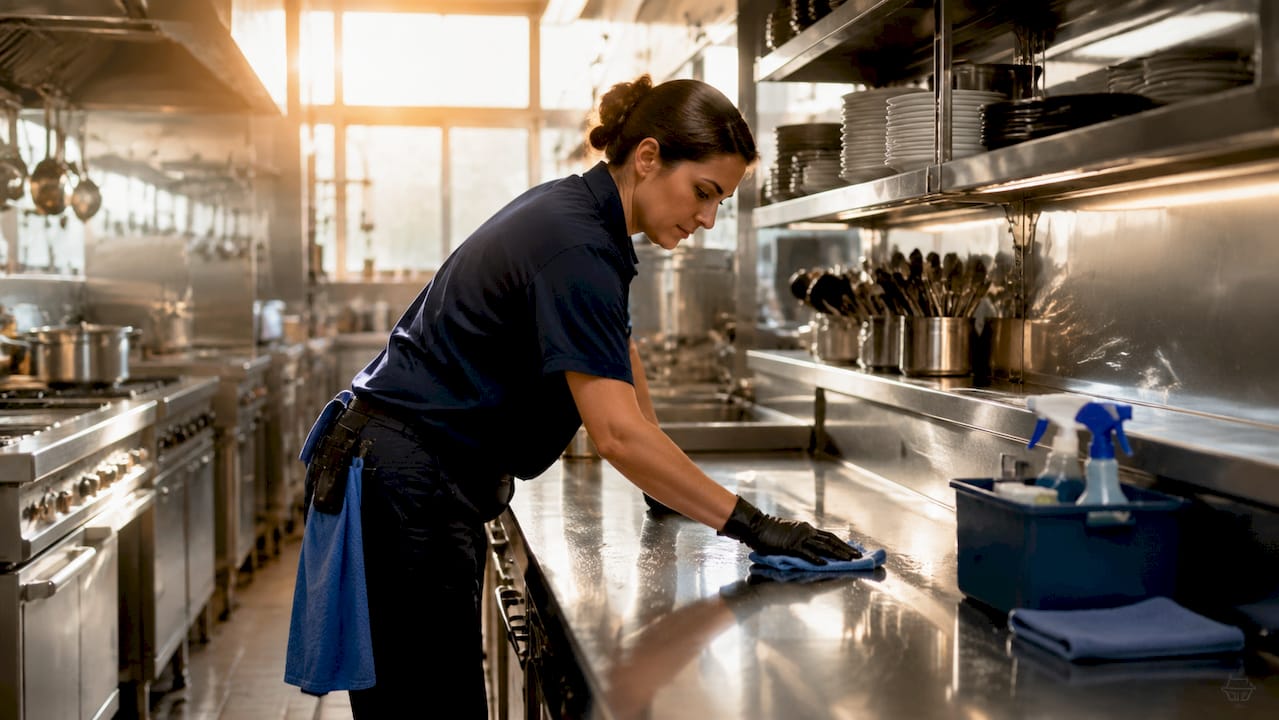
Daily cleaning targets every surface touched during service. Benchtops, cutting boards, sinks, stovetops, and equipment exteriors must be wiped down and sanitised at the end of every shift. Floors need sweeping and mopping with a food-safe floor cleaner. Grease filters above cooking stations should be wiped to prevent surface buildup between deeper cleans.
Weekly cleaning tasks
Weekly tasks go further than daily wiping. Ovens, grills, and fryers need thorough degreasing inside and out. Exhaust hood filters should be removed, soaked, and scrubbed. Storage areas, including shelving and cool room interiors, need emptying and sanitising to prevent mould and pest attraction.
Monthly deep cleaning tasks
Monthly deep cleaning addresses areas that daily and weekly routines cannot reach. This includes cleaning behind and underneath heavy equipment, scrubbing grease traps, and deep cleaning ventilation ducts and exhaust hoods. Ventilation system cleaning is often done monthly or quarterly and frequently requires professional intervention to meet fire safety compliance.
Cleaning frequency summary
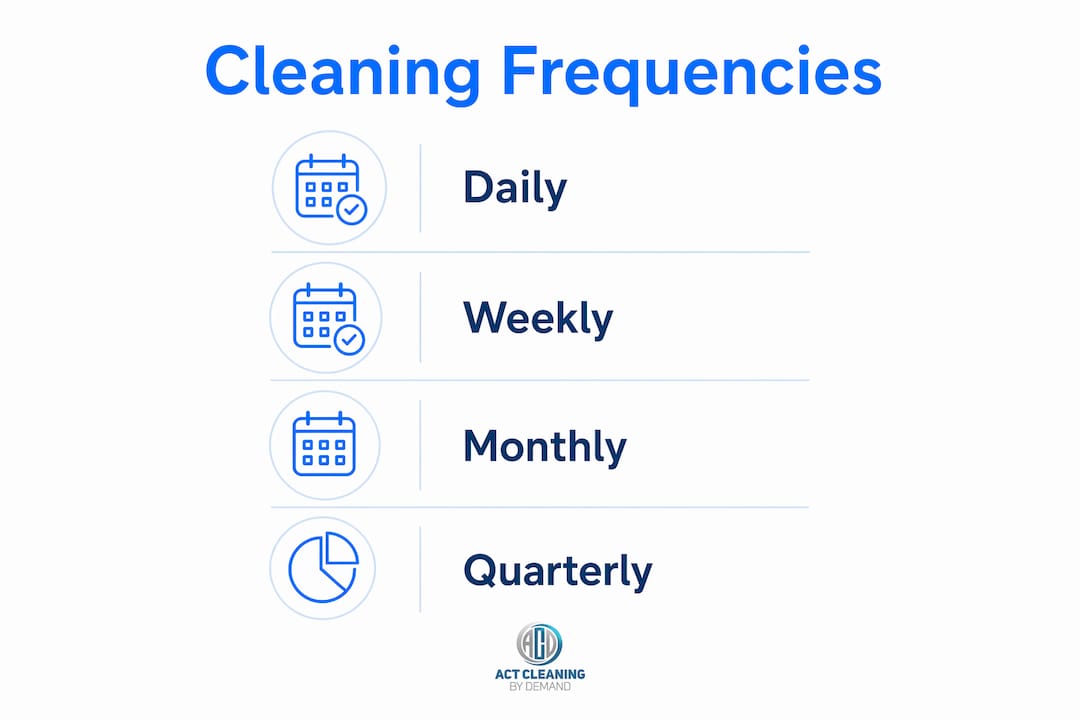
| Area or task | Frequency |
|---|---|
| Benchtops, sinks, floors, equipment exteriors | Daily |
| Ovens, grills, exhaust hood filters, storage | Weekly |
| Behind equipment, grease traps, ventilation ducts | Monthly or quarterly |
| Documentation review and log audits | Monthly |
Cleaning schedules must assign responsibility to named staff members and include supervisor sign-off. Printed checklists posted in the kitchen and rotating weekly task assignments reduce the burden on any one person and improve overall compliance.
Pro Tip: Rotate deep cleaning tasks across your team roster rather than assigning them to one person. Shared ownership improves thoroughness and reduces the risk of tasks being skipped during busy periods.
What tools and chemicals does commercial kitchen cleaning require?
Selecting the right cleaning agents and equipment is not optional. Using the wrong product at the wrong concentration either leaves pathogens alive or creates chemical residue that fails health inspections.
Cleaning agents: degreasers, detergents, and sanitisers
Three categories of cleaning agents cover the full scope of kitchen hygiene. Degreasers break down fat and carbon deposits on cooking surfaces and equipment. Detergents lift food particles and general soiling from surfaces. Sanitisers kill pathogens on food contact surfaces after cleaning.
Chlorine, iodine, and quaternary ammonium (quats) are the three main sanitiser types used in commercial kitchens. Each requires a specific concentration and exposure time to kill pathogens effectively. Chlorine sanitiser needs a minimum of 10 seconds at the correct parts per million and water temperature. Quats require a minimum of 30 seconds of contact time. Using either at the wrong dilution renders them ineffective.
Equipment and application tools
A well-stocked cleaning kit includes colour-coded scrubbing brushes, microfibre cloths, mops with separate buckets for cleaning and rinsing, single-use wipes for food contact surfaces, and a three-compartment sink for the wash, rinse, and sanitise sequence. Colour coding prevents cross-contamination between food preparation zones and toilet or waste areas.
Dwell times and correct application
Degreasers require a 5–15 minute dwell time for effective grease breakdown. Rushing this step leaves a greasy residue that inspectors identify immediately. Apply the degreaser, allow the full dwell time, then scrub and rinse thoroughly.
Pro Tip: Never mix a sanitiser directly with a detergent. Detergent residue consumes the active chemicals in a sanitiser, reducing its ability to kill pathogens. Always rinse surfaces completely before applying sanitiser.
Step-by-step commercial kitchen cleaning procedure
A structured workflow prevents missed areas and keeps staff safe during cleaning. The steps below apply to a full end-of-service clean, which forms the backbone of any restaurant deep cleaning procedure.
- Prepare the kitchen. Turn off all cooking equipment and allow surfaces to cool. Remove all food from benchtops and store it correctly. Put on personal protective equipment: gloves, eye protection, and a non-slip apron.
- Remove loose debris. Scrape all food waste from surfaces, grills, and fryer baskets into waste bins. Sweep floors before any wet cleaning begins.
- Apply degreaser to cooking surfaces. Spray or apply degreaser to ovens, grills, range tops, and exhaust hood surfaces. Allow the full dwell time of 5–15 minutes before scrubbing.
- Wash food contact surfaces. Use a food-safe detergent and hot water to wash benchtops, cutting boards, and equipment exteriors. Follow the correct sanitation sequence: scrape, rinse, wash, rinse, sanitise, and air dry. Deviating from this sequence reduces sanitiser effectiveness because organic matter consumes active chemicals.
- Dismantle and clean equipment. Remove detachable parts from slicers, mixers, and grills. Wash parts in the three-compartment sink, rinse, sanitise, and allow to air dry before reassembly.
- Sanitise all food contact surfaces. Apply the correct sanitiser at the right concentration. Allow the required contact time (10 seconds for chlorine, 30 seconds for quats) before air drying. Do not wipe off sanitiser.
- Clean floors, drains, and walls. Mop floors with a food-safe cleaner. Flush drains with hot water and a drain cleaner. Wipe splatter from walls near cooking stations.
- Complete the cleaning log. Record tasks completed, products used, staff names, and supervisor sign-off. Date and file the log.
A common mistake is cleaning from the floor upward. Always clean from top to bottom so that debris and cleaning solution fall onto surfaces you have not yet cleaned. Starting at the floor wastes time and recontaminates surfaces.
How should you document and verify cleaning procedures?
Documentation is as important as the cleaning itself. Health inspectors focus on proof of cleaning diligence, not just verbal claims. A kitchen that cleans thoroughly but keeps no records will fail an audit just as quickly as one that does not clean at all.
What records to keep
A complete documentation system includes:
- Daily cleaning checklists with staff names and supervisor sign-off
- Temperature logs for cool rooms and hot holding equipment
- Pest control reports from licensed contractors
- Chemical safety data sheets for all products used on site
- Records of equipment maintenance and deep cleaning dates
Cleaning logs must be retained for at least one year to satisfy health department requirements. This retention period gives inspectors a full picture of your cleaning history, not just a snapshot of the day they visit.
Structuring your documentation system
| Document type | Minimum retention | Review frequency |
|---|---|---|
| Daily cleaning checklists | 12 months | Weekly by manager |
| Temperature logs | 12 months | Daily |
| Pest control reports | 12 months | After each visit |
| Deep cleaning records | 12 months | Monthly |
Staff training is the weakest link in most documentation systems. Assign one team member per shift as the cleaning record keeper. Rotate this responsibility monthly so that every staff member understands the process. Post laminated checklists at each cleaning station so that nothing is left to memory.
Pro Tip: Audit your own cleaning logs before a scheduled health inspection. Look for gaps in dates, missing signatures, or incomplete temperature entries. Fixing these gaps in advance is far less costly than an inspection failure.
Key takeaways
A structured commercial kitchen cleaning procedure, backed by documented records and correct chemical use, is the single most reliable way to maintain compliance and prevent health inspection failures.
| Point | Details |
|---|---|
| Use tiered cleaning frequencies | Assign daily, weekly, and monthly tasks to cover all risk levels in the kitchen. |
| Apply chemicals correctly | Follow dwell times and contact times for degreasers and sanitisers to avoid residue and pathogen survival. |
| Follow the sanitation sequence | Scrape, rinse, wash, rinse, sanitise, and air dry every food contact surface in that order. |
| Keep records for at least one year | Retain cleaning logs, temperature records, and pest control reports to pass health inspections. |
| Assign and rotate responsibilities | Named staff accountability and supervisor sign-off reduce missed tasks and improve consistency. |
What I have learned from years of kitchen cleaning programmes
The biggest gap I see in commercial kitchens is not dirty surfaces. It is the assumption that daily cleaning is enough. Daily cleaning keeps a kitchen operational. It does not remove the grease that has bonded to the inside of an exhaust duct over three months of service. Those are two completely different problems, and they need two completely different responses.
The second gap is chemical misuse. I have walked into kitchens where staff were applying sanitiser directly over a greasy surface, skipping the wash stage entirely. The sanitiser was doing nothing. The surface looked clean, but it was not. Training staff to understand why each step in the sequence matters, not just what to do, produces far better results than handing someone a checklist.
Documentation is where most restaurant managers underestimate the risk. An inspector does not take your word for it. They want to see dated, signed records. A kitchen with a solid cleaning routine and no paperwork is a kitchen that cannot prove compliance. Build the documentation habit before you need it, not the night before an inspection.
The restaurants that maintain the cleanest kitchens over the long term are the ones that treat cleaning as a system, not a reaction. They schedule it, assign it, verify it, and record it. That discipline is what separates a kitchen that passes every inspection from one that scrambles before each visit.
— Deng
Professional kitchen cleaning support from Com
Running a compliant commercial kitchen takes more than good intentions. It takes consistent execution, the right products, and a team that knows exactly what to do and when.
Com offers custom cleaning packages tailored to the specific needs of commercial kitchens in Canberra and surrounding areas. Whether you need scheduled deep cleaning support, professional oven cleaning between service periods, or a one-off thorough clean before a health inspection, Com's team works to your schedule and follows Australian health and safety standards. Contact Com to discuss a cleaning programme that fits your kitchen's size, service frequency, and compliance requirements.
FAQ
What is a commercial kitchen cleaning procedure?
A commercial kitchen cleaning procedure is a structured system of daily, weekly, and monthly tasks that clean, sanitise, and maintain all kitchen surfaces and equipment to meet health and safety standards.
How often should a commercial kitchen be deep cleaned?
Deep cleaning of grease traps, ventilation ducts, and behind equipment should occur monthly or quarterly. Ventilation systems often require professional cleaning to meet fire safety compliance requirements.
What sanitisers are approved for commercial kitchen use?
Chlorine, iodine, and quaternary ammonium (quats) are the three main approved sanitiser types. Chlorine requires a minimum of 10 seconds at the correct concentration; quats require a minimum of 30 seconds of contact time.
How long must cleaning records be kept?
Cleaning logs, temperature records, and pest control reports must be retained for at least one year to satisfy health department inspection requirements.
What is the correct order for sanitising food contact surfaces?
The correct sequence is scrape, rinse, wash, rinse, sanitise, and air dry. Skipping any step reduces sanitiser effectiveness because organic matter consumes the active chemicals before they can kill pathogens.