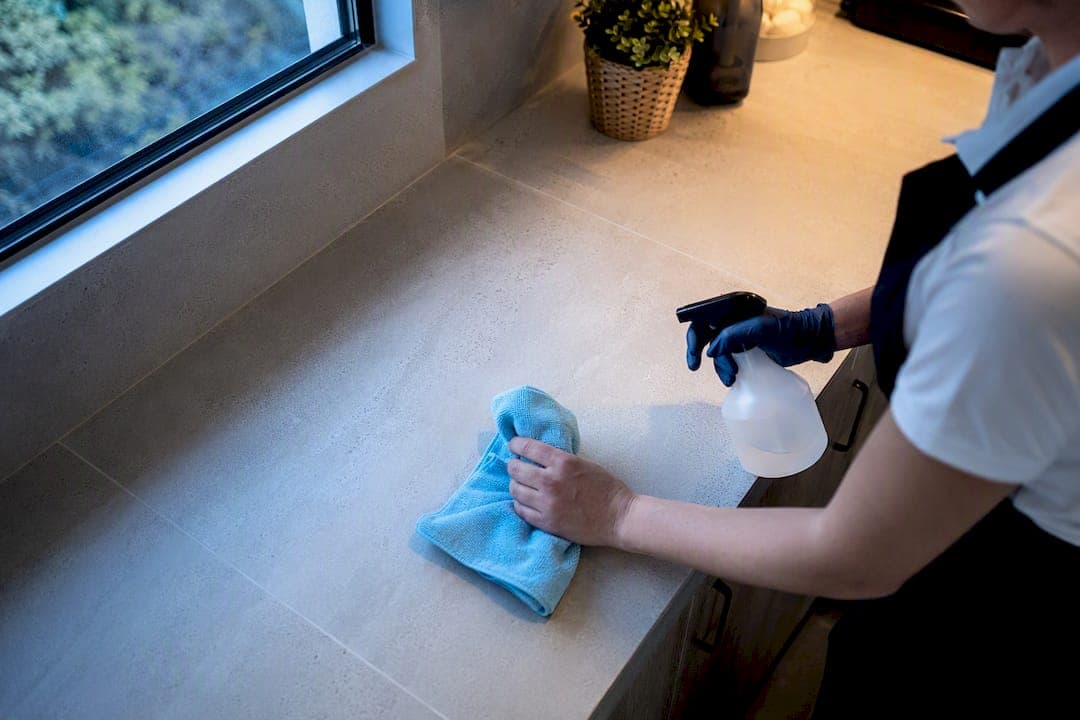
Cleaning removes dirt, grease and some germs with soap and water; disinfecting uses chemicals to kill the germs that survive that first step. Sanitising sits between the two, lowering germ counts to safe levels without fully killing everything. For most homes, cleaning is enough day to day. Disinfect on top of that only when someone is sick, after bodily fluid spills, or in genuinely high-risk settings.
TL;DR:
- Disinfectants require proper contact time and thorough application, which most households often neglect, reducing their effectiveness significantly.
- Mechanical cleaning with soap and water is essential before disinfecting because dirt and grease physically shield germs from chemical agents.
- Routine cleaning with soap and water is sufficient for most household surfaces, while sanitising is recommended for food-contact items and disinfecting only for illness or biohazard spills.
- Proper storage, handling, and understanding of labels are critical to ensure disinfectants work safely and effectively, with overuse or improper mixing risking chemical hazards.
- Professional cleaning services are advisable for large-scale or biohazard situations, where precise contact time and discipline ensure effective disinfection beyond DIY capabilities.
Table of Contents
- Cleaning, sanitising and disinfecting: what each one actually does
- Why cleaning always has to come first
- When cleaning is enough, and when you need to step up
- How to disinfect a surface properly (most people get this wrong)
- Storage, safety and the mistakes that waste your effort
- A cleaner's view on when disinfecting is actually worth it
- What the research gets right, and where the conventional advice oversells it
- Get the disinfecting-level clean without doing it yourself
- Sources
- FAQ
Cleaning, sanitising and disinfecting: what each one actually does
These three words get used interchangeably in supermarket aisles, and that's where the confusion starts. They are not the same process, and mixing them up is the reason a lot of "disinfecting" at home doesn't disinfect anything.
Cleaning is physical removal. Soap, water, a cloth, a mop, some elbow grease. It lifts dirt, grease and a share of the germs sitting on a surface, but it doesn't necessarily kill what's left behind, according to MedlinePlus. Wiping a benchtop, vacuuming a floor and mopping tiles all count.
Sanitising reduces germ numbers to a level public health codes consider safe, mostly targeting bacteria. It's the standard in food service, on chopping boards and baby gear, where you want a fast, lower-intensity kill without harsh residue, as the ISSA explains.
Disinfecting goes further, using chemical agents to destroy a broader range of pathogens including viruses and fungi, not just bacteria. Common active ingredients include:
- Diluted bleach (sodium hypochlorite)
- Alcohol solutions at 70% or higher
- Hydrogen peroxide
- Quaternary ammonium compounds ("quats")
Here's the part most people skip: a product only counts as a disinfectant if the label actually says so. The EPA notes that disinfectants face tougher testing and registration requirements than sanitisers, which is why an all-purpose spray that smells strong isn't automatically a disinfectant. Check the label, not the scent.
Why cleaning always has to come first
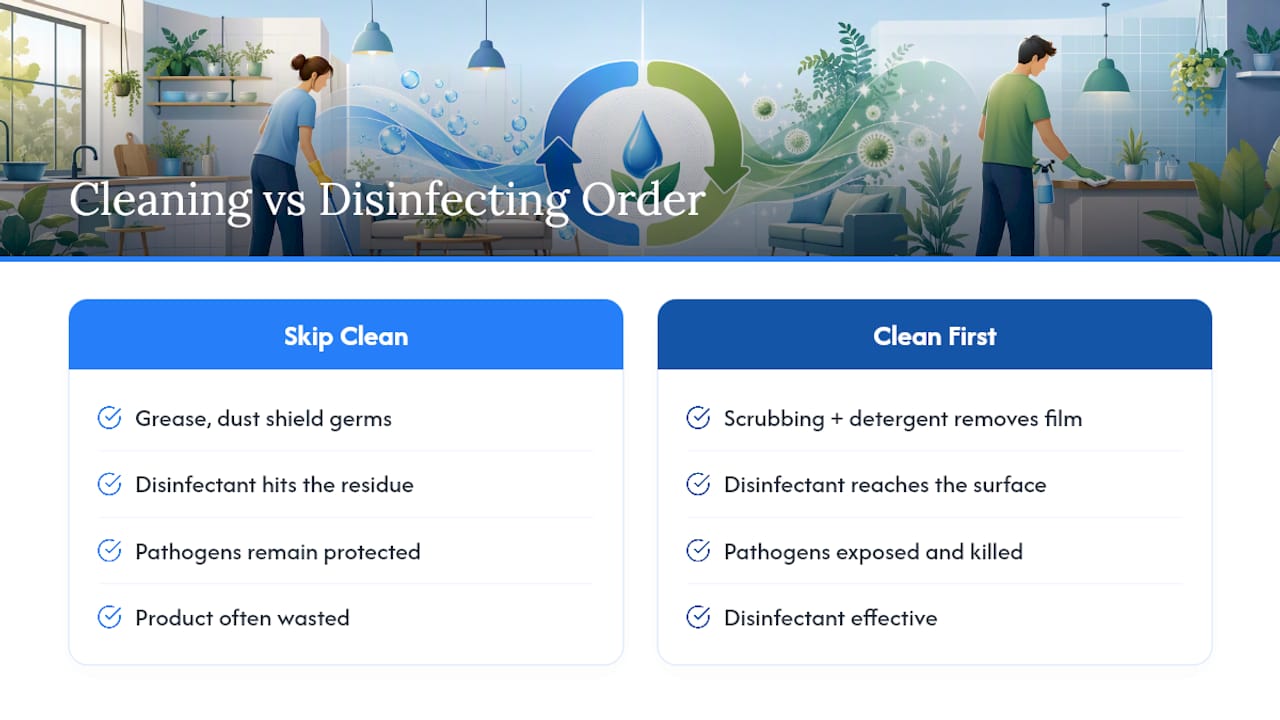
Skipping the clean step and going straight for disinfectant is one of the most common mistakes in household hygiene, and it usually comes from good intentions. The problem is chemistry, not effort.
Grease, dust and organic residue physically shield germs from the chemicals meant to kill them. The CDC's guidance on cleaning and disinfecting points out that dirt and soil reduce a disinfectant's ability to reach and destroy pathogens. Spraying disinfectant onto a greasy stovetop mostly disinfects the grease, not the surface underneath.
Mechanical cleaning, the scrubbing and detergent action, breaks up that film so the disinfectant can actually make contact. Skip it, and you're often just wasting product.
When cleaning is enough, and when you need to step up
Most surfaces in most homes never need a disinfectant. Matching the method to the actual risk is the whole game here, and it saves you money on chemicals you don't need.
- Daily maintenance surfaces (floors, general benchtops, dust, glass): soap and water is genuinely sufficient. Regular cleaning removes most germs and keeps a household healthy without any disinfectant at all, per the CDC.
- Food-prep and contact surfaces (chopping boards, baby toys, kitchen sponges): sanitise. This gets bacteria counts down to safe levels quickly without leaving strong chemical residue near food.
- Illness, bodily fluids and outbreak situations: disinfect. Once someone in the household is unwell or there's been a spill of blood, vomit or other fluids, cleaning alone isn't enough. This is exactly when the CDC recommends disinfecting on top of the usual clean.
- High-touch zones: door handles, light switches, remote controls and taps deserve more frequent attention than the rest of the house, especially during a cold or flu run through the family.
A short weekly schedule, clean everything, disinfect the high-touch points and anything touched by illness, covers almost every household scenario without turning your home into a hospital ward — or when you prefer, you can book professional cleaning services to manage those tough situations.
How to disinfect a surface properly (most people get this wrong)
Buying a disinfectant is the easy part. Using it so it actually works takes a few extra steps that most people skip under time pressure.
- Pick the right product. Check the label for the specific pathogens it's registered against, or reference a list like the EPA's List N of registered disinfectants if you're targeting a particular virus.
- Clean first. Wipe away visible dirt and grease with detergent and water, then rinse or dry the surface before applying disinfectant.
- Apply enough product to keep the surface visibly wet. This is where most home disinfecting fails.
- Respect the contact time on the label. Many products need the surface to stay wet for anywhere from three to ten minutes depending on the formula and target organism, according to the American Cleaning Institute.
- Don't wipe it off early. Wiping a disinfectant dry after thirty seconds defeats the purpose entirely.
- Follow dilution ratios exactly, and store the mixed solution as instructed, since some diluted bleach solutions lose potency within 24 hours.
- Never mix bleach with ammonia or acidic cleaners. The combination produces toxic gas.
Pro Tip: Time yourself the first few tries. Set a phone timer for the label's contact time and physically watch the surface, most people wipe disinfectant off in under a minute when the label wants five. Once you know what "wet for five minutes" actually looks like on your benchtop, you'll get it right without the timer.
Storage, safety and the mistakes that waste your effort
Disinfectants are effective precisely because they're reactive chemicals, which is exactly why they need respect, not just a spray bottle in the laundry cupboard.
- Wear gloves when handling concentrated products, and open a window or turn on an exhaust fan, particularly with bleach or ammonia-based sprays.
- Store all chemicals out of reach of children and pets, in their original labelled containers.
- Mix fresh bleach solutions rather than storing diluted batches for weeks, since bleach degrades and loses effectiveness over time.
- Follow the label's first-aid instructions if there's skin or eye contact, and keep the Poisons Information line handy.
The most common failure point, by a wide margin, is contact time. Skipping it is what turns an expensive disinfectant into an expensive surface cleaner. A close second is over-disinfecting low-risk areas out of anxiety rather than need, which burns through product and adds unnecessary chemical exposure for no real health benefit.
A cleaner's view on when disinfecting is actually worth it
After a certain point, scale changes the calculation entirely. A single sick day in the household is a DIY job. A full biohazard situation, a hoarding cleanup, or turning around a property for settlement with a tight deadline is a different problem, one where the volume of work and the consequences of getting contact time wrong make a professional service the sensible call. Balancing genuine efficacy against unnecessary chemical use is a daily judgment call for anyone doing this at scale, which is part of why professional cleaning standards differ from a quick home wipe-down.
What the research gets right, and where the conventional advice oversells it
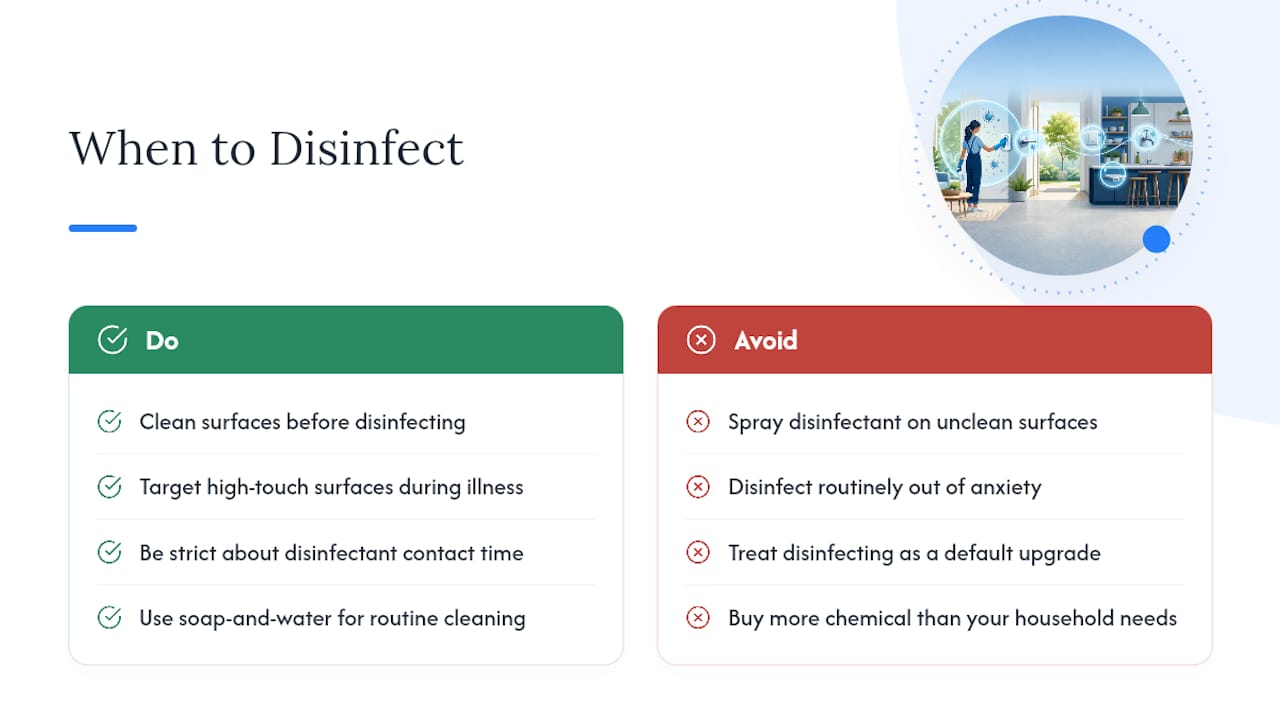
Most household hygiene advice treats disinfecting as the superior option, the thing you do when you're being thorough. That framing is backwards. Disinfecting a surface you haven't cleaned first is close to theatre, chemical residue that looks proactive but skips the mechanical step doing the actual work. The CDC and EPA guidance both point the same direction: cleaning is the foundation, and disinfecting is a targeted addition for specific risk, not a default upgrade.
The bigger failure isn't under-disinfecting. It's the habit of reaching for bleach spray on a clean benchtop out of anxiety, while genuinely high-touch surfaces, door handles, tap fittings, light switches, get a fraction of the attention they need during an actual illness in the house. If you're going to be strict about anything, be strict about contact time and about which surfaces earn the disinfectant treatment in the first place. Everything else in a normal week is a soap-and-water job, and pretending otherwise just means buying more chemical than your household needs.
— Deng
Get the disinfecting-level clean without doing it yourself
If your situation has moved past a wipe-down, a big changeover clean, an end-of-lease inspection, a hoarding or biohazard job, or simply not enough hours in the week, that's exactly where a professional service earns its keep over doing it solo. Com handles the scale and the contact-time discipline that DIY jobs often skip under time pressure, using eco-friendly products applied by police-checked staff, with no lock-in contracts tying you down afterwards.
For everyday deep cleans and disinfecting of high-touch areas, house cleaning covers routine and one-off jobs booked around your schedule. If you're handing back a rental and need the property properly sanitised for inspection, end of lease cleaning is built for exactly that deadline. Book online through the scheduling page, pick a time, and get a confirmed slot without back-and-forth calls.
This article is general information, not a substitute for advice from a qualified doctor. Consult a qualified healthcare professional about your own circumstances before acting on anything here.
Sources
- Cleaning, Disinfecting, and Sanitizing | MedlinePlus
- What Is the Difference Between Sanitizing and Disinfecting? - ISSA
- What’s the difference between products that disinfect, sanitize, and clean surfaces? | US EPA
FAQ
Is cleaning the same thing as disinfecting?
No. Cleaning removes dirt and some germs with soap and water; disinfecting uses chemicals to kill the germs a clean alone leaves behind, and the two serve different purposes.
What comes first, cleaning or disinfecting?
Always clean first. Dirt and grease block disinfectants from reaching germs, so the CDC recommends removing soil before applying any disinfectant product.
What is the difference between a disinfectant and a cleaner?
A cleaner lifts dirt and grease physically; a disinfectant is a chemical product tested and labelled to kill specific pathogens, and it must remain on the surface for a set contact time to work, per MedlinePlus.
What are three types of disinfection?
Common approaches include chemical disinfectants (bleach, alcohol, hydrogen peroxide, quats), UV or heat-based methods used in commercial and healthcare settings, and steam disinfection, which professional services like Com use for carpets and upholstery.
Do I need to disinfect my whole house every week?
No. Routine cleaning handles most surfaces; reserve disinfecting for high-touch points, illness, or bodily fluid contamination, as CDC guidance advises for typical households.