
Most people clean their homes regularly but never question whether they are doing it in the right order, with the right tools, or at the right frequency. The result is more time spent, more effort wasted, and a home that never quite feels as clean as it should. Domestic cleaning explained properly means understanding that cleaning is a system, not a series of random tasks. This guide breaks down the expert-backed strategies that professional cleaners use, adapted for Canberra homes and the specific hygiene demands that come with our climate and lifestyle.
Table of Contents
- Understanding domestic cleaning fundamentals
- The right order and routine for efficient cleaning
- Prioritising high-moisture and high-use areas for health
- Tools, supplies and preparation for smooth cleaning sessions
- Building and maintaining a consistent cleaning routine in Canberra homes
- Rethinking domestic cleaning: what most guides miss
- Professional domestic cleaning services in Canberra
- Frequently asked questions
Key Takeaways
| Point | Details |
|---|---|
| Focus on key zones | Prioritise kitchens, bathrooms and high-touch areas to maintain hygiene and prevent bacteria growth. |
| Correct cleaning order | Follow a top-to-bottom and dry-to-wet sequence to clean efficiently and avoid re-soiling surfaces. |
| Establish routine | Use daily, weekly, and monthly schedules to keep cleaning manageable and consistent. |
| Declutter beforehand | Clear surfaces and remove obstacles to speed up cleaning and reduce stress. |
| Consider professional help | Professional cleaning services can provide thorough, time-saving solutions tailored for Canberra homes. |
Understanding domestic cleaning fundamentals
To master domestic cleaning, first understand the fundamental areas and hygiene priorities within your home. Domestic cleaning is not just about making surfaces look tidy. It is about controlling bacteria, managing allergens, and maintaining a living environment that genuinely supports your health.
Every home contains several distinct zones that require different levels of attention. High-touch and high-moisture areas need frequent cleaning to prevent bacteria and allergens from accumulating. Kitchens, bathrooms, and entry points are the highest-priority zones. Living areas and bedrooms require consistent but less intensive attention. Storage areas and low-traffic rooms can be addressed less frequently.
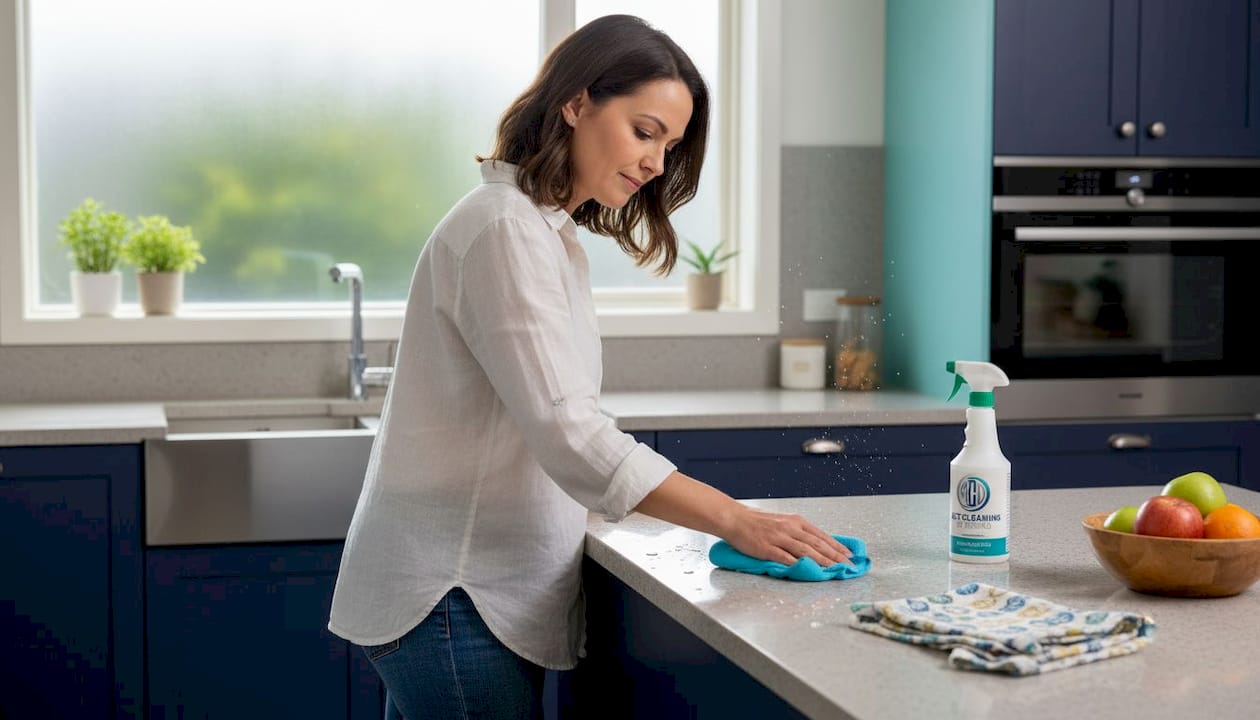
Understanding house cleaning basics also means recognising that not all surfaces carry the same hygiene risk. A bedroom window sill does not need weekly disinfection. A kitchen benchtop does. Prioritising by risk and frequency is what separates an efficient cleaning routine from one that exhausts you without delivering results.
Key zones to focus on in your Canberra home:
- Kitchens: Benchtops, sinks, stovetops, appliance handles, and splashbacks
- Bathrooms: Toilets, basins, shower screens, taps, and floor tiles
- High-touch surfaces: Door handles, light switches, remote controls, and stair rails
- Floors: Vacuuming and mopping across all rooms, prioritising entry points
- Soft furnishings: Cushions, rugs, and curtains that trap dust and allergens
If you are planning a home refresh alongside your cleaning routine, home interior design and renovation tips can help you think about how layout and materials affect how easy your home is to maintain.
The right order and routine for efficient cleaning
With the home zones understood, knowing the correct cleaning sequence and schedule drastically improves your cleaning effectiveness. Most people start wherever feels urgent, which means they often re-soil areas they have already cleaned or miss sections entirely.
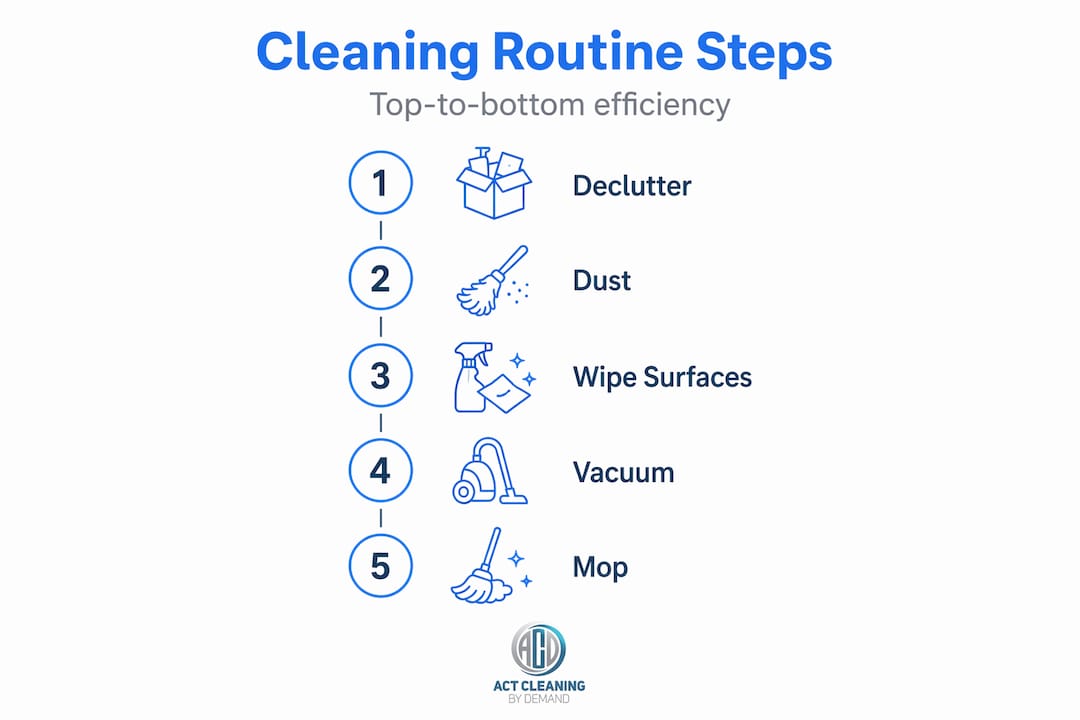
Following a top-to-bottom, dry-to-wet cleaning order reduces cleaning time by up to 30%. Dust and debris fall downward, so cleaning high shelves and ceiling fans before vacuuming floors means you are not doing the same job twice. Dry dusting before wet mopping prevents muddy smears across surfaces.
Zoning cleaning by frequency prevents 80% of germ buildup, helping maintain hygiene with manageable effort. Dividing tasks into daily, weekly, and monthly categories stops the overwhelm of trying to do everything at once.
The 'Daily 6' tasks every Canberra home benefits from:
- Make beds and straighten cushions
- Wipe kitchen benchtops and stovetop after cooking
- Quick sweep or vacuum of high-traffic floors
- Wipe bathroom basin and tap
- Take out rubbish if full
- Tidy clutter from common areas
A simple weekly cleaning sequence to follow:
- Declutter every room before you begin cleaning
- Dust from ceiling to floor in each room
- Clean bathrooms using disinfectant, starting with the toilet
- Clean the kitchen thoroughly, including the sink and appliances
- Vacuum all floors, including under furniture
- Mop hard floors using a clean mop head
- Change bed linens and towels
The cleaning order and routine you adopt matters more than the products you use. A consistent sequence builds muscle memory and cuts decision fatigue.
Pro Tip: Keep a portable cleaning caddy stocked with your core supplies. Moving it from room to room means you never waste time walking back to collect a forgotten cloth or spray bottle.
Prioritising high-moisture and high-use areas for health
With an effective routine established, prioritising these critical zones ensures your cleaning protects health, not just appearances. Bathrooms and kitchens are where moisture, food residue, and human contact combine to create the highest bacteria risk in any home.
"Kitchens and bathrooms require priority due to bacteria build-up, moisture risk, and health safety during cleaning. High-touch surfaces and moisture zones matter most to reduce bacteria and allergens." — Southern Living and Homeaholic
The practical implication of this is straightforward. Start your cleaning session in the bathroom and kitchen, apply your disinfectant sprays, and allow them to sit while you complete other tasks nearby. This dwell time, usually two to five minutes, is what allows the product to actually kill bacteria rather than just moving it around.
Ventilation matters too. Open windows or run exhaust fans when using chemical cleaners in bathrooms and kitchens. Canberra winters can make this feel inconvenient, but even a few minutes of airflow protects your respiratory health and prevents moisture from resettling on surfaces you have just cleaned.
Understanding kitchen cleaning importance goes beyond the visible benchtop. Sink drains, in particular, accumulate bacteria and food debris that most people overlook. A sink drain cleaning guide can help you address this often-missed area properly.
Tools, supplies and preparation for smooth cleaning sessions
Proper tools and preparation set the stage to execute your cleaning routine efficiently and safely. The right equipment does not need to be expensive, but it does need to be appropriate for the surfaces and tasks at hand.
Cleaning tools and preparation drastically affect cleaning speed and quality. Professional cleaners consistently recommend decluttering surfaces and gathering the right tools before starting, rather than improvising as you go.
Essential tools for effective domestic cleaning:
- Microfibre cloths: Far more effective than cotton rags at trapping dust and bacteria without spreading them
- Quality vacuum cleaner: One with a HEPA filter is worth the investment for Canberra homes, especially during high-pollen seasons
- Flat mop with washable head: Easier to control than traditional string mops and more hygienic
- Scrub brushes: A stiff-bristled brush for grout and tiles, a softer one for basins
- Multi-purpose spray cleaner: For general surfaces
- Disinfectant spray: For bathrooms, toilets, and kitchen benchtops
- Baking soda and white vinegar: Effective natural alternatives for deodorising and cutting through grease
Preparation also means securing pets and moving breakables before you begin. Tripping over a dog or knocking a vase off a shelf mid-clean is exactly the kind of setback that turns a 45-minute session into an hour and a half.
For renters managing apartment spaces, decluttering for efficient cleaning is especially relevant given the typically smaller footprints and shared surfaces involved.
Pro Tip: Use a separate colour-coded microfibre cloth for each zone. Red for bathrooms, blue for kitchens, green for general surfaces. This prevents cross-contamination and removes any guesswork.
Building and maintaining a consistent cleaning routine in Canberra homes
Having tools and knowledge, this schedule helps you implement a sustainable cleaning routine in your Canberra home. The biggest reason people fall behind on cleaning is not laziness. It is the absence of a clear, repeatable system.
Assigning tasks to specific days and using small daily sessions helps sustain a clean home with manageable effort. The goal is never to spend an entire Saturday cleaning. The goal is to distribute the workload so that no single session ever feels overwhelming.
| Task | Frequency | Estimated time |
|---|---|---|
| Wipe kitchen benchtops | Daily | 3 minutes |
| Bathroom basin and tap wipe | Daily | 2 minutes |
| Vacuum high-traffic floors | Daily or every 2 days | 10 minutes |
| Full bathroom clean | Weekly | 20 minutes |
| Mop all hard floors | Weekly | 20 minutes |
| Change bed linens | Weekly | 15 minutes |
| Dust all surfaces | Weekly | 20 minutes |
| Clean oven and stovetop | Monthly | 30 minutes |
| Wipe down windows | Monthly | 20 minutes |
| Clean baseboards and skirting | Monthly | 15 minutes |
| Declutter wardrobes and storage | Monthly | 30 minutes |
A simple weekly plan for a Canberra home:
- Monday: Bathrooms, toilets, and basin areas
- Tuesday: Kitchen deep wipe, including splashback and appliance fronts
- Wednesday: Vacuum all rooms including under furniture
- Thursday: Mop hard floors and wipe skirting boards
- Friday: Change bed linens and launder towels
- Saturday: Dust all surfaces and tidy common areas
- Sunday: Rest, or use this day for any missed tasks
Following a cleaning routine for home maintenance like this one means you are never more than a day behind. It also means guests arriving unexpectedly are far less stressful.
Rethinking domestic cleaning: what most guides miss
Most cleaning guides focus on products and checklists. Very few address the single biggest obstacle to a clean home: the mental load of treating cleaning as an unpredictable burden rather than a predictable system.
Here is what years of working with professional cleaners and observing how people actually maintain their homes reveals. The homes that stay cleanest are not the ones where the occupants work hardest. They are the ones where the occupants have removed friction from the process. Supplies are accessible. Surfaces are uncluttered. Tasks are assigned to specific times. There is no decision fatigue because the system makes the decisions.
Decluttering speeds cleaning by 20 to 30% since clutter slows professional cleaners significantly if left to navigate obstacles. This is not a minor efficiency gain. Over the course of a year, it translates to hours returned to your life.
The cleaning mindset and strategy shift that matters most is this: stop thinking about cleaning as something you do when the house gets dirty, and start thinking about it as something you do to prevent the house from ever getting truly dirty. Maintenance is always faster than recovery.
There is also an underappreciated connection between a clutter-free environment and mental wellbeing. Canberra's busy households, with work, school, and social commitments packed into every week, benefit enormously from a home that does not add to cognitive load. A predictable cleaning system is not just about hygiene. It is about creating an environment where you can actually relax.
Pro Tip: Before any cleaning session, spend five minutes securing valuables, moving breakables, and clearing surfaces. This single habit prevents the most common setbacks and keeps your sessions running on time.
Professional domestic cleaning services in Canberra
While mastering cleaning yourself is invaluable, professional services can enhance and simplify maintaining your Canberra home.
Even the most disciplined cleaning routine has limits. Deep cleaning behind appliances, restoring grout, or preparing a property for lease inspection requires equipment and expertise that most households simply do not have on hand. That is where professional cleaners make a genuine difference.
ACT Cleaning by Demand offers professional house cleaning services tailored specifically for Canberra homeowners and renters. Whether you need a regular maintenance clean to complement your own routine, or a thorough once-over before moving out, the team brings the right tools, products, and experience to deliver results you can see and feel. For tenants preparing to vacate, end of lease cleaning services ensure your property meets inspection standards without the stress. And for a finishing touch that transforms how your home looks and feels, window cleaning services are available to handle what is often the most overlooked area in any home clean.
Frequently asked questions
How often should I deep clean my home?
Most homes benefit from deep cleaning every four to eight weeks, supplementing daily and weekly maintenance for thorough hygiene. Most homes need deep cleaning two to four times a year at minimum, with regular cleaning keeping the workload manageable in between.
What is the fastest way to clean a 3-bedroom house efficiently?
Using a top-to-bottom, dry-to-wet sequence is the most effective approach. Cleaning order reduces time by up to 30% for a standard 3-bedroom home, and decluttering before you start removes the biggest time-wasting obstacle.
Are natural cleaning products effective for regular home cleaning?
Yes, absolutely. Natural cleaners such as vinegar and baking soda are effective and safer for frequent use, making them a practical choice for ongoing maintenance between deeper chemical cleans.
What cleaning tasks make the biggest difference for health and hygiene?
High-touch surfaces and moisture zones matter most for health and hygiene. Kitchens and bathrooms are your priority areas, followed by door handles, light switches, and any surface that multiple people contact daily.
How can I make my cleaning routine more manageable?
Assign specific tasks to certain days and use short daily sessions. Assigning tasks to days and using brief daily sessions helps maintain a tidy home easily, and preparing your space by decluttering before each session removes the friction that makes cleaning feel harder than it needs to be.