Walk into any cleaning aisle and you will find dozens of products competing for your attention. Yet most homes only need a focused domestic cleaning tools list to stay genuinely clean and hygienic. The right household cleaning equipment does not just make surfaces look tidy. It reduces bacteria, cuts your cleaning time in half, and makes the whole routine far less draining. This article cuts through the noise, giving you a practical cleaning checklist for home use that covers what to buy, what to skip, and how to keep your tools working properly.
Table of Contents
- Key takeaways
- How to choose from any domestic cleaning tools list
- ## 1. Microfiber cloths
- 2. Scrub brushes
- 3. Non-scratch sponges and pads
- 4. Mops suited to Australian homes
- 5. Vacuum cleaner
- 6. Broom and dustpan
- 7. Squeegees for windows and shower screens
- 8. Buckets and spray bottles
- 9. Protective gear
- 10. Cleaning caddy and storage hooks
- Cleaning tool comparison: which type suits your home?
- Keeping your tools clean and effective
- What I have learnt after years of watching people clean
- When your toolkit needs professional backup
- FAQ
Key takeaways
| Point | Details |
|---|---|
| Prioritise quality over quantity | A small set of well-chosen tools outperforms a cupboard full of gadgets you rarely use. |
| Colour-code microfiber cloths | Assign colours to specific rooms or tasks to stop bacteria spreading between surfaces. |
| Clean your tools regularly | Mop heads, brushes, and cloths can harbour bacteria for weeks if not laundered after use. |
| Match tools to your home's needs | Pet owners, allergy sufferers, and renters each need slightly different tool priorities. |
| Maintenance extends tool life | Rinsing, drying, and storing tools correctly saves money and keeps cleaning effective. |
How to choose from any domestic cleaning tools list
Before you spend a cent, it pays to know what separates a genuinely useful tool from one that sits under the sink for years. Professional housekeepers consistently choose tools designed for specific tasks rather than relying on multipurpose gadgets, because task-specific tools simply clean more thoroughly with less residue or streaking.
Here is what to weigh up when assessing any tool:
- Effectiveness on your surfaces. Tiles, timber, carpet, and glass each respond differently. A tool that shines on bathroom tiles can scratch a timber benchtop.
- Ease of cleaning the tool itself. A mop head you cannot easily remove and wash is a bacterial time bomb. Choose tools you can clean in under five minutes.
- Durability and value. Cheap sponges fall apart in a fortnight. Spending slightly more on a quality microfiber cloth system pays off over years of use.
- Health and safety. Cross-contamination between the bathroom and kitchen is a real hygiene risk. Tools with colour-coded or clearly designated uses reduce this significantly.
- Ergonomics. A broom or mop with an adjustable handle reduces back strain during longer cleaning sessions, which matters if you are doing a full weekly clean.
- Storage footprint. In a small apartment, a flat mop and a slim cleaning caddy are far more practical than a bulky traditional mop and bucket system.
- Sustainability. Reusable cloths, bamboo brushes, and concentrated cleaning solutions reduce waste without compromising results.
Pro Tip: Before buying anything new, do a quick audit of what you already own. Most households already have two or three solid tools. Fill the gaps rather than replacing everything at once.
## 1. Microfiber cloths
No home cleaning essentials list is complete without microfiber cloths, and for good reason. Microfiber cloths remove significantly more pathogens than cotton equivalents when properly laundered, making them the hardest-working item in your kit.
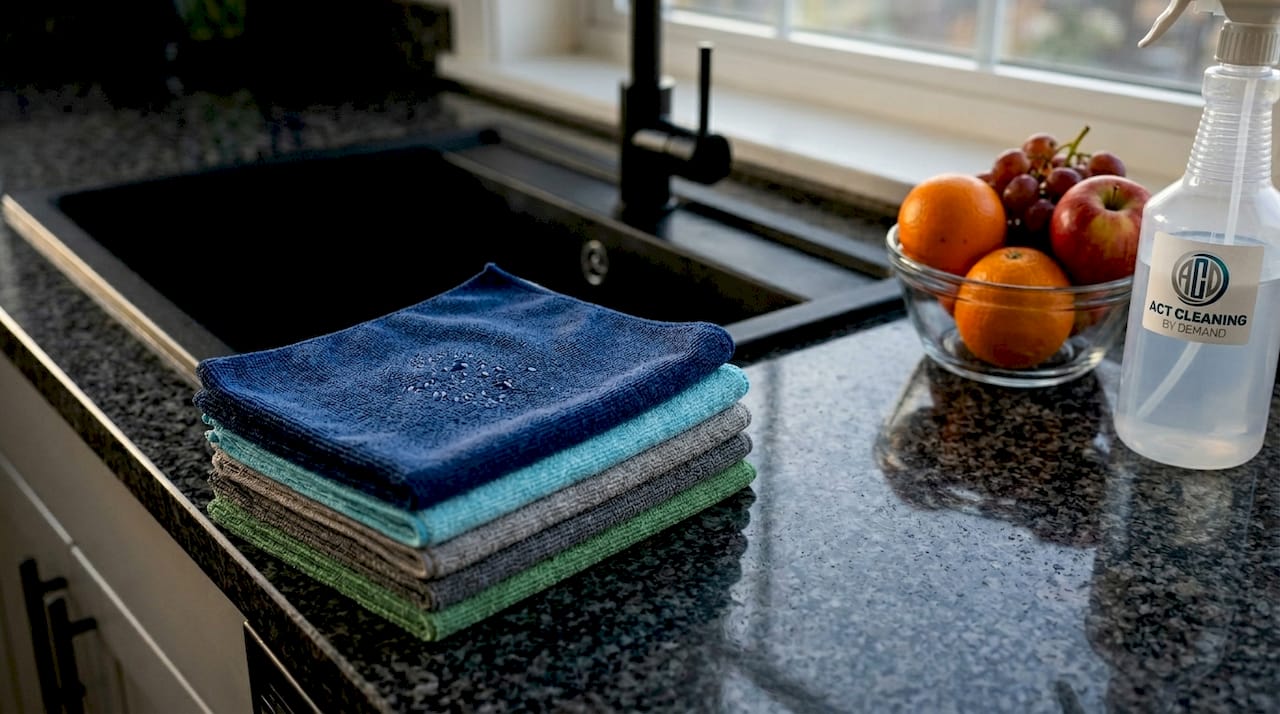
One 2026 guide recommends at least 12 microfiber cloths in distinct colours so you can assign specific cloths to the kitchen, bathroom, and general dusting without spreading germs between rooms. Buy a set and stick to your colour system every single time.
2. Scrub brushes
You need at least three types: a soft brush for delicate surfaces like oven glass or tiles with light grime, a medium brush for grout and bathroom sinks, and a stiff-bristled brush for outdoor areas or heavily soiled floors. Using the wrong stiffness is how surfaces get scratched.
Look for brushes with ergonomic grips and removable heads where possible. They are easier to rinse clean and dry faster, which matters for hygiene.
3. Non-scratch sponges and pads
Standard scouring pads will leave fine scratches on glass cooktops, stainless steel, and coated surfaces. Non-scratch sponges do the same scrubbing work without the damage. Keep a separate sponge for dishes and another dedicated to surface wiping so you are not dragging food residue across your benchtops.
Replace sponges every one to two weeks. They are cheap, and an old sponge does far more harm than good.
4. Mops suited to Australian homes
A flat microfiber mop handles most floor types found in Australian homes, from tiles in wet areas to floating timber floors. Spin mops are a step up in wringing efficiency and work well on large tiled areas. Steam mops are worth considering if you have young children or pets, because they sanitise without chemicals.
For a detailed look at how specialist floor care works in practice, the team at Com covers floor cleaning methods for different surface types.
5. Vacuum cleaner
For most homes, a stick vacuum handles daily quick cleans brilliantly, while an upright or canister model handles deeper weekly sessions. If you have pets, invest in a vacuum with a dedicated pet hair attachment and a HEPA filter. Room-by-room cleaning routines are most effective when paired with the right tools, and vacuum type genuinely changes your results on carpet versus hard floors.
Handheld vacuums are excellent for car interiors, upholstery, and stair edges where a full-sized machine cannot reach.
6. Broom and dustpan
Simple, reliable, and irreplaceable. A good rubber-bristled broom picks up fine dust and pet hair far better than traditional fibre bristles on hard floors. Pair it with a dustpan that has a rubber lip so dust does not escape underneath. This combination handles the daily floor sweep in kitchens and entryways faster than any gadget.
7. Squeegees for windows and shower screens
A quality rubber-bladed squeegee turns a frustrating streak-fest into a thirty-second job on shower screens and windows. Most households skip this tool entirely, then wonder why their glass always looks smeared after cleaning.
For windows specifically, a squeegee used with a small amount of diluted dish soap leaves glass cleaner than any spray-and-wipe method. Com's window cleaning service uses professional-grade squeegees on larger homes, but for regular maintenance between professional visits, a good consumer squeegee is the best cleaning supply you are probably missing.
8. Buckets and spray bottles
Two buckets are better than one. Use one for your cleaning solution and one for rinse water so you are not putting dirty water back onto the floor. Label your spray bottles clearly and fill them with purpose-mixed solutions rather than using undiluted products.
Effective surface disinfecting requires the right dilution ratio and adequate contact time, so properly labelled spray bottles with premixed concentrations make it easier to get both right every time.
9. Protective gear
Gloves, a light dust mask for dusty environments, and kneepads if you scrub floors regularly. These are not optional extras. Strong cleaning chemicals require gloves and ventilation as a minimum, and kneepads protect your joints during bathroom scrubs. They cost next to nothing and make a real difference to how long you can sustain a cleaning routine without discomfort.
10. Cleaning caddy and storage hooks
Organisation is underrated as part of a home cleaning essentials kit. A carry caddy with compartments means you can move all your supplies from room to room in one trip instead of making ten trips to the cupboard. Wall-mounted hooks in a laundry or cleaning cupboard keep mop handles and brooms off the floor, which helps them dry properly and keeps them from falling over.
Cleaning tool comparison: which type suits your home?
Choosing between similar tools comes down to your home's size, surfaces, and specific needs. This table covers the most common decisions homeowners and renters face.
| Tool type | Best for | Limitations | Approx. cost (AUD) |
|---|---|---|---|
| Upright vacuum | Large carpeted homes | Bulky, harder to store | $150 to $500 |
| Stick vacuum | Everyday quick cleans, hard floors | Less suction for deep carpet pile | $80 to $400 |
| Canister vacuum | Versatile use, stairs, upholstery | More parts to manage | $200 to $600 |
| Handheld vacuum | Cars, upholstery, tight spaces | Limited capacity | $40 to $150 |
| Microfiber flat mop | Timber, tiles, general hard floors | Not great for heavy grime build-up | $25 to $80 |
| Spin mop | Large tiled areas, heavy mopping | Mop head needs frequent washing | $40 to $120 |
| Steam mop | Homes with pets, allergies, or young children | Higher cost, not for all floor types | $80 to $300 |
| Non-scratch sponge | Glass, coated surfaces, stainless steel | Must replace frequently | $3 to $10 each |
| Stiff scrub brush | Grout, outdoor areas, laundry sinks | Too harsh for most interior surfaces | $8 to $25 |
Pro Tip: If you live in a rental and want to protect your bond, an end-of-lease clean is a completely different standard from weekly upkeep. A stick vacuum and a microfiber mop will not get your oven deposit-clean. Know when to call in reinforcements.
Keeping your tools clean and effective
Cleaning tools themselves require regular cleaning after each use to prevent bacteria and dirt from transferring back to your surfaces the next time you clean. This is the step most people skip, and it quietly undermines every cleaning effort they make.
Here is a practical maintenance routine to follow:
- Microfiber cloths: Machine wash after every use in warm water, without fabric softener. Fabric softener coats the fibres and reduces their ability to trap particles. Textile cleaning tools can harbour pathogens for up to 28 days under certain conditions, so laundering promptly is not optional.
- Mop heads: Rinse thoroughly after each use and wash the head weekly, or more frequently for heavy use. Allow it to dry fully before storing to prevent mould growth.
- Scrub brushes: Rinse under hot water after each use and shake dry. Stand them bristle-up in a holder so air can circulate.
- Sponges: Rinse after every use and microwave damp sponges on high for 60 seconds to reduce bacterial load. Replace them every one to two weeks regardless.
- Vacuum filters and bins: Empty the dustbin after every session. Wash or replace filters every one to three months depending on use.
- Squeegees: Wipe the rubber blade with a clean cloth after each use and rinse the frame. A squeegee blade that picks up residue will streak rather than clean.
Pro Tip: Add a ten-minute tool maintenance slot at the end of your weekly clean. Rinse brushes, put cloths in the wash, and empty the vacuum. It takes almost no time but makes your next clean dramatically more effective.
What I have learnt after years of watching people clean
I have seen homeowners spend hundreds of dollars on must-have cleaning gadgets that end up in the back of a cupboard within a month. The pattern is always the same: too many tools, not enough routine.
In my experience, the homes that stay genuinely clean do not have more equipment. They have better habits with fewer, well-maintained tools. A good microfiber cloth system, a reliable vacuum, a flat mop, and a caddy stocked with the right products will outperform a garage full of gadgets every single time.
The most overlooked insight I keep sharing is this: your tools only work as well as you maintain them. I have walked into kitchens cleaned with a two-week-old sponge and a mop head that had never been washed. The safest and most effective cleaning approach is not about the newest products. It is about consistent routines aligned to health-focused priorities.
People also underestimate ergonomics. An adjustable-handle mop costs maybe $20 more than a fixed one, but after a full house clean, your lower back will notice the difference. Invest in tools that are comfortable to use for thirty to sixty minutes at a stretch.
My personal toolkit has stayed largely the same for years: colour-coded microfiber cloths, a spin mop, a stick vacuum with a HEPA filter, a squeegee, a decent caddy, and colour-coded spray bottles. Simple, proven, and easy to maintain.
— Deng
When your toolkit needs professional backup
Even the best domestic cleaning tools list cannot replace what a professional clean delivers for specific tasks. Deep oven cleans, end-of-lease inspections, post-construction dust removal, and window cleans on multi-storey homes are all situations where professional equipment and expertise produce results your home kit simply cannot match.
Com's professional house cleaning service covers exactly these scenarios for homeowners and renters across Canberra. Whether you are preparing a property for sale, moving out and protecting your bond with an end-of-lease clean, or just want a thorough reset before maintaining with your own tools, the team brings the equipment, products, and know-how to do the job properly. Think of professional cleaning as the deep foundation your regular routine builds on.
FAQ
What tools should be on every domestic cleaning tools list?
The core tools are microfiber cloths in colour-coded sets, a vacuum suited to your floor types, a flat or spin mop, scrub brushes, non-scratch sponges, a squeegee, spray bottles, and a cleaning caddy. These cover the majority of household cleaning tasks without excess.
How often should I replace cleaning tools?
Sponges should be replaced every one to two weeks. Microfiber cloths last for years with proper laundering. Mop heads typically need replacing every three to six months depending on use, and vacuum filters every one to three months.
Are microfiber cloths better than cotton cloths for home cleaning?
Yes. Studies show microfiber cloths remove significantly more pathogens than cotton when properly maintained. The key is washing them promptly after use and avoiding fabric softener, which reduces their effectiveness over time.
Do I need different tools for different rooms?
Assigning specific tools to specific rooms, particularly the kitchen and bathroom, significantly reduces cross-contamination. Colour-coded microfiber cloths are the simplest way to manage this without needing to buy a large number of different tools.
When should I use a professional cleaning service instead of DIY tools?
Professional services are worth it for end-of-lease cleans, post-construction clean-ups, deep oven cleans, and window cleaning on multi-level homes. These tasks require specialised equipment that most home kits do not include.