Compare your property to the Entry Condition Report before you do anything else. That single step, required by the RTA, is what separates a smooth bond refund from a drawn-out dispute. Every other task on this list flows from that comparison.
Five things to do right now, before you start scrubbing:
- Pull out your Entry Condition Report and walk through each room, noting any differences between then and now.
- Take timestamped photos of every room, every appliance, and any marks or damage you find.
- Book carpet steam cleaning and oven cleaning if your lease or agent requires them — these fill up fast near month-end.
- Remove all personal items and rubbish, including from cupboards, the garage, and outdoor areas.
- Check your lease for outdoor obligations — lawns, gardens, and balconies are frequently overlooked.
Pro Tip: Save every receipt and photo to a single folder (cloud or phone) the moment you get them. Timestamped images and itemised receipts are the two pieces of evidence that resolve most bond disputes quickly.
Key takeaways
A full bond refund comes down to three things: matching the Entry Condition Report, having professional receipts for carpets and the oven, and documenting the handover with timestamped photos.
| Point | Details |
|---|---|
| Entry Condition Report is the baseline | Compare every room to the original report before and during the final inspection. |
| Ovens and carpets cause most disputes | Get itemised receipts for both; confirm the operator offers a re-clean window. |
| Timestamped photos are your evidence | Photograph every room, appliance, and flagged item on the day of handover. |
| Plan at least four weeks ahead | Book professional services early — carpet and oven cleaners fill up near month-end. |
| ACT Cleaning by Demand covers Canberra | End of lease cleans with receipts, eco products, and a re-clean guarantee for ACT renters. |
Table of Contents
- How to plan your vacate clean: a practical timeline
- Pre-clean tasks: what to do before you pick up a cloth
- Room-by-room bond clean checklist
- Carpet, oven, and specialist cleans: what you need to know
- How to handle the final inspection and avoid disputes
- What does a professional bond clean cost in Australia?
- Eco-friendly products and safety advice for common tasks
- What agents actually flag at inspections
- Prefer to leave it to a local professional?
- Sources
How to plan your vacate clean: a practical timeline
Leaving the clean to the final weekend is the most common mistake renters make. Book early, work backwards from your inspection date, and the whole process becomes manageable.
4+ weeks out
- Notify your property manager of your vacate date in writing.
- Review the Entry Condition Report and note anything that needs repair or professional attention.
- Book carpet steam cleaning and oven cleaning — reputable operators in most Australian cities fill their end-of-month slots two to three weeks in advance.
- Arrange any minor repairs (wall holes, broken fixtures) so tradespeople can complete work before the clean.
2 weeks out
- Begin decluttering room by room; donate, sell, or dispose of anything you are not taking.
- Confirm your professional cleaner's booking and scope in writing, including which rooms, oven, and carpet areas are covered.
- Check whether your lease requires pest or flea treatment — this is common in properties with pets and needs to be arranged separately.
1 week out
- Start cleaning rooms you have already vacated (spare bedrooms, storage areas).
- Launder curtains if required; check whether blinds need replacing or just dusting.
- Replace any burnt-out light bulbs.
72 hours out
- Complete the bulk of the cleaning: kitchen, bathrooms, floors, windows.
- Confirm your professional cleaner's arrival time and the final inspection time so there is no overlap.
- Photograph completed areas as you finish them.
24 hours out
- Final vacuum and mop of all floors.
- Wipe down all surfaces a second time.
- Pack receipts, the Entry Condition Report, and your photo folder together.
Pro Tip: When you confirm your cleaner's booking, ask them to send a written inclusions list and confirm their re-clean policy. Most reputable operators offer a 48–72 hour re-clean window if the agent flags a specific item — get that in writing before they arrive.
Pre-clean tasks: what to do before you pick up a cloth
Preparation prevents disputes. Agents notice when a property has been cleaned around clutter, and tribunals notice when evidence is thin.
Declutter and remove everything first
- Remove all personal items from every room, including inside cupboards, wardrobes, the pantry, the garage, and outdoor storage.
- Take all rubbish to the bin or arrange a hard rubbish collection if needed.
- Clear the fridge, freezer, and any built-in shelving.
Minor repairs
- Fill small nail holes and screw holes with a matching filler (available at any hardware store).
- Replace burnt-out light bulbs with the correct wattage.
- Remove hooks, picture hangers, and adhesive strips where the lease requires it.
- Report any pre-existing damage you noted on the Entry Condition Report to your agent in writing now, so it is on record.
Gather your evidence
- Locate your original Entry Condition Report — if you cannot find it, request a copy from your agent.
- Check for any furniture inventory or condition notes attached to the lease.
- Collect receipts for any repairs already completed.
Supplies to have on hand
- Degreaser (for kitchen surfaces, rangehood, and stovetop)
- Oven cleaner (fume-free where possible)
- pH-neutral cleaner (for stone, granite, and hardwood floors)
- Glass cleaner and microfibre cloths
- Grout brush and mould remover
- Vacuum with attachments, mop and bucket
Pro Tip: As you declutter each room, take a photo of it empty. This gives you a "before clean" baseline that is useful if an agent later claims damage that was already present.
Room-by-room bond clean checklist
This is the core of your end of lease cleaning checklist. Work through it systematically. Ovens and carpets are the two items most commonly disputed at exit inspections, so give them extra attention.
Kitchen
- Degrease bench tops and splashback
- Clean inside and outside all cupboards and drawers (remove shelf liners)
- Degrease rangehood exterior and clean or replace filters
- Clean stovetop, burners, and knobs
- Clean oven interior thoroughly — racks, glass door, and cavity (often quoted separately by professionals)
- Wipe microwave inside and out
- Clean dishwasher interior, door seal, and filter
- Polish sink and taps; remove limescale
- Wipe down walls and tiles near the cooktop
Bathroom and laundry
- Clean shower screens and tracks (remove soap scum and mould)
- Scrub grout lines with a grout brush and mould remover
- Polish taps, shower head, and fixtures
- Clean toilet thoroughly: bowl, seat, lid, behind the cistern, and the base
- Wipe vanity, mirror (streak-free), and all shelving
- Dust and wipe exhaust fan cover
- Clean laundry tub and taps
- Clear dryer lint filter and wipe drum
- Wipe washing machine drum, door seal, and detergent drawer
Bedrooms and living areas
- Wipe skirting boards and architraves throughout
- Clean light fittings and ceiling fans (dust blades and wipe housing)
- Vacuum carpets; treat visible stains before steam cleaning
- Mop hard floors
- Clean inside wardrobes and shelving (wipe rails, shelves, and tracks)
- Spot-clean walls and doors for marks and scuffs (note: general fading and minor scuffs are typically considered fair wear and tear under NSW Fair Trading guidance)
- Dust and wipe all power points and light switches
Windows and doors
- Clean glass inside and out where accessible
- Wipe window tracks and sills
- Clean flyscreens (remove, rinse, and dry where possible)
- Dust or wipe blinds; launder curtains if required
- Wipe door frames and handles
Note: external windows on upper floors of multi-storey properties are often excluded from tenant obligations — check your lease and the Entry Condition Report.
Floors and carpets
- Vacuum all carpets thoroughly, including edges and under furniture
- Treat visible stains with an appropriate carpet stain remover before professional steam cleaning
- Arrange professional steam cleaning if required by the lease or property manager (keep the receipt)
- Sweep, vacuum, and mop all hard floors
Outdoors
- Sweep balconies and patios; remove cobwebs
- Mow and edge lawns if the lease requires it
- Weed garden beds and remove dead plants
- Remove all rubbish and garden waste
- Tidy pots and outdoor furniture (or remove if they are yours)
- Clean outdoor light fittings and remove cobwebs from eaves
Special surfaces
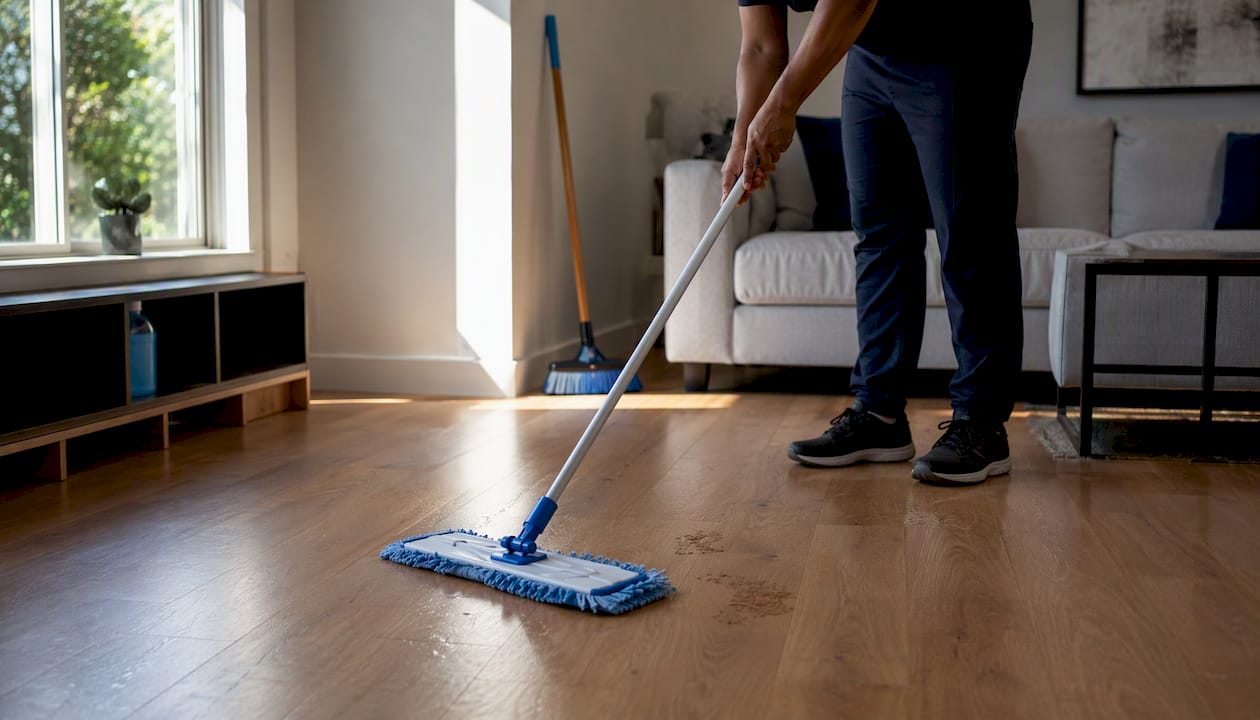
Hardwood floors: use a microfibre mop and a hardwood-specific cleaner. Avoid excess water, which can cause warping. Never use a steam mop on unsealed timber.
Stone and granite bench tops: use a pH-neutral cleaner only. Acidic products like vinegar or citrus-based sprays can etch the surface permanently.
Delicate finishes (brushed nickel, matte black tapware): wipe with a damp microfibre cloth and dry immediately. Avoid abrasive pads.
Pro Tip: Pay particular attention to the oven, rangehood filters, and carpets. These three items appear on almost every agent's re-clean request list. If you are short on time or unsure about the standard required, these are the areas worth outsourcing.
Carpet, oven, and specialist cleans: what you need to know
Professional cleaning is not always mandatory, but it is often the smartest move. Agents across Australia routinely accept evidence of a professional clean, plus timestamped photos, as sufficient proof that an area has been returned to its original condition.
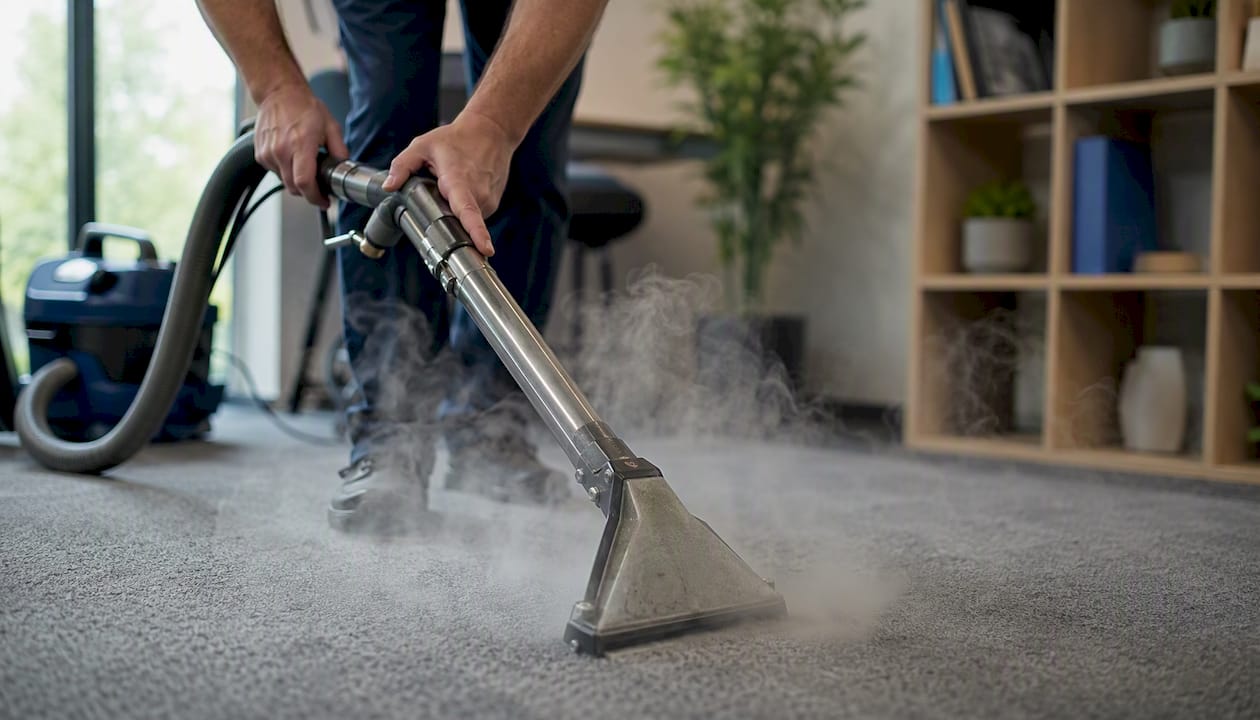
Ovens and carpets are the most commonly disputed items at exit inspections, and a poorly cleaned oven or stained carpet is the fastest way to lose part of your bond. An itemised receipt from a licensed operator protects you even if the agent raises concerns later.
What to check on a carpet cleaning receipt:
- Date of service and property address
- Scope of work (which rooms, square metreage or room count)
- Operator's name and ABN
- Whether a re-clean window is included (48–72 hours is standard with reputable operators)
Typical professional cleans and whether they are usually separate costs:
- Oven deep clean — almost always a separate add-on; get a standalone receipt
- Carpet steam cleaning — separate line item; confirm whether it includes stain treatment
- Pest and flea treatment — separate specialist service; required by many leases where pets were kept
- Window cleaning (external, multi-storey) — separate service; confirm whether your lease requires it
State expectations vary. In Queensland, the RTA guidance focuses on returning the property to its original condition rather than mandating specific services. In NSW, Service NSW provides the official bond claim process and forms. Always check your own state's rules.
Pro Tip: Ask your cleaner to photograph the oven and carpets before and after the clean, and to provide those images with the receipt. A written scope plus before-and-after photos is the strongest possible evidence if the agent later disputes the standard of work.
How to handle the final inspection and avoid disputes
The final walkthrough is where bonds are won or lost. Being present, being prepared, and having your documentation in order makes a significant difference.
Before the inspection
- Complete all cleaning and have professional receipts in hand.
- Print or have digital access to your Entry Condition Report.
- Charge your phone so you can photograph anything the agent raises.
During the inspection
- Walk through every room with the agent and compare the current condition directly with the Entry Condition Report.
- If the agent flags an item, photograph it immediately (wide shot, then close-up, with a label if possible — "oven door", "bathroom grout").
- Ask the agent to note any concerns in writing on the Exit Condition Report before you leave.
- Request a short re-clean window in writing if any item is flagged — most agents will allow 24–48 hours for minor items.
Documenting the handover
WA Consumer Protection notes that property condition reports are the primary evidence in bond disputes, and this principle applies across all Australian states. Your Exit Condition Report, compared against your Entry Condition Report, is the document that matters most.
How to photograph problem areas:
- Take a wide shot of the whole room or area.
- Take a close-up of the specific item or mark.
- Add a label or note in your phone's photo app identifying the location.
- Check the timestamp is visible and correct.
Pro Tip: If a dispute arises after handover, a combination of your Entry Condition Report, Exit Condition Report, dated photos, and professional receipts is the strongest evidence you can present to a tribunal. Legal Aid Victoria recommends seeking free tenancy advice early if you anticipate a bond deduction dispute.
What does a professional bond clean cost in Australia?
Costs vary by property size, location, and the inclusions in the quote. The figures below are typical ranges rather than fixed prices — always get an itemised written quote.
Typical cost ranges:
- Bond clean (standard 2-bedroom unit): roughly $250–$450, depending on condition and location
- Bond clean (3–4 bedroom house): roughly $380–$650
- Oven deep clean (add-on): roughly $60–$120
- Carpet steam clean (per room): roughly $35–$70 per room, with most operators offering a whole-home rate
- Pest/flea treatment: roughly $150–$300 depending on property size
Regional variation is real. Canberra and Sydney tend to sit at the higher end; regional areas are generally lower. Residential cleaning standards also differ between property managers, which affects what a quote needs to cover.
When does hiring a professional make more sense than DIY?
- The property is large or has been lived in for several years
- You have limited time between your move-out date and the final inspection
- The lease specifies professional cleaning for carpets or pest treatment
- You have mobility limitations or health concerns
- The property has a history of strict inspections or a demanding agent
DIY vs. professional: a quick comparison
| Factor | DIY | Professional |
|---|---|---|
| Cost | Lower upfront | Higher, but receipt is evidence |
| Time | Significant | Minimal for the tenant |
| Evidence quality | Photos only | Receipt + photos + re-clean window |
| Risk of re-clean request | Higher | Lower with a reputable operator |
If you hire a professional, confirm the following in writing before they start: scope (room by room), oven and carpet inclusions, re-clean policy, and whether they provide photographic proof on completion. Understanding how cleaning quotes work before you compare operators saves time and prevents scope surprises.
Eco-friendly products and safety advice for common tasks
Choosing the right product matters as much as using it correctly. The wrong cleaner on the wrong surface can cause damage that costs you part of your bond.
Kitchen and bathroom
- Use a low-fume, biodegradable degreaser on bench tops, stovetops, and rangehoods. Products like Purity or Earth Choice are widely available at Australian supermarkets and are effective without harsh fumes.
- For grout and mould, a hydrogen peroxide-based spray is effective and far less aggressive than bleach on grout lines.
- Microfibre cloths outperform paper towels on glass and mirrors — they leave no lint and require less product.
Oven cleaning safety
Always ventilate the kitchen when using oven cleaner — open windows and run the rangehood. Wear gloves and avoid mixing products: combining bleach and ammonia-based cleaners produces toxic fumes. Fume-free oven gels are a safer choice in enclosed spaces and work well overnight.
- Apply oven cleaner the night before your clean day and wipe out residue in the morning.
- Never use steel wool on oven glass — it scratches permanently.
Eco alternatives that work
- White vinegar diluted 1:1 with water is effective on windows and mirrors (avoid on stone surfaces).
- Bicarbonate of soda paste removes light oven grime and is safe on most surfaces.
- Microfibre mops on hard floors reduce the need for chemical floor cleaners entirely.
Mould and pest concerns
If you find significant mould (larger than a 30 cm patch, or in the ceiling), notify your agent in writing before the clean. Mould caused by structural issues is generally the landlord's responsibility under most state tenancy laws. Surface mould from condensation is typically the tenant's responsibility to clean.
For pest treatment, arrange a licensed operator and keep the certificate. Many leases specify this as a condition of vacating, particularly where pets were kept.
What agents actually flag at inspections
Most bond disputes come down to the same handful of items, and they are almost always avoidable.
The feedback property managers give most often centres on four areas: oven grease, carpet stains, dirty window tracks, and gardens left untidy. None of these are difficult to address — they just require attention before the inspection, not after.
Agents are not looking for perfection. They are comparing the property's current state to the Entry Condition Report, as NSW Fair Trading guidance makes clear. A scuff on a skirting board that was there when you moved in is not your problem — but only if it is documented in that original report.
The tenants who avoid disputes are almost always the ones who were present at the inspection, had their receipts ready, and asked the agent to note any concerns in writing on the day. A verbal "looks fine" from an agent is not the same as a signed Exit Condition Report. Get it in writing.
The other thing that resolves disputes faster than anything else is matching the Entry Condition Report precisely. If the report noted the oven was clean at entry, the oven needs to be clean at exit. If it noted the carpets were professionally cleaned, a receipt for steam cleaning at exit is your best defence. The symmetry between entry and exit is what tribunals look for.
Prefer to leave it to a local professional?
Cleaning a property to bond standard is genuinely time-consuming, and the stakes are high. ACT Cleaning by Demand offers end of lease cleaning in Canberra and the ACT with police-checked staff, eco-friendly products, and no lock-in contracts.
What's included in a standard end of lease clean:
- Full room-by-room clean covering kitchen, bathrooms, bedrooms, and living areas
- Oven deep clean and rangehood degreasing (available as add-ons)
- Carpet steam cleaning (available as an add-on)
- Skirting boards, light fittings, windows, and window tracks
- Itemised receipt and photographic evidence provided on completion
Every booking is backed by a re-clean policy: if the agent flags a specific item, the team returns to address it. You can view custom package options or book directly through the website. Get a written quote, confirm the scope matches your agent's expectations, and hand over the keys with confidence.
Sources
These are the official and industry resources worth bookmarking before your final inspection. Download condition report forms and bond claim paperwork from your state's portal before you need them.
State and territory tenancy authorities
Industry checklist reference
What to download before your inspection
For a practical overview of preparing a rental property for inspection, the property management perspective is worth reading alongside your tenancy authority's guidance — it shows exactly what agents are looking for when they walk through.
This article provides general information for Australian renters. Tenancy laws and bond procedures vary by state and territory. Confirm current rules with your state tenancy authority or a qualified tenancy adviser before taking action.
Recommended
- End of Lease Cleaning – ACT Cleaning by Demand
- Custom cleaning service packages for every Canberra home – ACT Cleaning by Demand
- Domestic cleaning explained: the Canberra homeowner’s guide – ACT Cleaning by Demand
- How to retain commercial cleaning clients and boost satisfaction – ACT Cleaning by Demand