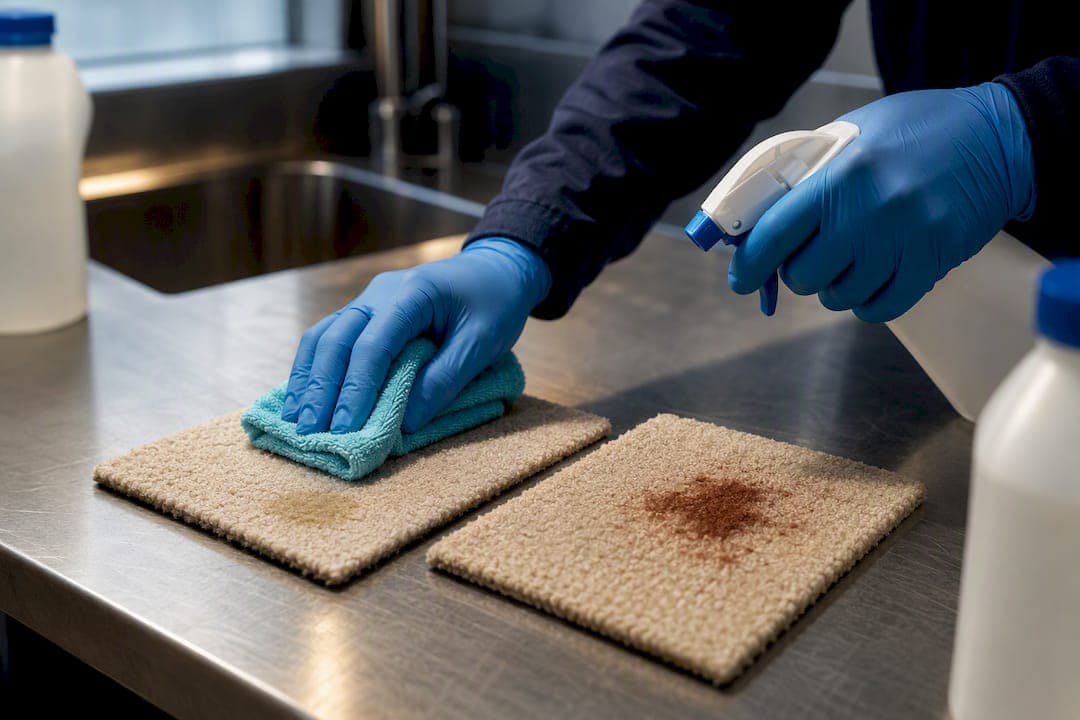
Use an enzyme cleaner for organic stains and odours like pet urine, food, and blood, especially on carpets, upholstery, and mattresses. Use bleach when you need to disinfect a hard surface or kill visible mould on tile or grout. Never mix the two products or use them back to back without rinsing, since bleach destroys the enzymes and can react dangerously with other cleaning chemicals.
TL;DR:
- Enzyme cleaners target organic stains and odors by breaking down proteins, fats, and starches, and require time and moisture to work effectively.
- Bleach kills bacteria and viruses on contact on non-porous surfaces but does not penetrate below the surface or reach deep roots of mold, fungi, or stains.
- Combining bleach with enzyme cleaners or acids produces dangerous gases or destroys enzyme activity, so they must be applied separately with thorough rinsing and ventilation.
- For pet urine or blood stains, enzymes reach deep into porous materials to neutralize odors, while bleach can only lighten visible stains and may worsen underlying odor issues.
- Professional cleaning is recommended for deep-seated stains and mold, especially in large or delicate jobs, as DIY treatments often mask problems rather than fully resolve them.
Table of Contents
- Enzyme cleaner vs bleach: how each one actually works
- Which cleaner wins for pet stains, blood, mould, and fabric?
- Why you should never mix bleach and enzyme cleaners
- How to choose between enzyme cleaner and bleach for your job
- What the research actually says about enzyme cleaner and bleach
- What most homeowners get wrong about stain removal
- When DIY isn't enough, here's what we can do instead
- Sources
- FAQ
Enzyme cleaner vs bleach: how each one actually works
Enzyme cleaners rely on proteins that break down specific organic molecules. Protease targets proteins in blood and food, lipase breaks down fats and oils, and amylase digests starches. These enzymes need moisture, a moderate temperature, and time to work properly, which is why a five-minute spray-and-wipe rarely finishes the job. Most enzymatic products need at least 60°C (What is an enzyme cleaner? How they work) or below to stay active, since heat above that point deactivates the proteins doing the work.
Bleach works completely differently. Sodium hypochlorite oxidises cell walls and proteins on contact, which is why it kills bacteria and viruses fast on hard, non-porous surfaces. That same oxidising action is what makes it useless once the two products meet.
- Enzymes digest the actual source of the smell, not just the smell itself
- Bleach kills microbes on the surface it touches, but does nothing to material trapped below
The practical difference: enzymes work slowly and go deep into porous material. Bleach works fast but stays on the surface, and it will inactivate an enzyme cleaner stone dead if the two ever touch.
Which cleaner wins for pet stains, blood, mould, and fabric?
Every stain has its own chemistry, and picking the wrong product wastes both time and money.
- Pet urine. Enzymes reach into carpet padding and neutralise the uric acid crystals that cause the smell to return with humidity. Bleach might lighten the visible mark but doesn't affect the odour source underneath, and can leave a bleached patch on top of a stain that keeps smelling over time.
- Blood and food stains. These are protein and fat based, which is exactly what protease and lipase are built for. On hard surfaces where speed matters more than depth, an oxidising cleaner can be a reasonable alternative to enzymes.
- Mildew and mould. Bleach kills surface growth on tile, grout, and other non-porous surfaces reasonably well. On porous material like grout haze, drywall, or timber, it often fails to reach the root network, and regrowth within a short period is common. Large infestations usually need specialist remediation rather than a bottle from under the sink.
- Fabrics and upholstery. Enzymes are the safer default for coloured or delicate textiles. Bleach's oxidising action can strip dye and weaken fibres, particularly on anything that's been through a few wash cycles already.
Pro Tip: Always test any cleaner on a hidden patch of fabric or grout first, and give enzyme cleaners a full dwell time of at least 15 to 20 minutes before blotting, since rushing the process is the single biggest reason people think enzyme cleaners "don't work".
Why you should never mix bleach and enzyme cleaners
Some chemical combinations in a laundry cupboard can genuinely put you in hospital, and this is where the enzyme cleaner vs bleach question stops being about stain removal and starts being about safety.
- Bleach plus ammonia produces toxic chloramine gas
- Bleach plus acidic cleaners (including some toilet bowl cleaners) produces chlorine gas
- Bleach plus enzyme cleaner doesn't produce a gas, but it does destroy the enzyme proteins on contact, wasting the product entirely
Queensland Health is blunt on this point: bleach should only ever be diluted with plain water, never combined with another cleaning product. If you've treated a stain with an enzyme cleaner and want to disinfect the same spot afterwards, rinse the area thoroughly with water first, let it dry, then apply bleach separately.
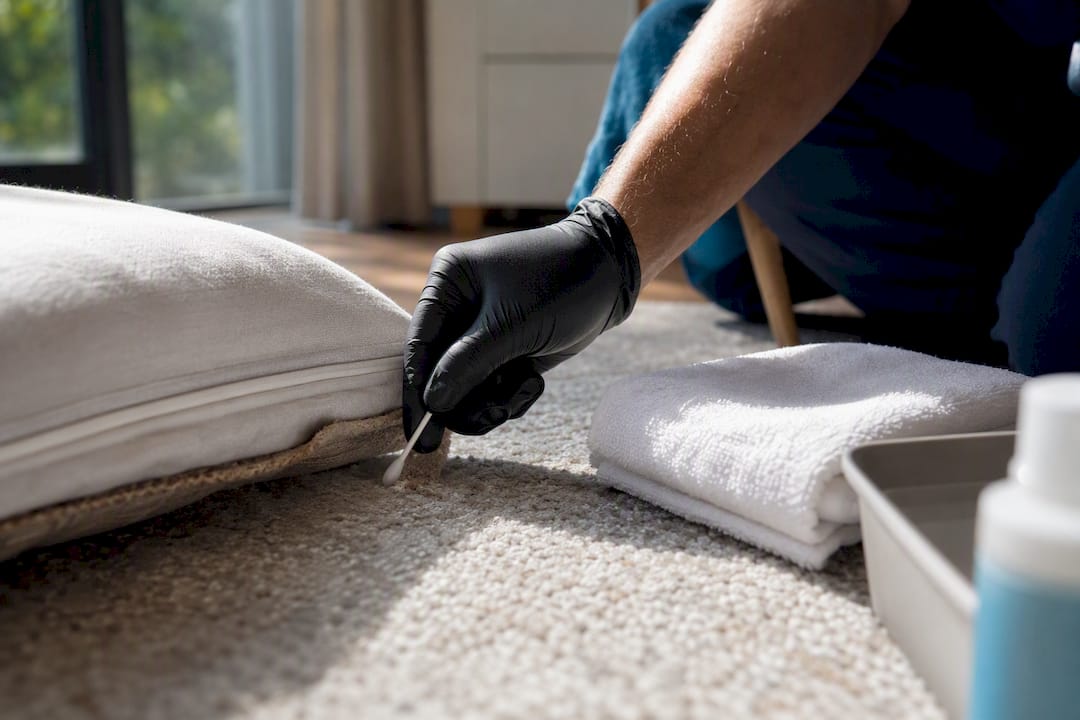
Ventilate the room, wear gloves, and keep bleach off carpet, wool, silk, and anything with colour you care about. A quick patch test on an inside seam or offcut takes thirty seconds and saves a ruined cushion cover.
How to choose between enzyme cleaner and bleach for your job
Work out what you're actually dealing with before you reach for either bottle. Is the problem a smell or stain with a biological source, or is it germs and visible mould on a hard surface? That single question decides which chemistry you need.
A basic application plan looks like this:
- Blot or scrape away excess material first
- Test the product on a hidden area
- Apply enough enzyme cleaner or bleach to saturate the spot, not just mist it
- Hold dwell time (check the label, but 10 to 20 minutes is typical for enzymes)
- Rinse or blot dry
- Disinfect afterwards with bleach only if the surface is hard and non-porous, and only once it's dry
Call in professionals when urine has soaked deep into carpet padding or subfloor, when you're dealing with antique or delicate textiles, or when mould covers more than about a square metre. At that point, DIY treatment usually just masks the problem rather than solving it.
What the research actually says about enzyme cleaner and bleach
Deng, editor at ACT Cleaning by Demand, has drawn these recommendations from established cleaning science rather than guesswork, and it's worth reading our breakdown of why professional cleaners use certain chemicals for the fuller picture.
The research consensus is fairly consistent:
- Enzymes don't disinfect, full stop. They remove the organic food source for odour and bacteria, but they don't kill pathogens the way a disinfectant does
- Consumer testing backs enzymes for bio-based stains and rates oxidisers as a solid alternative on hard surfaces
- Enzyme products are generally biodegradable, which matters if you're trying to keep a septic system healthy or reduce chemical runoff
What most homeowners get wrong about stain removal
The mistake we see most often is bleach on carpet, either straight from the bottle or diluted "just in case." It doesn't just bleach the fibres. It also seals in odour-causing bacteria under a false clean smell, so the problem resurfaces within days. The second mistake is layering cleaners, hoping a stronger mix will finish the job faster. It won't. If urine has soaked into padding or mould has spread across more than a small patch, a technician with proper extraction equipment will get further in twenty minutes than a full bottle of anything will in a weekend.
— Deng
When DIY isn't enough, here's what we can do instead
Professional cleaning services can be a practical alternative when a stain, odour, or mould patch has gone past what a bottle from the supermarket can fix. We offer carpet cleaning with proper hot water extraction for pet urine that's soaked into padding, targeted odour removal, and end-of-lease cleans that catch the stains and marks landlords actually check for.

Every job starts with an inspection so you know exactly what you're paying to fix, followed by a recommended treatment plan using eco-friendly products where they'll do the job properly. Our team is police-checked, insured, and works with no lock-in contracts, backed by a 100% satisfaction guarantee. If you've got a stain that's outlasted three different cleaners already, book a carpet clean or end-of-lease service through our online scheduling and get it sorted properly the first time.
Sources
- Household cleaning products: bleach, ammonia and safe use | Queensland Health
- Best enzyme cleaners and oxidisers for pet stains and odours | Consumer Reports
- Enzyme cleaners vs disinfectants: odor control guide | WC Safety
- What is an enzyme cleaner? How they work | Enzyme Cleaners
FAQ
Is white vinegar an enzymatic cleaner?
No. White vinegar is a mild acid that can help lift some odours and mineral deposits, but it contains no enzymes and won't break down proteins or fats the way protease and lipase do. It's also risky to combine with bleach, since acid plus bleach produces chlorine gas.
What should you never mix with an enzyme cleaner?
Never mix an enzyme cleaner with bleach or any other oxidising cleaner, since oxidisers destroy the enzyme proteins on contact and waste the product. Hot water or steam applied straight after can also deactivate the enzymes before they finish working.
What's a substitute for enzyme cleaner?
An oxidising cleaner such as a hydrogen peroxide based product can work as a faster alternative on hard, non-porous surfaces where speed matters more than reaching deep into a material. For carpet padding, upholstery, or anything absorbent, there's no real substitute for an enzyme's ability to work at depth.
What are examples of enzymatic cleaners?
Enzymatic cleaners typically list protease, lipase, and amylase on the label, often alongside live bacterial cultures that keep feeding the enzymes over time. They're commonly sold as pet stain and odour removers, laundry pre-treatments, and septic-safe drain cleaners.
How much does professional stain removal cost?
Pricing depends on the size of the job and the type of stain or odour involved, so current rates are available directly through our services page rather than a flat quote here.