A single-room tidy-up in Australia typically runs $500 to $2,000, a standard multi-room hoarding clean sits between $2,000 and $15,000, and severe biohazard jobs with structural damage or contamination can climb to $20,000 to $50,000 or more. Most jobs land somewhere in the middle, and the only way to know your number is an onsite assessment or a detailed photo and video walk-through.
What that range covers:
- Light tidy-up: one to two rooms, minimal odour or pest issues, no structural damage.
- Standard multi-room clean: several rooms or a full house, moderate clutter, some sanitisation needed.
- Severe biohazard job: contamination, pest infestation, structural repairs, and licensed hazardous waste disposal.
Book an onsite assessment or send through photos and a short video. It's the fastest way to get a number you can actually plan around.
Key Takeaways
Hoarding cleanup costs in Australia typically range from $500 for light jobs to $25,000 or more for extreme biohazard cases, with severity and disposal volume driving most of the difference.
| Point | Details |
|---|---|
| Know your price band | Light jobs run $500–$2,000, standard clears $2,000–$15,000, extreme biohazard cases can reach $25,000+. |
| Biohazard adds real cost | Certified contamination handling can add $1,000–$4,000 or more on top of a standard clean. |
| Location shifts pricing | Sydney metro carries a 15–25% premium over regional rates; ACT sits closer to regional pricing. |
| Insist on itemised quotes | Ask for labour, disposal, and biohazard costs broken out separately, plus disposal receipts. |
| Book a specialist assessment | Com provides onsite assessments, itemised quotes, and police-checked staff for ACT hoarding jobs. |
Table of Contents
- What does hoarding cleanup cost in Australia?
- What drives the price up or down?
- How does the cleanup process actually work?
- How do you get an accurate quote?
- What do real hoarding cleanup jobs cost?
- Why hire a hoarding specialist instead of a standard cleaner?
- What payment and contract terms should you expect?
- Does insurance cover hoarding cleanup?
- What hidden fees should you watch for?
- Does location change the price?
- A compassionate approach to a costly problem
- How ACT Cleaning by Demand can help
- Sources
- FAQ
What does hoarding cleanup cost in Australia?
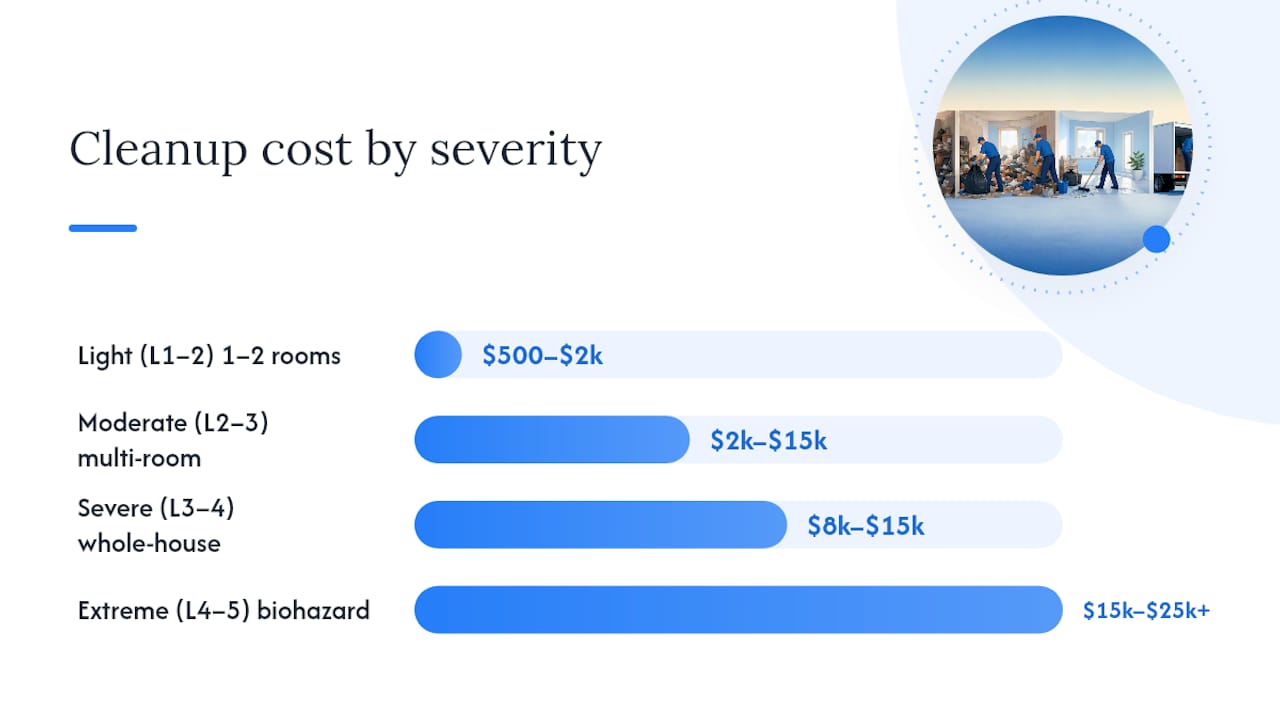
Providers typically grade jobs on a severity scale, often called Level 1 through Level 5, and price accordingly. A Level 1 job (light clutter, no odour, no biohazard risk) can start from around $500. By Level 5, where you're dealing with animal waste, mould, structural rot, or biohazard material, totals can reach $25,000 or beyond.
For everyday budgeting, a useful baseline is the per-visit rate many Australian cleaners quote for hoarder-level work: roughly $120 to $1,400 per visit, depending on scope, access and how many visits the job needs. A full-property clean usually needs multiple visits or a multi-day crew booking rather than a single session.
| Severity band | Typical cost range | What's usually included |
|---|---|---|
| Light (Level 1–2) | $500–$2,000 | One to two rooms, general sorting, standard rubbish removal, light clean |
| Moderate (Level 2–3) | $2,000–$15,000 | Multi-room clutter, some odour control, deep clean, several truckloads |
| Severe (Level 3–4) | $8,000–$15,000 | Whole-house accumulation, pest evidence, sanitisation, minor repairs |
| Extreme/biohazard (Level 4–5) | $15,000–$25,000+ | Structural damage, contamination, licensed hazardous waste removal, major repairs |
A two-bedroom unit with moderate clutter and no biohazard concerns will usually sit in the moderate band. A full house with animal waste, black mould, or years of undisturbed accumulation pushes straight into the severe or extreme category, and that's before any structural repairs get added to the invoice.
What drives the price up or down?
Severity is the biggest lever, but it's rarely the only one. A handful of factors combine to produce your final number, and understanding them helps you read a quote properly instead of just looking at the bottom line.
- Level of accumulation: more volume means more sorting hours, more truckloads, more disposal fees.
- Property size and layout: a five-bedroom house with a shed and garage costs more to clear than a one-bedroom flat, purely on square metreage.
- Access and logistics: stairs, narrow driveways, no parking near the loading zone, or a long carry distance to the truck all add labour time. Sending photos or a short video walk-through before the quote helps providers price access issues accurately instead of guessing.
- Disposal volume and tipping fees: every truckload costs money to haul and to tip, and regional tipping fees vary.
- Biohazard contamination: bodily fluids, mould, or vermin waste require certified handling and can add $1,000 to $4,000 on top of a standard clean.
- Pest or animal issues: infestations often need separate pest control before or during the cleanup.
- Repairs or demolition: water damage, rotted flooring, or compromised drywall add trade costs.
- Timing and urgency: a rushed job, weekend booking, or tight settlement deadline usually carries a premium.
- Regional labour rates: metro areas charge differently to regional towns, which we'll cover shortly.
Most providers charge one of three ways: per crew-hour (commonly $75 to $150 an hour for a two to three person team), per truckload ($400 to $800 each), or per square metre for very large or straightforward jobs. Smaller, quick jobs tend to use hourly rates; large accumulation jobs usually move to truckload or flat project pricing once the scope is clear.
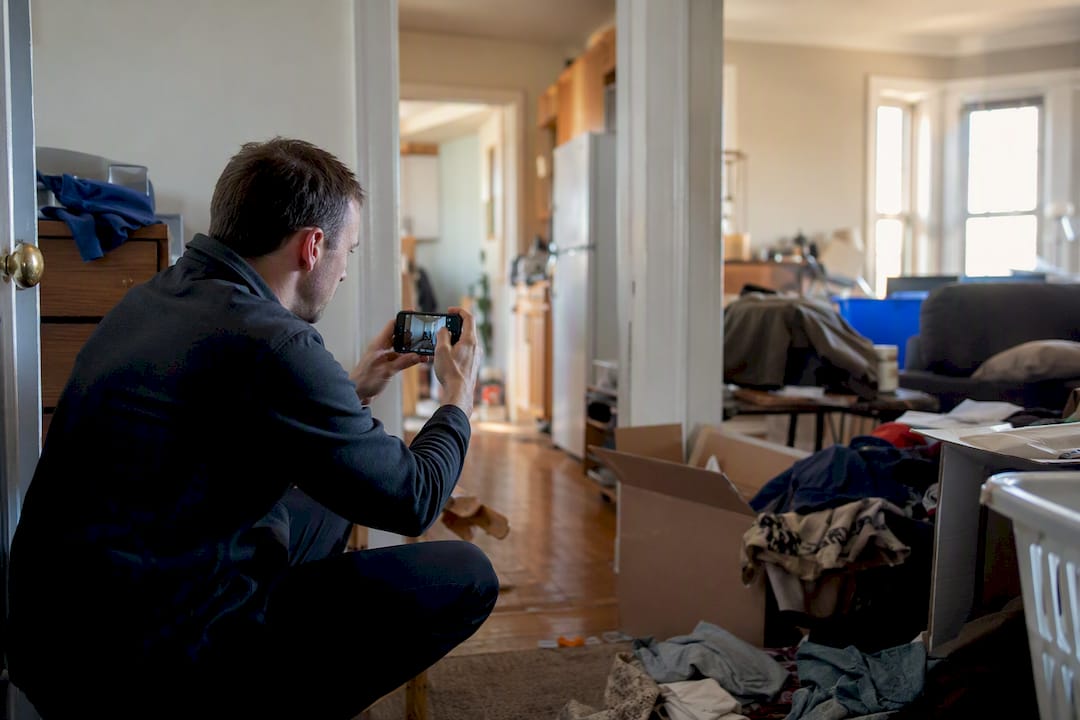
Pro Tip: Take photos of every room, including cupboards, garages, and sheds, before you call for a quote. A visual walk-through cuts down on the "surprise" charges that show up once a crew actually opens a wardrobe you forgot to mention.
How does the cleanup process actually work?
Most jobs follow a similar sequence, whether it's a single room or a whole property.
- Initial contact and assessment — you describe the situation, send photos or book an onsite visit, and get a scoped estimate.
- Sorting and client direction — items get separated into keep, donate, and dispose, usually with the homeowner or family involved in key decisions.
- Removal and hauling — sorted items go out via truckload, with recyclables and donations separated where possible.
- Deep clean and sanitisation — surfaces, carpets, and fixtures get cleaned, and any biohazard areas are decontaminated.
- Repairs or remediation — flooring, walls, or fixtures damaged by long-term accumulation get addressed if needed.
- Final walkthrough — you inspect the finished property against the agreed scope before signing off.
Timelines scale with severity, not just square metreage:
| Severity | Typical duration | Typical crew size |
|---|---|---|
| Light | Half a day to one day | 1–2 people |
| Moderate | One to three days | 2–3 people |
| Severe | Three to seven days | 3–4 people |
| Extreme/biohazard | One to three weeks | 4+ people, often with specialist contractors |
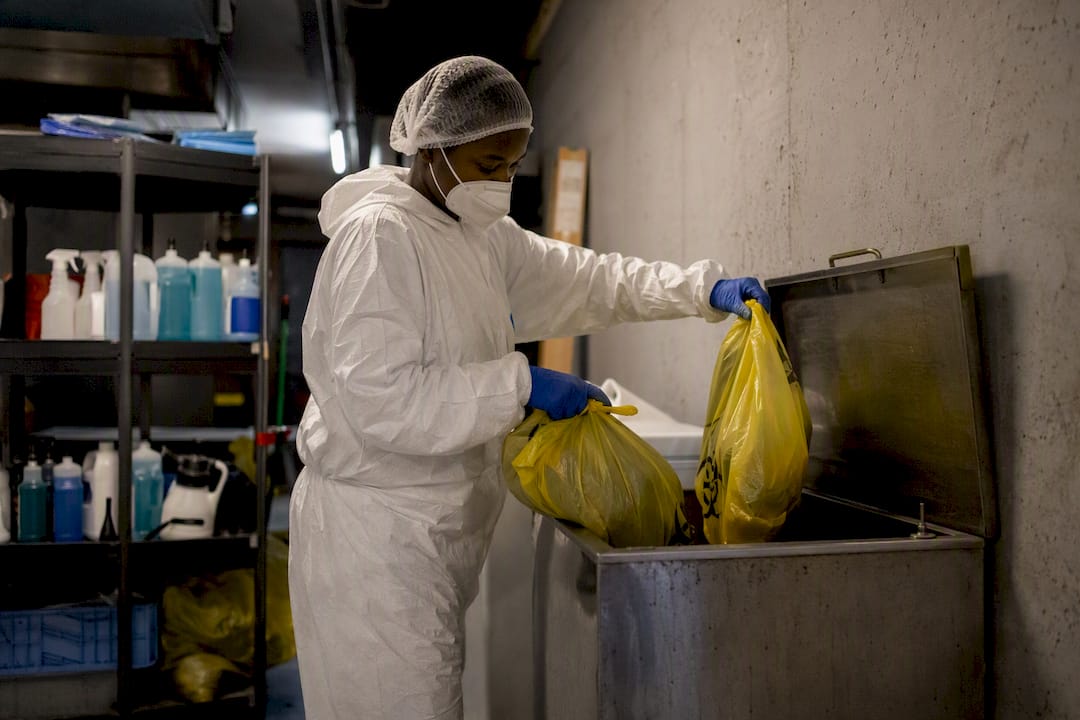
Contaminated sites need proper biohazard cleanup and containment. That means PPE for the crew, sealed disposal bags for hazardous material, and licensed waste transport for anything classified as biohazard, not just a regular skip bin pickup.
How do you get an accurate quote?
Providers assess jobs three main ways: an onsite visit, photos or video sent ahead of time, or a virtual walkthrough over video call. Onsite inspection gives the most accurate final price because an assessor can see access constraints, hidden damage, and contamination levels that photos often miss.
When an assessor walks through, they're checking for:
- Visible contamination or odour sources
- Rooms that are fully blocked or inaccessible
- Signs of pests or vermin
- Structural issues (water damage, rot, unstable flooring)
- Estimated number of truckloads needed
- Access constraints (stairs, distance to parking, narrow hallways)
- Parking and loading zone availability
- Any hazardous materials (chemicals, sharps, biological waste)
Before you accept any quote, ask the provider these questions:
- Is the quote itemised by labour, materials, and disposal, or is it one lump figure?
- Does the price include biohazard handling, or is that a separate line item?
- What's the estimated tipping and disposal fee, and is it capped or variable?
- Are staff certified for biohazard or infection control work, and is the company insured?
- Will you provide disposal receipts once the job's done?
- What are the payment terms and cancellation policy?
Understanding how cleaning quotes are typically structured makes it much easier to compare two providers fairly, rather than just picking the lowest number on the page.
Watch for red flags: a vague lump-sum quote with no breakdown, no mention of disposal receipts, or a provider willing to quote a firm price without ever seeing the property or footage of it. Those are the quotes most likely to blow out once the crew actually arrives.
What do real hoarding cleanup jobs cost?
Numbers make more sense with context, so here are four rough scenarios based on typical Australian pricing.
- Light one-room tidy: a single cluttered bedroom, no odour, half-day job with two people. Roughly $500 to $1,200. Biggest price mover: whether furniture needs disposal or just repositioning.
- Standard two to three room clean: moderate clutter across a small unit, two days, one truckload. Roughly $2,500 to $6,000. Biggest mover: number of truckloads.
- Severe multi-room job with pests: whole house, mild pest evidence, some odour, four to five days, three to four truckloads. Roughly $10,000 to $16,000. Biggest mover: pest treatment plus extra labour hours.
- Extreme biohazard job: heavy contamination, structural repairs, licensed hazardous disposal. One real-world example saw a professional cleaner quote $17,000 to clear an entire heavily hoarded property.
Why hire a hoarding specialist instead of a standard cleaner?
Standard house cleaners aren't trained or equipped for biohazard-level contamination, and using one for a severe hoarding job can be a genuine safety risk. Specialist teams work under infection-control protocols, use PPE and containment barriers, and follow licensed disposal procedures for anything classified as hazardous waste. Industry practitioners generally advise against booking a standard cleaning company once contamination or complex logistics are involved, because the training gap shows up fast on site.
There's also a human side to this work. Restoration specialists point out that the real goal isn't just an empty room. It's a staged, compassionate process that protects the wellbeing of the person living there as much as it protects the structure of the house itself.
When you're comparing providers, ask for:
- Biohazard or infection-control training (IICRC or equivalent)
- Current insurance and police-checked staff
- Itemised quotes broken down by labour, disposal, and materials
- Disposal receipts confirming EPA-compliant waste handling
- Documented protocols for contamination or biohazard scenarios
Pro Tip: If NDIS or council involvement is part of your situation, ask upfront whether the provider has experience working within those frameworks. Not every cleaning company understands the reporting or consent processes involved.
What payment and contract terms should you expect?
Most Australian hoarding cleanup providers work on a deposit-plus-balance structure: a percentage upfront to lock in the booking, with the remainder due on completion or at agreed milestones for multi-day jobs. Larger extreme-level jobs sometimes split payment across stages, such as after removal, after deep clean, and after repairs.
Card payments, bank transfer, and sometimes cash are the norm, and reputable providers will always give you a written receipt. Be wary of any company asking for full payment upfront before any work has started, particularly on a job worth several thousand dollars.
Contracts for smaller jobs are often informal, a written quote accepted by email or text is usually enough. Larger projects, especially those involving repairs or biohazard remediation, tend to come with a proper written agreement outlining scope, timeline, and what happens if the job's scope changes once work begins (for example, if a wall turns out to have water damage behind it).
Look for a no lock-in contract arrangement where possible. Ongoing or recurring cleaning relationships, such as follow-up maintenance cleans after the initial hoarding job, shouldn't require you to sign away months of commitment if your circumstances change.
Cancellation terms vary. Ask specifically what happens if you need to reschedule, and whether the deposit is refundable if the provider hasn't started sourcing materials or booking a skip bin yet.
Does insurance cover hoarding cleanup?
Insurance coverage for hoarding cleanup is patchy, and it's one of the areas people get wrong most often. Standard home and contents insurance generally does not cover the cost of decluttering or general hoarding cleanup itself, because insurers treat hoarding as a lifestyle or behavioural issue rather than a sudden, insurable event.
Where insurance can help is when hoarding has caused a secondary, insurable problem. If years of clutter led to a burst pipe going unnoticed and causing water damage, or a pest infestation damaged structural timber, the resulting repair work may be covered even if the original cleanup isn't. Fire damage claims sometimes fall into a similar category, where the cleanup tied directly to fire and smoke remediation is covered, but the pre-existing clutter removal is billed separately.
If a hoarding situation involved a workplace, a rental property, or NDIS-supported accommodation, different coverage rules can apply through landlord insurance, workers' compensation frameworks, or NDIS plan funding for environmental modifications. It's worth checking your specific policy wording and, where relevant, speaking with your insurer before the job starts rather than after, since retrospective claims for cleanup work are rarely straightforward.
What hidden fees should you watch for?
The advertised price on a quote rarely tells the whole story unless it's genuinely itemised. Labour and disposal fees together usually make up the bulk of the invoice, with labour averaging $1,200 to $3,000 and hauling or dumpster fees running several hundred to around two thousand dollars depending on volume.
Common hidden fees include:
- Tipping fees that vary by council area: some tips charge more for mixed waste versus sorted recyclables.
- Hazardous material surcharges: anything classified as biohazard, asbestos, or chemical waste attracts specialist disposal pricing well above standard rubbish rates.
- Additional truckloads: quotes based on an initial estimate can blow out if the actual volume is higher once sorting begins.
- Access surcharges: long carry distances or no parking near the property sometimes get added after the crew arrives, if it wasn't assessed properly upfront.
- Storage or processing fees: if items need to be held temporarily for the client to review before disposal.
Ask for a written, itemised quote that separates labour, disposal, materials, and any biohazard surcharge before you sign anything. That's the single best defence against a bill that's meaningfully higher than what you were told at the start.
Does location change the price?
Yes, and the gap can be significant. Metro areas like Sydney typically carry a 15% to 25% premium on labour and disposal costs compared to regional towns, driven by higher tipping fees, traffic-related time costs, and higher base labour rates.
In the ACT and surrounding NSW regions, pricing tends to sit closer to regional rates than Sydney metro rates, which is good news for Canberra homeowners. That said, jobs in outer regional areas can sometimes carry a travel surcharge instead of a metro premium, since crews may need to travel further to reach the property. If you're in a smaller town without a local specialist provider, factor in that a callout fee or travel charge might apply on top of the standard quote.
Always ask a provider whether their quote reflects local tipping and labour rates for your specific suburb or region, rather than a generic national average. A quote built on Sydney disposal fees won't necessarily reflect what you'd pay in Canberra or a regional NSW town.
A compassionate approach to a costly problem
Hoarding cleanup is rarely just a financial decision. It's usually tied to a person's wellbeing, a family relationship, or a genuinely difficult moment. The most useful thing you can do is get a proper, staged, itemised quote and an onsite assessment before committing to anything, because that's what protects both your budget and the person at the centre of the situation.
If you're the one coordinating this for a parent or relative, balance the numbers against their comfort and safety, not just the lowest bid on the table.
How ACT Cleaning by Demand can help
If you're in Canberra or the ACT and facing a hoarding situation, you don't need to sort through five different providers to find one that understands both the practical and the personal side of this work. Com offers onsite assessments, itemised quotes broken into labour, materials, and disposal, and police-checked staff who use eco-friendly products throughout the job.

Our teams are equipped to handle biohazard-adjacent situations with the same care we bring to standard residential cleans, and every quote is built from what we actually see on site, not a generic estimate. We also handle the follow-up work many hoarding jobs need, including end-of-lease standard cleans if the property is being sold or handed back to a landlord.
If you're local to the Inner South, you can book an onsite assessment through our Inner South service page and get a proper, itemised quote before you commit to anything. No lock-in contracts, no vague lump-sum pricing, just a clear plan for getting the property back to a liveable, safe standard.
Sources
- Hoarding Cleanup Cost Calculator — 2026 Severity & Biohazard Pricing | UseCalcPro
- Hoarding Clean Up Cost: Price Ranges, Factors, and How to Budget 2026 – Current Cost
- Hoarding Cleanup Cost NSW 2026 - Get Free Quotes | The Quote Yard
- I'm a professional cleaner - this is how much it costs ... - Kidspot
FAQ
How much does a hoarder clean cost?
Most Australian hoarding cleanups cost between $2,000 and $15,000, though light one-room jobs can start around $500 and extreme biohazard cases can exceed $25,000.
Should you clean up a hoarder's home yourself?
DIY cleanup can work for very light clutter, but anything involving pests, mould, structural damage, or biohazard material is safer left to a specialist team with proper PPE and licensed disposal access.
How much do cleaners charge per hour in Australia?
Hoarding-trained crews typically charge $75 to $150 per hour for a two to three person team, though most jobs move to truckload or project-based pricing once the scope is clear.
How much does two hours of cleaning cost?
Two hours from a standard crew typically falls within the $75 to $150 per hour range, but hoarding-level jobs rarely fit into a short session since sorting and disposal take considerably longer.
Does Com handle hoarding cleanup in Canberra?
Yes, Com offers onsite assessments and itemised quotes for hoarding-related cleaning across the ACT, with police-checked staff and eco-friendly products used throughout the job.
Recommended
- How cleaning quotes work for Australian homeowners – ACT Cleaning by Demand
- Domestic cleaning explained: the Canberra homeowner’s guide – ACT Cleaning by Demand
- Custom cleaning service packages for every Canberra home – ACT Cleaning by Demand
- Why commercial cleaning invoicing is complex – ACT Cleaning by Demand