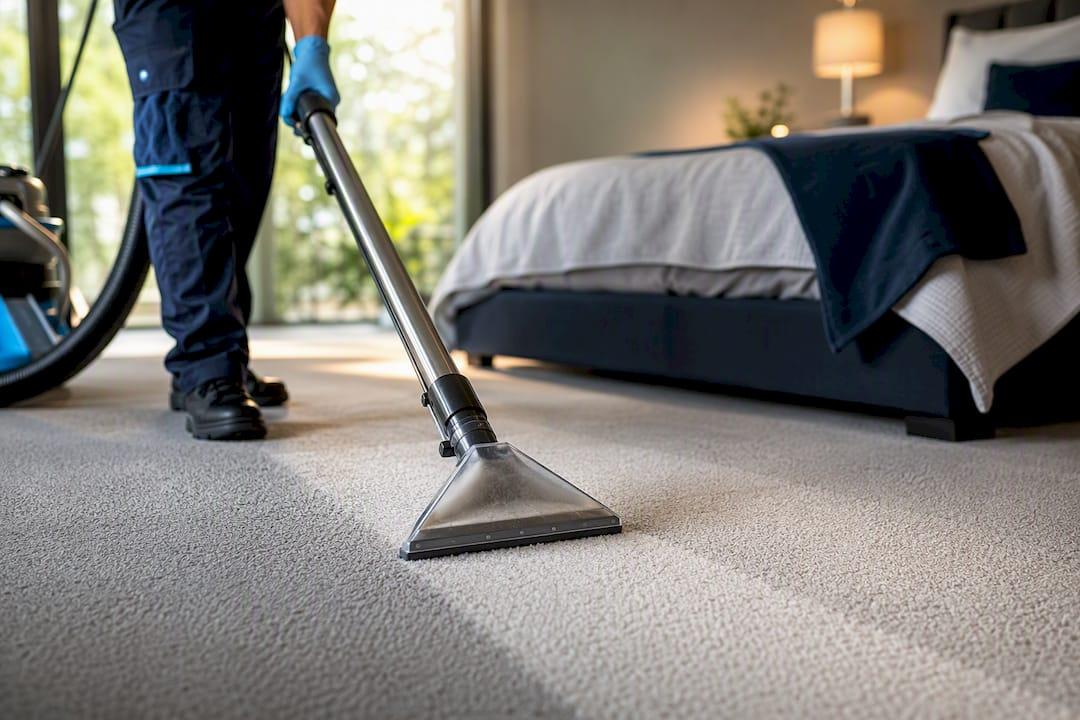
Hot water extraction is the deep-clean method most carpet manufacturers and the Carpet and Rug Institute recommend for household carpets, because it flushes out embedded soil and allergens that vacuuming alone can't reach. It suits most synthetic and blended carpets, drying in a few hours depending on equipment and airflow. Delicate wool or natural-fibre rugs, and homes with heavy staining or moisture-sensitive subfloors, are usually better handled by a professional than a rented machine.
TL;DR:
- Hot water extraction removes deep-seated allergens, pet dander, and old detergent residues effectively only when the full process, including vacuuming and preconditioning, is properly followed.
- Using professional-grade equipment with higher heat and stronger vacuum lift significantly shortens drying times and improves soil removal compared to DIY rental machines.
- Natural fiber carpets, moisture-sensitive subfloors, and heavily stained or heavily soiled carpets may require specialized treatment or professional assessment before cleaning.
- Regular vacuuming, pre-treatment, and drying with air movers help maintain carpets between professional deep cleans, which should typically be done every 6 to 12 months.
- For households with pets, kids, or high foot traffic, professional hot water extraction provides the most thorough cleaning, while wool rugs and moisture-sensitive floors usually need lower-moisture methods.
Table of Contents
- What is hot water extraction and how does it actually work?
- What does hot water extraction remove, and what results should you expect?
- When should you avoid hot water extraction?
- DIY rental versus professional service: what actually changes?
- Getting the best result: preparation, drying and upkeep
- When I'd actually recommend hot water extraction
- Book a professional hot water extraction with Com
- Sources
- FAQ
What is hot water extraction and how does it actually work?
Hot water extraction, often called steam cleaning even though no steam is genuinely involved, injects heated water and a cleaning solution into the carpet pile, then immediately pulls it back out with a vacuum, taking dissolved soil with it. The mechanics differ from true vapour steam cleaning, which uses low moisture and no liquid injection. Understanding the sequence explains why skipping a step ruins the result.
- Vacuum first. Dry-soil removal via thorough vacuuming pulls out most of the grit sitting in the pile before any liquid touches it. Skip this and you're just pushing sand around with hot water.
- Pre-spray and precondition. A cleaning agent goes down first, working with heat and light agitation over a dwell time of several minutes to loosen ground-in oils and soil so the extraction pass can lift them cleanly.
- Inject and extract. A wand forces hot water in and immediately draws it back out under vacuum. Truck-mounted units typically run hotter and pull stronger vacuum than portable rentals, which means faster drying and better soil recovery.
- Neutralise, groom and dry. A pH-balancing rinse stops sticky detergent residue from attracting new dirt, then the pile gets groomed upright and left to dry with air movers or open windows doing the heavy lifting.
Following this sequence is what separates a genuine deep clean from a machine pass that just leaves carpet damp and no cleaner underneath.
What does hot water extraction remove, and what results should you expect?
Done properly, hot water extraction lifts contaminants that sit well below what a vacuum head can reach: dust mites and their waste, pet dander, pollen trapped in the pile, and the sticky detergent residue left behind by earlier cleanings or bargain carpet shampoos.
- Dust mite allergens and skin flakes bound into carpet fibres
- Pet dander, hair and odour-causing residue
- Pollen and other airborne particulates tracked in and settled deep in the pile
- Old detergent build-up from previous cleans, which otherwise keeps attracting new dirt
Statistic snapshot: Independent testing and industry guidance show hot water extraction removes allergens effectively when the full process (vacuum, precondition, extract, dry) is followed correctly, which is why manufacturers tie warranty upkeep to periodic professional extraction rather than a one-off clean.
Heavily soiled carpet or carpet that hasn't been deep cleaned in years may need two passes to get back to a genuinely clean state. A single visit on carpet in reasonable condition, by contrast, usually restores colour and texture in one go. Set expectations around your carpet's actual history rather than assuming every job looks the same.
When should you avoid hot water extraction?
Hot water extraction isn't the right call for every carpet or every situation, and knowing the exceptions saves you from a costly mistake.
- Wool and other natural fibres can shrink, bleed dye or brown if the water is too hot or the cleaning solution's pH is wrong. These need low-moisture or fibre-specific treatments instead.
- Floating floors and moisture-sensitive subfloors underneath carpet can warp or grow mould if excess water seeps through.
- Underpowered rental machines with weak vacuum lift often leave carpet over-wet, which invites mould, odour and faster re-soiling as detergent residue attracts new dirt.
- Tight turnaround situations, like a rental inspection the next morning, favour low-moisture encapsulation cleaning over a method that needs hours to dry.
Pro Tip: Check the manufacturer's care label or ask your installer about fibre type before booking any wet cleaning method. A five-minute check can save you a very expensive carpet.
DIY rental versus professional service: what actually changes?
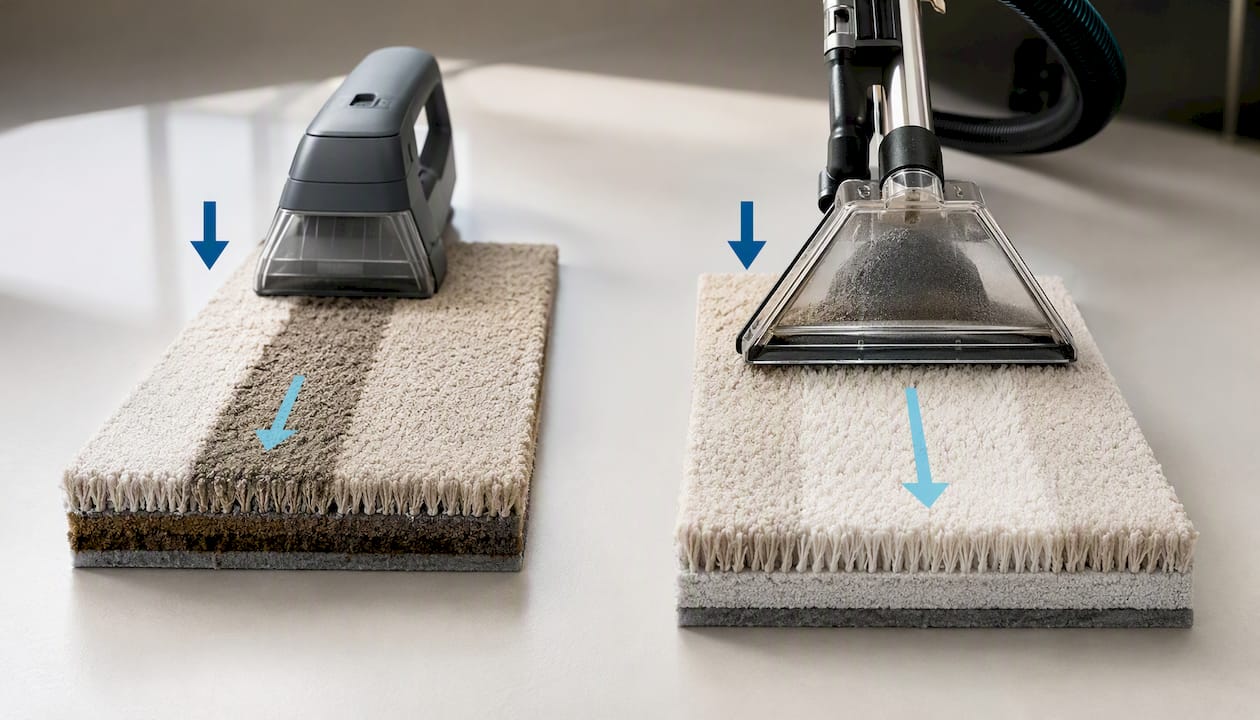
The gap between a supermarket rental machine and a professional truck-mounted unit comes down to three things: heat, pressure and vacuum lift. Professional gear commonly runs at wand temperatures around 82°C or higher for residential jobs, with stronger suction that pulls more moisture back out in the same pass. That directly shortens drying time and improves how much soil actually leaves the carpet rather than just getting redistributed.
If you're going the DIY route, a few things determine whether it works or backfires:
- Vacuum thoroughly first, every square inch, not just the visible walkways.
- Use the correct chemical dilution. Too strong leaves sticky residue; too weak barely cleans anything.
- Run at least two extraction passes, one with solution and one rinse pass with plain hot water.
- Get airflow moving straight after, because rental units generally lack the vacuum lift to pull enough moisture out on their own.
Rental machines suit light, interim cleaning between deeper treatments rather than replacing periodic professional visits. Pricing for professional hot water extraction varies with carpet area, soiling level and whether pet treatment or stain protection is added, so get a specific quote rather than assuming a flat rate. Professional service is strongly worth it for pet-contaminated carpet, warranty-mandated cleaning, or carpet that hasn't seen a deep clean in years, where a portable rental simply won't generate enough heat or lift to finish the job properly.
Getting the best result: preparation, drying and upkeep
A little prep before the technician arrives makes a real difference to the outcome. Vacuum any loose debris, move small furniture and breakables out of the room, and point out specific stains so they get pre-treated rather than just run over with the wand.
- Clear pathways and lift fragile items off the floor before the appointment
- Open windows or run the air conditioner during drying to help moisture escape faster
- Position a fan or air mover across damp patches if drying stretches past a few hours
- Vacuum weekly between professional cleans, and book a full extraction roughly every 6 to 12 months depending on foot traffic and pets
Technicians follow this same preparation and drying standard on every job, using eco-friendly cleaning agents that skip the harsh residues cheaper products leave behind.
When I'd actually recommend hot water extraction
For households with pets, kids or heavy daily traffic, hot water extraction is the method I'd point to first. It handles ground-in soil and allergens that spot cleaning never touches. Where I'd pump the brakes: wool rugs, moisture-sensitive subfloors, or a tight turnaround before an inspection. Check your carpet manufacturer's guidance and ask any technician what temperature and vacuum lift their machine actually runs.
— Deng
Book a professional hot water extraction with Com
A professional service offers the alternative to renting a machine and hoping for the best: a crew running proper heat and vacuum lift, using eco-friendly chemistry that's safe around kids and pets without leaving sticky residue behind.

A typical booking covers an inspection of your carpet and any problem stains, pre-spray and preconditioning, hot water injection and extraction, neutralising and grooming, and a post-clean check before the crew leaves. It's the same process covered above, done with commercial-grade equipment rather than a supermarket rental. If your carpet clean is part of a bigger job, Com's house cleaning service folds extraction into a full clean, and if you're moving out, the end of lease cleaning package includes carpet extraction to the standard most agents expect. Check availability for your suburb and get a quote before your next deep clean is due.
Sources
- The Carpet and Rug Institute publishes new carpet cleaning standards
- Hot water extraction — Wikipedia
FAQ
Is hot water extraction good for carpet?
Yes, for most synthetic and blended carpets it's the method the Carpet and Rug Institute recommends for a genuine deep clean, provided vacuuming and preconditioning happen first.
Is a heated carpet extractor worth it?
Yes. Higher wand temperature loosens soil and kills more allergens than a cold-water pass, and it also speeds up drying because hotter water evaporates faster once extracted.
How do you get water out of carpet after cleaning?
Run air movers or fans across the wet area, open windows or run the air conditioner, and avoid walking on damp carpet until it's dry, which typically takes 2 to 8 hours depending on equipment and airflow.
Is chem-dry better than hot water extraction?
Low-moisture methods dry faster and suit moisture-sensitive situations, but they don't flush soil out the way hot water extraction does, which is why the industry treats extraction as the standard periodic deep clean rather than a replacement for it.