Getting a cleaning quote should be simple. You describe your home, someone gives you a number, and you book. But many Australian homeowners and tenants find themselves surprised by final invoices that look nothing like the original figure. Understanding how cleaning business quoting works puts you back in control, helps you ask the right questions, and means you can compare quotes from different providers without accidentally choosing the wrong one for all the wrong reasons.
Table of Contents
- Why cleaning quotes vary and what affects pricing
- How cleaning businesses prepare and itemise their quotes
- Comparing cleaning quotes like-for-like for better decisions
- How to get reliable quotes and avoid common pitfalls
- Pricing approaches used by cleaning businesses in Australia
- Why understanding quote details matters more than chasing the cheapest price
- Get a clear, detailed quote for your cleaning needs today
- Frequently asked questions
Key Takeaways
| Point | Details |
|---|---|
| Quotes vary by scope and assumptions | Cleaning quotes differ mainly due to labour time, access, timing, and material supply assumptions within the scope. |
| Look for detailed itemised quotes | An itemised quote with clear tasks, pricing breakdown, and terms helps avoid misunderstandings. |
| Compare like-for-like scope | Compare quotes by matching inclusions, exclusions, and variation rules, not just total cost. |
| Avoid vague or message-only quotes | Quotes without written scope and terms often lead to surprise charges and disputes. |
| Understand pricing models | Cleaning services use hourly, flat-rate, or per-square-foot pricing depending on job type and frequency. |
Why cleaning quotes vary and what affects pricing
Two neighbours on the same street, with homes of identical size, can receive quotes that differ by hundreds of dollars. That is not necessarily a sign that one cleaner is dishonest. It usually means their quoting assumptions are different.
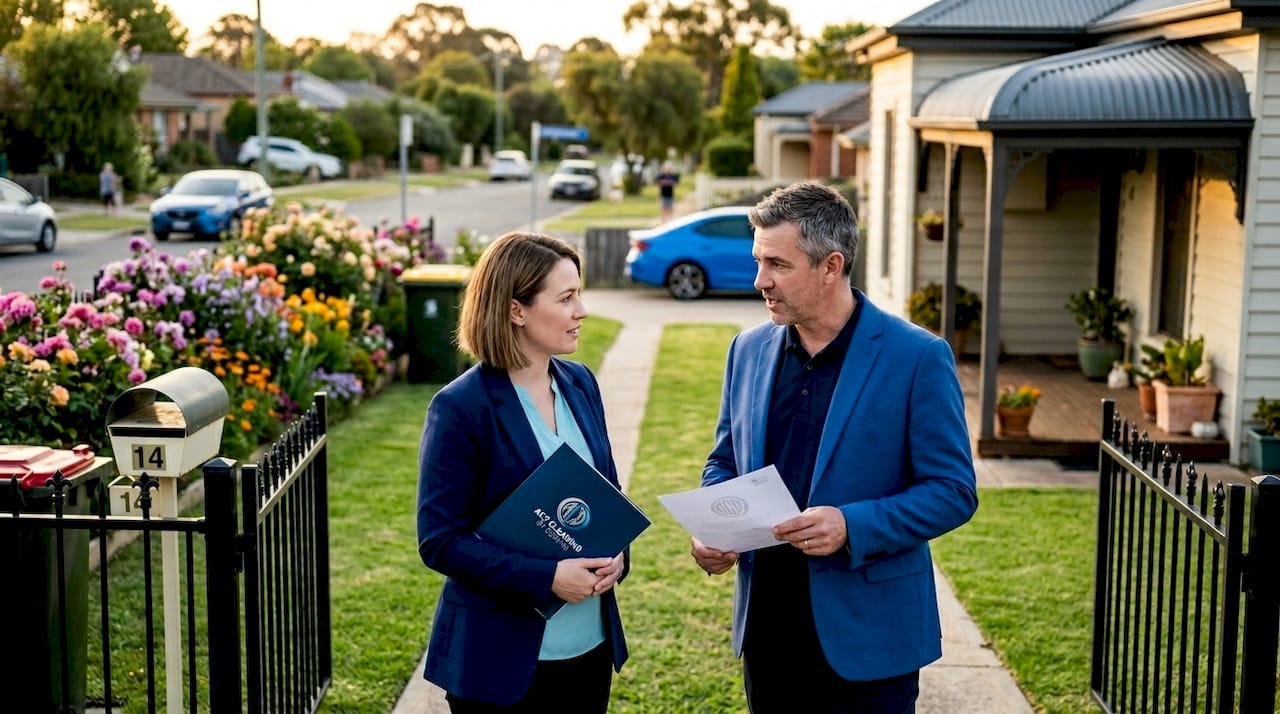
The final cost is driven by labour-time assumptions tied to access, timing, and material supply. A ground-floor apartment that takes ten minutes to access is genuinely faster to service than a multi-level home with tight stairwells and locked service areas. Cleaners price what they expect to encounter, and those expectations are built from experience.
Key factors that affect cleaning service pricing include:
- Property size and layout: More rooms, more time. Complicated layouts or split-level designs add labour.
- Current condition: A home cleaned weekly costs far less to maintain than one receiving its first proper clean in two years.
- Access and parking: No on-site parking means travel time adds up. Restricted site access extends the job.
- Timing and urgency: Same-day bookings or weekend slots typically attract a premium.
- Materials supplied: Some cleaners include their products and equipment in the quote; others charge separately or expect you to supply your own.
- Scope complexity: Standard vacuuming is fast. Deep cleaning floors with grout scrubbing, moving furniture, or treating stains is a different job entirely.
To give you a realistic sense of the range, here is how typical residential cleaning costs break down in Australia:
| Cleaning type | Approximate price range | Typical job duration |
|---|---|---|
| Standard house clean | $120 to $300 | 2 to 4 hours |
| Deep clean (thorough) | $300 to $700 | 4 to 8 hours |
| End of lease clean | $350 to $900 | 4 to 10 hours |
| Post-construction clean | $500 to $1,400 | 6 to 12+ hours |
These ranges reflect how much scope and condition can shift the price. For a fuller picture of what house cleaning pricing typically covers, it helps to look at the specific tasks included rather than just the total figure.
Pro Tip: Always ask whether materials and products are included in the quoted price. A quote that looks cheaper may jump once consumables are added separately.
How cleaning businesses prepare and itemise their quotes
Knowing what drives price variation, you can now look more critically at the quotes you receive. A quote is more than a number; it is a document that sets expectations for both sides.
A well-prepared cleaning quote itemises tasks, pricing, access requirements, and assumptions to minimise disputes. When you receive a quote that is just a dollar figure via text message, you have no way to know what is included, what is excluded, or what happens if the job takes longer than expected.
A trustworthy cleaning quote should include:
- A clear task list specifying every area to be cleaned and the standard expected
- Separate line items for labour and materials (or a clear statement that they are bundled)
- Stated assumptions about parking, access, and how long the job is expected to take
- Variation rules explaining what triggers additional charges and by how much
- Cancellation and rescheduling terms
- A quote expiry date (most quotes are valid for 14 to 30 days)
- Acceptance criteria, meaning what counts as a completed and satisfactory job
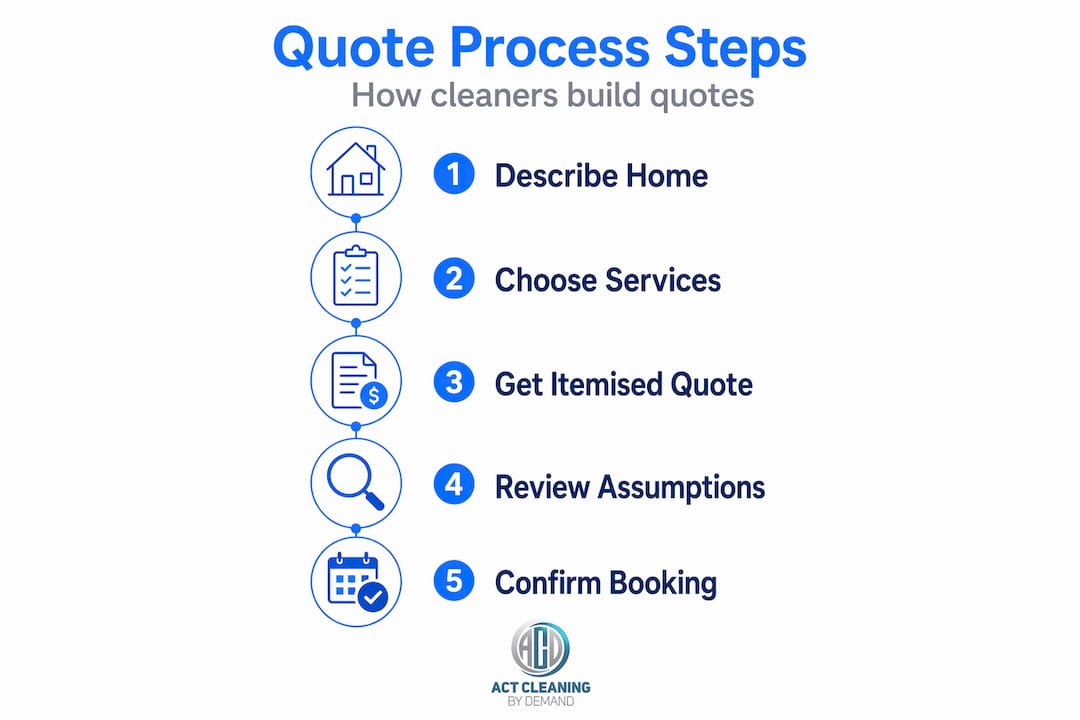
Here is the order in which a professional cleaner typically builds a quote:
- Gather property details (size, number of rooms, condition, any special requirements)
- Estimate labour hours based on those details
- Factor in materials, travel, parking, and any time-of-day loading
- Apply their pricing model (hourly, flat rate, or per area)
- List inclusions and exclusions clearly
- Add terms for variations, cancellations, and rework
- Deliver the written quote with a validity period
Detailed areas like bathroom cleaning or kitchen cleaning often attract their own line items because they are time-intensive and condition-dependent. If a quote groups everything into a single figure, ask the provider to break it down.
Pro Tip: Request that every assumption be written into the quote. If the cleaner assumes parking is available, that should be stated. If it turns out parking costs $30, you want that variation process documented before the job starts.
Comparing cleaning quotes like-for-like for better decisions
Receiving three quotes and picking the middle one is a common approach. It is also a surprisingly unreliable way to choose. Comparing quotes at the scope level instead of raw price avoids surprises by ensuring matching labour, materials, and variation terms.
The real question is not "which quote is cheapest?" but "which quotes are actually offering the same thing?"
Use a scope comparison table when evaluating multiple quotes:
| Scope element | Quote A | Quote B | Quote C |
|---|---|---|---|
| Task list provided | Yes | No | Yes |
| Labour and materials separated | Yes | Bundled | Yes |
| Variation policy stated | Yes | No | No |
| Rework or guarantee policy | Yes | No | Yes |
| Cancellation terms | Clear | Vague | Clear |
| Acceptance criteria | Yes | No | Partial |
Quote B in that table might be the cheapest on paper. But without a task list or variation policy, you have no protection if the cleaner decides the job was more complex than expected and charges more on the day.
When comparing quotes, check that each one:
- Specifies which rooms and surfaces are included
- States whether bedroom cleaning scope covers wardrobes, skirting boards, and window tracks or just the floor and surfaces
- Notes whether outdoor areas like garden cleaning or balconies are in or out
- Explains what triggers an additional charge and how that charge is calculated
- Confirms the person quoting is the one actually doing the work (or supervising it)
Pro Tip: Get a minimum of two written quotes before committing, and three if the job is large or complex. One quote gives you no reference point; three gives you a real picture of the market.
How to get reliable quotes and avoid common pitfalls
Understanding what good quotes look like makes it easier to spot the ones that will cause problems. Quotes received only by message with no written scope or terms commonly lead to surprise final invoices and dissatisfaction.
Steps to getting a reliable cleaning quote:
- Describe your property in writing before you request the quote, including size, condition, and any specific requirements
- Ask for the quote in writing, not by phone or text summary
- Confirm that inclusions, exclusions, and variation policies are all documented
- Request proof of public liability insurance before agreeing to anything
- Ask how the provider handles dissatisfaction and what their rework policy is
Red flags to watch for in a cleaning quote:
- Price given verbally with nothing in writing
- Large upfront deposit required before any work is confirmed
- No mention of what is excluded from the scope
- Vague descriptions like "full clean" without a task list
- No variation policy explaining how extra charges are applied
- No insurance mentioned or provided on request
A quote for window cleaning services should specify which windows are included, whether inside and outside surfaces are covered, and what happens if some windows are inaccessible. If that detail is missing, the quote is incomplete regardless of how attractive the price looks.
Pro Tip: Before signing any quote, ask "what would cause this price to change?" The answer tells you more about the provider's transparency than the quote document itself.
Pricing approaches used by cleaning businesses in Australia
Every quote is built on an underlying pricing model. Understanding which model a cleaner uses helps you interpret their quote accurately and budget with confidence.
Australian house cleaners commonly charge around $40 to $60 per hour for contractor-level work, with typical residential jobs lasting around two hours. That said, many residential cleaners present their quotes as flat rates because clients find it easier to budget without worrying about the clock.
Commercial cleaning pricing models include per-square-metre, hourly, and flat-rate contract pricing, chosen based on scope predictability and frequency. Residential quoting tends to follow similar logic, with the model selected based on how predictable the job is.
| Pricing model | Best suited to | Typical use case |
|---|---|---|
| Hourly rate | Variable or unpredictable scope | One-off cleans, post-event cleans |
| Flat rate | Predictable recurring scope | Fortnightly house cleans |
| Per square metre | Large or commercial spaces | Office or warehouse cleaning |
What to know about each pricing model:
- Hourly rate: You pay for actual time spent. Good for honest, transparent billing but harder to budget. Ask for an estimated total range.
- Flat rate: Easy to budget but relies on the scope being accurately defined upfront. Any out-of-scope work should trigger a written variation.
- Per square metre: Mainly commercial but occasionally used for large residential properties or presale cleans. Confirm whether communal areas and outdoor spaces are included in the measured area.
Some cleaners bundle their products into the price; others itemise them separately. Neither approach is inherently better, but you need to know which applies to understand what you are actually comparing between quotes. Visit ACT Cleaning by Demand to see how residential and commercial cleaning models are structured in practice.
Pro Tip: For recurring cleans, ask for a flat-rate quote with a clearly documented scope. It protects you from bill creep and gives the cleaner a clear target for each visit.
Why understanding quote details matters more than chasing the cheapest price
Here is the part most comparison guides skip: the lowest quote is not a bargain if the scope is undefined.
After years of working with homeowners and tenants across Canberra and the surrounding region, the pattern is consistent. Disputes rarely start because a cleaner charged too much. They start because the client and the cleaner had different ideas about what the job included, and nobody wrote it down.
A quote with a detailed task list, clear variation terms, and a rework policy is not just a price document. It is a record of mutual understanding. When something is missed or questioned after the job, that document is what resolves the conversation quickly and professionally, rather than turning it into an argument.
Choosing quality house cleaning based on quote clarity rather than headline price also tends to attract providers who care about consistency. A cleaner who takes the time to quote properly is usually the same cleaner who takes the time to do the work properly.
There is also a risk-management dimension that homeowners rarely think about. If a cleaner damages something in your home during a job, you want them to carry public liability insurance and you want a written scope proving they were engaged for that specific work. A quote given by text with no written terms leaves you in a genuinely difficult position if something goes wrong.
The transparent quoting process is not bureaucracy. It is how professional cleaning businesses manage risk for themselves and for you.
Get a clear, detailed quote for your cleaning needs today
Now that you know what separates a trustworthy quote from a vague one, you can apply that knowledge directly. Ask for written scope, confirm inclusions and exclusions, and make sure variation and rework policies are on paper before you agree to anything.
ACT Cleaning by Demand provides detailed, written quotes across a full range of residential and commercial cleaning services in Canberra and the ACT. Whether you need house cleaning services, are preparing for a move with end of lease cleaning, or require regular office cleaning services, every quote includes a clear task list, transparent pricing, and terms you can understand before you commit. Reach out today to request your quote and experience the difference that professional quoting makes.
Frequently asked questions
What should I expect to see in a professional cleaning quote?
A professional cleaning quote includes a detailed task list, pricing separated by labour and materials, assumptions on access and timing, and clear variation and cancellation policies. A good quote is itemised with detailed tasks, a pricing summary, and documented exclusions.
Why do cleaning quotes for similar homes differ so much?
Quotes differ mainly due to variations in labour time assumptions, site access, materials supplied, urgency, and how well the scope is defined. The final cost is driven by labour-time assumptions influenced by access, timing, and material supply.
How can I compare cleaning quotes effectively?
Compare quotes by their detailed scope, labour, materials, exclusions, and variation terms to ensure you are comparing similar service offerings rather than just the total fees. Quote comparisons done at the scope level rather than total price avoids the most common surprises.
Is it safe to accept quotes given only in messages without formal scopes?
No. Receiving a quote without a written scope, inclusions, exclusions, or variation terms often leads to misunderstandings and unexpected charges. Quotes given only by message with no written scope or terms commonly lead to surprises at the final invoice.
What pricing models do Australian cleaners use?
Australian cleaning businesses use hourly rates around $40 to $60 per hour, flat rates for recurring jobs, and per-square-metre pricing mainly for commercial contracts. Commercial cleaning businesses use per-square-foot, hourly, or flat-rate contract pricing based on scope predictability.