Most homes need a deep clean roughly two to four times a year. That single rule covers the majority of Australian households, but three factors will push you toward the shorter end of that range:
- Pets (especially dogs and cats that shed or spend time indoors)
- Young children or infants (higher germ load, more mess on floors and upholstery)
- Allergies or respiratory conditions (dust mites, mould spores, and pet dander accumulate faster than most people realise)
If none of those apply, a deep clean twice a year is a reasonable baseline. If two or more apply, quarterly is the smarter call. Pick your cadence now, then use the room-by-room checklist below to turn it into a plan you can actually follow.
Key takeaways
Most homes need a deep clean every 3–6 months, with quarterly cleaning recommended for households with pets, young children, or allergy sufferers.
| Point | Details |
|---|---|
| Baseline cadence | Deep clean every 3–6 months; quarterly for pets, kids, or allergy households. |
| Kitchen and bathroom first | These rooms accumulate grease, mould, and bacteria fastest — prioritise them every deep clean. |
| Use the 20/10 method | 20 minutes of focused work plus a 10-minute break makes deep-clean tasks manageable without a full-day commitment. |
| Hire a pro for specialist jobs | End-of-lease, post-renovation, carpet steam, and mould remediation are better handled by a professional. |
| ACT Cleaning by Demand | Police-checked, eco-friendly deep cleaning across Canberra and the ACT, with no lock-in contracts. |
Table of Contents
- What counts as a deep clean — and what doesn't?
- How often should you deep clean your house?
- Room-by-room deep clean checklist
- Signs you need a deep clean sooner than planned
- How to fit deep cleaning into your regular routine
- When should you hire a professional deep cleaner in Australia?
- How to choose a reliable deep-cleaning provider in Australia
- What supplies do you need for a deep clean?
- What Canberra homes get wrong about deep cleaning
- Professional deep cleaning in Canberra and the ACT
- Sources
What counts as a deep clean — and what doesn't?
Regular cleaning keeps a home liveable. Deep cleaning keeps it genuinely healthy. The distinction matters because people often spend a Saturday doing what they think is a deep clean and still miss the tasks that actually drive dust, mould, and bacteria buildup.
Routine cleaning covers the daily and weekly jobs: wiping benchtops, washing dishes, vacuuming high-traffic areas, mopping hard floors, and scrubbing the toilet bowl. These tasks maintain the surface layer.
A deep clean goes further. It targets the spots that rarely get touched: grout lines, the inside of the oven, behind and under appliances, rangehood filters, window tracks, skirting boards, extractor fans, and the inside of cupboards. It also includes upholstery, mattresses, curtains, and the seals around your fridge and dishwasher.
Two examples that make the difference obvious:
-
Routine: wiping down cabinet fronts with a damp cloth
-
Deep clean: emptying every cupboard, washing the shelves, and checking for expired products or pest activity
-
Routine: vacuuming the lounge room floor
-
Deep clean: moving the sofa, vacuuming underneath and behind it, then cleaning the upholstery fabric
Understanding why residential cleaning standards differ helps you see which tasks belong in which category, so you're not burning time on deep-clean days doing jobs that belong in your weekly routine.
How often should you deep clean your house?
Most houses benefit from two to four deep cleans per year, roughly every 3–6 months. The right cadence depends on who lives there and how the home is used.
Three baseline schedules
Deep cleaning every few months is best for homes with pets, young children, allergy sufferers, or high foot traffic. A solid weekly routine is still assumed; the quarterly deep clean handles what routine maintenance can't reach. Many professional cleaners recommend this cadence precisely because buildup in kitchens, bathrooms, and soft furnishings compounds quickly without it.
For a two-person household with no pets, no significant health concerns, and a consistent weekly cleaning habit, a periodic schedule several times a year is common. This is the most common schedule for working couples and empty nesters.
Annual deep cleans are suitable only for very small homes, single occupants with minimal cooking, or holiday properties used infrequently. An annual deep clean is a floor, not a goal.
Adjusting for your household
| Household profile | Recommended cadence |
|---|---|
| Single adult, no pets, consistent weekly cleaning | Every 6 months |
| Couple, no pets, regular routine | Every 4–6 months |
| Family with one or more pets | Every 3 months |
| Household with toddlers or infants | Every 3 months |
| Allergy or asthma sufferers | Every 3 months |
| Large home (4+ bedrooms), high foot traffic | Every 3–4 months |
| Holiday rental or Airbnb property | After every extended stay |
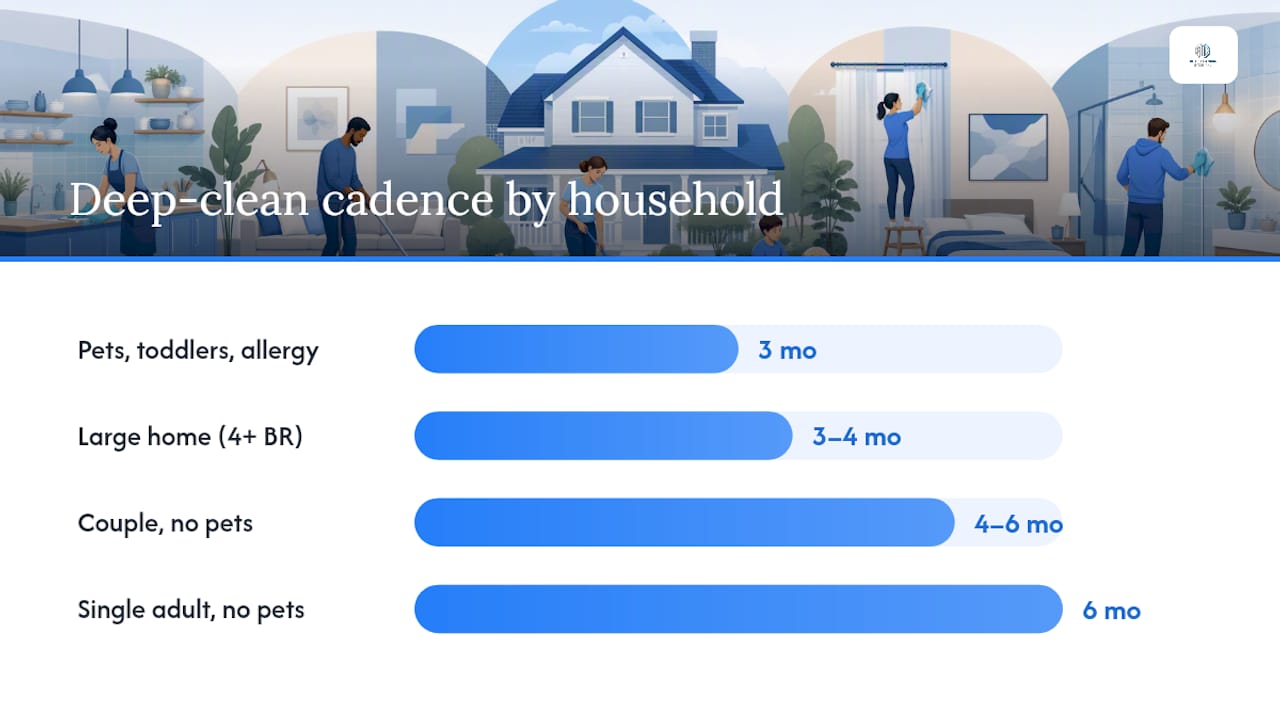
For many households, once or twice a year is sufficient when the weekly routine is genuinely thorough. The problem is that most weekly routines have gaps, and those gaps are exactly where mould, dust mites, and grease build up. Adapting your schedule to your actual household — not the idealised version — is what makes the difference. You can read more about the variables that affect your personal schedule in this guide to cleaning your home.
Room-by-room deep clean checklist
Kitchen
The kitchen accumulates grease, food residue, and bacteria faster than any other room. Deep-clean tasks here every 3 months if you cook regularly.
- Oven: degrease interior walls, racks, and door glass; check door seal
- Rangehood and filters: soak metal filters in hot soapy water; wipe fan housing
- Behind and under the fridge: vacuum coils (reduces energy use), clean floor underneath
- Inside cupboards and pantry: empty, wipe shelves, check for pests or expired goods
- Dishwasher: clean the filter, wipe door seals, run a hot cycle with a dishwasher cleaner
- Sink and tapware: descale, clean the drain, scrub around the base of the tap
Bathroom
Bathrooms need deep cleaning every 2–3 months, or more often in humid climates like coastal ACT regions where mould establishes quickly.
- Grout lines: scrub with a stiff brush and a bleach-free grout cleaner
- Shower screen: remove soap scum with a dedicated glass cleaner or white vinegar solution
- Extractor fan: remove the cover and vacuum dust from the blades
- Toilet cistern: remove the lid and clean inside with a disinfectant
- Vanity and cabinet interiors: empty, wipe down, check for moisture damage
Bedrooms and living areas
These rooms feel clean longer but harbour dust mites, dead skin cells, and allergens in soft furnishings.
- Under beds and furniture: vacuum thoroughly, including the base of the bed frame
- Mattress: vacuum the surface, spot-treat stains, rotate or flip if the manufacturer recommends it
- Curtains and blinds: wash or steam curtains; wipe down blind slats
- Upholstery: vacuum all cushions and crevices; spot-treat stains; consider a professional steam clean annually
Floors and soft furnishings
Carpets in low-traffic rooms can go 12–18 months between professional steam cleans, but homes with pets or high foot traffic need professional carpet cleaning more frequently. A good rule of thumb: steam clean every 6–12 months for most households, every 3–6 months with pets. Before booking, check a carpet cleaning preparation guide so the visit goes smoothly.
Appliances and systems
- Washing machine drum: run a hot empty cycle with a machine cleaner monthly; wipe the door seal and detergent drawer quarterly
- Fridge coils: vacuum every 6 months to maintain efficiency
- Air vents and HVAC filters: dust vents monthly; replace or clean filters every 3–6 months. Duct cleaning is a separate, specialised task with its own checklist and timing recommendations — it's not part of a standard deep clean and usually requires a licensed technician.
Windows, screens, and outdoor areas
- Window glass (inside): clean every 3–6 months with a streak-free glass cleaner
- Window tracks and frames: scrub with a toothbrush and diluted all-purpose cleaner
- Fly screens: remove and rinse with a hose; scrub gently with soapy water
- Outdoor areas: sweep and hose down patios, clean outdoor furniture, check gutters seasonally
Pro Tip: In Canberra, spring (September to November) is the best time to tackle windows and outdoor areas. Pollen season follows immediately, so cleaning screens before it peaks means you're not pushing allergens back inside every time you open a window.
Signs you need a deep clean sooner than planned
Your schedule is a guide, not a guarantee. Several situations call for moving a deep clean forward.
Persistent odours that don't clear after regular cleaning usually signal a buildup in drains, upholstery, or behind appliances. Ventilate the room, identify the source, and address it directly rather than masking it with sprays.
Visible mould on grout, ceilings, or around window frames needs immediate attention. Small patches on non-porous surfaces can be treated with a diluted white vinegar solution or a mould-specific spray. Larger infestations, or mould on porous materials like plasterboard, warrant a professional assessment.
Staining that won't lift with routine cleaning often means the stain has set into the substrate. Carpet stains, in particular, worsen if left, and DIY attempts with the wrong product can lock them in permanently.
Pest activity — droppings, gnaw marks, or live insects — requires a clean before and after any pest treatment, since food residue and clutter give pests a reason to return.
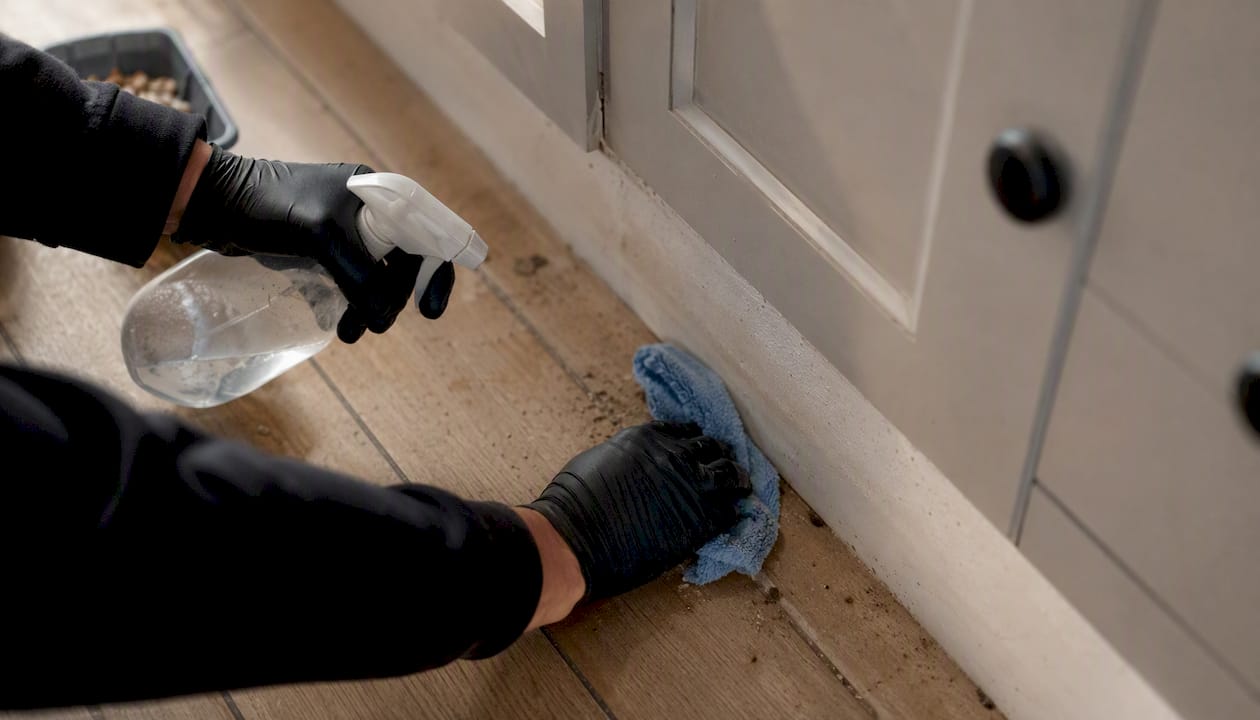
Post-illness contamination is one of the most overlooked triggers. After a household member recovers from gastroenteritis, influenza, or a similar illness, a targeted deep clean of bathrooms, door handles, light switches, and shared surfaces reduces reinfection risk.
Allergy flare-ups that worsen at home, particularly in spring, often point to dust mite or mould accumulation in bedding, carpets, or air vents.
A professional clean is justified any time the problem is beyond what you can safely or effectively address yourself. Mould covering more than a square metre, post-renovation dust, or a hoarding situation all fall into that category.
How to fit deep cleaning into your regular routine
The biggest reason deep cleaning doesn't happen is that people treat it as a single overwhelming event. It doesn't have to be.
Splitting tasks across months rather than doing everything in one weekend significantly improves follow-through. A seasonal rotation, where you tackle different rooms or task categories each month, keeps the load manageable and means nothing gets ignored for more than a quarter.
The 20/10 method
The 20/10 rule is straightforward: 20 minutes of focused cleaning, followed by a 10-minute break or tidy-up. It works well for deep-clean tasks because it removes the psychological weight of an open-ended job. Set a timer, pick one task (cleaning the oven, scrubbing grout, wiping down the inside of the fridge), and stop when the timer goes. You'll be surprised how much ground you cover.
A simple timeboxing template
- Weekly (15–20 minutes): one micro deep-clean task per week — rotate through appliances, vents, and fixtures so nothing accumulates
- Monthly (1–2 hours): one room gets a proper deep clean, including behind furniture and inside storage
- Quarterly (half-day or full day): whole-house deep clean, or book a professional for the tasks you've deferred
- Annually: specialist tasks — carpet steam clean, duct cleaning, exterior window wash, mattress replacement assessment
Combining deep-clean tasks with routine chores
The most efficient approach is to piggyback deep-clean tasks onto existing habits. Cleaning the shower screen while you're already in the bathroom after your weekly scrub adds five minutes, not an hour. Wiping rangehood filters while the oven is self-cleaning costs almost no extra time. Small additions to existing routines are far more sustainable than scheduling a separate "deep clean day" that never arrives.
When should you hire a professional deep cleaner in Australia?
Some situations genuinely call for a professional, and trying to DIY them often costs more time and money in the long run.
Hire a pro when:
- You're vacating a rental and need to meet bond-return standards (end-of-lease cleaning has specific requirements that differ from a standard deep clean)
- There's significant mould, post-renovation dust, or construction debris
- You have limited mobility or time and the home has fallen behind
- The property is large (4+ bedrooms) and a full deep clean would take more than a day
- Carpets, upholstery, or mattresses need steam cleaning beyond what a domestic machine can achieve
- The situation involves biohazard concerns (hoarding, pest infestation aftermath, post-illness)
Post-renovation and move-out cleans require checklist-driven professional visits rather than standard routine deep cleans, because the dust, debris, and scope of work differ substantially.
What to expect from a professional deep clean
A professional deep clean typically runs 4 hours for a small property up to 10+ hours for a larger home, depending on size, condition, and the specific services included. Move-out cleans tend to sit at the longer end because they cover every surface to a rental-inspection standard.
In Australia, pricing is driven by:
- Home size (number of bedrooms and bathrooms)
- Task complexity (oven restoration, carpet steam, grout treatment add to the cost)
- Number of cleaners and travel time
- Specialist services (carpet steam cleaning, window washing, HVAC)
Rates vary across the ACT and surrounding regions, so request a detailed quote that itemises each service rather than accepting a single flat figure.
Before booking, ask:
- Are your staff police-checked and insured?
- What cleaning products do you use, and do you offer eco-friendly options?
- Is there a satisfaction guarantee or re-clean policy?
- Can you provide a written task list so I know exactly what's included?
- What's your cancellation policy?
How to choose a reliable deep-cleaning provider in Australia
A good cleaning company is easy to verify. A poor one relies on you not checking.
Questions to ask before booking
- Insurance: are they covered for public liability and property damage?
- Police checks: are all staff background-checked? This matters particularly for residential jobs.
- Products: do they use eco-friendly or low-toxicity products? Can they accommodate chemical sensitivities?
- References: can they provide local reviews or references from comparable jobs?
- Guarantee: what happens if you're not satisfied? Is a re-clean offered within 24–48 hours?
- Contract terms: is there a lock-in contract, or can you book one-off?
Red flags
- No written quote or scope of work before the job
- Pressure to book immediately without time to compare
- Vague answers about what's included ("we clean everything")
- No verifiable local reviews or an inability to name specific services
- Cash-only payment with no receipt
Verifying quickly
Ask for proof of insurance before the booking is confirmed. Request a sample task list for a job similar to yours. Check Google reviews and look for responses to negative feedback — how a company handles complaints tells you more than a five-star average.
ACT Cleaning by Demand uses police-checked staff and eco-friendly products, and publishes practical cleaning tips and local advice for Canberra homeowners on its blog.
What supplies do you need for a deep clean?
You don't need a cupboard full of specialty products. A focused kit covers most tasks.
Essential tools
- Microfibre cloths (several — use separate ones for kitchen, bathroom, and glass)
- Extendable duster for ceiling fans, cornices, and high shelves
- Quality vacuum with HEPA or high-filtration capability (critical for allergy households)
- Steam cleaner for grout, upholstery, and hard floors (hire one if you don't own it)
- Stiff-bristle scrubbing brushes in two sizes — one for grout, one for general scrubbing
- Bucket, scrub pads, and a mop with a washable head
Product notes
- Enzyme cleaners break down organic stains (pet urine, food residue) more effectively than standard detergents
- Bleach alternatives (hydrogen peroxide-based sprays) handle mould on non-porous surfaces without the fumes of chlorine bleach
- Safe oven cleaners: look for fume-free formulas, particularly if you have children or pets
- Eco-certified products are widely available in Australia through supermarkets and hardware stores; look for the Good Environmental Choice Australia (GECA) certification or similar third-party marks
Better Homes & Gardens Australia provides room-specific cleaning plans and local product suggestions worth bookmarking alongside this guide.
Concentrated products are more economical and generate less plastic waste than ready-to-use sprays. Store cleaning products in a locked or high cupboard away from children, and check local council guidelines for safe disposal of chemical products.
What Canberra homes get wrong about deep cleaning
Most homeowners I speak with in Canberra and the ACT focus their deep-clean energy on the obvious spots: the oven, the bathroom tiles, the kitchen benchtops. Those matter, but they're rarely where the real problems hide.
The overlooked areas in ACT homes are almost always the same: rangehood filters caked with grease that's been there for years, washing machine door seals harbouring black mould, and air vents that haven't been touched since the home was built. In Canberra's climate, where we get cold, dry winters and warm summers, dust accumulates in vents and under furniture faster than in more humid cities. That dust isn't just unsightly — in a sealed home running ducted heating, it circulates constantly.
The habit I'd suggest adopting immediately: every time you run a hot wash cycle, wipe the washing machine door seal with a dry cloth afterward. It takes 30 seconds and prevents the mould buildup that eventually requires a full drum clean or, worse, a service call. Small, consistent actions like this are what keep a quarterly deep clean from turning into a half-day rescue mission.
Professional deep cleaning in Canberra and the ACT
When the schedule slips or the job is simply too big to tackle alone, ACT Cleaning by Demand covers the full range of deep-clean needs across Canberra and the ACT. The team handles end-of-lease cleaning to bond-return standard, deep and spring cleans, carpet and upholstery steam cleaning, post-construction cleans, and after-party or Airbnb turnovers.
Every job uses eco-friendly products, and all staff are police-checked. There are no lock-in contracts, so you can book a one-off deep clean without committing to an ongoing arrangement. Flexible scheduling means you can book around work, school, or a lease inspection date. Homeowners in Inner South Canberra can book a local team directly. Get a quote online or call to discuss what your home needs — the booking process takes a few minutes.
Sources
- Care
- How Often Do You Really Need To Deep Clean Your House?
- How Long Does It Take to Deep Clean a House? | Angi
- A Complete Guide for Deep Cleaning Every Room in Your Home