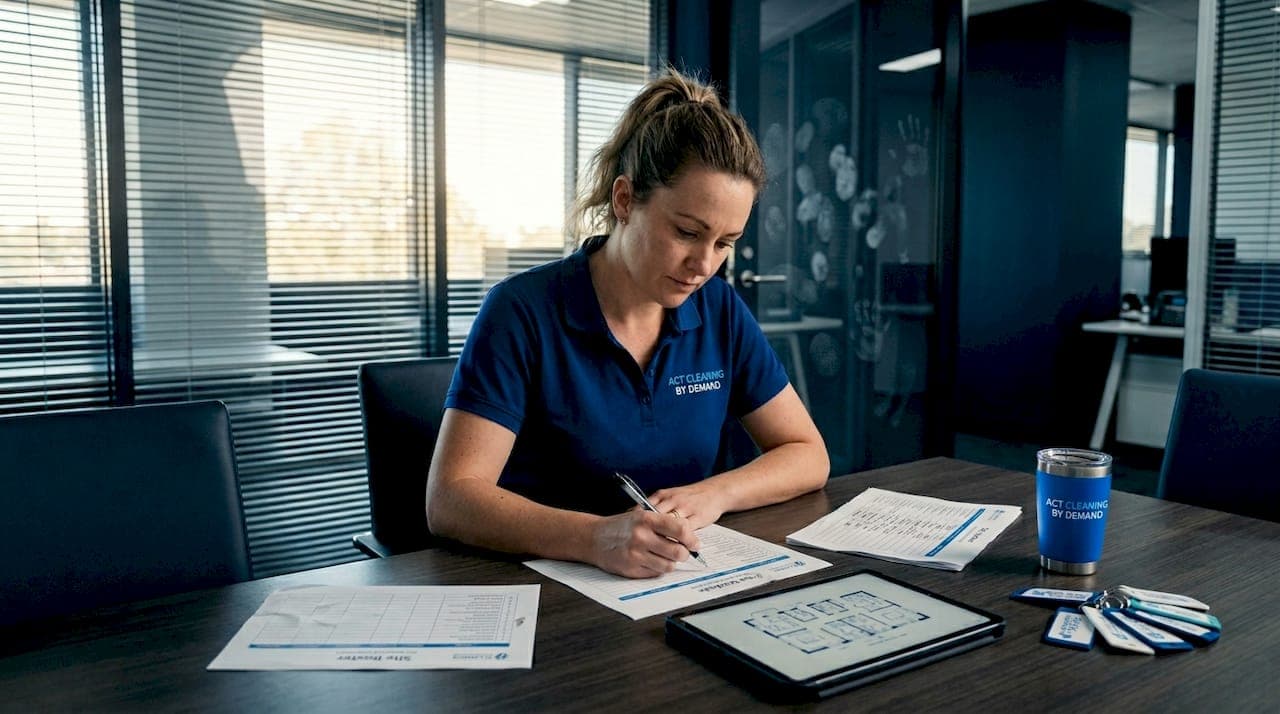
Managing multiple cleaning crews across a portfolio of Canberra properties is one of those tasks that looks straightforward on paper but unravels fast in practice. Jobs run late, standards slip between crews, and complaints from tenants or owners pile up before you even know there's a problem. Whether you're overseeing end-of-lease cleans, post-construction tidyups, or routine commercial maintenance, the gap between a well-coordinated operation and a chaotic one comes down to systems, tools, and accountability. This guide walks you through exactly how to build those systems and take back control.
Table of Contents
- Assessing your cleaning project needs and team structures
- Essential tools and systems for crew coordination
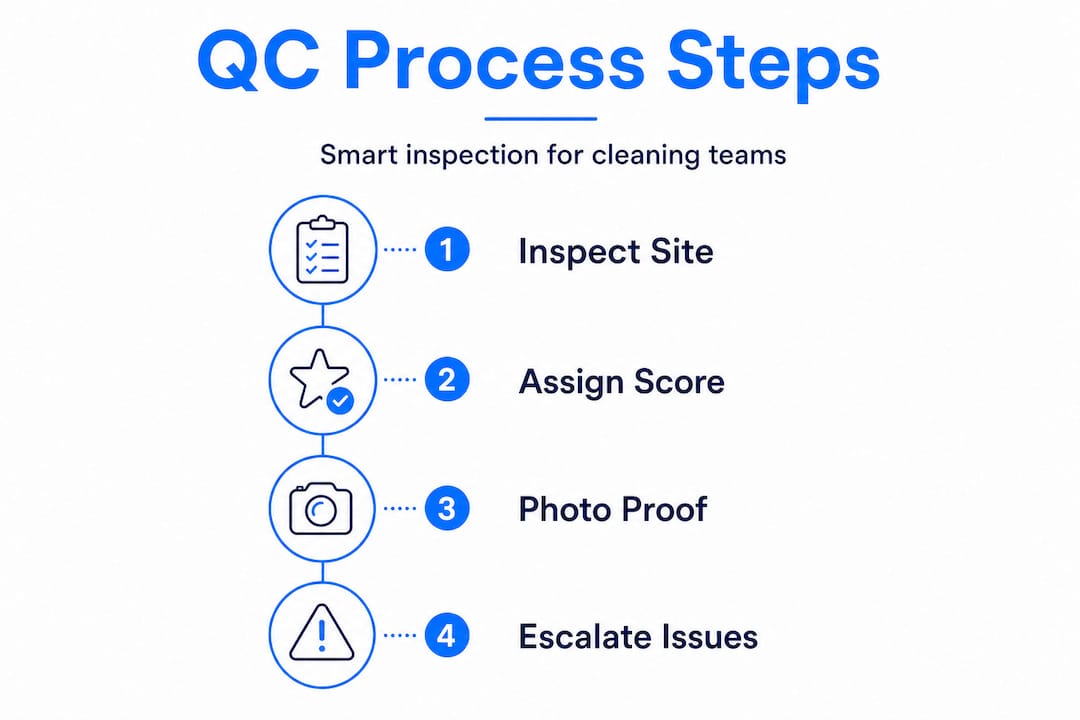
- Implementing quality control: inspection, scoring, and escalation
- Troubleshooting common issues with multiple cleaning crews
- Why digital audits and structured scoring beat old-school supervision
- Simplify cleaning crew management with expert local support
- Frequently asked questions
Key Takeaways
| Point | Details |
|---|---|
| Clarify requirements first | Define your team sizes, project types and reporting responsibilities before you start. |
| Invest in digital tools | Use scheduling apps, digital checklists and photo evidence to coordinate and monitor your cleaning crews. |
| Use scoring, not just schedules | Implement inspection and scoring systems to ensure high-quality, consistent results. |
| Standardise escalation protocols | Set clear thresholds and require contractors to act within set timeframes when scores fall below standards. |
| Maintain documented evidence | Keep photographic records and logs for all cleans to resolve disputes and ensure accountability. |
Assessing your cleaning project needs and team structures
Before you can coordinate crews effectively, you need a clear picture of what you're actually managing. Many property managers in Canberra jump straight to scheduling apps or new rosters without first mapping out the scope of their operation. That's where things go wrong early.
Start by identifying the types of projects your portfolio generates. These typically fall into three categories: regular maintenance cleans (weekly or fortnightly office or commercial cleans), event-driven cleans (end-of-lease, pre-sale, post-construction), and ad hoc or spot cleans (emergency turnarounds, Airbnb changeovers, or reactive hygiene responses). Each type demands a different crew size, skill set, and reporting structure.
Crew structures also vary. Some managers organise teams by building, assigning a dedicated crew to each site for consistency. Others run shift-based teams, particularly for large commercial properties that need cleaning outside business hours. A third model uses specialisation, where one crew handles carpet and upholstery while another focuses on hard surfaces or post-builder debris. Understanding which model fits your portfolio is the foundation of everything else.
| Job type | Frequency | Crew size | Special skills needed | Reporting responsibility |
|---|---|---|---|---|
| Regular commercial maintenance | Weekly/fortnightly | 2 to 4 | General cleaning, floor care | Site supervisor |
| End-of-lease clean | Per vacancy | 3 to 6 | Detail cleaning, bond compliance | Property manager |
| Post-construction clean | Per project | 4 to 8 | Debris removal, surface restoration | Project manager |
| Pre-sale property clean | Per listing | 2 to 4 | Presentation, staging support | Sales agent liaison |
| Airbnb/short-stay changeover | Per booking | 1 to 3 | Speed, linen management | Booking platform sync |
A key insight from janitorial quality inspection frameworks is that a scoring-based QC model should include quantified thresholds that trigger mandatory re-service and escalation, connecting each score to a responsible contractor and documented evidence. That accountability loop starts here, at the assessment stage, before a single mop hits the floor.
When supervising cleaning teams across multiple sites, it also pays to map out your high-traffic or high-risk zones in advance. Foyers, bathrooms, and kitchen areas in commercial buildings attract the most complaints and carry the highest hygiene risk. Flag these zones in your project briefs so crews know where to concentrate effort.
Pro Tip: Create a one-page site brief for each property that lists high-risk zones, access codes, special instructions, and the name of the responsible crew leader. Laminate it and keep it on-site so every team member is working from the same information.
Essential tools and systems for crew coordination
With your scope and crew structures mapped out, the next step is building the coordination infrastructure. The right tools don't just make scheduling easier. They create an audit trail that protects you when disputes arise and gives you real-time visibility across all sites.
Here's what a well-equipped property manager needs in their toolkit:
- Scheduling and dispatch software that allows you to assign jobs, set recurring tasks, and receive completion notifications. Look for platforms that support multiple crews and locations simultaneously.
- GPS-based time tracking so you can verify when a crew arrived, how long they stayed, and when they left. This is non-negotiable for managing crews across several buildings.
- Digital checklists that crews complete on a mobile device at the end of each job. These replace paper sign-offs and create an automatic record.
- Group messaging channels organised by site or crew, keeping communication contained and searchable rather than scattered across personal text threads.
- Photo documentation tools integrated into your checklist system, so before-and-after images are attached to every job record automatically.
The office cleaning technology available today means even small property management operations can run with the same oversight capability as large facilities teams. Similarly, floor cleaning tips and protocols can be embedded directly into digital checklists so crews don't need to guess what standard is expected.
Here's a quick comparison of what to look for when evaluating coordination tools:
| Feature | Why it matters | Watch out for |
|---|---|---|
| Real-time scheduling | Reduces missed jobs and double-bookings | Systems that don't sync across devices |
| GPS time-stamping | Verifies attendance and duration | Battery drain on older crew devices |
| Photo upload with timestamp | Provides dispute-proof evidence | Storage limits on cheaper plans |
| Digital checklists | Ensures consistent task completion | Overly complex forms crews won't use |
| Corrective action workflows | Closes the loop on quality failures | Systems without escalation alerts |
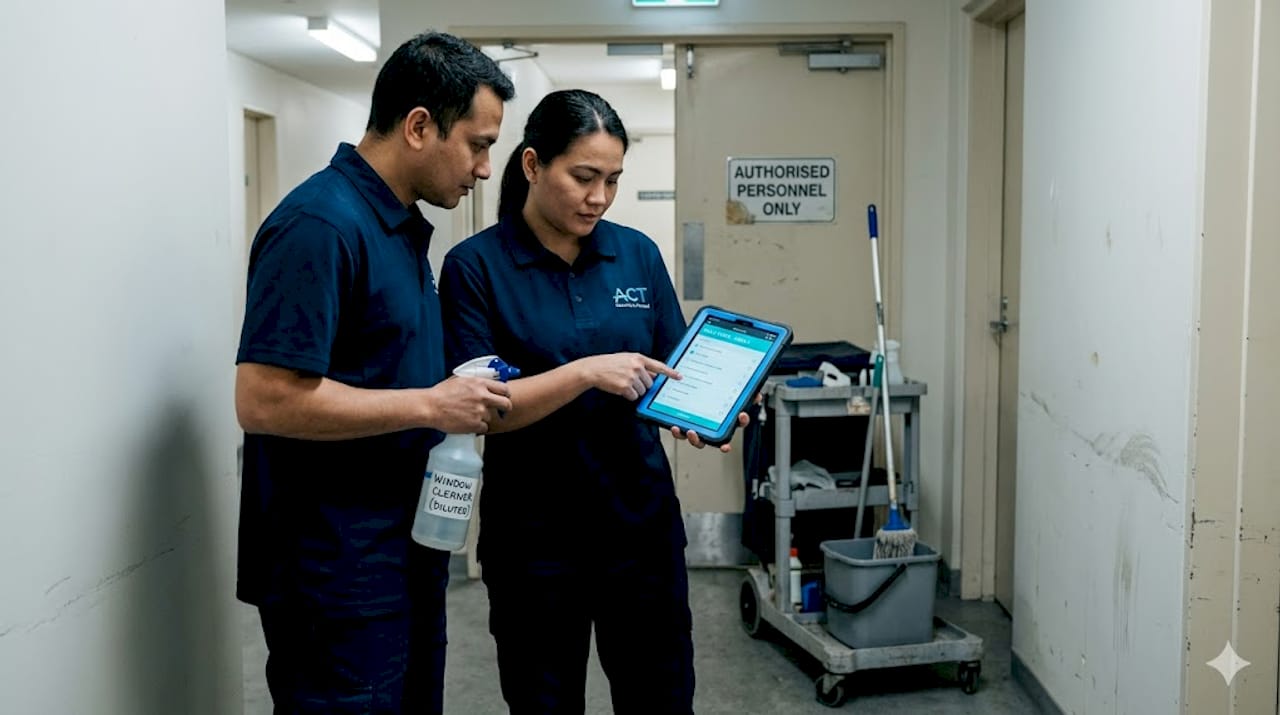
A critical point from quality inspection research is that measuring only schedule completion misses hygiene failures entirely. If a crew marks a job done but no photo or score is attached, you have no evidence of what actually happened. Scoring inspections with photo documentation and a corrective-action service level agreement (SLA, meaning a defined timeframe for fixing problems) are the control mechanisms that prevent that failure mode.
Pro Tip: Use photo documentation and time-stamped logs not just for quality assurance but as your first line of defence in disputes with tenants, owners, or contractors. A timestamped before-and-after photo resolves most complaints within minutes.
Implementing quality control: inspection, scoring, and escalation
Systems and tools mean nothing without a structured quality control process. This is the stage where many Canberra property managers fall short. They have the scheduling sorted, but when a crew says the job is done, there's no independent check on whether it actually meets the required standard.
Schedule completion is not a quality measure. It tells you a crew showed up and left. It tells you nothing about whether the bathrooms are hygienic, whether carpet stains were treated, or whether the property is genuinely ready for a new tenant or buyer. The janitorial inspection checklist model addresses this directly by separating schedule data from scoring data.
Here's how to run a proper inspection:
- Plan the inspection before the crew finishes. Know which zones you're checking and what the standard looks like for each.
- Use a structured checklist that covers every area of the property, from entry points to wet areas to storage rooms.
- Score each item on a consistent scale so results are comparable across crews, sites, and time periods.
- Capture photo evidence for every item that scores below standard, and for a representative sample of items that pass.
- Record all findings in your digital system immediately, linking the score to the crew leader responsible for that zone.
- Issue corrective work orders for any zone that falls below your threshold, with a defined deadline for re-service.
Sample scoring scale: 4 = Excellent, meets all standards with no issues. 3 = Acceptable, minor issues that don't affect hygiene or presentation. 2 = Below standard, noticeable issues requiring attention. 1 = Unacceptable, immediate re-service required.
According to structured QC frameworks, zone averages below 2.5 should trigger a mandatory contractor review within 48 hours, with corrective work orders issued when thresholds are missed. That 48-hour window is important. It's fast enough to protect the property but gives the crew a realistic chance to rectify the issue.
For every inspection, document the following as a minimum:
- Who conducted the inspection and their role
- Date and time of the inspection
- Which crew completed the original clean and their crew leader
- Zone-by-zone scores with written notes
- Photographic evidence attached to each scored item
- Any corrective actions issued and their due date
This level of documentation might feel like extra work initially, but it pays for itself the first time a tenant disputes a bond deduction or an owner questions the standard of a house cleaning quality control service.
Troubleshooting common issues with multiple cleaning crews
Even with the best systems in place, things go wrong. The difference between a well-run operation and a reactive one is how quickly you identify problems and how structured your response is.
Here are the most common issues Canberra property managers face with multi-crew operations, and how to address them:
- No-shows or late arrivals: Implement automated absentee alerts tied to GPS check-in. If a crew hasn't checked in within 15 minutes of the scheduled start, the system flags it and notifies the coordinator.
- Missed cleaning standards: Use your scoring system to identify which crews or which sites consistently underperform. Patterns reveal training gaps, not just individual failures.
- Tenant or owner complaints: Log every complaint against the specific job record, including the crew, date, and zone. This connects the complaint to the evidence and speeds up resolution.
- Hygiene gaps in high-risk areas: Add mandatory photo requirements for bathrooms, kitchens, and food preparation areas. No photo, no job completion sign-off.
- Communication breakdowns between crews and coordinators: Standardise your messaging channels. One platform for all crew communication, with separate channels per site, prevents messages getting lost across multiple apps.
- Repeat issues with the same crew: Use your house cleaning reporting data to identify repeat offenders and trigger a formal performance review with documented evidence.
A scoring-based QC model that includes quantified thresholds, connects scores to responsible contractors, and requires documented evidence is the backbone of any effective troubleshooting process. Without it, every complaint becomes a "he said, she said" situation that wastes time and damages relationships.
Pro Tip: Document every incident with the time, photos, and crew details the moment it's reported. Don't wait until the end of the day. Real-time documentation is far more accurate and far more useful in a dispute than notes written from memory hours later.
Why digital audits and structured scoring beat old-school supervision
Here's an uncomfortable truth that most property management guides won't say plainly: paper schedules and verbal check-ins are not supervision. They're hope. You're hoping the crew did the job, hoping the supervisor noticed the issues, and hoping someone wrote it down correctly. That's not a system. That's a liability.
We've seen this play out repeatedly in Canberra's property sector. A developer hands over a newly constructed building, the cleaning crew signs off on the schedule, and three days later the real estate agent is fielding complaints about construction dust on every surface. No photos were taken. No scores were recorded. The crew says they cleaned. The agent says they didn't. Nobody wins, and the dispute drags on for weeks.
Digital audits change that dynamic entirely. When every inspection produces a score, a photo record, and a timestamped log linked to a specific crew member, the evidence speaks for itself. Disputes that used to take weeks to resolve now take minutes. Scoring inspections with photo documentation and a corrective-action SLA are the control mechanism that prevents the "we said we cleaned it" failure mode from ever becoming a serious problem.
The adoption challenges are real. Some crew leaders resist digital tools because they feel like surveillance. Some coordinators get overwhelmed by the volume of data a good system generates. And some platforms try to do too much, creating feature creep that nobody uses. The answer isn't to abandon digital oversight. It's to start simple, with scheduling, GPS check-in, and photo checklists, and add complexity only when the team is ready.
Most Canberra developers and property managers are still operating well behind where national facilities management standards are heading. Digital audit trails are not a future option. They're the current standard in every other major Australian city, and Canberra is catching up fast. The managers who build practical management strategies around digital oversight now will be the ones who avoid the disputes, protect their bonds, and retain the best cleaning contractors as the market tightens.
Simplify cleaning crew management with expert local support
If you want help managing multiple teams without the constant headache of coordination, ACT Cleaning by Demand is built for exactly this kind of challenge.
ACT Cleaning by Demand specialises in managing diverse crews across a wide range of property types in Canberra, from high-turnover Airbnb cleaning solutions to complex end of lease cleaning services that need to meet strict bond return standards. Our teams operate with digital oversight, structured quality control, and clear escalation processes built in from the start. You get the evidence trail, the accountability, and the local knowledge that makes a real difference when things need to be done right the first time. Explore our house cleaning project support or get in touch to discuss a tailored solution for your portfolio.
Frequently asked questions
How do I keep track of multiple cleaning crews across several buildings?
Use a centralised digital app with scheduling, GPS logs, and photo-based proof of completion for every crew and job. Digital platforms and checklists enable oversight of multiple crews and create detailed documentation that's accessible in real time.
What is the best way to handle service failures or complaints from tenants or owners?
Adopt a scoring-based quality check and set a clear threshold that triggers rapid review and corrective work within 48 hours. Zone averages below 2.5 trigger mandatory contractor review and corrective work orders under this model.
How can I make sure each crew is held accountable for their results?
Require objective inspection scores connected to a responsible crew leader, with photographic and time-stamped evidence attached to every clean. Connecting each score to a responsible contractor and documented evidence removes ambiguity entirely.
Why isn't schedule completion a reliable quality measure?
Schedule completion only confirms that a crew claims to have cleaned, not that they met hygiene standards or resolved existing problems. Scoring inspections with photo documentation and a corrective-action SLA are the control mechanisms that close that gap.
What role does documented evidence play in crew management?
Documented evidence provides proof for audits, reduces disputes between crews and clients, and gives you a clear basis for corrective actions when standards are missed. Documented evidence linked to quality scoring and contractor responsibility is the foundation of any defensible quality control process.