

Scaling domestic cleaning bookings, the practice of systematically growing scheduled appointment volume through repeatable systems rather than ad hoc marketing, is achievable for any Canberra cleaning business that removes friction between lead and booked job. The three levers that drive this growth are automated intake, transparent pricing with instant quoting, and recurring client conversion. Businesses that combine all three consistently outperform those relying on manual scheduling and word of mouth alone. This guide covers each lever in practical detail, with local Canberra market data and operational tactics you can apply immediately.
How can automation improve your cleaning booking intake and scheduling?
Missed calls are not a minor inconvenience. Each missed booking costs a cleaning business approximately $1,200 in lost revenue, and manual scheduling consumes 8 to 12 admin hours every week. For a Canberra business trying to grow, that is a structural ceiling, not a temporary problem.
The fix is not hiring more admin staff. It is replacing manual intake with automated systems that capture, qualify, and schedule every inbound inquiry without human intervention.
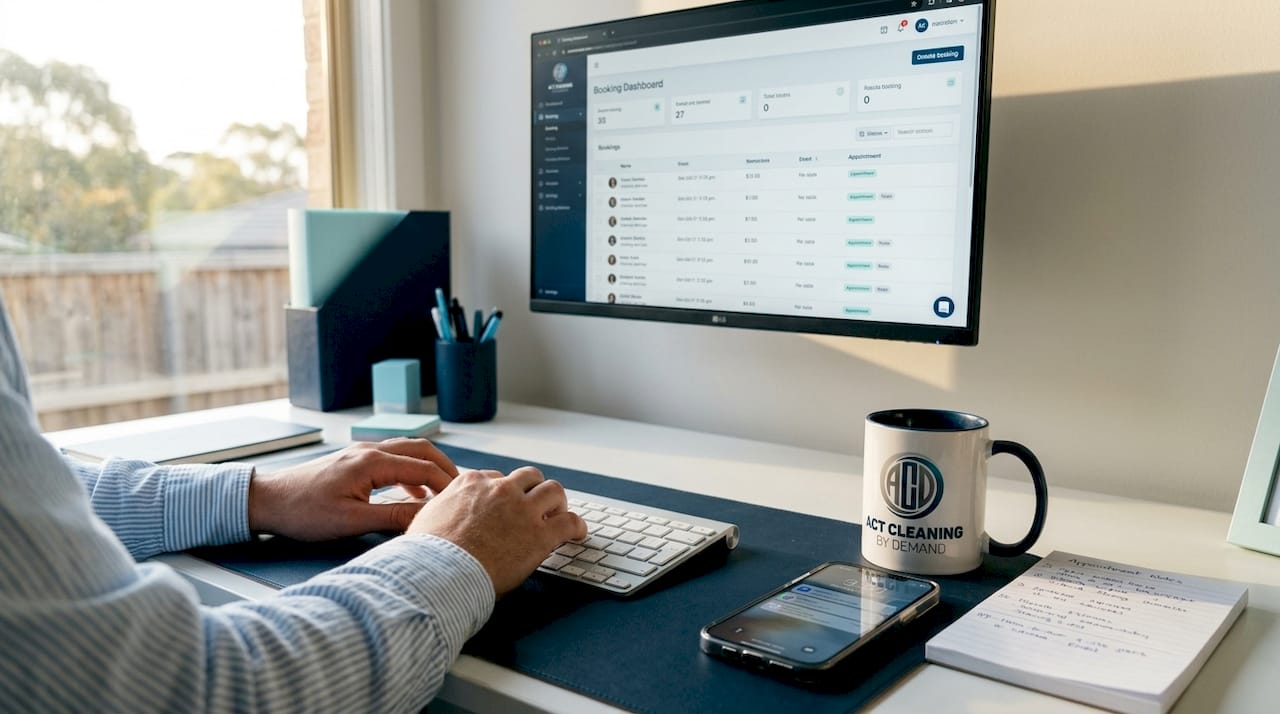
What automated intake actually looks like
A 24/7 online booking portal lets clients self-schedule at 11pm on a Sunday, which is exactly when many Canberra households make decisions about home services. AI phone agents, such as those offered by Goodcall, answer every call and convert the inquiry into a booked appointment regardless of the time or day. These tools do not just take messages. They ask structured intake questions covering service type, property size, urgency, and suburb, then route the job to the right crew automatically.
Structured call intake that captures service type, urgency, and location enables efficient job allocation and measurably improves booking scale. The CleanMade case study demonstrates this directly: booking volume grew not from increased marketing spend but from replacing unstructured manual triage with a systematic intake process.
Automated follow-up tools reduce no-shows by sending SMS and email reminders 24 and 2 hours before each appointment. Scheduling software also eliminates manual calendar rebuilds, improves crew coordination, and accelerates payment collection. The combined effect is fewer gaps in the schedule and more revenue per crew member per day.
Key automation capabilities worth prioritising:
- 24/7 online booking portal with real-time availability display
- AI phone agent to handle inbound calls and capture structured intake data
- Automated SMS and email reminders to reduce no-show rates
- Intake fields covering service type, property size, suburb, and urgency
- Auto-dispatch logic that routes jobs based on crew location and availability
Pro Tip: Integrate your AI call handling tool directly with your scheduling platform so that a completed phone intake automatically creates a calendar entry and triggers a confirmation SMS. This removes the manual step that most businesses still rely on and cuts booking drop-off significantly.
Why is competitive pricing and instant quoting crucial for increasing cleaning bookings?
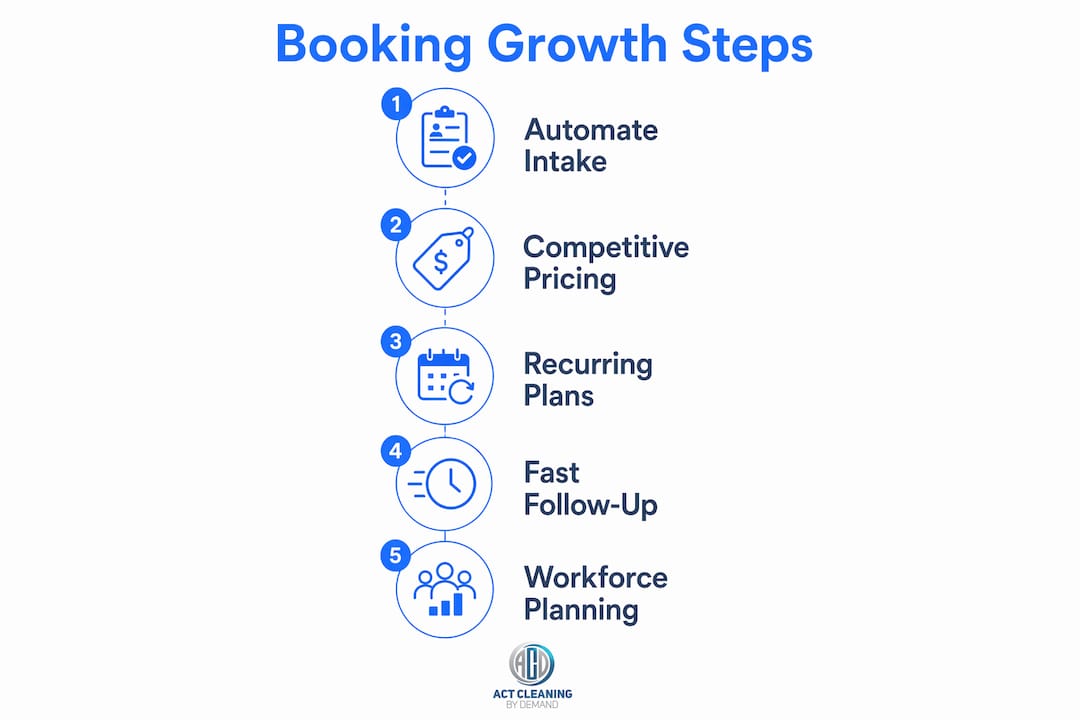
Pricing is where most Canberra cleaning businesses lose bookings they should be winning. A prospective client who cannot get a price immediately will move to the next provider who can. Transparent, instant pricing removes that exit point entirely.
Cleaning companies using instant quote calculators book 2 to 3 times more online appointments than those requiring a callback for pricing. That is not a marginal improvement. It is the difference between a business that converts website traffic and one that generates enquiries that go nowhere.
Setting prices that match the Canberra market
Local pricing context matters. 85.6% of Canberra Airbnb listings charge a cleaning fee, with an average of $108 and a median of $79. This tells you what Canberra property owners consider a normal and acceptable cleaning cost. Pricing your residential services near that median positions you as competitive without undervaluing your service. Pricing significantly above it without a clear quality signal will cost you bookings.
Understanding local fee benchmarks helps you avoid the two most common pricing errors: underpricing out of fear and overpricing without justification.
The table below compares common pricing strategies and their typical impact on booking conversion:
| Pricing strategy | Booking impact |
|---|---|
| Instant online quote calculator | 2 to 3x more online appointments booked |
| Callback-only pricing | High drop-off before quote is delivered |
| Bundled recurring plan pricing | Increases average client lifetime value |
| Transparent one-time vs recurring comparison | Converts more one-time clients to recurring |
| Pricing hidden behind contact forms | Reduces trust and increases competitor comparison |
A dedicated recurring services page that shows both one-time and recurring pricing side by side is one of the highest-converting pages a cleaning website can have. Clients who see the per-visit saving from a fortnightly plan make the decision to commit on the spot rather than booking one clean and waiting to see how it goes. Understanding how cleaning quotes work in the Australian context helps you frame pricing in a way that builds confidence rather than hesitation.
Pro Tip: In every quote email or SMS, include a one-line comparison: "One-time clean: $X. Fortnightly plan: $Y per visit." This single line, placed before the booking confirmation button, consistently lifts recurring plan uptake without any additional sales effort.
How to convert one-time cleans into recurring bookings to scale your business?
A single clean generates revenue once. A recurring client generates revenue every fortnight for years. The operational and financial difference between a business built on one-time jobs and one built on recurring contracts is enormous, and the conversion from one to the other happens in a narrow window.
Follow-ups within 24 hours convert 3 to 4 times more clients into recurring bookings than follow-ups sent later. This means the 24 hours after a first clean is the single most valuable period in your client relationship. Most businesses waste it entirely.
The conversion window: what to do and when
The first clean and the follow-up that comes after it form what experienced operators call the conversion window. Here is the sequence that works:
- During the clean: Leave a brief handwritten or printed card thanking the client and noting what was completed.
- Within 2 hours of completion: Send an SMS asking if they are happy with the result and inviting a quick reply.
- Within 24 hours: Send an email with a recurring plan offer, showing the per-visit saving and confirming the same team member will return.
- Within 72 hours: If no response, send one follow-up SMS with a direct booking link.
The objection that kills most recurring conversions is the fear of getting a different cleaner each visit. Addressing this directly, by committing to the same team member wherever operationally possible, removes the primary reason clients decline recurring plans. Consistent team scheduling combined with rapid follow-up is the combination that converts.
Residential cleaning businesses that focus on recurring plans during uncertain economic periods grow bookings more reliably than those chasing new one-time clients. Recurring demand buffers your revenue against seasonal dips and economic uncertainty, which is particularly relevant for Canberra businesses navigating the ACT's distinct seasonal patterns. Strategies for retaining cleaning clients over the long term share the same foundation: consistency, communication, and a clear value proposition.
Predictable recurring bookings also deliver operational benefits beyond revenue. They allow you to plan crew rosters weeks in advance, reduce the cost of acquiring new clients, and improve your ability to forecast supply needs accurately.
What operational strategies ensure your workforce and scheduling scale with growing bookings?
Booking volume means nothing if your crews cannot deliver reliably. Scaling cleaning operations requires managing workforce density and scheduling to balance peak demand against idle capacity. Experienced operators average 4 to 5 jobs per crew member per day. Reaching and sustaining that figure requires more than hiring. It requires standardised intake, smart routing, and staff retention.
The most common mistake growing cleaning businesses make is hiring more staff before fixing their scheduling logic. Adding crew to a broken dispatch system multiplies inefficiency rather than resolving it. Increasing per-day job capacity requires standardising intake parameters and routing logic first, then scaling headcount to match confirmed demand.
Operational tactics that support workforce scaling in Canberra:
- Micro-market density: Cluster bookings by suburb to reduce travel time between jobs and increase the number of cleans per crew per day.
- Staff training and retention: High turnover destroys scheduling reliability. Invest in onboarding, fair pay, and recognition to keep experienced cleaners.
- Real-time dispatch tools: GPS tracking and live schedule updates allow coordinators to respond to cancellations or delays without rebuilding the entire day's roster manually.
- Tiered crew structure: Separate experienced team leads from newer staff and pair them strategically to maintain quality during rapid growth.
- Demand forecasting: Use booking history to anticipate peak periods, such as pre-Christmas and end-of-lease season in Canberra, and roster accordingly.
Managing workforce quality and density directly determines operational reliability and client satisfaction during scaling. A business that books 30% more jobs but delivers inconsistently will lose clients faster than it gains them. Guidance on managing multiple cleaning crews covers the scheduling and communication systems that keep quality consistent as team size grows.
Pro Tip: Use your scheduling software's GPS and real-time dispatch features to build suburb-clustered daily runs. A crew completing five jobs within a 5km radius earns significantly more per day than one crossing the city between appointments. This single routing change often adds one full job per crew member per day without any additional hiring.
Key takeaways
Scaling domestic cleaning bookings requires automated intake, competitive pricing, rapid recurring conversion, and workforce routing working together as a system rather than as isolated tactics.
| Point | Details |
|---|---|
| Automate intake immediately | Missed calls cost $1,200 each; AI scheduling tools recover this revenue 24/7. |
| Price transparently and locally | Instant quote calculators lift online bookings 2 to 3 times; align fees with Canberra's $79 median. |
| Act within the conversion window | Follow-ups within 24 hours convert 3 to 4 times more one-time clients into recurring bookings. |
| Route crews by suburb density | Clustering jobs geographically adds capacity without additional hiring. |
| Fix routing before hiring | Standardising intake and dispatch logic unlocks per-day job capacity more reliably than headcount alone. |
What I have learned about scaling cleaning bookings in Canberra
Having worked closely with cleaning businesses navigating growth in the ACT market, the pattern I see most often is this: owners invest heavily in marketing before fixing what happens to the leads they already have. They run Google Ads, build a website, and then lose 30% of inbound calls because no one answers after 5pm. The revenue lost to missed calls alone would fund a year of automation tools.
The second pattern is pricing timidity. Canberra clients are not as price-sensitive as many operators assume. What they are sensitive to is uncertainty. A business that gives an instant, clear price wins the booking over a cheaper competitor who requires a callback. I have seen this play out repeatedly. Transparency converts faster than discounting.
On recurring conversions, the 24-hour follow-up is genuinely the most underleveraged tactic in the industry. Most businesses send a thank-you email three days later, if at all. The clients who would have said yes on day one have already moved on. The conversion window is real, and it is short.
Workforce management in Canberra has its own character. The ACT's compact geography is actually an advantage for micro-market density routing. A well-organised business can cluster five jobs in Belconnen or Tuggeranong in a single day with minimal travel. Businesses that have not mapped their booking geography by suburb are leaving capacity on the table every single day.
The mindset shift that matters most for managers moving from small-scale to scaled operations is accepting that growth is a systems problem, not a sales problem. Build the intake, pricing, and scheduling systems first. The bookings follow.
— Deng
How ACT Cleaning by Demand supports your booking growth
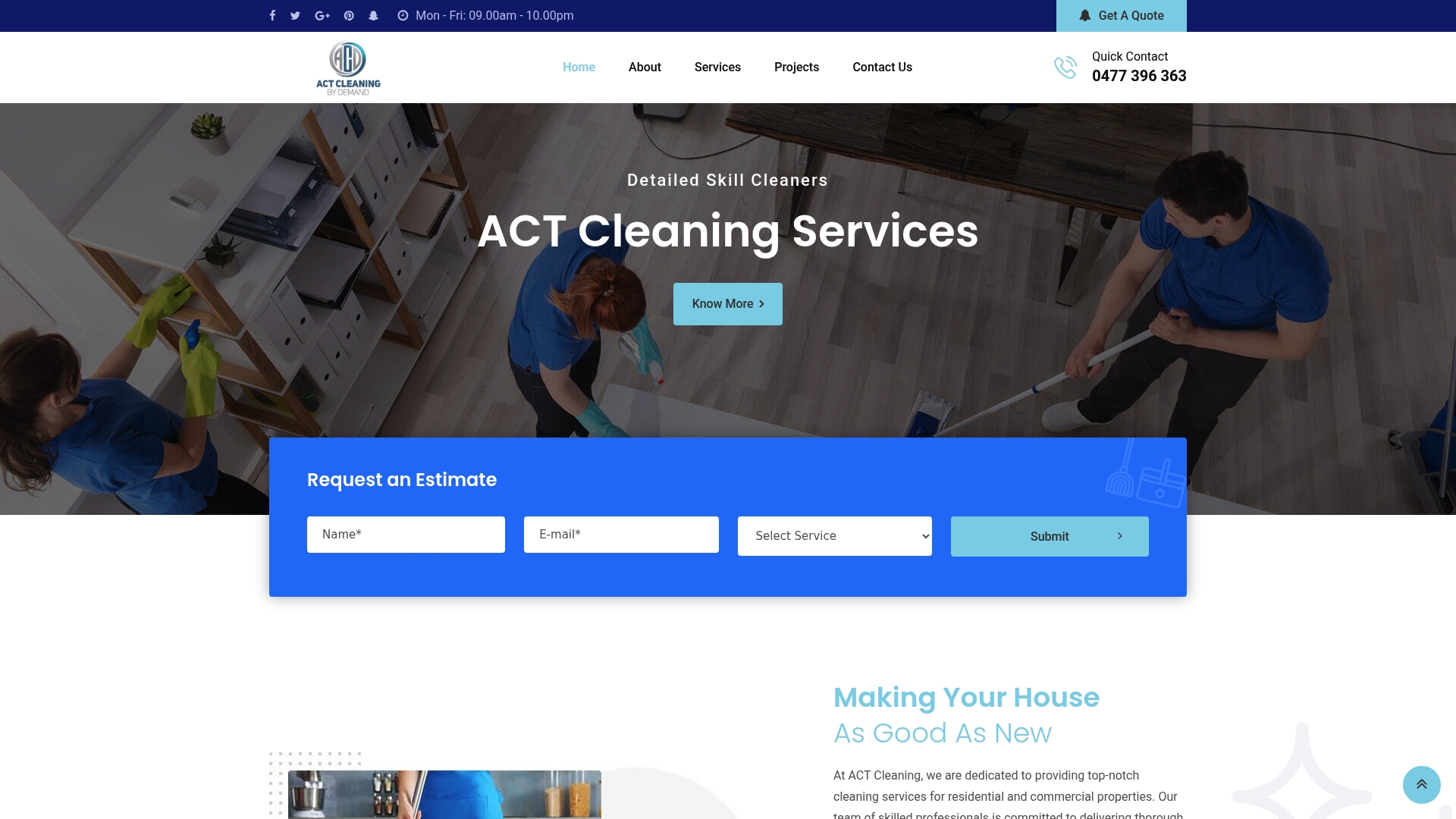
ACT Cleaning by Demand offers custom cleaning packages designed specifically for Canberra homes, with transparent pricing, consistent team allocation, and a user-friendly booking interface that removes the friction between enquiry and confirmed appointment. Whether you are a property manager needing reliable end-of-lease cleans or a homeowner ready to commit to a fortnightly plan, the service is structured to make recurring bookings straightforward. Explore house cleaning services tailored to the ACT market, or connect with the team to discuss a package that fits your schedule and property requirements.
FAQ
How do I scale domestic cleaning bookings without hiring more staff?
Fix your intake and routing systems before adding headcount. Standardising dispatch logic and using suburb-clustered scheduling typically adds one full job per crew member per day without any new hires.
What is the best way to convert one-time clients into recurring bookings?
Send a follow-up SMS within 2 hours of the first clean and an email with a recurring plan offer within 24 hours. Committing to the same team member each visit removes the most common objection.
How should I price cleaning services in Canberra?
Align your pricing with the local market. Canberra's median cleaning fee sits at $79, with an average of $108. Instant online quote calculators that display pricing transparently convert 2 to 3 times more bookings than callback-only pricing models.
Does automation actually reduce no-shows for cleaning appointments?
Automated SMS and email reminders sent 24 hours and 2 hours before each appointment measurably reduce no-show rates and free admin staff from manual follow-up calls.
How many jobs should each cleaner complete per day at scale?
Experienced cleaning operators average 4 to 5 jobs per crew member per day. Reaching this figure consistently requires suburb-clustered routing and standardised intake, not just additional staff.
Recommended
- Domestic cleaning explained: the Canberra homeowner’s guide – ACT Cleaning by Demand
- Custom cleaning service packages for every Canberra home – ACT Cleaning by Demand
- How to retain commercial cleaning clients and boost satisfaction – ACT Cleaning by Demand
- Top 4 canberra-act.cleancontrol.com.au Alternatives 2026 – ACT Cleaning by Demand