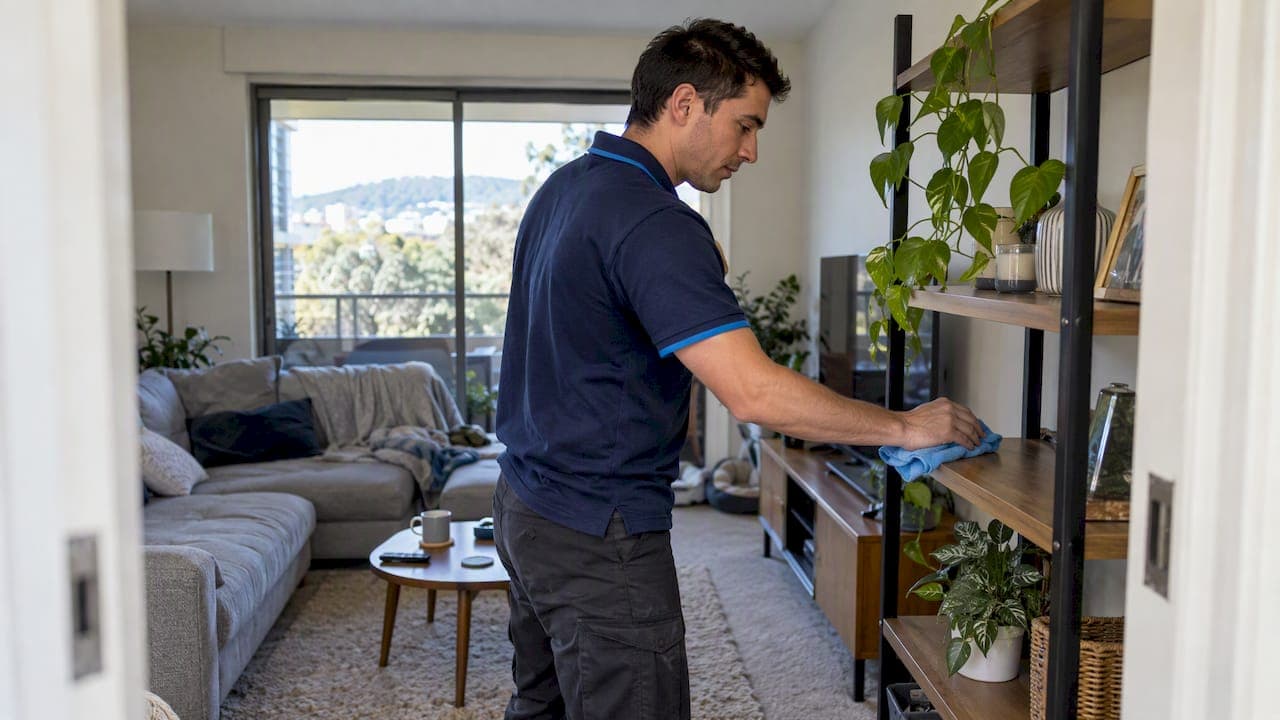
A routine rental inspection clean is a focused tidy and sanitary touch-up, not a full bond-level deep clean, and it usually fits into one to two hours. The fastest path is to run through a short checklist yourself or book a quick pre-inspection clean with a local ACT cleaner before your agent arrives.
TL;DR:
- A routine inspection may occur up to twice yearly and requires at least one week’s written notice; book promptly to leave time to review the result.
- With only a day or two, prioritize the kitchen, bathroom, main living area, floors, and visible clutter, and confirm access before the cleaner arrives.
- Before booking, confirm the quote’s scope and timing, whether supplies are included, and whether staff are insured and police checked.
- Tenants must keep the home reasonably clean throughout the tenancy, while landlords cannot demand showroom standards or cleaning beyond the agreement.
Table of Contents
- What to tick off for a one to two hour inspection clean
- Room by room: what to do and how long it takes
- How to pick and brief a cleaner in the ACT for your inspection
- Timing your clean around the inspection notice
- Who is responsible for what before an inspection
- Cleaning sustainably for a routine inspection
- Why a customised cleaning package beats a one-size job
- What landlords worry about most at inspection time
- Getting your home ready before the cleaner arrives
- Residential versus commercial inspection cleaning
- A local view on keeping rentals inspection-ready
- Book a pre-inspection clean with ACT Cleaning by Demand
- FAQ
- Sources
What to tick off for a one to two hour inspection clean
Property managers doing a routine inspection are checking for sanitary kitchens and bathrooms, tidy living areas and floors free of surface dirt, not the oven-degreasing, inside-cupboard standard of a bond clean. That distinction matters because it sets the scope: you are tidying and sanitising, not stripping the property back for a new tenant.
- Wipe down kitchen benches and the stovetop.
- Clean the sink and tapware until they shine.
- Give the toilet and bathroom surfaces a quick wipe.
- Run a cloth over the shower screen and tiles.
- Vacuum and mop all hard and soft flooring.
- Empty every bin in the house.
- Clear visible clutter from benches, tables and floors.
- Wipe high-touch surfaces: light switches, handles, remotes.
- Straighten beds and tidy linen.
- Open windows briefly to air out each room.
A standard routine inspection clean typically takes one to two hours, compared with four to ten hours for a bond or deep clean. Thirty minutes covers the kitchen and bathroom basics, sixty minutes adds floors and bins, and the full two hours lets you tidy every room and step back outside for a final look.
Room by room: what to do and how long it takes
Working room by room keeps the job efficient and stops you backtracking over surfaces you have already cleaned.
- Kitchen (20 to 30 minutes for a small kitchen). Wipe benches, splashback and the stovetop, clean the sink and tapware, wipe the microwave inside and out, and take the rubbish out.
- Bathroom (15 to 25 minutes). Clean the toilet bowl and seat, wipe the vanity and mirror, run a cloth over the shower screen and tiles, and mop the floor last so it has time to dry.
- Bedrooms and living areas (10 to 20 minutes per room). Declutter surfaces, straighten bedding, dust visible furniture and vacuum or mop the floor.
- Entry, balcony and outdoor areas. Sweep the entry, clear cobwebs from doorways, tidy any outdoor furniture and remove rubbish or recycling bins from view.
Some rooms need more than the standard window. If a previous inspection flagged mould, pet odour or a maintenance issue, budget extra time for that specific spot rather than stretching the whole clean.
Pro Tip: Clean from top to bottom and dry to wet, dusting shelves before vacuuming and wiping surfaces before mopping, so dirt falls onto a surface you are about to clean anyway.
If you are a landlord considering small upgrades alongside the clean, something like a well-fitted security door is worth checking against the building's permission rules before you commit, as outlined in this rental property security door checklist.
How to pick and brief a cleaner in the ACT for your inspection
Not every cleaner offers a short inspection-focused visit, so it pays to ask the right questions before booking.
- Ask for an estimated time and exactly what is included in that quote.
- Confirm whether cleaning supplies and equipment are provided.
- Check for police-checked staff, insurance and a re-clean or satisfaction guarantee.
- Ask whether eco-friendly or non-toxic products are available if that matters to you.
Brief the cleaner the way you would brief a tradesperson: send a few photos of the areas that need attention, name the rooms and the minutes you want spent in each, and flag any problem spot such as a greasy stovetop or a grubby shower screen up front. Industry advice consistently warns against cramming cleaning into one last-minute session, so booking a week or two ahead gives you time to review the result before inspection day. If notice is shorter than that, say so when you call: many local cleaners hold same-day or emergency slots for exactly this situation.
Pro Tip: Ask the cleaner for a few quick before-and-after photos of the kitchen and bathroom so you can confirm the job is inspection-ready without doing a full walkthrough yourself.
Once the job is done, do a five-minute walkthrough of the kitchen, bathroom and main living area, since these are the spots an agent checks first.
Timing your clean around the inspection notice
Under the ACT's standard residential tenancy terms, a lessor may conduct a routine inspection up to twice in each twelve-month period and must give at least one week's written notice. That week is exactly the window to lock in a pre-inspection clean, whether you do it yourself or book a cleaner.
- Book as soon as the notice arrives rather than waiting until the day before.
- If notice is unusually short, focus on three or four priority areas (kitchen, bathroom, main living space) rather than the whole property.
- Agree in advance who will be home for the clean, how the cleaner gets in, and what time you want the job finished relative to the inspection.
Coordinating access matters as much as the clean itself. A cleaner locked out at the booked time loses the slot you arranged around that one-week notice.
Who is responsible for what before an inspection
Tenants and landlords each carry a distinct duty around cleanliness, and knowing where that line sits avoids arguments at the front door. A tenant's obligation under the ACT's tenancy rules is to take reasonable care of the premises and keep them reasonably clean, leaving the property in substantially the same condition at the end of the tenancy, fair wear and tear aside. That standard applies throughout the tenancy, not only at the final inspection, which is why a quick clean before each routine visit matters.
Landlords and property managers, for their part, must give proper written notice before entering and cannot use a routine inspection to demand a standard beyond what the tenancy agreement requires. A tidy, sanitary home satisfies that obligation; it does not need to look like a display property. If an inspection report or condition report flags something specific, such as a mouldy extractor fan or a stained carpet, that becomes a fair talking point for the next visit rather than a general expectation applied to every room. Keeping a copy of your original condition report on hand, a step covered in the condition report template used at move-in, gives both sides a reference point if a dispute arises over what "reasonably clean" actually looked like when the tenancy started.
Cleaning sustainably for a routine inspection
A routine inspection clean does not need harsh chemicals to meet the standard an agent is checking for. Microfibre cloths and a mop with plain hot water handle most kitchen and bathroom surfaces without leaving chemical residue behind, and a diluted vinegar or bicarbonate-of-soda solution lifts soap scum and light grime just as well as many commercial sprays. These approaches also matter for shared airflow: a quick clean with low-fume products means you can air the property out fast rather than waiting for strong chemical smells to clear before the inspection.

Our cleaning jobs use eco-friendly products, which suits tenants with allergies, pets or young children living in the property, and it means nothing is left behind that needs rinsing or airing out longer than necessary. Choosing a cleaner who stocks these products as standard saves you from having to supply or request them yourself, which is one less thing to organise in a tight one-week window.
Why a customised cleaning package beats a one-size job
A routine inspection clean on a one-bedroom unit looks nothing like one on a four-bedroom family home with a yard, so a fixed package rarely matches what you actually need. We build cleaning packages around the property, the number of rooms and the specific areas flagged as concerns, rather than charging a flat rate for a generic scope.
That flexibility matters most when notice is short or when only part of the property needs attention, such as a kitchen after a busy week or a bathroom with mould returning in a corner. A tailored package lets you book exactly that scope instead of paying for a full-property clean you do not need, and it lets a short-stay host request a faster turnaround between guests without reworking an entire service agreement each time.
What landlords worry about most at inspection time
Landlords and property managers doing routine inspections are usually watching for the same handful of issues: mould creeping into bathroom corners, grease building up around stovetops and rangehoods, carpet stains that suggest ongoing neglect, and clutter that makes it hard to assess the condition of the property underneath. None of these require a bond-level clean to fix, but they do require consistent attention between inspections rather than a single scramble beforehand.

Professional cleaning addresses these concerns directly because a cleaner trained to spot the same issues an inspector looks for will treat them as priorities rather than afterthoughts. Wiping a stovetop every visit stops grease from building into a problem that eventually needs degreasing. Regular bathroom cleaning keeps mould from establishing itself in grout lines, which is far easier to prevent than to remove once it has set in. For landlords managing multiple properties, booking a consistent cleaner for each routine inspection also means the same standard gets applied every time, rather than relying on whichever tenant happens to be more house-proud.
Getting your home ready before the cleaner arrives
A little preparation before the cleaner turns up makes the whole job faster and more thorough. Clear personal items, paperwork and loose belongings off benches and floors so the cleaner can focus on wiping and vacuuming instead of moving things out of the way. Put dishes away or at least into the sink, strip and remake beds if you want fresh linen on show, and take rubbish and recycling out the night before.
If you know an inspector previously flagged something, point it out before the cleaner starts rather than leaving them to find it. A five-minute walk-through with the cleaner, or a few photos sent ahead of time, means they can allocate extra minutes to that spot instead of spreading the clean evenly across a property where one room needs more work than the rest.
Small maintenance issues are worth flagging too, even if they are not strictly a cleaning task. A dripping tap or slow drain noticed during a routine clean is easier and cheaper to sort before it becomes a bigger problem, and a straightforward yearly plumbing check catches most of these early.
Residential versus commercial inspection cleaning
A routine inspection clean for a residential tenancy and one for a commercial lease are built around different expectations. Residential inspections focus on liveability: sanitary kitchens and bathrooms, tidy bedrooms and living areas, and floors free of surface dirt, all judged against the tenancy agreement and condition report.
Commercial and strata properties carry a different scope. Shared foyers, stairwells and common areas often fall under a strata or facilities contract rather than an individual tenant's responsibility, and the standard expected tends to be set by lease terms covering presentation to clients and staff rather than the tenancy rules that apply to a rented home. Office floors, kitchenettes and bathrooms in a commercial tenancy are usually cleaned on a recurring schedule rather than a single pre-inspection push, since the space is in daily use by staff and visitors rather than inspected once or twice a year. Anyone managing a commercial lease alongside a residential rental should treat the two as separate cleaning scopes with separate schedules, since trying to apply a residential one to two hour routine to an office floor will leave gaps a workplace inspection would flag.
A local view on keeping rentals inspection-ready
Consistent, modest cleaning between inspections does more for landlord and tenant relationships than any single scramble before the agent arrives. A property that is always reasonably tidy signals a tenant who takes care of the place, and it gives a landlord fewer reasons to raise concerns at the next visit.
We build our packages around that reality: customised cleaning plans, eco-friendly products, staff checks and a simple online booking system, all aimed at making the routine part of renting less stressful for everyone involved.
— Deng
Book a pre-inspection clean with ACT Cleaning by Demand
A routine inspection clean does not need to take over your weekend. Short, focused pre-inspection visits are offered alongside a full range of services, so you can book exactly the scope your property needs rather than paying for a deep clean you do not.
- Property Inspection Cleaning for routine agent visits.
- End of Lease & Bond Cleaning when you need a full exit clean.
- Short-stay and Airbnb cleaning for fast guest turnarounds.
All of our jobs use eco-friendly products and police-checked staff, and booking takes a few minutes through our services page. If your next inspection is already on the calendar, get in touch for a quote and we will work out the right scope and timing around your notice period.
FAQ
How long does a routine inspection clean actually take?
A routine inspection clean typically takes one to two hours, covering the kitchen, bathroom, floors and general tidiness. A full bond or deep clean takes considerably longer because it covers tasks like oven degreasing and cleaning inside cupboards.
What is the difference between a routine clean and a bond clean?
A routine clean is a tidy and sanitise aimed at the standard an agent checks during a regular inspection, focused on sanitary kitchens and bathrooms and clutter-free living areas. A bond clean is a deeper, more thorough service covering ovens, cupboards, windows and other areas a bond clean checklist typically includes, most of which are unnecessary for a routine visit.
How much notice do landlords have to give for a routine inspection in the ACT?
Under the standard residential tenancy terms, a lessor must give at least one week's written notice before a routine inspection and can conduct one up to twice in each twelve-month period. That notice window is the practical time to schedule your pre-inspection clean.
Can I book a short pre-inspection clean instead of a full end-of-lease clean?
Property Inspection Cleaning is offered as a shorter, targeted service separate from End of Lease & Bond Cleaning, priced and scoped to match a routine visit rather than a full exit clean. Details and bookings are available on the services page.
What should I do if I only have a day or two before the inspection?
Focus on the highest-impact areas first: kitchen benches and sink, toilet and shower, floors and visible clutter, since these are what agents check most closely. If you need professional help on short notice, ask a local cleaner about same-day or emergency availability rather than assuming you need to book weeks ahead.