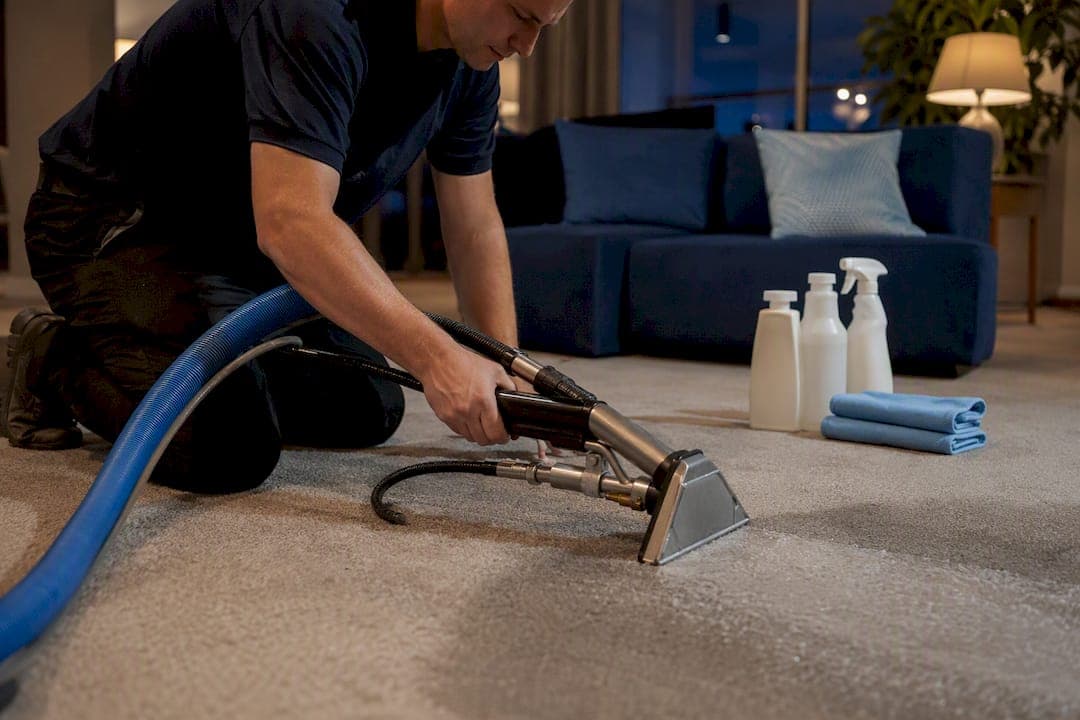
Rent a machine like Rug Doctor for light maintenance and quick refreshes; hire a professional when you're dealing with pet urine, set-in stains, delicate fibres, or a carpet that has to survive a pre-sale inspection. The choice really comes down to two trade-offs: money and time versus depth and risk.
A rental costs less upfront but demands hours of your weekend and only lifts surface soil. A professional service costs more per visit but pulls deep-down grime out with commercial-grade extraction and handles the tricky calls (fibre type, staining, warranty conditions) that a rental machine can't.
- Rent when the carpet just needs freshening between proper cleans
- Hire a pro when there's pet damage, wool or viscose fibres, or you need the result to hold up
The next sections break down exactly why the outcomes differ, what each option actually costs once you count your own time, and how to get the best result if you do decide to rent.
Key Takeaways
The best outcome depends on matching the tool to the job: rentals suit light maintenance, professionals suit deep soil, staining, and delicate fibres.
| Point | Details |
|---|---|
| Extraction power differs sharply | Rentals lift roughly 50 to 70% of surface soil; professional systems reach much deeper into the pile. |
| Rentals cost less, but not by much | A rental job often lands at $80 to $110 once solution, deposit and travel are counted, before your own time. |
| Technique determines the result | Two wet passes, two dry passes, and a rinse pass reduce residue and re-soiling risk. |
| Some problems need a professional | Pet urine at the pad, wool or viscose fibres, and warranty conditions all point to hiring a pro. |
| Com covers the professional side | ACT Cleaning by Demand offers fibre-matched chemistry and controlled extraction for jobs a rental can't safely handle. |
Table of Contents
- What rental machines do well, and where they fall short
- Cost, time and effort: realistic budgeting for renting vs hiring
- When renting is the right choice
- When to hire professionals: red flags and a decision checklist
- If you rent: step-by-step technique to reduce risk
- ACT Cleaning by Demand: the professional alternative and what to expect
- The conventional advice gets the framing backwards
- Book a professional clean without the guesswork
- Sources
- FAQ
What rental machines do well, and where they fall short
Rental machines and professional systems both use hot water extraction, but the hardware behind that process isn't close to equal. Commercial units run at higher pressure and pull far more water (and soil) back out of the carpet pile than a consumer rental ever will.
That gap shows up directly in the result. Comparative estimates suggest rental machines remove roughly 50 to 70% of surface soil, while professional extraction reaches well beyond that for soil buried deep in the pile. It's not a small difference. If your carpet looks dull rather than filthy, a rental will probably get you there. If it's genuinely soiled, you'll finish the job still seeing grey in the traffic lanes.
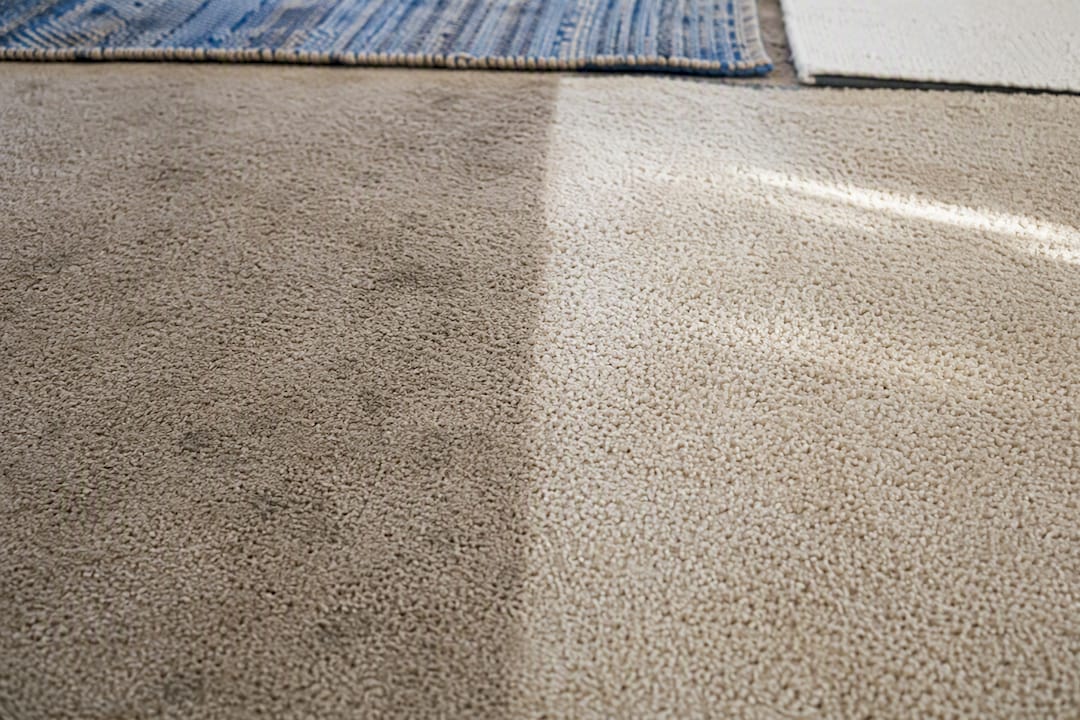
Heat matters too. Professional truck-mount and portable systems typically run hotter water, which loosens oils and allergens that cold or lukewarm rental water leaves behind. Combine weaker suction with lower heat and you get a second problem: carpets that stay wet for 12 to 24 hours instead of 4 to 6, which raises the odds of mould, browning, or that musty smell creeping back a few days later.
Residue is the third failure point. Overdosing the cleaning solution, or skipping a clear rinse pass, leaves a sticky film in the fibres that actually attracts dirt faster than before you cleaned.
- Weaker extraction means soil sits deeper in the pad
- Lower water temperature means allergens and oils survive the pass
- Skipped rinsing means faster re-soiling within weeks
Cost, time and effort: realistic budgeting for renting vs hiring
On paper, renting looks like the cheap option. Machine hire typically runs $30 to $50 for 24 hours, plus cleaning solution and sometimes a deposit. Add those up and a single room often costs under about a hundred dollars once you've factored in solution, deposit, and the fuel to collect and return the machine. Check pricing with your local rental outlet, since fees vary by store and region.
What that figure misses is your own time. Consumer Reports points out that hauling a machine, shifting furniture, and monitoring wet carpet for hours adds a real labour cost that never shows up on the rental receipt.
- Rental makes sense for a single room, light soil, and a free afternoon
- A pro makes more sense once you count your own hourly value against a multi-room job, or if a failed DIY attempt means paying someone to fix it anyway
Professional quotes usually price by room or square metre, and most include pretreatment and rinsing as standard rather than as an upsell.
When renting is the right choice
A rental machine earns its keep in specific, low-stakes situations, not as a general substitute for a proper clean.
- Small rooms or single spot refreshes where the soil is light and surface-level
- Short-term rentals or share houses where tenants want a quick freshen-up between tenancies, not a restoration
- Odour refresh jobs where the smell is mild and hasn't reached the carpet pad
- Maintenance between professional cleans, roughly once or twice a year, to stretch the interval out
Set your expectations accordingly: a rental will make a carpet look and smell noticeably better, but it won't restore colour in worn traffic lanes or fully reset an older carpet. Before you commit, run through a quick checklist: how old is the carpet, is it wool or a synthetic blend, are there pets in the house, and does the manufacturer's warranty require professional cleaning to stay valid?
Pro Tip: Spot-test any solution on a hidden corner first. Wool and viscose in particular can react badly to the wrong chemistry, and you won't know until it's too late.
When to hire professionals: red flags and a decision checklist
Certain situations call for a professional every time, not because a rental is inconvenient, but because getting it wrong causes real damage.
- Pet urine that's reached the pad. Surface cleaning won't touch it, and professionals typically use enzyme treatments and controlled extraction that a rental unit cannot replicate
- Set-in or old stains that have already bonded with the fibre
- Wool, silk, or viscose carpets, where the wrong chemistry or excess moisture can cause permanent discolouration or shrinkage
- Heavy traffic lanes with years of embedded soil
- Any carpet with prior DIY damage, like browning from over-wetting
There are also non-emergency reasons to book a pro: warranty compliance, and presentation before selling or leasing a property, where a patchy DIY job can cost you at inspection.
Before booking anyone, ask what chemistry they use on your fibre type, how many passes are included, and whether pretreatment and a final rinse are part of the price. Reputable operators will answer all three without hesitation, and checking a local reviews platform like Home Service Simple before you commit is a sensible extra step.
If you rent: step-by-step technique to reduce risk
- Vacuum thoroughly and spot-test an inconspicuous patch before you start
- Pretreat visible stains with a dedicated spot treatment, not the main tank solution
- Work in small sections, overlapping each pass slightly so you don't miss strips
- Run two wet passes, then two dry passes over each section. Manufacturer guidance backs this exact sequence and warns rentals suit maintenance, not heavy restoration
- Finish with a clear-water rinse pass if your machine allows it, to stop detergent residue attracting new dirt
- Open windows and run fans to hit a drying target of 4 to 6 hours rather than letting the carpet sit damp overnight
Stop and call a professional if the carpet is still soaked after six hours, if you spot browning coming through, or if a stain won't lift after pretreatment.
Pro Tip: A portable dehumidifier in the room cuts drying time dramatically, especially in a closed bathroom or bedroom with poor airflow.
ACT Cleaning by Demand: the professional alternative and what to expect
When a rental won't cut it, ACT Cleaning by Demand handles the deeper work: carpet and upholstery steam cleaning alongside residential, end of lease, and specialty services across Canberra and the ACT.
Every job uses eco-friendly products and police-checked staff, so you're not choosing between a clean carpet and a safe home.
- Chemistry matched to your fibre type, so wool and delicate blends aren't treated the same as synthetic carpet
- Controlled heat and commercial extraction that avoid the over-wetting problem common with rentals
- A quote that spells out passes, pretreatment, and rinsing before the job starts, not after
When you book a quote, ask what's included for stain treatment and drying time. That answer tells you a lot about who you're hiring.
The conventional advice gets the framing backwards
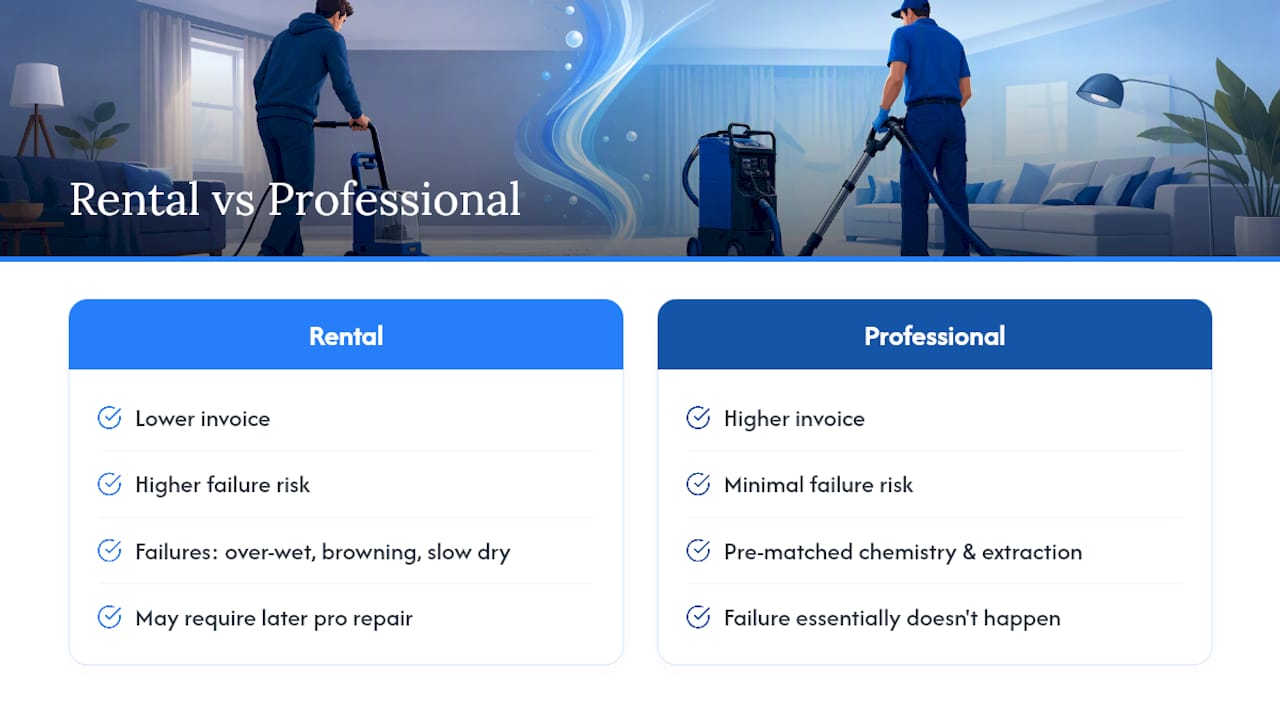
Most guides treat this as a straight cost comparison, cheaper rental against pricier professional visit, as if the only variable that matters is the invoice. That's the wrong lens. The real question is risk allocation: what happens if the job goes wrong.
A rental gone wrong costs you a weekend and a carpet that still looks tired. A professional job gone wrong essentially doesn't happen, because the chemistry and extraction are matched to the fibre before anyone starts. That's the trade you're actually making, not "cheap versus expensive" but "acceptable risk versus none."
What gets underestimated is how often a failed DIY attempt turns into two costs instead of one. Over-wet carpet that browns or takes two days to dry doesn't just look bad, it sometimes needs a professional to fix afterwards anyway. If your carpet falls into any high-risk category (pets, wool, old stains, an upcoming inspection), skip the rental altogether. Save it for the jobs where getting it slightly wrong costs you nothing.
Book a professional clean without the guesswork
If you've read this far and you're leaning towards a professional, Com is set up to make that decision easy. We offer residential carpet and upholstery steam cleaning across Canberra and the ACT, built around eco-friendly products, police-checked staff, and no lock-in contracts, so you're never signed up for more than the job in front of you.

Where a rental leaves you guessing at dosing and drying times, our quotes spell out exactly what's included: pretreatment, the number of passes, and a rinse stage, before the technician arrives. That matters most for wool carpets, pet stains, or any home heading towards a sale or lease inspection, where a mediocre DIY result becomes a bigger problem at the worst possible time.
Ready to compare your situation against a proper quote? Get your house cleaning quote and tell us your carpet's fibre type and any stains upfront so the price reflects the real job, not a guess.
Sources
- Rental Carpet Cleaner vs Professional: Is It Worth Hiring a Pro? | Otesse
- Are Rental Carpet Cleaners Any Good? What to Know | Family Handyman
- Carpet cleaning: rent, hire, or buy? | Consumer Reports
- Rental Carpet Cleaners Vs Professional Carpet Cleaners | Rug Doctor
FAQ
What's the difference between Rug Doctor and Rug Doctor Pro?
The consumer Rug Doctor is the machine available for home rental, built for light maintenance cleaning. Rug Doctor Pro refers to commercial-grade units used by cleaning businesses, with stronger extraction and heat suited to deeper, more frequent professional work.
Is it worth getting carpets professionally cleaned?
Yes, particularly for pet urine, set-in stains, delicate fibres like wool or viscose, or any carpet where warranty terms require professional cleaning. Professional extraction removes substantially more soil than a rental machine can manage.
Why does my carpet smell after using Rug Doctor?
Usually it's over-wetting combined with detergent residue left behind from skipping a clear-water rinse pass. Slow drying traps moisture in the pad, which encourages the musty smell that shows up days later.
Should I rent a machine or hire a cleaner for pet stains?
Hire a professional if the urine has reached the carpet pad, since surface cleaning won't remove odour that's soaked in that deep. A dedicated pet urine cleaning approach targets the pad directly rather than just the visible stain.
How many passes should I do with a rental carpet cleaner?
Manufacturer guidance recommends two wet passes followed by two dry passes over each section, overlapping slightly to avoid missed strips.