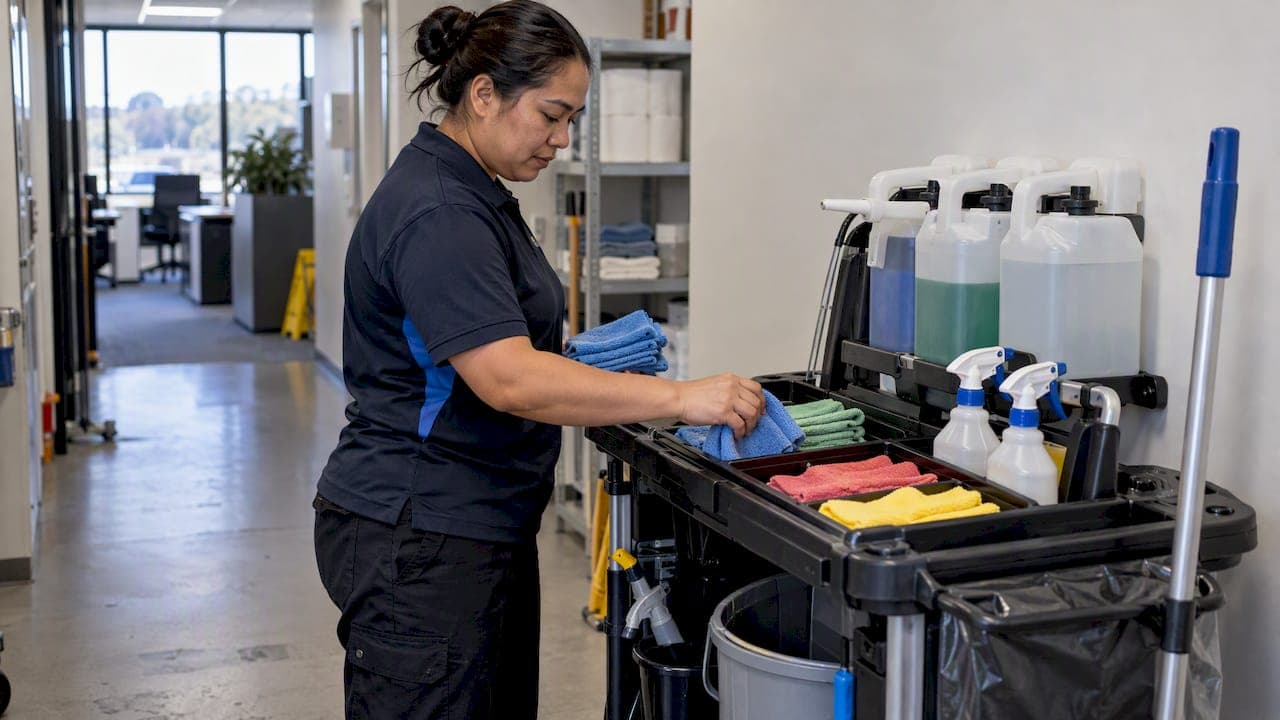
Sustainable office cleaning combines verified low-impact products with high-performance mechanical systems and strict dosing control, and it can cut environmental impacts substantially without losing hygiene. The single most useful first step is a baseline audit of chemical use, waste and laundering habits, paired with supplier KPIs you can actually verify. Life cycle research backs this up with measurable reductions, not just marketing claims.
TL;DR:
- Conduct a baseline audit of chemical use, waste, and laundering habits to set measurable sustainability targets for office cleaning.
- Use calibrated dosing stations, microfibre textiles, and lower-temperature laundering to reduce chemical consumption, textile waste, and energy use.
- Require verification of supplier certifications such as GECA and detailed reporting on chemical volume, waste diversion, and textile lifecycle metrics.
- Implement specific protocols like colour-coded microfibre systems and refillable dispensers to minimize cross-contamination and packaging waste.
- Pilot new procedures in one zone for four to eight weeks to assess hygiene effectiveness and environmental impact before full-scale rollout.
Table of Contents
- What sustainable office cleaning actually involves
- Evidence and benefits: LCA results and procurement implications
- Practical techniques and product choices to reduce environmental impact on site
- How to choose products and suppliers: certifications, contract clauses and KPIs
- A practical roadmap to implement sustainable cleaning at your office
- Regulations and standards shaping sustainable office cleaning
- Waste management strategies for office cleaning
- Common challenges in implementing sustainable cleaning
- How our services put this guide into practice
- Get a tailored sustainable cleaning quote
- FAQ
- Sources
What sustainable office cleaning actually involves
Sustainable office cleaning is not a single product swap. It is a set of linked choices: low-VOC and biodegradable chemistry, concentrated formulas dispensed through calibrated dosing stations, reusable microfibre textiles instead of disposable wipes, and equipment set to use less water and energy per clean. Each element reduces a different kind of impact, and skipping one undermines the rest.
Mechanical removal does more work than fragrance ever will. A microfibre cloth or mop head physically lifts soil and bacteria from a surface, which matters more for hygiene than the scent left behind. Dosing control prevents the common failure mode of "green" programmes: staff over-pouring concentrate because the bottle has no measure, which cancels out any chemical benefit. Eco-mode machinery, like variable-speed vacuums and cold or warm-fill laundering, cuts energy draw during the parts of a clean that use the most power.
Professional services typically combine these elements into a single protocol rather than buying them separately:
- Concentrated, low-VOC chemistry dispensed through wall-mounted or cap-fitted dosing stations.
- Colour-coded, laundrable microfibre cloths and mop heads instead of disposable wipes.
- Low-temperature laundering cycles matched to textile type and soil load.
- Vacuum and floor equipment with HEPA filtration and adjustable power settings.
- Refillable dispensers for hand soap and surface spray in place of single-use bottles.
None of these choices requires a special "eco" brand name. What matters is whether the protocol actually specifies them, and whether anyone checks that it is being followed.
Evidence and benefits: LCA results and procurement implications
The strongest evidence for sustainable cleaning comes from life cycle assessment (LCA), which tracks environmental impact from manufacturing through to disposal rather than relying on a single "green" claim on a label.
A cradle-to-grave LCA of a CAM-compliant green cleaning protocol found it cut global warming potential substantially Mdpi and reduced chemical consumption substantially, energy use significantly and textile waste greatly, while matching or improving microbiological surface results compared with conventional cleaning. That is the headline figure worth taking into a budget meeting: sustainability and hygiene were not a trade-off in this study, they moved together.
The drivers behind those numbers are operational, not exotic. Dosing control stopped chemical overuse at the point of application. Lower-temperature laundering cut the energy cost of keeping textiles usable. Durable microfibre, washed and reused hundreds of times rather than thrown away after one shift, is what drove the textile waste reduction. None of this depended on a single miracle product; it depended on a protocol being followed consistently.
That consistency is exactly what procurement language needs to demand. A cleaning tender that simply asks for "eco-friendly products" invites vague promises. One built around measurable outcomes gets you something you can audit. The Australian government's sustainable procurement guidance recommends exactly this: specify outcomes such as recycled content targets, percentage of waste diverted and a documented supplier environmental sustainability plan, rather than accepting a supplier's own description of itself as green.
Practical implications for a facilities manager reading a quote or a contract draft:
- Ask for the specific reduction a supplier can evidence, not a general sustainability statement.
- Require a reporting cadence (monthly or quarterly) on chemical volume, water use and waste diversion.
- Treat "eco-friendly" as a starting point for questions, not as a completed claim.
The MDPI study is one facility-level assessment, so treat the exact percentages as evidence of what is achievable under a well-run protocol rather than a guarantee for every site. The direction, though, is consistent: dosing discipline and textile reuse do most of the work.
Practical techniques and product choices to reduce environmental impact on site
Turning the evidence into a working office protocol comes down to a handful of concrete changes, as detailed in A guide to sustainability for Sydney commercial cleaning - Sweep and Scrub.
- Switch to colour-coded microfibre systems. Assigning colours to zones (kitchens, bathrooms, desks) reduces cross-contamination risk and cuts reliance on disinfectant as the primary defence.
- Install dosing stations for concentrated chemistry. Calibrated dispensers remove guesswork, reduce packaging waste because concentrate ships in smaller containers, and stop the over-pouring that undoes chemical savings.
- Launder textiles at lower temperatures where fabric allows. This cuts energy use per wash cycle, though some heavily soiled items will still need a hot cycle, so match temperature to soil load rather than applying one rule everywhere.
- Avoid aerosol air fresheners. Environmental hygiene research warns that aerosolised fragrance products can degrade indoor air quality and quietly cancel out gains made elsewhere; ventilation and surface cleaning do the actual hygiene work.
- Swap single-use consumables for refillable and recycled alternatives. Refillable soap and spray dispensers, recycled-content paper towel, and durable cloths all reduce the waste stream without changing the clean itself.
Textile durability is the trade-off worth watching. Microfibre cloths that are laundered too hot or too often lose their fibre structure faster, which means more frequent replacement and less of the lifecycle benefit the LCA evidence describes. Matching laundering temperature to the manufacturer's guidance protects both performance and the environmental case for using microfibre in the first place.
Pro Tip: Keep one laundered microfibre cloth in rotation per colour-coded zone and retire it by wash count, not by appearance, since visible wear lags behind fibre breakdown.
For offices with carpeted areas, pairing this protocol with non-toxic carpet treatments extends the same low-VOC logic to a surface that holds onto both soil and fragrance chemicals longer than hard flooring does.
How to choose products and suppliers: certifications, contract clauses and KPIs
Certification schemes exist to make "eco-friendly" checkable instead of promotional. Good Environmental Choice Australia (GECA) licenses products against criteria that exclude certain hazardous substances and require low-VOC formulation. A GECA-licensed product, such as the Kuranda example, will state on its product page or safety data sheet that it is free from ingredients like alkyl phenol ethoxylates, phthalates, heavy metals, chlorine and certain solvents, and that its surfactants are biodegradable and phosphate-free. Checking for that licence mark, rather than taking a label's own "green" language at face value, is the fastest way to separate certified products from marketing.
When you are tendering or comparing suppliers, the contract itself should carry the sustainability commitment, not just the sales conversation. Items worth specifying:
- A documented dosing system with calibration records, not just "concentrated products available on request".
- Safety data sheet (SDS) access for every product used on site.
- Waste diversion reporting, ideally with a percentage figure the supplier updates regularly.
- Textile lifecycle metrics: wash counts, replacement frequency, laundering temperature.
- A clause allowing you to verify certification claims against the issuing body's own listing.
Buyers following sustainable procurement guidance are encouraged to require a supplier environmental sustainability plan for higher-value contracts, which turns a general promise into a document you can hold a supplier to. That single clause does more to prevent greenwashing than any amount of label-reading.
For a pilot, measure before and after on three things: chemical volume purchased per month, laundering energy or water use if metered, and waste bin volume. A four to eight week pilot in one wing or floor gives enough data to model whether scaling the protocol office-wide is worth the cost, without committing the whole budget upfront. Our guide to GECA certification covers what to check when verifying a supplier's claims in more detail.
A practical roadmap to implement sustainable cleaning at your office
Moving from "we'd like to be greener" to a working protocol follows a predictable sequence.
- Audit first. Record current chemical purchases, waste volumes, laundering frequency and textile types before changing anything, so you have a baseline to measure against later.
- Pilot in one area. Run the new protocol, dosing stations, microfibre system, lower-temperature laundering, in a single floor or wing for four to eight weeks, tracking both hygiene indicators and the environmental metrics from your audit.
- Update contract language and roll out. Once the pilot shows the protocol holds up, write dosing, SDS access, waste diversion and textile metrics into the supplier contract, and train staff on the specific steps rather than a general "be more eco-friendly" instruction.
- Report on a regular cadence. Monthly or quarterly reporting on the same metrics keeps the programme honest and gives you the evidence to expand it or adjust it.
Pro Tip: Brief occupants before the pilot starts. A short note explaining why bins look different or why a cleaner is now using a labelled cloth system prevents confused complaints that have nothing to do with cleaning quality.
Staff training deserves its own attention in step three. A colour-coded microfibre system only prevents cross-contamination if cleaners consistently use the right cloth in the right zone, and a dosing station only saves chemical and money if nobody bypasses it with a backup bottle. Short, repeated training sessions work better than a single induction day, particularly where cleaning staff turnover is high. For offices managing the clean themselves rather than through a contractor, our office cleaning checklist breaks the daily-to-annual tasks down into a format staff can follow without supervision.
Regulations and standards shaping sustainable office cleaning
Formal standards for green cleaning vary by market, and it is worth being precise about which apply where you operate rather than assuming a single global rulebook. In Australia, the clearest reference point for commercial buyers is the government's own sustainable procurement guidance, which sets out how public and private buyers can specify measurable sustainability outcomes in a contract rather than relying on supplier self-description.
Beyond procurement policy, product-level certification does the heavy lifting on verifying what is actually in a cleaning formula. GECA's criteria for cleaning products exclude specified hazardous ingredients and require low-VOC formulation, giving buyers a licence mark to check rather than a claim to trust blindly. Building-level sustainability ratings, where a workplace is pursuing one, often include cleaning protocol and product choice as a contributing factor, though the specific requirements depend on the rating scheme and jurisdiction a building is certified under, so check the scheme's own documentation rather than assuming a generic standard applies.
The practical takeaway for an office manager is the same regardless of which formal scheme applies: ask a supplier to point to the specific standard or certification their claim is based on, and verify it against the issuing body's own listing rather than a product description written by the supplier itself.
Waste management strategies for office cleaning
Cleaning protocol and office waste management are connected more directly than most facilities teams treat them. Switching to concentrated chemistry and refillable dispensers reduces the packaging volume going into general waste before recycling is even considered, which is often a bigger win than optimising the recycling stream itself.
Where recycling and composting bins exist in an office, cleaning staff need clear, consistent rules for what goes where, since a cleaner who cannot tell recyclable packaging from general waste will default to the bin that is easiest, undoing the sorting work occupants did during the day. Labelling bins by material rather than by vague "recycling" and "rubbish" signage, and briefing the cleaning team on the same system occupants use, keeps the stream consistent end to end.

Composting food waste from office kitchens is worth setting up where volume justifies it, paired with a simple separation bin at the point of disposal rather than asking cleaners to sort it later.
Common challenges in implementing sustainable cleaning
The most common obstacle is not cost, it is habit. Cleaning staff who have used the same chemical and technique for years can be reasonably sceptical that a new dosing station or a colour-coded cloth system will clean as well as what they already know works. Addressing this with hands-on training and a short pilot period, rather than a memo announcing the change, tends to resolve it faster than any amount of written instruction.
A second recurring tension is balancing effectiveness against environmental intent. Some low-VOC products genuinely need slightly longer contact time on tough soil than a stronger conventional chemical, and skipping that step to save time undermines both hygiene and the sustainability case. Training staff on correct dwell time, not just on which bottle to use, closes that gap.
Cost is a real but often overstated barrier. Concentrated chemistry and reusable textiles cost less over time even where the upfront switch looks like an added expense, because packaging, replacement wipes and chemical overuse are recurring costs that a well-run protocol removes. Running a small pilot before a full rollout, as outlined earlier, gives a manager real numbers to settle that argument rather than relying on supplier promises either way.
How our services put this guide into practice
Everything above describes what a well-run sustainable cleaning protocol looks like on paper. In practice, we build our office cleaning around a similar approach: customised cleaning plans rather than a fixed package, eco-friendly products, and staff who are trained on the protocol rather than left to improvise.
That training is where dosing control and textile durability actually hold up day to day. A customised plan means we can match laundering temperature, cloth rotation and chemical dosing to the specific site rather than applying one generic routine, and flexible scheduling lets us adjust frequency as an office's needs change without requiring a long-term contract.
— Deng
Get a tailored sustainable cleaning quote
If you are ready to move from reading about dosing stations and microfibre systems to actually having them running in your office, we start with a site visit and a short audit, the same first step this guide recommends, so any proposal we send reflects your actual chemical use, traffic patterns and waste volume rather than a generic quote.
From there, we typically propose a pilot in one area before recommending a full rollout, so you can see hygiene and environmental results before committing to an ongoing arrangement. What you can expect when you reach out:
- A site visit and baseline audit covering current cleaning habits and waste.
- A pilot proposal for one floor or zone, with clear metrics to review afterwards.
- No lock-in contract, eco-friendly products as standard, and a satisfaction guarantee on the work. Current details and terms are available on our website.
Visit our office cleaning page to see how the service is structured, or browse the full range of cleaning services we offer if your needs extend beyond a single office.
FAQ
Is GECA or Koala Eco certification better for office products?
GECA is a formal, independently audited ecolabel that licenses specific products against documented criteria, including low-VOC formulation and exclusion of certain hazardous substances, which GECA's product listings make checkable. A brand's own eco-positioning is not the same as third-party certification, so for procurement purposes, checking whether a product carries a GECA licence is more reliable than comparing brand reputations alone.
What are eco-friendly cleaning options for an office?
Eco-friendly cleaning options centre on low-VOC and biodegradable chemistry, concentrated formulas dispensed through dosing stations, reusable microfibre cloths instead of disposable wipes, and equipment set to lower energy and water use. Choosing products certified by a scheme such as GECA adds a verification layer beyond a supplier's own description.
How do you professionally clean an office sustainably?
Professional sustainable office cleaning follows a documented protocol: colour-coded microfibre systems to limit cross-contamination, calibrated dosing stations for concentrated chemistry, and low-temperature laundering matched to textile type. A cradle-to-grave LCA found this kind of protocol can cut chemical consumption drastically while maintaining comparable hygiene results.
How often does an office need to be cleaned?
Cleaning frequency depends on occupancy, foot traffic and the specific area, with high-touch zones like kitchens and bathrooms generally needing daily attention and desks or common areas often managed on a less frequent schedule. A baseline audit of your specific office is the most reliable way to set a frequency, rather than applying a standard schedule designed for a different type of space.
Sources
- Environmental and microbiological performance of a CAM‑compliant green cleaning protocol: an integrated life cycle and surface contamination assessment in a civil facility
- Sustainable procurement guide (DCCEEW)