Property cleaning specializations are distinct service categories defined by the type of property, the hazards involved, and the equipment required to do the job safely and effectively. The cleaning industry employs approximately 2.4 million workers across residential, commercial, and specialty domains. That scale reflects genuine diversity in what "cleaning" actually means from one property to the next. Understanding the types of property cleaning specializations available helps you match the right service to your property's condition, legal obligations, and budget before you sign a contract or hand over keys.
1. What are the main types of property cleaning specializations?
The three primary categories of property cleaning specializations are residential, commercial, and specialty cleaning. Each addresses a different set of property conditions, risk levels, and compliance requirements. Choosing the wrong category wastes money and can leave you exposed to disputes or damage claims.
Residential cleaning covers standard recurring cleans, deep cleans, and move-in or move-out cleans. Commercial cleaning covers offices, retail spaces, and managed facilities under structured maintenance contracts. Specialty cleaning covers regulated or high-risk environments where standard methods are unsafe or ineffective. The boundary between general and specialised cleaning lies primarily in risk management protocols and regulatory compliance, not just the type of building.
2. Residential cleaning: standard, deep, and turnover cleans
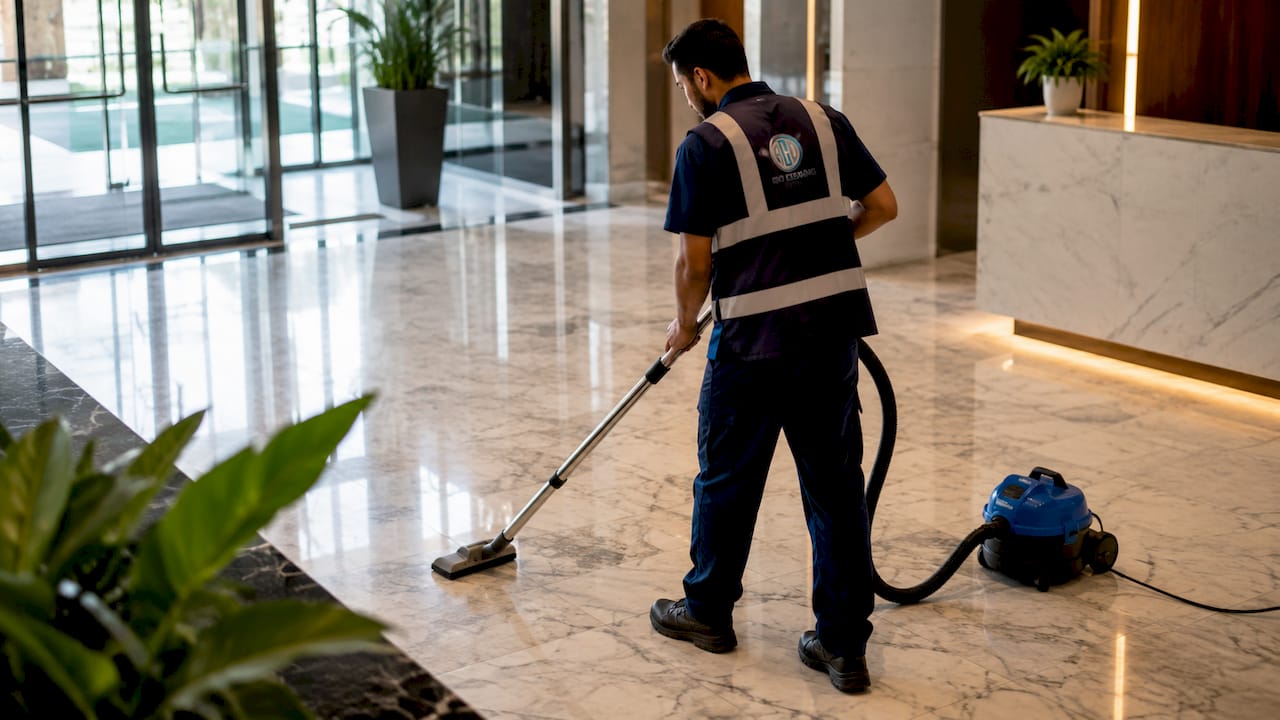
Standard recurring cleaning covers routine tasks such as vacuuming, mopping, surface wiping, and bathroom sanitising on a weekly or fortnightly schedule. Deep cleaning goes further, targeting grout, appliances, skirting boards, and areas skipped during routine visits. Move-in and move-out cleans, often called end-of-lease cleaning, are the most thorough residential service and the one landlords rely on most heavily during tenancy transitions.
Carpet and upholstery cleaning are common add-ons for residential properties. These require wet extraction or dry-compound methods and specialised equipment that most general cleaners do not carry. Licensing requirements for chemical use vary by state, so confirm your provider holds the correct credentials before booking.
Pro Tip: Request timestamped, room-by-room before-and-after photos from your cleaner. Photographic documentation protects you from bond disputes and verifies the scope of work was completed.
- Standard recurring clean: surfaces, floors, bathrooms, kitchens
- Deep clean: appliances, grout, window tracks, inside cupboards
- Move-in or move-out clean: full property reset to rental condition
- Carpet and upholstery: wet extraction or dry-compound methods
- Window cleaning: interior glass, frames, and fly screens
3. How commercial property cleaning differs and what specializations exist
Commercial property cleaning operates under facility management contracts rather than one-off bookings. These contracts specify cleaning frequency, scope, compliance standards, and reporting obligations. Janitorial services cover daily or nightly maintenance of offices and retail spaces, while specialised commercial cleaning addresses tasks that require licensed operators or regulated equipment.
Office cleaning is the most common commercial specialisation. It covers workstation sanitising, communal kitchen maintenance, and waste management on a scheduled basis. Window and external panel cleaning for multi-storey buildings requires rope access certification or elevated work platform licences. Kitchen hood and exhaust cleaning in commercial food premises is regulated under fire safety codes and must be completed by licensed contractors.
Commercial cleaning contracts often include compliance documentation, which is particularly relevant for landlords managing commercial leases. OSHA standards in the United States and equivalent Safe Work Australia guidelines set minimum requirements for chemical handling, personal protective equipment, and waste disposal in commercial environments.
- Office cleaning: workstations, kitchens, bathrooms, waste
- Retail cleaning: floor care, display areas, fitting rooms, entry zones
- Window and facade cleaning: rope access or elevated platform certified
- Kitchen hood cleaning: fire-code compliant, licensed contractors only
- Facility maintenance contracts: scheduled, documented, compliance-driven
4. What constitutes specialty cleaning and when is it necessary
Specialty cleaning is defined by three criteria: the presence of regulated hazards, the use of equipment costing more than $10,000, or the requirement for professional licensing. This is not a marketing label. It is a functional distinction that determines which operators can legally perform the work.
Biohazard remediation covers crime scenes, trauma sites, and properties affected by mould or sewage. Fire and smoke restoration addresses soot penetration, odour neutralisation, and structural surface treatment after a fire. Industrial tank cleaning and confined space cleaning require gas monitoring, breathing apparatus, and confined space entry permits.
Two technologies are reshaping specialty cleaning in 2026. Automated CO2 snow cleaning reduces cleaning time by up to 70% while achieving 93% contamination removal without surface abrasion. That makes it highly effective for precision surfaces where manual scrubbing would cause damage. Laser cleaning for heritage conservation uses Nd:YAG lasers at 1064 nm wavelength with tuned pulse durations to remove contaminants from delicate stone, timber, and metalwork without altering the underlying substrate. Both methods reflect a broader shift toward selective, controlled removal strategies that protect asset integrity rather than simply scrubbing surfaces clean.
Data centres represent a less obvious but critical specialty cleaning environment. ESD-safe cleaning protocols use grounded equipment and low-moisture methods to eliminate particulate and electrostatic risks without disrupting thermal management systems. Standard janitorial cleaning is unsuitable here and can cause hardware failure.
Pro Tip: If a contractor cannot name the specific protocol, chemical classification, or equipment standard they use for a specialty job, treat that as a disqualifying gap. Vague answers in specialty cleaning carry real financial and legal risk.
- Biohazard remediation: mould, sewage, trauma sites
- Fire and smoke restoration: soot, odour, structural surfaces
- Industrial and confined space cleaning: gas monitoring, entry permits
- Automated CO2 snow cleaning: precision surfaces, zero abrasion
- Laser cleaning: heritage stone, timber, and metalwork
- Data centre cleaning: ESD-safe, low-moisture, grounded equipment
5. How to choose the right cleaning specialisation for your property
The right cleaning specialisation starts with an honest assessment of your property type and its current condition. A residential landlord preparing a unit for a new tenant needs a move-out clean with photographic verification, not a specialty service. A commercial landlord handing over a food premises needs licensed kitchen hood cleaning, not a standard office package.
Rental property cleaning projects typically receive a market-rate quote within 48 hours and complete within 5 business days when booked through a structured service. That timeline matters when you are managing tenancy transitions with fixed handover dates. Build the cleaning schedule around your lease end date, not around cleaner availability.
Consider these factors when selecting a specialisation:
- Property type: Residential, commercial, or industrial use determines the base service category.
- Tenancy condition: A well-maintained property needs a standard clean. A neglected or damaged property needs a deep clean or specialty intervention.
- Compliance obligations: Commercial leases often specify cleaning standards. Confirm what your lease requires before booking.
- Licensing: Specialty services require licensed operators. Ask for proof of licence and insurance before work begins.
- Documentation: Always request timestamped before-and-after photos, regardless of the service type.
- Budget: Specialty cleaning costs more, but the cost of not using it on a sensitive property is higher.
Pro Tip: For short-term rental properties, Airbnb cleaning is its own specialisation. Rapid turnover between guests requires a different checklist and timeline than a standard residential clean.
Understanding why residential cleaning standards differ from commercial ones helps you avoid over-specifying or under-specifying the service you book. A mismatch between service type and property need is the most common and most avoidable mistake landlords make.
Key takeaways
Matching the correct cleaning specialisation to your property type is the single most effective way to protect asset value and avoid post-tenancy disputes.
| Point | Details |
|---|---|
| Three core categories | Residential, commercial, and specialty cleaning each serve distinct property types and risk levels. |
| Documentation is non-negotiable | Timestamped, room-specific before-and-after photos protect landlords during every tenancy transition. |
| Specialty cleaning has legal criteria | Regulated hazards, equipment over $10,000, or licensing requirements define specialty cleaning. |
| Technology is changing specialty work | CO2 snow and laser cleaning deliver higher contamination removal with less substrate damage than manual methods. |
| Compliance drives commercial contracts | Commercial leases often specify cleaning standards; confirm obligations before booking any service. |
Why I think most landlords underestimate cleaning specialisations
Most landlords treat cleaning as a commodity. They book the cheapest available option, assume the job is done, and then face a bond dispute or a compliance notice that costs far more than the saving. I have seen this pattern repeat across residential and commercial properties alike.
The shift I find most significant in 2026 is not the technology, though CO2 snow and laser cleaning are genuinely impressive. It is the move toward selective, multidimensional cleaning strategies that treat substrate integrity as a primary concern. That thinking used to belong only to heritage conservators and semiconductor manufacturers. Now it applies to any high-value property asset.
My practical recommendation is this: before you book any cleaning service, ask the provider for their scope document and their verification method. If they cannot produce both within 24 hours, they are not operating at the standard your property deserves. Cleaning is not a cost centre. For a landlord, it is asset protection with a mop.
— Deng
Cleaning your Canberra property the right way
Property owners in Canberra have access to a local service built around exactly this kind of thinking. ACT Cleaning by Demand offers custom cleaning packages tailored to residential, commercial, and specialty property needs, with eco-friendly products and documented verification as standard.
Whether you need an end-of-lease clean with full photographic sign-off, a scheduled commercial maintenance contract, or a specialty intervention for a challenging property condition, ACT Cleaning by Demand matches the service to the property. Their booking process is straightforward, and quotes are available quickly. Contact ACT Cleaning by Demand to discuss your property's specific requirements and get a package that fits.
FAQ
What are the three main types of property cleaning specializations?
The three main types are residential cleaning, commercial cleaning, and specialty cleaning. Each is defined by the property type, risk level, and equipment or licensing required.
When does a property need specialty cleaning rather than a standard clean?
Specialty cleaning is required when a property involves regulated hazards, equipment costing more than $10,000, or tasks that require a professional licence, such as biohazard remediation or fire restoration.
Why is photographic documentation important for rental property cleaning?
Before-and-after photos, organised by room and timestamped, protect landlords from bond disputes and verify that the cleaning scope was completed as agreed.
What is the difference between janitorial services and commercial cleaning?
Janitorial services cover routine daily or nightly maintenance tasks in commercial spaces. Specialised commercial cleaning covers licensed or regulated work such as kitchen hood cleaning, facade cleaning, or data centre maintenance.
Is standard cleaning suitable for data centres or heritage properties?
Standard cleaning is unsuitable for both. Data centres require ESD-safe protocols to prevent hardware damage, and heritage properties benefit from laser or CO2 snow cleaning to avoid substrate damage.