Most people think they're keeping a clean house. Regular vacuuming, wiping down benches, a weekly bathroom scrub. But what does deep cleaning involve beyond those routine habits? The answer tends to surprise people. A proper deep clean, sometimes called a thorough or intensive clean in the professional industry, targets the grime, allergens, and bacteria that routine cleaning misses entirely. We're talking about grout lines, refrigerator coils, ceiling fan blades, and the dust colony living behind your couch. This guide covers everything you need to know, from room-by-room tasks to real health benefits.
Table of Contents
- Key takeaways
- What deep cleaning actually involves
- Room-by-room deep cleaning tasks
- Health benefits of a thorough clean
- Areas most people miss
- Steps for your next deep clean
- My take on why people underestimate deep cleaning
- Ready for a professional deep clean?
- Common questions
Key takeaways
| Point | Details |
|---|---|
| Deep cleaning goes deeper | It targets neglected areas like baseboards, grout, and appliances that regular cleaning never touches. |
| Health benefits are real | Removing hidden allergens, mould spores, and bacteria directly improves indoor air quality. |
| Frequency matters | Most homes benefit from a thorough clean two to four times per year depending on pets and traffic. |
| Room-by-room works best | Breaking tasks into specific rooms reduces overwhelm and keeps the process manageable. |
| Professionals fill the gaps | When DIY isn't enough, professional cleaners reach the spots most homeowners consistently overlook. |
What deep cleaning actually involves
Deep cleaning is the practice of systematically cleaning areas and surfaces that don't get attention during regular tidying or weekly maintenance. Where routine cleaning maintains surface appearance, deep cleaning targets hidden grime in hard-to-reach areas, beneath furniture, inside appliances, and embedded in fabrics. It's less about how often you clean and more about how thoroughly you clean.
Here is what a proper deep clean typically addresses:
- Baseboards and skirting boards – Dust and grime accumulate along the bottom of every wall, often ignored for months.
- Ceiling fans and light fittings – Layers of dust build up on fan blades and get redistributed into the air every time the fan runs.
- Window blinds and tracks – Both collect dust and can harbour mould in humid climates.
- Grout lines – Between tiles in kitchens and bathrooms, grout traps bacteria and discolouration that surface wiping won't remove.
- Upholstery and mattresses – Dust mites live in fabric. Regular vacuuming helps, but deep cleaning is the only way to properly address them.
- HVAC vents and filters – These circulate whatever is sitting inside them directly into your breathing air.
According to Care.com's cleaning guidance, most of these areas should be cleaned every six months at a minimum, with frequency ranging from two to four times per year based on how many people and pets live in the home. Homes with young children or allergy sufferers benefit from more frequent sessions.
Room-by-room deep cleaning tasks
The most practical way to approach a thorough clean is to break it down by room. Each space has its own set of tasks, and treating them separately prevents the whole process from feeling unmanageable.
Kitchen
The kitchen is the highest priority in any deep cleaning checklist. Grease and bacteria accumulate even with regular wiping, which makes food safety a genuine concern if deep cleaning gets skipped. Here is a logical order for kitchen deep cleaning tasks:
- Clear benchtops and cupboards, then wipe down all surfaces including the backs and undersides of cupboard doors.
- Clean the oven, including the door glass, racks, and internal walls. Use a non-toxic degreaser and leave it to soak before scrubbing.
- Deep clean the refrigerator by removing all food and shelving. Wash shelves and drawers, sanitise the interior walls, and clean the door seals and coils every three to four months.
- Degrease the rangehood filter and wipe the exterior.
- Clean the dishwasher interior and door seal, which collects food residue and mould.
- Scrub the sink, taps, and surrounding tiles with a disinfectant.
Pro Tip: For the full kitchen cleaning sequence, always work from top to bottom so loosened debris falls onto surfaces you haven't cleaned yet.
Bathroom
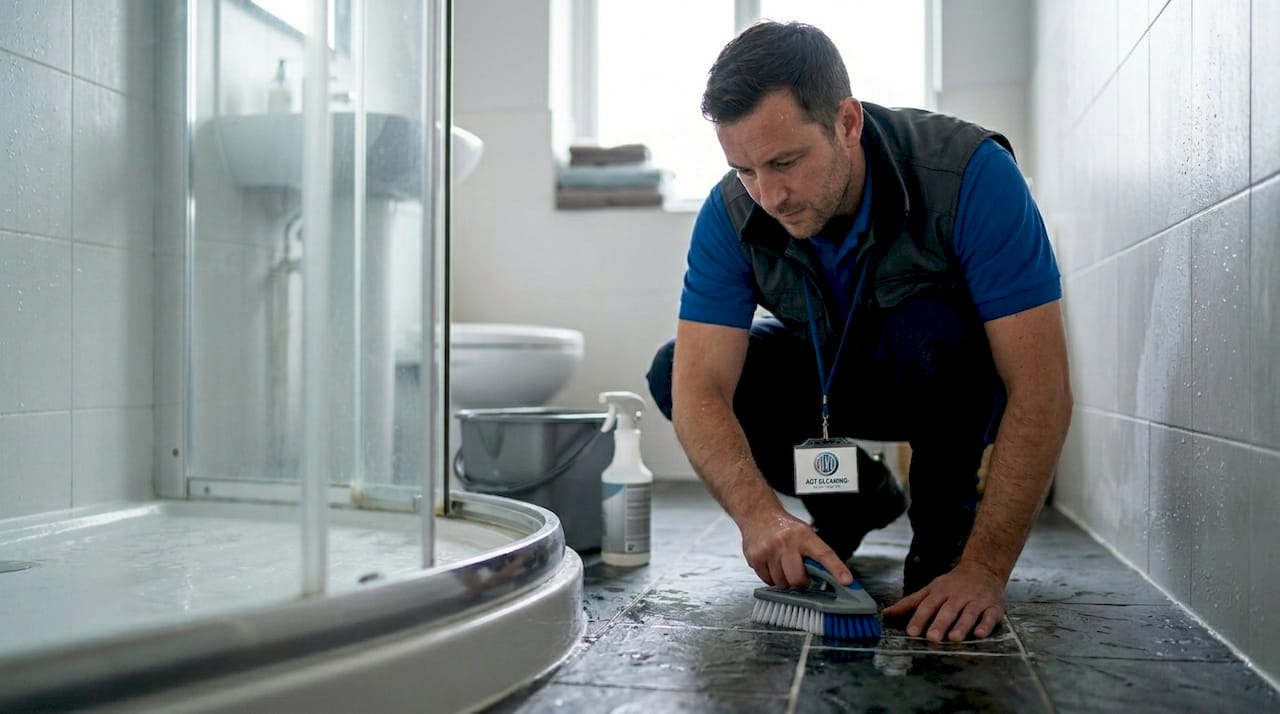
The bathroom deep cleaning process focuses on mould, limescale, and soap scum, three things that routine spraying rarely removes completely. Scrub grout lines with a stiff brush and a bicarbonate-based paste. Remove limescale from taps and showerheads by soaking them in diluted white vinegar. Clean behind and around the toilet base, not just the bowl. Wash shower curtains or thoroughly scrub screen tracks where soap scum hides.
Living areas and bedrooms
These rooms seem cleaner because the mess is less visible. But carpets and upholstery hold far more than what a regular vacuum removes. Steam clean carpets and rugs, or hire a professional extractor annually. Flip and vacuum mattresses, then use an upholstery attachment on bed bases. Dust behind televisions, inside shelving units, and on top of wardrobes. Wipe down light switches, door handles, and remote controls.
Pro Tip: Dividing rooms into zones (floor, furniture, walls, fixtures) helps you manage room tasks without missing a surface.
Health benefits of a thorough clean
The health case for deep cleaning is more compelling than most people realise. Dyson's research frames it not as an aesthetic exercise but as a health-related practice targeting allergens and contaminants at their source.
Consider what builds up in an uncleaned home over a matter of months:
| Contaminant | Where it hides | Health impact |
|---|---|---|
| Dust mites | Mattresses, upholstery, carpets | Trigger asthma and allergic rhinitis |
| Mould spores | Bathroom grout, window seals, vents | Cause respiratory irritation and infections |
| Pet dander | Fabrics, air ducts, under furniture | Exacerbate allergies and asthma |
| Bacteria | Kitchen surfaces, sponges, door handles | Lead to gastrointestinal and skin infections |
EPA guidance on indoor air quality identifies source control, improved ventilation, and air filtration as the most effective strategies for healthier homes. Deep cleaning directly addresses source control. Paired with opening windows during and after cleaning, the indoor air quality improvement can be significant.
"Deep cleaning addresses hidden accumulation of grime and allergens beneath and behind furniture and surfaces, which is essential for a truly healthy home." (Dyson)
Pro Tip: Integrating ventilation into your cleaning routine, by opening windows and running extraction fans, reduces allergens resettling on freshly cleaned surfaces.
Mould deserves specific mention. The Australian CDC advises that mould cleaning requires scrubbing an area about 50 centimetres beyond the visible patch, using wet methods only (never dry brushing, which releases spores), and thoroughly drying the area afterwards to prevent recurrence.
Areas most people miss
There is a consistent gap between what people think they clean and what actually gets cleaned. Routine cleaning covers surface appearance, but a proper deep clean is defined by the areas it reaches that weekly tidying never touches.
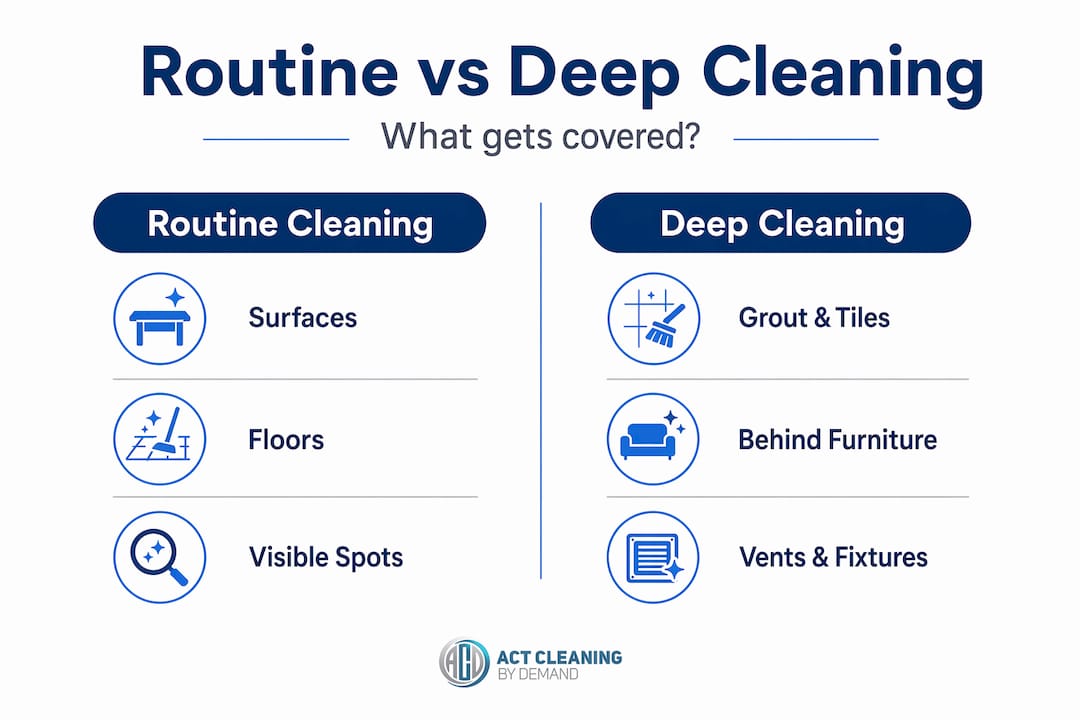
| Area | Routine cleaning | Deep cleaning |
|---|---|---|
| Skirting boards | Rarely | Wiped and sanitised |
| Refrigerator coils | Never | Vacuumed or brushed |
| HVAC vents | Never | Removed and washed |
| Under heavy furniture | Rarely | Vacuumed and mopped |
| Window blind slats | Occasionally wiped | Fully cleaned and dried |
| Mattress surface | Rarely | Vacuumed and deodorised |
The reason these spots matter is not just visual. Dust and allergens accumulate in these overlooked spaces and re-enter the air you breathe every day. Moving furniture to vacuum and mop underneath it, removing vent covers and washing them, and cleaning refrigerator coils are not glamorous tasks. But they are the ones that make the actual difference to your home's hygiene.
Here are the most commonly missed spots worth adding to your next checklist:
- Behind and under the refrigerator
- The seal around the washing machine drum
- Exhaust fans in bathrooms and kitchens
- Inside kitchen cupboards and drawer interiors
- Top edges of door frames and architraves
Steps for your next deep clean
Knowing where to clean is one thing. Having a clear plan for how to deep clean efficiently saves hours and prevents you from circling back to areas you thought were done.
- Schedule and plan. Choose one room or zone per session if time is limited. Most homes benefit from a full deep clean every three to six months.
- Gather your supplies. You'll need microfibre cloths, a stiff grout brush, a steam mop or carpet cleaner, a degreaser for the kitchen, mould-specific cleaner for bathrooms, and a vacuum with attachments.
- Declutter before you clean. You cannot clean surfaces with objects on them. A thorough declutter first makes every subsequent step faster.
- Work top to bottom, back to front. Always start with high surfaces (ceiling fans, tops of cupboards) and work downward. Clean the furthest corner of a room first and move toward the door.
- Tackle one room completely before moving to the next. This prevents cross-contamination and gives you a visible sense of progress.
- Ventilate throughout. Open windows and run fans during and after cleaning to clear airborne particles and speed drying.
- Address mould carefully. Follow the Australian CDC's mould guidelines: scrub beyond the visible area, never dry brush, and dry completely.
- Maintain between sessions. A five-minute daily wipe of high-touch surfaces extends the results of a deep clean considerably.
Pro Tip: Set a timer for each room rather than trying to finish the whole house in one day. Two focused hours per room is more effective than a rushed whole-house attempt.
My take on why people underestimate deep cleaning
I've spoken with hundreds of homeowners over the years, and the pattern is always the same. They clean regularly, they feel good about it, and then they're genuinely shocked when they pull out the fridge or strip the mattress. The amount of accumulated grime is almost always worse than expected.
The mistake I see most often is confusing cleanliness with tidiness. A tidy home looks clean. A clean home actually is. Those are two very different things. Regular cleaning is maintenance. Deep cleaning is restoration. You need both, but most people only do one.
I also think people underestimate the frequency needed. Two to four times a year sounds like a lot until you consider that you spend the majority of your life breathing the air inside your home. That's the frame that changes people's thinking.
The honest truth is that a full deep clean is time-consuming and physically demanding. There's no shortcut for moving furniture, scrubbing grout, or cleaning oven interiors properly. For many households, calling in a professional once or twice a year isn't a luxury. It's a practical decision that guarantees the job actually gets done, including the spots most people never get to.
— Deng
Ready for a professional deep clean?
If this article has made your to-do list feel long, that's actually a good sign. It means you're seeing your home clearly. Com, through ACT Cleaning by Demand, provides professional house cleaning services tailored to exactly these needs. Whether you're tackling a thorough post-season clean, preparing a property for sale, or finishing a tenancy, their team covers the hard-to-reach areas, health-critical surfaces, and overlooked spots that make the real difference. Renters finishing a lease will also find their end-of-lease cleaning service covers the full scope of what landlords and agents actually check. Booking is straightforward and the service is customised to your specific space.
Common questions
What is the difference between regular and deep cleaning?
Regular cleaning maintains surface appearance through tasks like vacuuming, wiping down benches, and mopping. Deep cleaning targets hidden areas including grout, appliances, baseboards, and upholstery that accumulate grime over time.
How often should you deep clean your home?
Most homes benefit from a thorough clean two to four times per year. Homes with pets, young children, or allergy sufferers should lean toward the higher end of that range.
What areas does deep cleaning cover that regular cleaning doesn't?
Deep cleaning addresses ceiling fans, behind and under furniture, refrigerator coils, HVAC vents, grout lines, mattresses, and the insides of appliances. These areas are rarely touched during routine weekly cleaning.
Is deep cleaning necessary for renters?
Yes. Renters are typically required to return a property in a clean condition at the end of a lease, which means a full deep clean is often expected. Professional end-of-lease cleaning covers all the areas that standard cleaning misses.
Can deep cleaning help with allergies?
Removing dust mites, pet dander, and mould spores through thorough cleaning of carpets, upholstery, and neglected surfaces directly reduces allergen load in the home and can meaningfully improve symptoms for allergy sufferers.