Commercial cleaning is something most business owners think they understand until they actually have to manage it. At its core, what is commercial cleaning? It is the professional cleaning of non-domestic workplaces including offices, schools, hospitals, and retail spaces, using trained staff and specialised equipment and protocols. This is not scaled-up home cleaning. The scope, the chemistry, the scheduling, and the compliance obligations are categorically different. This guide cuts through the confusion so you can make smarter decisions about how your facility gets cleaned, who does it, and what you should actually expect from the service.
Table of Contents
- Key takeaways
- What commercial cleaning actually is
- The real benefits of commercial cleaning for businesses
- How to choose a commercial cleaning provider
- Commercial cleaning procedures and techniques
- My perspective on commercial cleaning management
- ACT Cleaning by Demand: professional commercial cleaning in Canberra
- Common questions about commercial cleaning
Key takeaways
| Point | Details |
|---|---|
| Commercial cleaning is specialised | It involves trained staff, sector-specific protocols, and equipment far beyond residential standards. |
| Janitorial and deep cleaning differ | Routine upkeep and periodic deep cleans serve different purposes and should both be part of your plan. |
| Cleaning order matters | Always clean surfaces before sanitising or disinfecting for maximum effectiveness. |
| Provider selection is critical | Match your provider's expertise to your facility type, not just their price point. |
| High-touch zones need priority | Some surfaces in busy workplaces need cleaning multiple times daily to maintain genuine hygiene. |
What commercial cleaning actually is
Commercial cleaning covers the professional cleaning of non-domestic environments. That includes offices, aged care facilities, schools, retail shops, gyms, medical centres, and warehouses. It involves trained staff following documented protocols, using equipment specifically chosen for the setting.
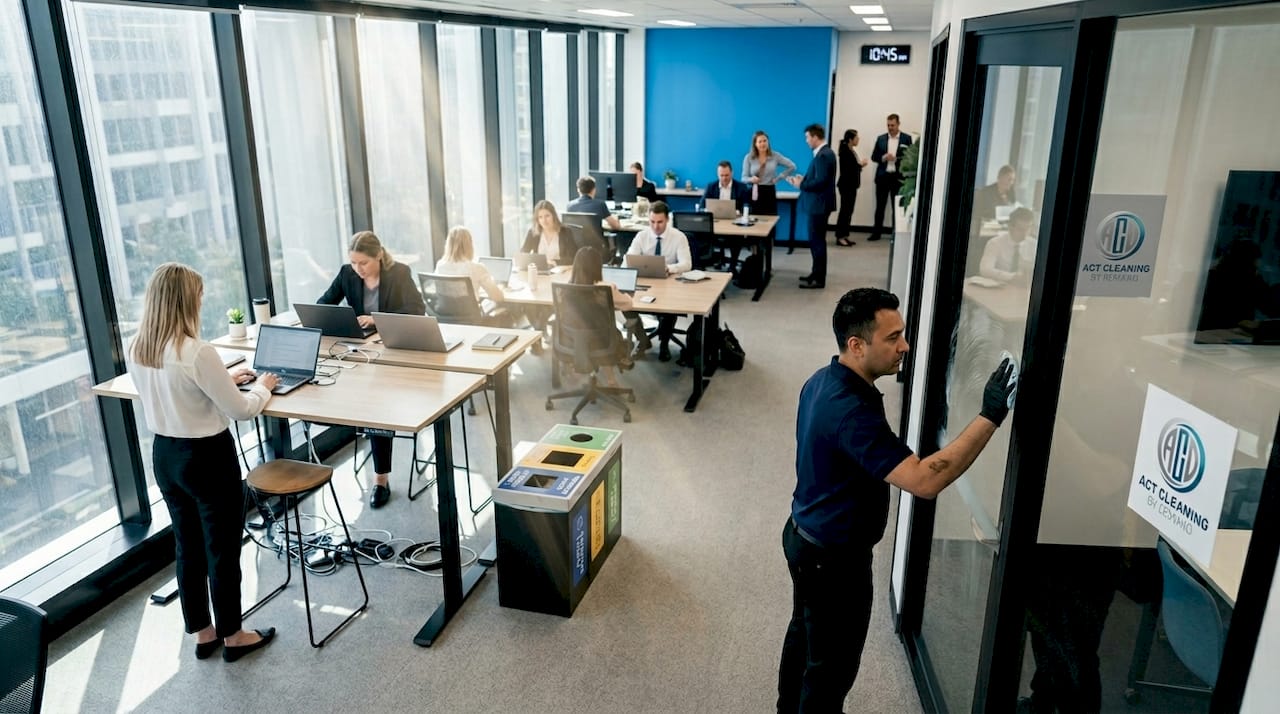
A common point of confusion is the difference between commercial cleaning and janitorial services. Janitorial work focuses on routine daily upkeep: emptying bins, mopping floors, wiping down surfaces. Commercial cleaning goes deeper and includes carpet extraction, floor waxing, window cleaning, sanitising high-touch areas, and post-construction clean-ups that go well beyond what a janitor's kit can handle. The two are complementary, not interchangeable.
What does commercial cleaning include in practice? The list typically covers:
- Routine surface cleaning and disinfection of workstations, kitchens, and bathrooms
- Carpet and upholstery cleaning using hot water extraction, typically required every 18 to 24 months
- Hard floor stripping, buffing, and polishing
- Window cleaning at height using specialist equipment
- Post-construction cleaning to remove debris, dust, and residual materials
- Periodic deep cleaning of high-risk zones such as toilets, break rooms, and entry points
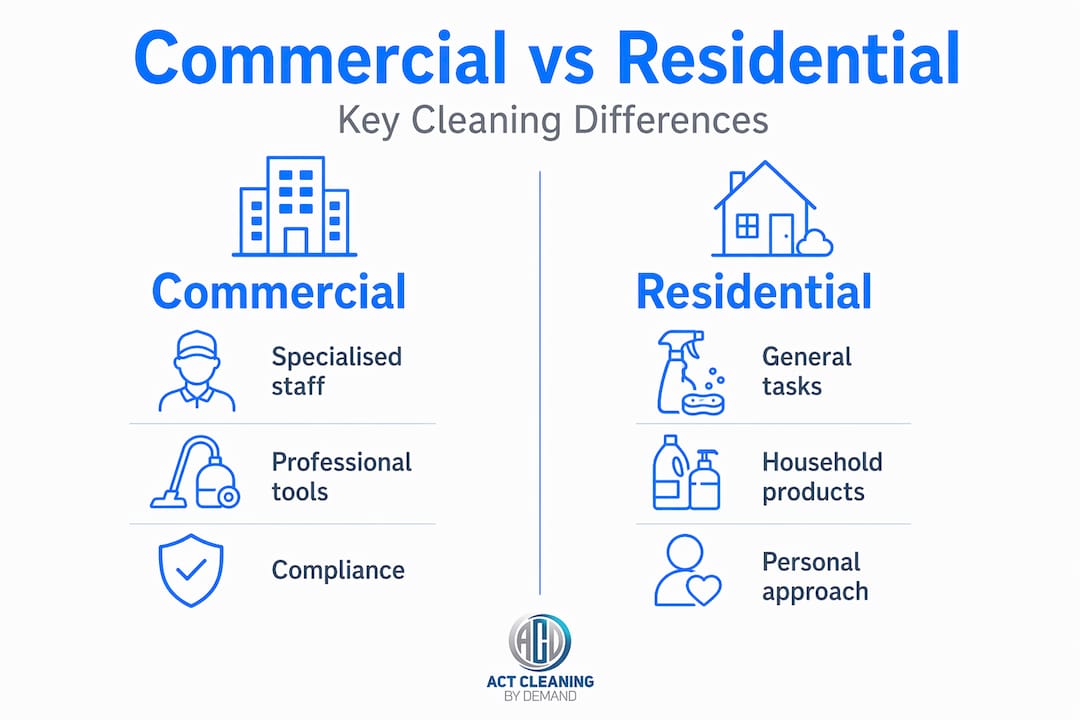
The contrast with residential cleaning goes beyond scale. Different facility types require distinct protocols and tools. A hospital clean must meet infection control standards. A food production facility must comply with food safety regulations. A standard home does not carry those obligations. Understanding this distinction helps you recognise why you cannot simply hire a domestic cleaner and expect the same result.
Pro Tip: Ask any prospective commercial cleaning provider whether their staff are trained specifically for your facility type. A provider experienced in office environments may not have the protocols required for a medical or food-handling setting.
The real benefits of commercial cleaning for businesses
Most business owners who invest in professional commercial cleaning do so because they understand two things: staff get sick, and clients notice mess. But the benefits of commercial cleaning run deeper than those surface-level concerns.
A well-maintained workplace supports employee wellbeing and client confidence in ways that are hard to quantify but easy to feel when they are absent. Staff who work in clean, organised environments report higher morale and are less likely to take sick days related to hygiene-driven illness. That directly affects productivity.
There are also significant safety and compliance considerations. Slippery floors, accumulated dust in ventilation, and poorly maintained bathrooms create liability exposure. Professional commercial cleaning services manage these risks systematically, not reactively.
Here is where business owners often underestimate the value:
- Time and resource savings. Cleaning takes time. When staff manage their own workspace hygiene, the cost in lost productive hours adds up fast. Outsourcing to a skilled team eliminates this drag.
- Regulatory compliance. Depending on your industry, you may be legally required to maintain specific hygiene standards. Commercial cleaning providers who understand sector compliance keep you on the right side of those obligations.
- Reputation protection. A dirty reception area or grimy bathroom sends a clear message to clients and visitors. Professional cleaning maintains the visual standards your brand depends on.
- Consistent results. Commercial cleaning services operate on schedules with documented standards. There is no "we didn't get to it today" variability.
Pro Tip: If you manage a multi-tenanted building, negotiate a cleaning contract that covers shared zones separately from individual tenancy spaces. This prevents gaps where everyone assumes someone else is responsible.
If you are weighing up why residential cleaning standards differ from what your business actually needs, the short answer is that the obligation level and the frequency of use are entirely different categories.
How to choose a commercial cleaning provider
Choosing commercial cleaning services is not simply a matter of finding the cheapest quote. The cost of commercial cleaning is rarely the most important variable. What matters more is whether the provider can actually service your facility type, at the right frequency, with the right equipment and trained personnel.
Here is a practical framework for evaluating providers:
- Define your scope first. Before you contact anyone, list every area in your facility that needs cleaning, how often, and to what standard. This prevents providers from quoting only what they want to offer rather than what you actually need.
- Check sector experience. A provider experienced in retail may not understand the compliance requirements of a childcare centre or medical clinic. Ask directly about facilities similar to yours.
- Ask about chemical choices. Eco-friendly cleaning products are not just a marketing claim. Professional-grade chemical choices affect both cleaning effectiveness and the health of people in the space. Ask whether the products used are appropriate for your environment and the people in it.
- Confirm training and compliance. PPE use, wet cleaning methods, and handling of contaminated materials should all be documented in the provider's protocols. Ask to see them.
- Integrate janitorial and deep cleaning. Routine and deep cleaning work best together. Providers who offer both under one contract give you better continuity and accountability.
- Build in quality monitoring. Establish how you will assess ongoing performance. Regular walkthroughs, feedback mechanisms, and contract review periods keep standards from slipping over time.
The commercial cleaning industry in Australia has matured considerably, and reputable providers now offer customised plans with clear reporting structures. If a provider cannot explain how they measure the quality of their own work, that is a serious red flag.
Pro Tip: Request a trial clean before signing a long-term contract. A single visit reveals more about a provider's actual standards than any quote document or sales conversation.
Thinking about how office fit-out decisions affect cleaning requirements is also worth the time. Floor materials, furniture placement, and traffic flow all influence how complex your cleaning needs will be.
Commercial cleaning procedures and techniques
Understanding how commercial cleaning actually works helps you assess whether your provider is doing the job properly. The operational side involves more discipline than most people expect.
The single most important principle is cleaning order. You must clean before you disinfect. Disinfectants cannot penetrate through dirt, grease, or organic matter. Skipping the cleaning step renders disinfection largely ineffective. Any provider who does not follow this sequence is giving you a false sense of hygiene.
Wet cleaning methods are the standard approach in commercial settings. Dry sweeping and dry dusting spread contaminants by becoming airborne. Wet mopping, damp wiping, and HEPA-filtered vacuuming control contamination rather than redistributing it.
The table below shows typical cleaning zones and recommended frequency in a standard commercial office environment:
| Zone | Cleaning type | Recommended frequency |
|---|---|---|
| Reception and entry | Surface wipe, mop, bin empty | Daily |
| Workstations and desks | Surface disinfection | Daily or more in high-traffic periods |
| Bathrooms | Full clean and disinfect | Once or twice daily |
| Kitchen and break room | Surface clean, appliance wipe | Daily |
| Carpets | Hot water extraction | Every 18 to 24 months |
| Windows (internal) | Streak-free glass clean | Monthly or quarterly |
| Hard floors | Strip, seal, or buff | Quarterly or as needed |
High-touch surfaces such as door handles, lift buttons, shared keyboards, and light switches need attention more than once daily in busy environments. This is where many standard cleaning contracts fall short, because frequency is what drives genuine hygiene outcomes rather than thoroughness of a single weekly clean.
Specialist services such as post-construction cleaning require additional protocols. After a building or renovation project, surfaces carry fine particulate dust, adhesive residue, and debris that standard cleaning products and equipment cannot fully address. Industrial-grade vacuums, microfibre systems, and specific chemical applications are required to bring the space to occupancy standard.
My perspective on commercial cleaning management
I have spoken with and worked alongside enough facility managers over the years to notice a consistent pattern. Commercial cleaning is almost always underestimated in its complexity until something goes wrong. A staff member raises a hygiene complaint, a client notices a neglected bathroom, or a health inspection flags a compliance gap. That is when the phone calls start.
What I have found is that the biggest mistakes come from treating cleaning as a fixed, set-and-forget service rather than an actively managed one. The facility changes. Traffic patterns shift, especially with hybrid work arrangements reshaping how offices are used day to day. A cleaning schedule designed for a fully occupied office five days a week does not serve a space that sees inconsistent footfall across a flexible week.
The providers who genuinely serve their clients well are the ones who understand sector-specific needs without needing to be told. They flag issues they notice during cleans. They adjust frequency when circumstances change. They treat the relationship as ongoing rather than transactional.
My honest take: invest more time in the selection process than most business owners do, and less time renegotiating contracts after problems emerge. Getting the brief right at the start, including scope, frequency, chemical standards, and compliance obligations, is where the real management value lies. Cutting corners on the cost of commercial cleaning almost always costs more in the long run through rework, complaints, or regulatory exposure.
— Deng
ACT Cleaning by Demand: professional commercial cleaning in Canberra
If this article has clarified what commercial cleaning involves and you are ready to put the right structure in place for your facility, ACT Cleaning by Demand is worth a conversation.
ACT Cleaning by Demand offers tailored office cleaning services for businesses across the ACT, with trained staff, documented protocols, and cleaning plans that match your facility type rather than a generic template. From routine commercial maintenance to end-of-lease cleaning for commercial tenancies, the team brings the sector knowledge and equipment to deliver genuine results. Eco-friendly product options, flexible scheduling, and transparent pricing make the process straightforward. Whether you manage a single office or a multi-site facility, ACT Cleaning by Demand builds a programme around what you actually need. Enquire through the website or book directly to get a quote tailored to your space.
Common questions about commercial cleaning
What is commercial cleaning and how does it differ from residential cleaning?
Commercial cleaning is the professional cleaning of non-domestic workplaces such as offices, schools, and hospitals, using trained staff and specialised equipment. It differs from residential cleaning in scale, regulatory requirements, protocols, and the types of equipment used.
What does a commercial cleaning service typically include?
A typical commercial cleaning service includes routine surface cleaning, bathroom and kitchen sanitation, vacuuming, mopping, bin removal, and periodic deep cleaning such as carpet extraction, floor buffing, and window cleaning.
How often should commercial premises be cleaned?
Frequency depends on the facility type and traffic. High-touch areas in busy offices may need attention daily or more, while carpets generally require deep cleaning every 18 to 24 months and hard floors quarterly.
How do I choose the right commercial cleaning provider?
Start by defining your scope and facility type, then look for providers with documented training and compliance protocols, sector-relevant experience, and the ability to offer both routine and deep cleaning under one arrangement.
What is the cost of commercial cleaning in Australia?
The cost varies based on facility size, cleaning frequency, and the range of services required. Most providers offer customised quotes, and comparing two or three detailed proposals gives you a realistic benchmark for your specific situation.