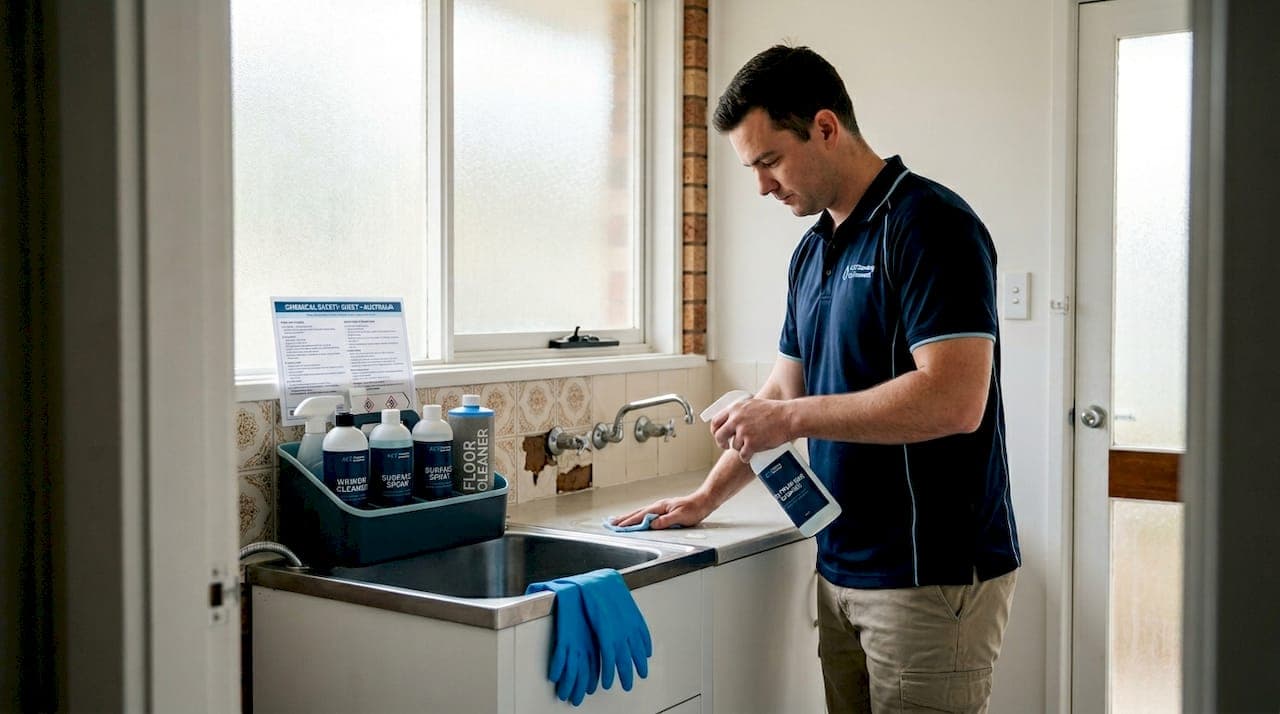
Walk into any Canberra property after a builder has packed up, or just before a lease inspection, and the cleaning challenge is immediately obvious. Grease-baked rangehoods, concrete dust on every surface, limescale rings in every basin. The idea that plain water or a "natural" spray will fix this is a common misconception, and one that costs property owners bond money and sale opportunities every year. Professional cleaners rely on specific chemicals because the science demands it, not because it is convenient. This article explains exactly why, how those choices are made safely, and what it means for your property outcome.
Table of Contents
- The science behind professional cleaning chemicals
- How professionals match chemicals to surfaces and soils
- Balancing cleaning power with safety and indoor air quality
- Practical outcomes: why thorough chemical cleaning matters for Canberra properties
- Our perspective: what most Canberra property owners get wrong about cleaning chemicals
- How ACT Cleaning by Demand ensures safe, spotless results
- Frequently asked questions
Key Takeaways
| Point | Details |
|---|---|
| Chemistry drives results | Professional cleaners use chemicals because they target specific soils and deliver the high-standard results Canberra properties require. |
| Safety measures are essential | Proper product selection, use of SDS, and following safety protocols protect occupants’ health. |
| Outcome matters most | Thorough, controlled chemical cleaning is key for bond returns, faster sales, and passing inspections. |
| Ask about certifications | Requesting lower-VOC or certified cleaning products helps safeguard indoor air quality. |
The science behind professional cleaning chemicals
Cleaning is not just scrubbing. At its core, it is a series of chemical reactions that break the bond between a contaminant and a surface. Understanding this changes how you think about what a professional cleaner brings to your property.
Professional cleaners use chemicals because effective cleaning is fundamentally chemical: surfactants lower surface tension to wet and lift soils, solvents dissolve oily residues, acids and alkalis target mineral deposits and organic residues, and disinfectants disrupt microbes. Each category does something distinct that no other approach can replicate.
Here is a breakdown of the core chemical types and what they actually do:
| Chemical type | What it targets | Typical Canberra property use |
|---|---|---|
| Surfactants | General soils, grease, dust | Kitchen benches, floors, bathroom tiles |
| Solvents | Adhesive residue, paint, oils | Post-construction surfaces, window frames |
| Acids (e.g. citric, phosphoric) | Limescale, mineral deposits, rust | Shower screens, basins, tapware |
| Alkalis (e.g. sodium hydroxide) | Baked-on grease, organic matter | Ovens, rangehoods, grout lines |
| Disinfectants (e.g. quaternary ammonium) | Bacteria, mould, viruses | Bathrooms, laundries, high-touch surfaces |
Consider the practical example of a Canberra rental property kitchen. The rangehood filter is coated in polymerised cooking oil, which is essentially a hardened plastic-like substance. Water cannot dissolve it. A mild "natural" spray cannot break it down. An alkaline degreaser, applied at the correct concentration with adequate dwell time, chemically converts that residue into a water-soluble compound that can then be wiped away. This is not a shortcut. It is the only method that works.
The same logic applies to bathroom limescale. Canberra's water supply carries dissolved minerals that deposit on shower screens and tapware over time. Only an acidic solution can dissolve those calcium carbonate deposits without damaging the underlying surface. This is why professional house cleaning methods are built around chemical specificity rather than generic sprays.
"Science, not simply tradition, drives chemical choice in professional cleaning. The right chemical for the right soil on the right surface is the foundation of inspection-ready results."
Water alone, or plain soap, simply cannot achieve the bond return standard that property managers in Canberra expect. The chemistry is not optional.
How professionals match chemicals to surfaces and soils
Knowing which chemicals exist is only half the picture. The real skill lies in matching the right product to the right surface and the right type of contamination. This is where professional expertise separates itself from DIY attempts.
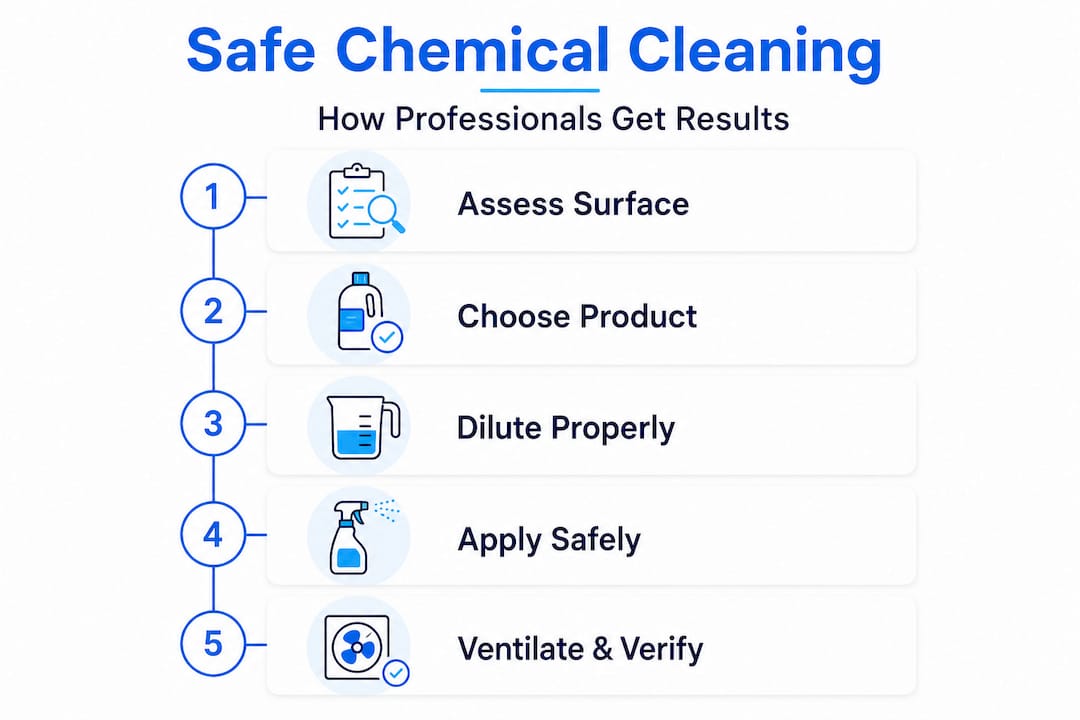
Professionals select products based on surface type, contamination level, and safety considerations. A polished stone benchtop requires a pH-neutral cleaner, because an acidic or strongly alkaline product will etch the surface permanently. A porcelain toilet bowl can tolerate an acid-based descaler that would destroy a marble basin. Getting this wrong is expensive and irreversible.
Here is how a professional cleaner works through the decision for each scenario:
- Identify the surface material. Granite, laminate, vinyl, ceramic, stainless steel, and timber all have different chemical tolerances. The cleaner checks before applying anything.
- Identify the contamination type. Is it mineral-based (limescale, rust), organic (grease, mould, food), adhesive (tape residue, paint), or microbial (bacteria, mould spores)? Each requires a different chemical approach.
- Check the Safety Data Sheet (SDS). Every professional product comes with an SDS that specifies safe dilution ratios, contact time, and incompatibilities. A professional reads and follows this.
- Test in an inconspicuous area. Before applying a new product to a large surface, a small test patch confirms there is no adverse reaction.
- Apply, dwell, agitate, and rinse. The sequence matters. Dwell time allows the chemistry to work. Agitation lifts the loosened soil. Rinsing removes the chemical and the contaminant together.
This process applies whether the job is end of lease cleaning in a Canberra apartment or a post-construction deep clean in a new build.
| Surface or soil | Safest effective approach | Risk if wrong product used |
|---|---|---|
| Shower screen (limescale) | Diluted phosphoric acid, rinse thoroughly | Etching if too strong or left too long |
| Oven (baked grease) | Alkaline oven cleaner, adequate dwell | Residue on food surfaces if not rinsed |
| Vinyl flooring | pH-neutral surfactant, damp mop | Surface clouding or delamination |
| Grout lines (mould) | Diluted bleach or quaternary ammonium | Tile discolouration if over-applied |
| Stainless steel | Neutral or mild alkaline, grain direction | Scratching or corrosion from wrong product |
The kitchen cleaning expertise required for a presale property goes well beyond what a standard supermarket product can achieve. Similarly, safe floor cleaning methods depend entirely on knowing the floor substrate before choosing a product.
Pro Tip: Ask your cleaner to show you the SDS for the products they plan to use. A professional will always have these on hand and will welcome the question. It is also worth requesting a test spot on any sensitive surface before full application begins.
Generalised "all-purpose" products are a compromise. They are formulated to be safe on most surfaces and moderately effective on most soils. That means they are rarely optimal for any specific situation. Targeted professional solutions deliver results that all-purpose products simply cannot match.
Balancing cleaning power with safety and indoor air quality
The concern about chemical use in homes and offices is legitimate. The issue is not that chemicals are inherently dangerous. The issue is improper use.
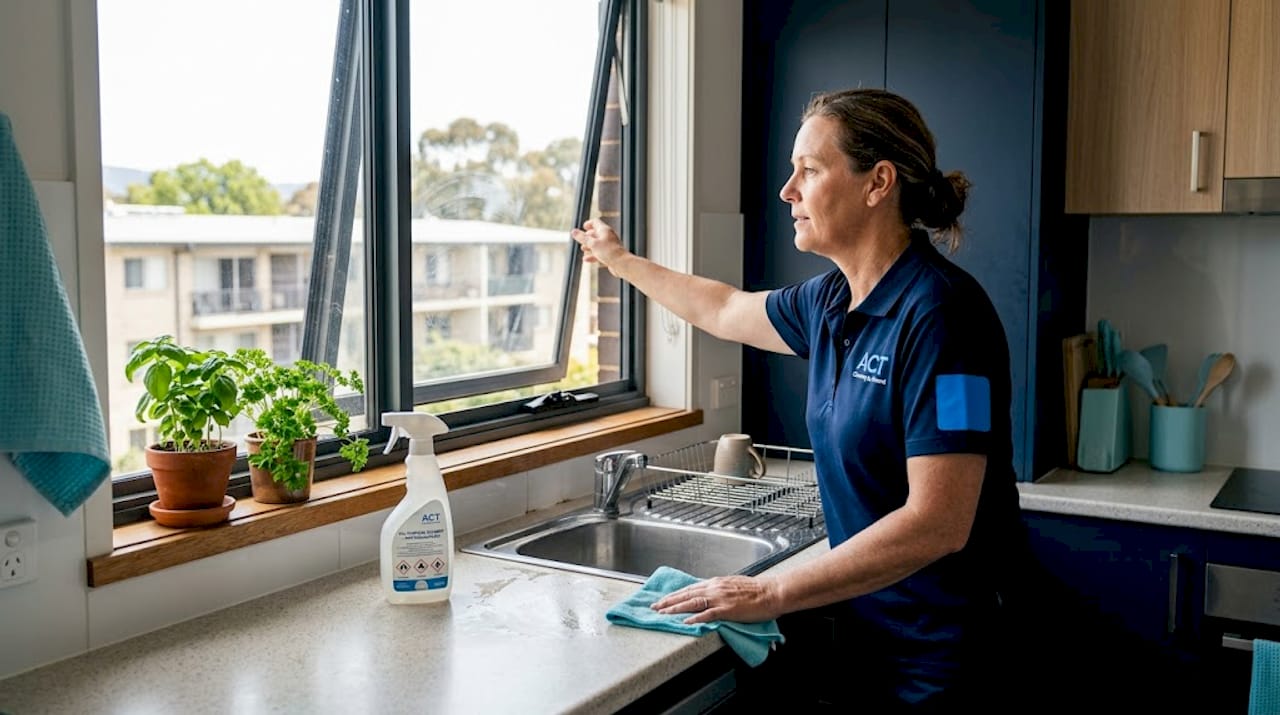
Some cleaning chemicals can worsen indoor air quality if used improperly, and there is a growing push for safer formulations and certified lower-impact products. Volatile organic compounds (VOCs), which are gases released by many cleaning agents, can accumulate in enclosed spaces and cause respiratory irritation, headaches, and longer-term health concerns if ventilation is inadequate.
What most property owners miss is that the risk is not in the chemical itself but in how it is used. A professional cleaner manages this through several controls:
- Correct dilution. Concentrated products are mixed to the manufacturer's specified ratio. Using a product at full concentration does not clean better. It increases chemical exposure and can damage surfaces.
- Adequate ventilation. Windows and doors are opened during and after application. Mechanical ventilation is used where available. This is not optional.
- Personal protective equipment (PPE). Gloves, eye protection, and sometimes respiratory protection are standard for professional cleaners handling strong chemicals.
- Certified lower-impact products. Certifications such as Green Seal, ECOLOGO, and the US EPA's Safer Choice programme identify products that perform effectively with reduced environmental and health impact. Many Canberra cleaning services now stock these as standard.
- No chemical mixing. Combining bleach and ammonia, or bleach and acid-based products, creates toxic gases. Professionals know this and never mix incompatible chemicals.
Pro Tip: If you are booking a clean for a property with young children, elderly occupants, or people with respiratory conditions, specifically ask whether your service uses lower-VOC or eco-certified products. A reputable cleaner will have options and will advise you honestly.
Canberra cleaners also operate under Work Health and Safety obligations that require safe chemical handling, proper labelling, and SDS availability on site. This is not just best practice. It is a legal requirement. Property owners benefit directly from this because it means the professionals working in their space are accountable for safe outcomes.
Practical outcomes: why thorough chemical cleaning matters for Canberra properties
All of this science and safety practice comes back to one thing: results. For property owners and real estate agents in Canberra, the outcome of a professional clean is measured at inspection.
Here are four real-world scenarios where chemical cleaning directly affects property outcomes:
-
Bond recovery at end of lease. A property manager conducting a final inspection will check the oven, rangehood, shower screens, and grout lines. These are the areas where DIY cleaning most commonly fails. An alkaline oven cleaner removes baked-on carbonised residue that scrubbing cannot shift. An acid-based descaler removes the limescale that a vinegar spray only partially addresses. The difference between a full bond return and a deduction often comes down to these specific chemical applications.
-
Faster presale presentation. A property presented for sale needs to look and smell clean. Odours from cooking, pets, or moisture are chemically embedded in surfaces and soft furnishings. Enzymatic cleaners break down the organic compounds that cause odour at the molecular level. No amount of air freshener achieves this. A buyer walking into a property that has been professionally cleaned with the right products will notice the difference immediately.
-
Post-construction safety. After a renovation or new build, surfaces carry construction dust, adhesive residue, paint overspray, and silicone smears. These are not household soils. They require solvent-based products, specific mechanical action, and in some cases neutralisation steps. Leaving these residues in place is both a presentation failure and a potential health issue for new occupants.
-
Mould remediation. Canberra's cold winters and condensation-prone properties create conditions for mould growth in bathrooms, laundries, and window reveals. Surface mould requires a disinfectant with proven efficacy against fungal spores, applied at the correct concentration and left for adequate contact time. Wiping visible mould with a damp cloth spreads spores and does not address the underlying contamination.
"The 'why chemicals' answer is mainly about chemical specificity to different soils and materials, process control through dwell time, dilution, and rinse and neutralisation steps, and achieving inspection-ready outcomes including degreasing, descaling, and sanitising, while managing health risks through SDS, PPE, and ventilation."
Edge cases worth discussing with your cleaner include unusual stains from specific materials (such as tannin stains from timber or rust from metal fittings), persistent odours from previous occupants, and any surfaces that have already been damaged by previous incorrect cleaning attempts. A professional will assess these individually and advise on the safest and most effective approach. You can also find practical guidance in resources like apartment cleaning insights that address Canberra-specific property challenges.
Our perspective: what most Canberra property owners get wrong about cleaning chemicals
We see a consistent pattern in the Canberra market. Property owners who have had a bad experience with a cleaning service often blame the chemicals. In reality, the problem is almost always the application, not the chemistry.
The "chemical-free" marketing trend has created a genuine misconception that natural or green cleaning is automatically safer and more effective. In our experience, this is rarely true when the standard is a passed property inspection. A lemon-scented spray might smell pleasant and feel reassuring, but it will not remove polymerised grease from an oven or eliminate mould spores from grout. When a property manager marks a cleaning job as unsatisfactory, they are judging the outcome, not the ingredients list.
What "safe" actually means in professional cleaning is the right chemical, used at the right concentration, on the right surface, with the right controls in place. Zero chemicals is not a safety standard. It is a marketing position.
The hard-won lesson from years of working on Canberra properties is this: property managers and real estate agents care about results. They care whether the shower screen is clear, whether the oven is clean, and whether the grout is free of mould. They do not care whether the cleaner used a certified organic product or a conventional one, as long as the outcome is inspection-ready and the process was safe.
The best cleaners we know are the ones who explain their approach clearly, invite questions about their products and methods, and can produce an SDS when asked. If a cleaning service cannot tell you what they use and why, that is a red flag regardless of how "natural" their marketing sounds. For practical insights on what a thorough professional clean actually involves, home cleaning insights offer a useful starting point for Canberra property owners.
Choose your cleaner based on their knowledge, their transparency, and their track record. Not their tagline.
How ACT Cleaning by Demand ensures safe, spotless results
Understanding the science is one thing. Having a team that applies it correctly on your Canberra property is another.

At ACT Cleaning by Demand, our approach to every job is built on the same principles this article covers: the right chemical for the right surface, applied with correct process controls and full transparency about what we use and why. Whether you need end of lease cleaning that will satisfy the most thorough property manager, or a presale preparation that makes your property genuinely stand out, our team brings both the technical knowledge and the professional accountability that Canberra properties demand. Our house cleaning experts are trained to assess each property individually, communicate clearly with owners and agents, and deliver results that hold up at inspection. Contact us for a detailed quote or to discuss the specific cleaning requirements for your property.
Frequently asked questions
What types of chemicals do professional cleaners use and why?
They use surfactants, solvents, acids, alkalis, and disinfectants because each targets a specific type of contamination and surface for optimal results. As the science confirms, effective cleaning is fundamentally chemical, and no single product can replace targeted chemistry.
Is chemical cleaning safe for people and pets?
When professionals select products based on surface type, contamination level, and safety considerations, and apply correct dilution and ventilation controls, the process is safe for people and pets.
Can too many chemicals make indoor air quality worse?
Yes. Improper chemical use can worsen indoor air quality through VOC accumulation, which is why certified products, correct dilution, and adequate ventilation are non-negotiable in professional practice.
Should I ask about the chemicals my cleaner uses?
Absolutely. Ask about SDS availability, surface compatibility, and whether they use lower-VOC or certified products for your Canberra property. A professional cleaner will welcome these questions and answer them clearly.