You book two different cleaning services for what looks like the same job, and the results are worlds apart. One team scrubs the grout, wipes the skirting boards, and leaves your bathroom gleaming. The other ticks the basics and calls it done. This is why residential cleaning standards differ so widely, and it is not random. Everything from where you live, what you pay, and who actually shows up on the day shapes what you get. Understanding the factors behind these variations helps you make smarter choices about the cleaning services you hire.
Table of Contents
- Key takeaways
- Why residential cleaning standards differ
- How human factors shape cleaning quality
- Residential vs commercial cleaning standards
- Cost, frequency, and market dynamics
- Choosing a cleaning service that meets your standards
- My perspective on cleaning standards and expectations
- Ready for cleaning that matches your standards?
- FAQ
Key takeaways
| Point | Details |
|---|---|
| No national standard exists | Australia has no legal benchmark for residential cleaning, so quality is shaped by individual expectations. |
| Human factors drive inconsistency | Fatigue, technique, and lack of feedback cause results to vary even when cleaners follow the same process. |
| Cost and frequency affect quality | Regular bookings typically produce better outcomes and lower per-visit costs than one-off cleans. |
| Residential and commercial standards differ | Commercial cleaning follows stricter protocols; residential cleaning is more flexible and personalised. |
| Clear communication is your best tool | Spelling out your expectations upfront is the single most reliable way to get consistent results. |
Why residential cleaning standards differ
The most common assumption homeowners make is that cleaning is cleaning. You hire someone, they clean, and the result should be roughly the same no matter who shows up. That assumption falls apart quickly in practice, and the reason is structural.
No national standard defines how clean a residential property needs to be in Australia. Unlike food safety or building codes, residential cleaning guidelines are not regulated. What counts as a thorough clean is largely negotiated between the client and the provider, which means the goalposts shift with every booking.
Several foundational factors drive these variations in cleaning practices:
- Home size and layout. A three-bedroom house with two bathrooms requires a completely different scope of work than a studio apartment. Providers price and plan accordingly, but the depth of cleaning within that scope still varies.
- Occupant needs and lifestyle. A household with pets, young children, or allergy sufferers has different cleaning requirements than a single professional who travels frequently.
- Service type. A standard maintenance clean focuses on surface tidying and routine tasks. A deep clean addresses built-up grime, behind appliances, and areas that rarely get attention. Confusing the two is one of the most common sources of disappointment.
- Provider training and systems. Some companies invest in structured training and quality checks. Others rely on individual cleaners to set their own pace and priorities.
- Customer expectations. What one homeowner considers spotless, another finds barely adequate. Because cleaning expectations are personal, the standard is always partly subjective.
Understanding these factors affecting cleaning standards is the first step toward knowing what to ask for and what to watch out for.
How human factors shape cleaning quality
Even when a cleaning company has a detailed checklist and a clear process, the results still vary. The reason is straightforward: people are not machines.
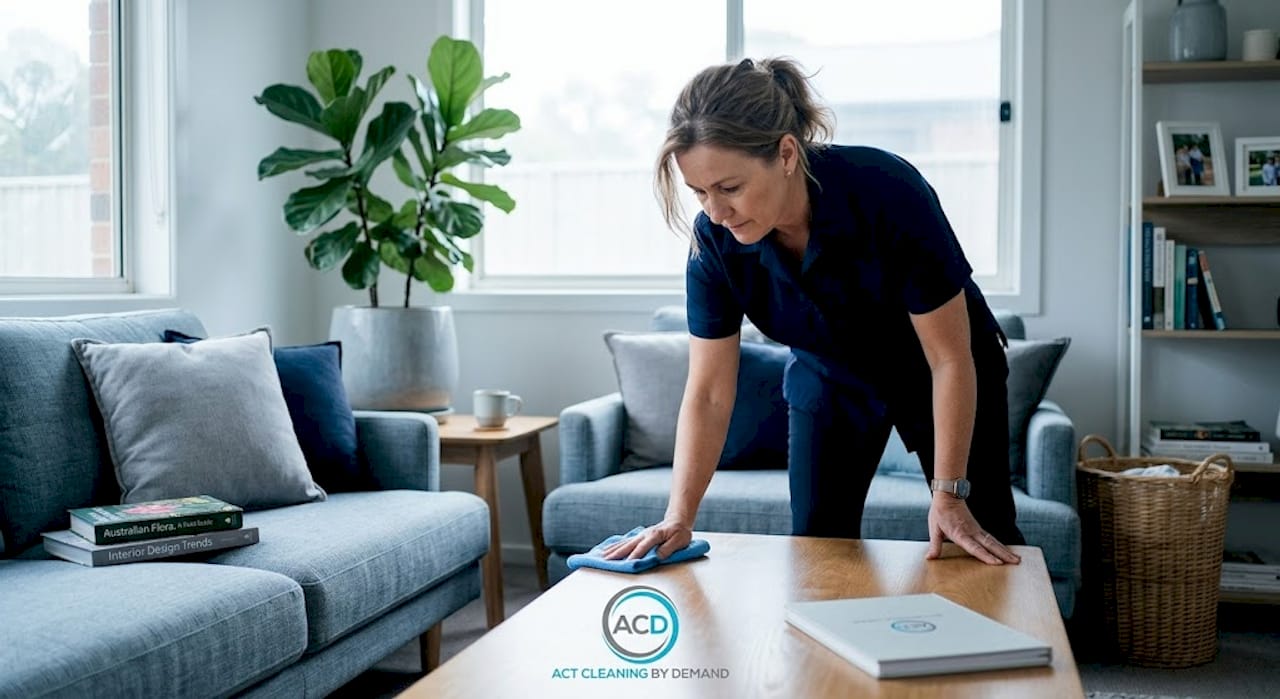
Research into cleaning variability shows that human behaviour drives inconsistency more than any other single factor. Two cleaners following the same standard operating procedure will produce different results based on wiping pressure, speed, technique, and how much attention they are paying at any given moment. These are not character flaws. They are natural human tendencies that every service business has to actively manage.
Fatigue compounds the problem. Cleaning is physically demanding, repetitive work. A cleaner on their fifth job of the day is not going to deliver the same focus as they did on their first. Fatigue leads to task simplification, meaning cleaners unconsciously skip or rush steps they would otherwise complete properly.
Pro Tip: When booking a cleaning service, ask whether the same cleaner or team will be assigned to your home each time. Familiarity with a property reduces the mental load on the cleaner and tends to produce more consistent results.
The feedback gap makes things worse. Unlike a chef who sees immediately whether a dish is right, a cleaner rarely gets real-time feedback on their work. Delayed performance feedback means small quality drops go unnoticed and uncorrected until a client complains. Companies that build in inspection processes and follow-up calls close this gap more effectively than those that do not.
"Cleaning failures are rarely about one bad moment. They are almost always the result of deeper systemic issues: inadequate training, poor communication, or missing quality controls." Root Cause Analysis in cleaning service failures points to process breakdowns, not just individual performance, as the real culprit.
Residential vs commercial cleaning standards
Understanding why cleaning requirements by region and sector differ helps put residential expectations in perspective. Commercial and residential cleaning operate under very different rules.
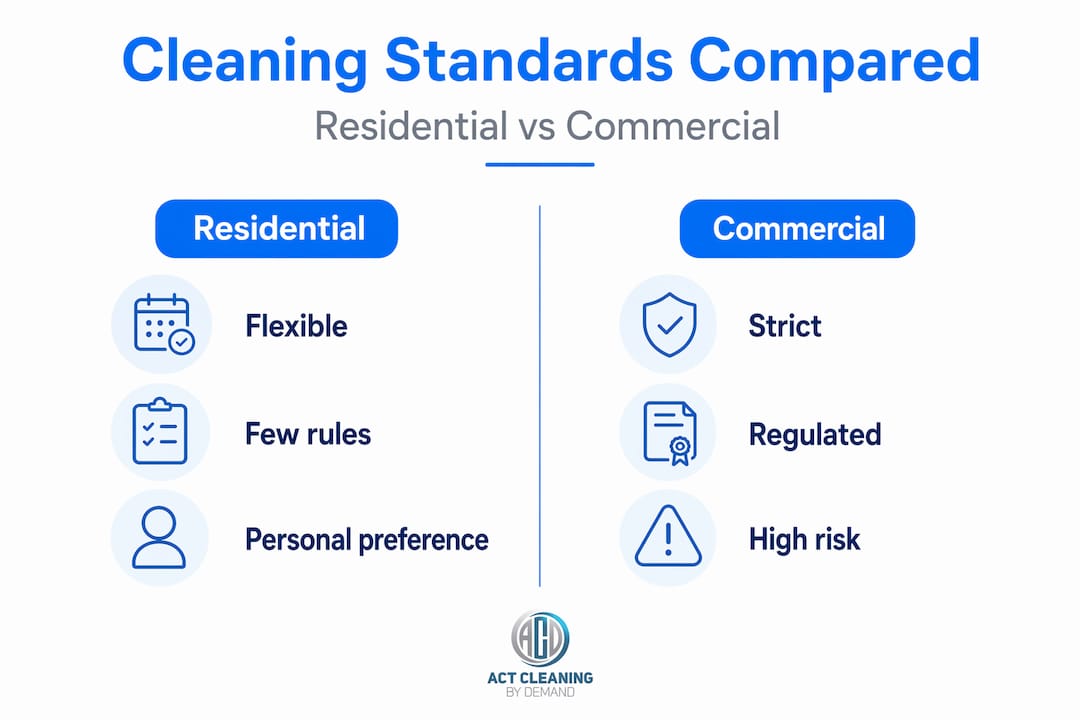
| Factor | Commercial cleaning | Residential cleaning |
|---|---|---|
| Regulatory oversight | Often governed by workplace health and safety standards | No formal regulation in Australia |
| Scope flexibility | Standardised protocols with little variation | Highly customisable to client preferences |
| Frequency | Usually daily or multiple times per week | Weekly, fortnightly, or monthly |
| Accountability | Formal contracts with performance clauses | Often informal agreements |
| Training requirements | Structured, often industry-certified | Varies widely between providers |
Commercial cleaning follows strict regulated standards because the consequences of failure, whether in a medical facility, food production area, or office, carry legal and reputational weight. Residential cleaning carries no equivalent obligation, which is precisely why variations in cleaning practices are so pronounced in the home services sector.
What is changing, though, is the influence of hospitality on residential expectations. Luxury hotel cleaning practices are reshaping what clients expect from residential services. Homeowners who have stayed in well-run hotels increasingly want that same level of structured consistency at home: folded towels, spotless mirrors, nothing left to chance. This is raising the bar across the residential sector, particularly for premium and short-stay property cleaning.
You can see this crossover clearly in Airbnb cleaning services, where hospitality-level checklists and turnaround standards have become the norm rather than the exception.
Cost, frequency, and market dynamics
Price is not just a reflection of what you pay. It is also a signal of what you are likely to get. This is one of the most misunderstood aspects of why cleaning standards vary.
Pricing models for cleaning include hourly rates, flat fees per visit, and per-square-metre rates. Flat-rate pricing tends to be clearer for clients, but it can incentivise cleaners to rush if the rate does not reflect the actual scope of work. Hourly pricing rewards thoroughness but can feel open-ended for the client.
Here is how the main cost variables typically play out:
- Home size. Larger homes cost more, but the per-room rate often decreases at scale.
- Service type. A standard clean is noticeably cheaper than a deep clean. Deep cleaning costs more because it covers areas that routine cleaning skips.
- Frequency. Regular bookings almost always reduce the per-visit cost. A fortnightly client is more profitable and easier to plan for than a one-off booking, so providers often pass some of that saving on.
- Location. Labour costs, travel time, and local market competition all affect what providers charge in different areas. Cleaning requirements by region reflect these local economic realities.
- Market competition. In areas with many providers, pricing pressure tends to drive costs down. In areas with fewer options, providers can charge more and set their own standards.
The practical takeaway here is that booking regular cleans, rather than occasional one-offs, tends to produce better results at a lower average cost. The cleaner knows your home, the scope is predictable, and quality control becomes easier for both sides.
Choosing a cleaning service that meets your standards
Knowing why residential cleaning standards differ is useful. Knowing how to act on that knowledge is what actually changes your experience.
Start by getting specific about your own priorities. Not every room in your home carries equal weight. The 80/20 principle applies directly to cleaning: roughly 80% of the perceived cleanliness in your home comes from 20% of the tasks, typically the kitchen benchtops, bathroom surfaces, floors, and mirrors. Know which areas matter most to you before you speak to any provider.
When evaluating services, work through these questions:
- What is specifically included in a standard clean versus a deep clean?
- Will the same cleaner or team attend each visit?
- How do you handle complaints or missed areas?
- Do you use your own products, or should I supply them?
- Is there a quality check or follow-up process after each visit?
These questions reveal how seriously a provider takes their own residential cleaning guidelines. Vague answers to questions three and five are a red flag.
Pro Tip: Before your first clean, walk through your home and note the three areas that bother you most. Share this list with your cleaner at the start. It takes two minutes and dramatically increases the chance that you will be satisfied with the result.
Reading about factors affecting home cleaning quality from a professional perspective can also sharpen your expectations before you commit to a service.
My perspective on cleaning standards and expectations
By Deng
I've worked with enough homeowners to know that the biggest source of frustration is not a dirty bathroom. It's a mismatch between what someone expected and what they received. And in my experience, that gap almost never comes from malicious intent. It comes from assumptions that were never spoken out loud.
What I've learned is that absolute uniformity in residential cleaning is not a realistic goal. The variables are too many: different homes, different cleaners, different days, different levels of fatigue. Chasing a perfectly consistent result without addressing the underlying systems is like expecting the same meal from a different chef every time without giving them the recipe.
The homeowners I've seen get the best results are the ones who treat their cleaner like a professional partner rather than a service commodity. They communicate clearly, they give feedback early, and they book regularly rather than calling in a panic before a family visit. Those habits matter more than which company you choose.
Cost matters too, but not in the way most people think. The cheapest option rarely saves money over time because it usually means higher turnover, more complaints, and more time spent re-booking. A slightly higher investment in a provider with clear processes and genuine accountability pays off in consistency.
If you take one thing from this: talk to your cleaner before the first job. Not during, not after. Before. That conversation sets the standard, and it is the most reliable quality control tool available to you.
— Deng
Ready for cleaning that matches your standards?
Understanding why cleaning standards vary is one thing. Finding a provider who actively manages those variables is another.
ACT Cleaning by Demand works with homeowners and tenants across the ACT region to deliver residential house cleaning that is tailored to your home, your priorities, and your schedule. Whether you need a regular maintenance clean or a thorough end of lease clean that meets real estate standards, the team brings structured processes, transparent pricing, and consistent quality to every visit. You can customise your service package, ask questions before you book, and expect the same high standard each time. Get in touch to discuss what your home actually needs.
FAQ
Why do cleaning results vary between providers?
Residential cleaning has no national regulatory standard in Australia, so quality is shaped by each provider's training, processes, and individual cleaner performance. Human factors like fatigue and technique also play a significant role in the consistency of results.
What is the difference between a standard clean and a deep clean?
A standard clean covers routine tasks like vacuuming, mopping, and surface wiping. A deep clean addresses built-up grime, hard-to-reach areas, and tasks like cleaning behind appliances, and it typically costs significantly more.
How does booking frequency affect cleaning quality?
Regular bookings, such as weekly or fortnightly cleans, tend to produce better results because the cleaner becomes familiar with your home and the scope of work is predictable. Consistent scheduling also often reduces the per-visit cost.
Why does my cleaner's performance seem to vary from visit to visit?
Fatigue, workload, and the absence of real-time feedback all contribute to variability in cleaning quality. Even experienced cleaners following the same checklist will produce slightly different results depending on the conditions of a given day.
What should I ask a cleaning service before booking?
Ask what is included in the service scope, whether the same cleaner will attend each visit, and how the company handles complaints or missed areas. Clear answers to these questions indicate a provider with genuine quality controls in place.