
Construction just wrapped up, and the place looks almost finished. Almost. What most homeowners and property managers don't realise is that windows are carrying an invisible load of hazardous debris that no quick wipe with a damp cloth will fix. Understanding why window cleaning after construction is necessary goes far beyond appearances — it touches on property value, glass longevity, and the health of anyone living or working inside.
Table of Contents
- Understanding post-construction window contamination
- How professional post-construction window cleaning protects your property and health
- Comparing common post-construction window cleaning approaches
- Window cleaning techniques and tools for flawless post-construction results
- Long-term benefits and practical tips for post-construction window care
- Rethinking post-construction window cleaning: what most homeowners overlook
- How ACT Cleaning by Demand can help with your post-construction window cleaning needs
- Frequently asked questions
Key Takeaways
| Point | Details |
|---|---|
| Construction dust hazard | Construction leaves hazardous silica dust on windows that is hard to remove with regular cleaning. |
| Professional cleaning methods | Specialist wet suppression and HEPA vacuums safely remove dust and contaminants. |
| Advanced cleaning tech | Deionised water and water-fed poles deliver streak-free, residue-free window finishes. |
| Health and property protection | Thorough post-construction cleaning protects both occupant health and window lifespan. |
| Choose expert services | Hiring experienced professional cleaners ensures effective, hassle-free results after construction. |
Understanding post-construction window contamination
Walk up to any window on a freshly completed build or renovation and you'll likely see a grey, hazy film. That film isn't ordinary household dust. Construction activity generates a complex cocktail of fine particles from plasterboard, concrete, mortar, paint overspray, sealants, and adhesives. These particles settle into glass pores, window tracks, and frame joints where they harden and bond over time.
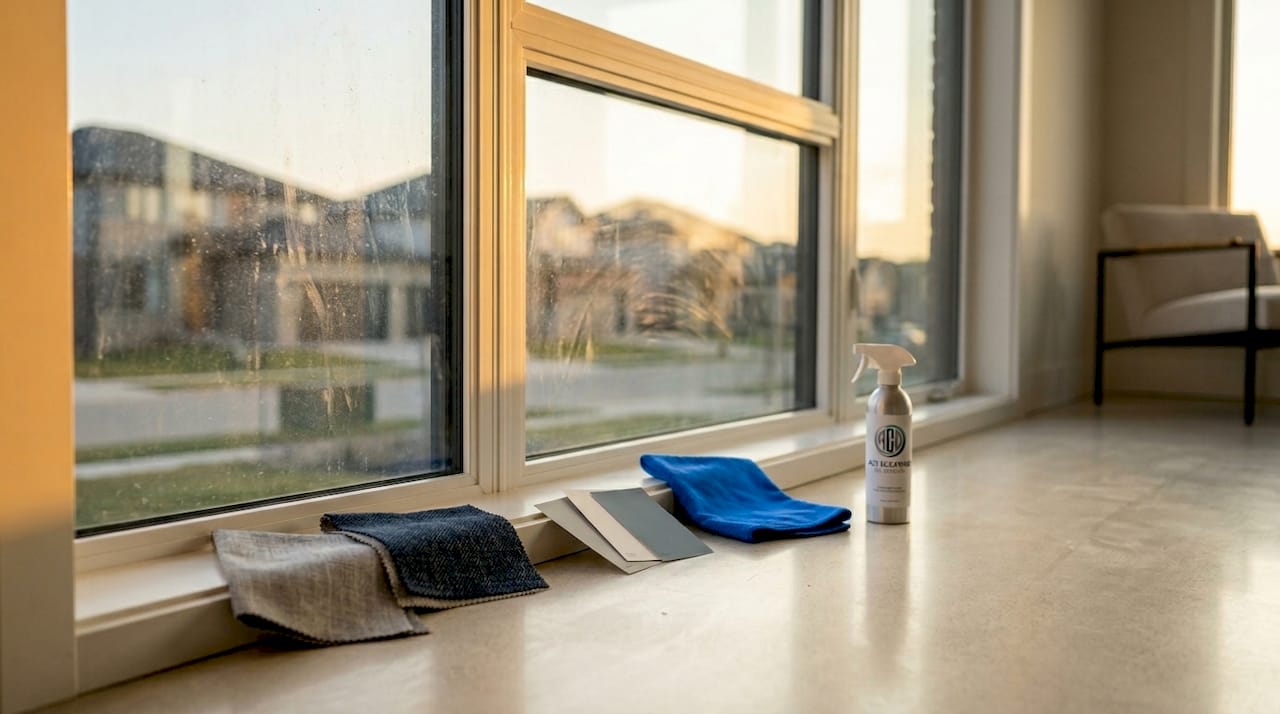
The most serious component in that mix is silica. Construction dust contains respirable crystalline silica, a known carcinogen, which is released when cutting, grinding, or sanding concrete, brick, and stone. Once it settles on glass and frames, everyday cleaning methods simply redistribute it rather than remove it safely.
Standard household cleaning methods are genuinely inadequate here. A microfibre cloth and spray bottle won't reach deep into window tracks where abrasive particles compact. Scrubbing without proper technique can actually grind silica particles into the glass surface, causing microscopic scratches that accumulate and permanently cloud the glass.
Post-construction window contaminants typically include:
- Fine silica and concrete dust embedded in glass surfaces
- Paint overspray and splatter on glass and frames
- Adhesive residue from protective films left by installers
- Mortar and grout splatter on sills and tracks
- Caulk smears on framing and glass edges
- Timber and plasterboard dust packed into window tracks
Professional window cleaning after construction uses specialised equipment and techniques specifically designed for these contaminants, not the kind of effort that comes from a general clean-up crew with a bucket and squeegee.
How professional post-construction window cleaning protects your property and health
The difference between professional post-construction cleaning and a standard window wash isn't just effort. It's methodology. Proper post-construction cleaning is a structured process, and every step exists for a reason.
A professional process typically follows these steps:
- Protective film removal. Builders often apply adhesive films to protect glass during construction. Removing them incorrectly leaves sticky residue that attracts dust and accelerates grime buildup.
- Dry dust suppression. Before any wet cleaning begins, HEPA-filtered vacuuming removes loose dust from tracks, sills, and frames without launching particles into the air.
- Wet cleaning of glass surfaces. Using appropriate cleaning solutions, professionals scrub glass to break down bonded residues while keeping surfaces wet to suppress airborne particles.
- Detail cleaning of tracks and seals. This is where DIY efforts almost always fall short. Tracks hold compacted dust that, if left, works into the window mechanism and causes long-term damage.
- Final inspection and polish. A final squeegee and lint-free wipe removes all streaks and confirms every pane is clear.
Professional cleaning must use wet suppression or HEPA vacuums to keep airborne silica levels below the Workplace Exposure Standard. This isn't bureaucratic box-ticking. It's the difference between cleaning that's genuinely safe and cleaning that just looks like it's working.
Pro Tip: Before booking any post-construction clean, confirm the service provider uses HEPA-filtered equipment specifically. General cleaning companies often lack this, and it matters enormously when silica is involved.
The health protection benefit of professional cleaning extends to building occupants for months after the job is done. Residual dust in tracks and frames continues to release fine particles every time a window is opened or closed. Expert window cleaning services that address the full window assembly, not just the glass, eliminate this ongoing exposure risk. Cleaning to occupational hygiene standards ensures the property is genuinely safe for vulnerable occupants including children and people with respiratory conditions.
Comparing common post-construction window cleaning approaches
Not all cleaning is created equal. The gap between a DIY effort, a routine window cleaning visit, and a specialist post-construction clean is significant. Understanding the distinction helps you choose the right approach and avoid paying twice.
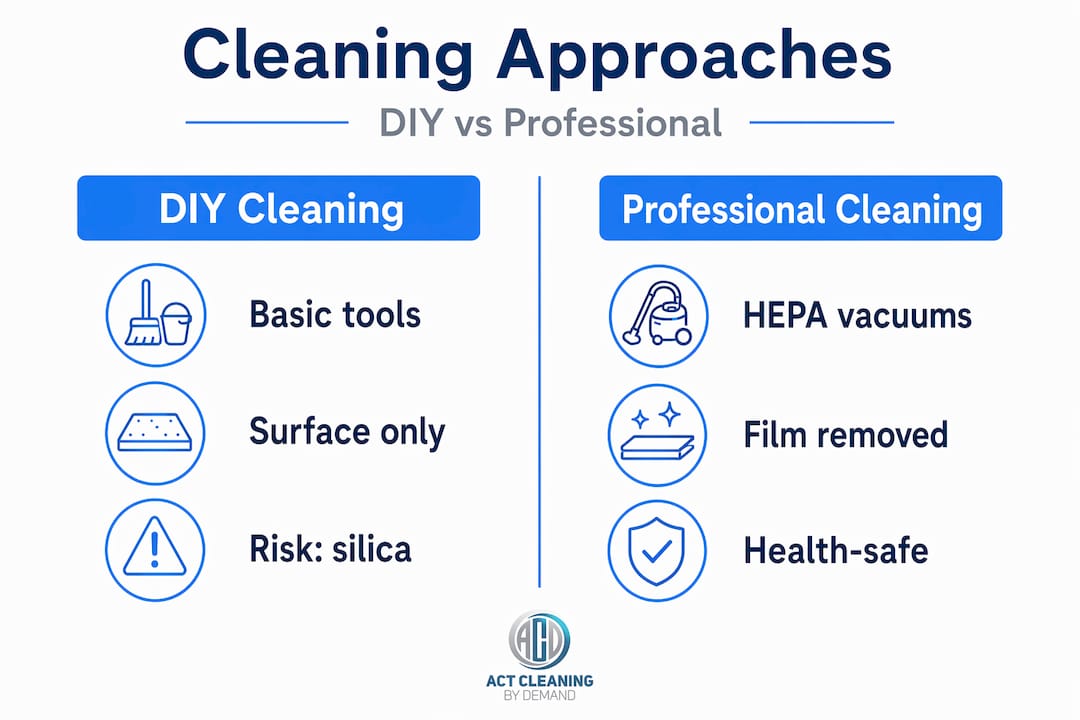
| Approach | Dust control | Film removal | Track cleaning | Health safety | Streak-free result |
|---|---|---|---|---|---|
| DIY cleaning | None | Often missed | Rarely complete | Not guaranteed | Inconsistent |
| Routine window cleaning | Minimal | Sometimes included | Basic only | Partial | Usually good |
| Professional post-construction | Full HEPA suppression | Always included | Thorough | Meets standards | Consistent |
DIY cleaning carries a specific risk that most homeowners don't anticipate: using the wrong tools actually makes the problem worse. Steel wool or abrasive pads — commonly reached for to tackle stubborn residue — scratch glass permanently. Dry wiping spreads silica across the surface, increasing exposure risk rather than reducing it.
Routine window cleaning services do a solid job on glass that's been in service for a while. But post-construction cleaning requires a sequence and specialised cleaning phases not used in routine janitorial work. The three-phase structure of rough clean, light clean, and final detailed clean exists because different contaminants respond to different treatments at different stages.
Why the sequence matters:
- Attempting a final polish before rough debris is removed just moves grit across the glass
- Skipping the dust suppression phase before wet cleaning turns silica dust into an airborne hazard
- Rushing to finish without track cleaning leaves abrasive particles that damage the window mechanism over time
Choosing a service with genuine post-construction cleaning expertise rather than a general window cleaner will consistently produce better, safer, and longer-lasting results.
Window cleaning techniques and tools for flawless post-construction results
Technology plays a bigger role in modern window cleaning than most people realise. Two tools in particular have transformed what's achievable on post-construction sites: deionised water systems and water-fed poles.
Deionised water leaves a perfectly clear, polished, and residue-free surface every time without detergents. Ordinary tap water contains dissolved minerals that evaporate and leave white spots and streaks on glass. After a construction clean, where the goal is a flawless, inspection-ready result, tap water simply doesn't meet the standard.
Water-fed poles take this further. These extendable poles pump purified water directly to a brush head, allowing cleaners to scrub and rinse windows from ground level. On a two-storey home or commercial property, this removes the need for ladders, reducing risk to the cleaner and to your property.
Key tools used in professional post-construction window cleaning:
- HEPA vacuums for pre-clean dust suppression in tracks and frames
- Deionised water systems for spot-free, streak-free rinsing
- Water-fed poles for safe reach on upper floors and skylights
- Specialised scrapers and plastic blades for adhesive and paint residue
- Lint-free, non-abrasive cloths for final polishing
| Tool | Purpose | Key benefit |
|---|---|---|
| HEPA vacuum | Dust extraction | Prevents silica becoming airborne |
| Deionised water | Rinsing glass | Zero mineral residue, spot-free finish |
| Water-fed pole | High-level access | Safe, ladder-free reach |
| Plastic scraper | Adhesive removal | Removes residue without scratching |
Pro Tip: Ask your cleaning provider what TDS (Total Dissolved Solids) reading their purified water system produces. A reading of zero to five parts per million is the target for genuinely spot-free results. Higher readings mean mineral deposits will still appear once the glass dries.
The investment in advanced cleaning technology by professional providers isn't a luxury upgrade. It directly affects whether your glass ends up clear and protected or spotted and potentially scratched.
Long-term benefits and practical tips for post-construction window care
The case for professional post-construction window cleaning isn't just about getting a nice result right now. The long-term benefits are measurable and they compound over time.
Construction debris left on glass doesn't just sit there passively. Alkaline residues from cement and concrete actively etch glass surfaces. Over weeks and months, this etching becomes permanent, creating a frosted or cloudy appearance that no amount of later cleaning can reverse. Post-construction cleaning improves safety, aesthetics, and property readiness for occupancy or inspection.
Clean windows also contribute more than you might expect to a property's first impression. Natural light throughput improves noticeably when glass is genuinely clean rather than hazed with construction residue. For properties heading to market or through a rental inspection, this difference is visible and financially significant.
Practical tips for managing post-construction window maintenance:
- Schedule professional cleaning immediately after the final construction phase, not weeks later when residues have hardened
- Request that builders use protective film on all glass during construction and confirm proper removal is part of the clean-up scope
- Inspect window tracks and seals yourself after cleaning is complete, and flag any remaining residue before signing off
- Plan for at least one follow-up professional clean in the three to six months after construction, as dust continues to settle from wall cavities and ceiling spaces
Pro Tip: If your property has double-glazed windows, be especially careful about who cleans them post-construction. Abrasive methods or incorrect chemicals can compromise the edge seals, causing fogging between the panes — a repair that is expensive and sometimes requires full glass replacement.
Regular professional window cleaning on a post-construction property isn't a one-off event. It's the first step in a maintenance routine that protects a significant investment.
Rethinking post-construction window cleaning: what most homeowners overlook
Here's an uncomfortable truth about post-construction window cleaning: most people who skip it aren't lazy or careless. They genuinely believe the visible dirt is the whole problem. Get rid of the obvious grime, and you're done. This is where the real mistake happens.
The visible layer of grey dust is the easy part. The dangerous part is what you can't see. Without verified exposure controls, construction dust can pose ongoing health risks long after work ends. Silica particles too fine to see with the naked eye settle into tracks, sit in the seals around frames, and release into indoor air every time a window is operated. This isn't a theoretical risk. It's an ongoing one that standard cleaning methods don't address.
There's also a financial dimension that often goes unacknowledged. Glass that's been allowed to etch from alkaline construction residue cannot be restored by cleaning. It requires resurfacing or replacement. The cost of professional window cleaning done right immediately after construction is a fraction of what glass replacement costs down the track.
We'd also push back on the idea that this is purely an aesthetic concern. Australian workplace health and safety legislation places duties on property owners and managers around dust exposure. Even in a residential setting, when tradespeople, inspectors, or cleaners come through after construction, the condition of surfaces matters. Meeting the standard isn't just about optics. It protects the people in your space. Insights from cleaning industry research consistently reinforce that post-construction cleaning is one of the most undervalued investments a property owner can make.
Thorough post-construction window cleaning isn't the final step of a renovation. It's the first step of actually using the building safely.
How ACT Cleaning by Demand can help with your post-construction window cleaning needs
Now that you understand what's genuinely at stake after construction, it helps to know there's an experienced local team ready to handle it properly.

ACT Cleaning by Demand provides specialist post-construction window cleaning using the equipment and methods outlined in this article — HEPA vacuuming, purified water systems, and thorough track and frame cleaning that meets Australian standards. Scheduling is flexible and designed to align with your construction completion timeline, so there's no scramble to get things done. The service covers glass, frames, sills, tracks, and residue removal as a complete package, not a basic glass wipe. If you need a broader post-renovation solution, the team also provides professional house cleaning and end of lease cleaning to get any property fully ready for occupancy or inspection.
Frequently asked questions
Why can't I just clean construction dust from windows myself?
Construction dust often contains fine silica particles that standard cleaning methods can't fully remove and may actually redistribute as airborne hazards, so professional cleaning with HEPA-filtered equipment and wet suppression is the safe and effective choice.
How soon after construction should windows be cleaned?
Windows should be cleaned promptly once construction is complete, ideally during the light clean or final clean phase, before alkaline residues from cement and concrete begin etching the glass surface.
Is using deionised water really better for cleaning windows post-construction?
Yes — deionised water leaves no mineral residue on glass, producing a spot-free and streak-free finish that's especially important after the heavy dust load of construction work.
Are there health risks to homeowners from silica dust on windows after construction?
Absolutely — respirable crystalline silica is a known carcinogen, and without proper professional cleaning that minimises airborne dust, occupants face ongoing inhalation risk every time they operate contaminated windows.