
Window track cleaning is the process of removing dirt, debris, mould, and grime from the narrow grooves that guide your window sashes, keeping windows sliding freely and seals intact. Dirty tracks do more than look unsightly. Debris like dust, pollen, pet hair, and mould spores impairs window operation and compromises weather sealing, which can push up your energy bills over time. This window track cleaning guide covers the right tools, a proven step-by-step method, and a maintenance routine that takes less than five minutes per window. Follow it consistently and your windows will slide, seal, and look the way they should.
What tools and materials are best for cleaning window tracks?
The right tools make the difference between a five-minute job and a frustrating hour of scrubbing. Specialised stiff-bristle nylon brushes and ergonomic track cleaning brushes remove compacted grime without scratching aluminium or vinyl surfaces. A standard toothbrush works in a pinch, but a purpose-built track brush reaches the full depth of the groove in one pass.
Essential tools to gather before you start
- Vacuum cleaner with a crevice tool: pulls out loose debris before any liquid touches the track
- Stiff nylon track brush or old toothbrush: dislodges compacted dirt from corners
- Cotton swabs: reach tight angles and screw recesses that brushes miss
- Microfibre cloths: wipe surfaces clean without leaving lint behind
- Spray bottle: applies cleaning solution evenly without flooding the track
Safe cleaning solutions for window tracks
White vinegar and bicarbonate of soda are the most effective DIY window track cleaning solutions for most households. White vinegar cuts through grease and kills surface mould. Bicarbonate of soda provides gentle abrasion and, when combined with vinegar, produces a fizzing action that lifts embedded grime from crevices. A mild all-purpose cleaner diluted with water works well for light maintenance cleans.
Avoid bleach-based sprays on aluminium tracks. They accelerate oxidation and leave a chalky residue that is harder to remove than the original grime. WD-40 attracts dust and leaves a gummy residue that impairs window movement. Use silicone lubricant instead, applied only after the track is fully clean and dry.
| Tool or agent | Best use | Notes |
|---|---|---|
| Crevice vacuum tool | Initial dry debris removal | Use before any wet cleaning |
| Stiff nylon brush | Scrubbing compacted dirt | Outperforms household brushes |
| Cotton swabs | Tight corners and screw holes | Dip in solution, do not use dry |
| White vinegar | Grease, mould, and mineral deposits | Safe on vinyl and aluminium |
| Bicarbonate of soda | Abrasive lift with fizzing action | Combine with vinegar for deep clean |
| Silicone lubricant | Post-clean glide and protection | Never substitute WD-40 |
Pro Tip: Buy a pack of purpose-built window track brushes online. They cost a few dollars and cut cleaning time significantly compared to repurposed household tools.
How to clean window tracks step by step
A thorough deep clean takes about five minutes per window. That figure assumes you follow the correct order. Skipping steps or starting with water creates a muddy slurry in the groove that is far harder to remove than dry debris.
The step-by-step cleaning process
-
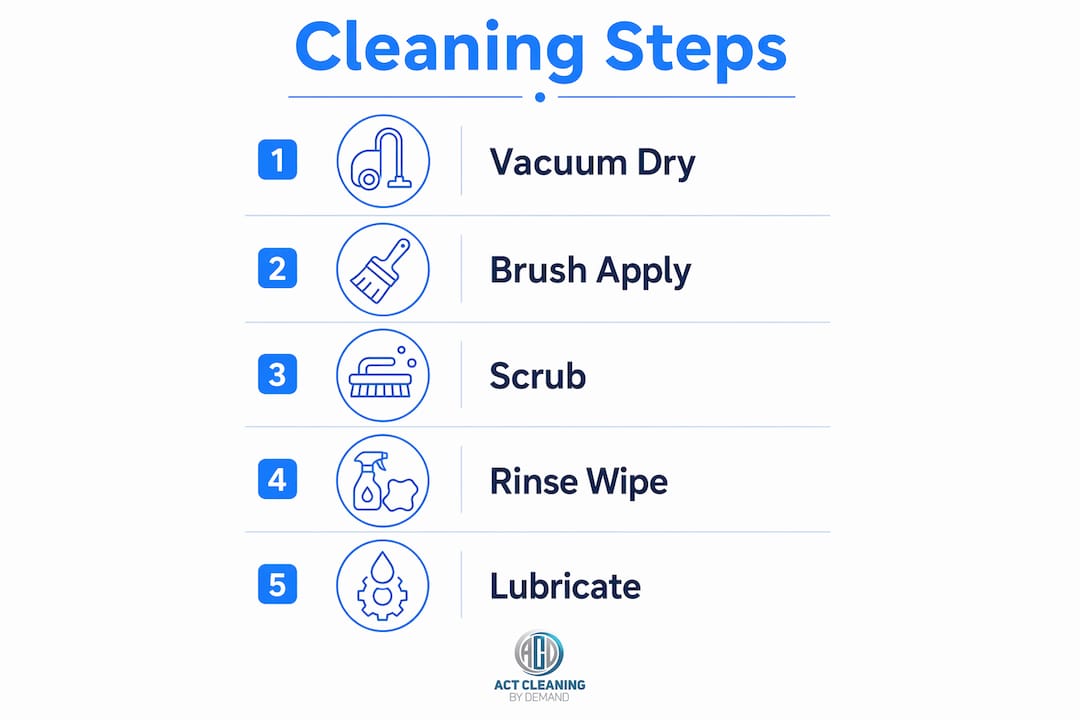
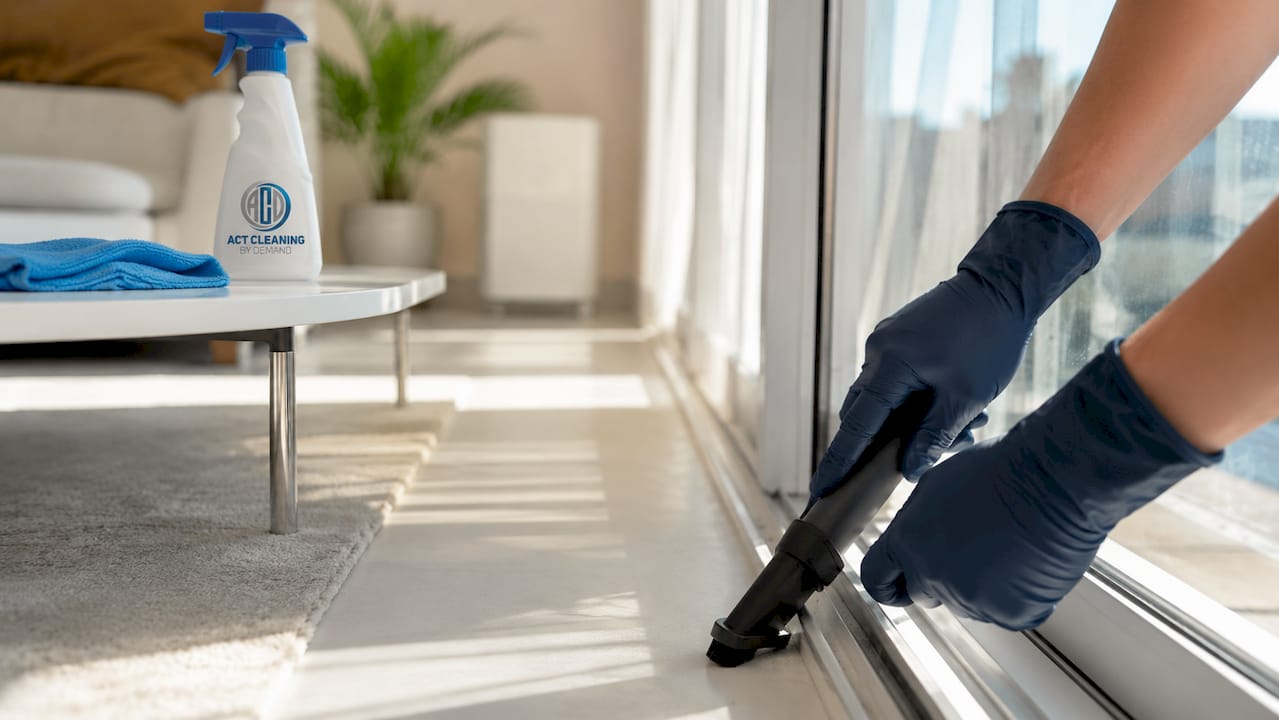
Dry vacuum the track. Run the crevice tool along the full length of the track. Start with dry vacuuming to avoid turning loose debris into difficult sludge. Remove as much loose material as possible before introducing any liquid.
-
Brush out compacted dirt. Work a stiff nylon brush along the track in short, firm strokes. Pay extra attention to the corners where the track meets the frame. This is where mould and compacted grit collect most heavily.
-
Apply bicarbonate of soda. Sprinkle a thin line of bicarbonate of soda along the track. Follow immediately with a spray of undiluted white vinegar. The fizzing reaction lifts embedded grime and breaks down mould at the surface level.
-
Let it sit for five minutes. Do not wipe immediately. The fizzing action needs time to penetrate compacted deposits. Use this time to treat the second window track.
-
Scrub with a toothbrush. Work the toothbrush into the corners and along the groove walls. The bicarbonate of soda acts as a mild abrasive, so you do not need to apply heavy pressure.
-
Use cotton swabs for tight spots. Dip cotton swabs in the cleaning solution rather than using them dry. Wet swabs lift debris from screw recesses and tight angles where brushes cannot reach.
-
Wipe clean with a damp cloth. Use a microfibre cloth dampened with clean water. Work from one end of the track to the other in a single pass. Rinse the cloth and repeat until no residue remains.
-
Dry thoroughly. This step is non-negotiable. Leaving moisture behind accelerates mould regrowth and grime accumulation within days. Use a dry microfibre cloth and, if needed, a hairdryer on a low setting to reach the deepest part of the groove.
-
Apply silicone lubricant. Run a thin bead of silicone lubricant along the track. Silicone lubricant creates a hydrophobic barrier that improves window glide and repels dust. Wipe away any excess with a clean cloth.
| Step | Action | Approx. time |
|---|---|---|
| 1 | Dry vacuum | 1 minute |
| 2–3 | Brush and apply solution | 2 minutes |
| 4 | Dwell time | 5 minutes |
| 5–6 | Scrub and swab | 2 minutes |
| 7–8 | Wipe and dry | 2 minutes |
| 9 | Lubricate | 1 minute |
Pro Tip: Clean both tracks on a window before moving to the next one. Keeping the task contained to one window at a time prevents the cleaning solution from drying out before you reach step seven.
How often should window tracks be cleaned?
Cleaning frequency depends on your environment and how much your windows are used. The professional standard is a minimum of twice yearly for maintenance vacuuming, with a full deep clean at the same intervals. Homes near bushland, busy roads, or with pets need more frequent attention because pollen, grit, and pet hair accumulate faster.
Many homeowners only clean window tracks when sliding windows become jammed, which is reactive rather than preventive. By that point, grime has often hardened into a compacted layer that takes significantly more effort to shift. A short routine prevents that outcome entirely.
Recommended cleaning schedule
- Weekly: Run a dry cloth or soft brush along the track surface to remove surface dust before it compacts.
- Monthly: Use the crevice vacuum tool for a quick pass. This takes under two minutes per window.
- Twice yearly (spring and autumn): Perform the full nine-step deep clean described above. Spring removes the pollen and grit that accumulates over winter. Autumn clears debris before wet weather drives moisture into the tracks.
- After storms or high-wind events: Vacuum tracks promptly. Wind forces fine grit and organic matter deep into the groove, where it compacts quickly.
Neglecting tracks beyond a year causes real damage. Grime damages window hardware and weather seals over time, leading to costly repairs. Damaged weather seals also reduce your home's thermal performance, which shows up on your energy bills. The same principle applies to other sealing systems around your home. Worn or debris-clogged weather seals on doors and frames cause the same kind of energy loss and mechanical wear.
Troubleshooting common window track problems
Even with the right tools and method, some situations need a different approach. Stubborn mould, oxidised metal, and trapped moisture each require a specific fix.
Stubborn mould in the corners. Apply undiluted white vinegar directly to the mould and leave it for ten minutes before scrubbing. For persistent black mould, a paste of bicarbonate of soda and a few drops of tea tree oil works as a natural antifungal treatment. Scrub with a toothbrush and rinse thoroughly.
Aluminium tracks showing oxidation or discolouration. Avoid abrasive scrubbing pads and acidic cleaners stronger than diluted white vinegar. Oxidation appears as a white chalky film. A paste of cream of tartar and water applied with a soft cloth removes it without scratching the surface.
Vinyl tracks with deep staining. Vinyl is more forgiving than aluminium. A mild all-purpose cleaner or diluted dish soap lifts most stains. Avoid solvents, which can cause vinyl to become brittle over time.
Trapped moisture after cleaning. If water pools in the track after cleaning, the drainage holes at the base of the frame are likely blocked. Use a toothpick or thin skewer to clear them. These small holes are designed to drain condensation and rainwater. Blocked holes are a leading cause of mould resurgence.
Rapid dust resettlement. If tracks collect visible dust within a week of cleaning, the silicone lubricant step was skipped or the track was not fully dry before lubrication. Reapply silicone to a clean, dry surface and the dust-repelling effect will hold for months.
Pro Tip: Take a photo of your tracks before and after cleaning. The visual comparison motivates you to maintain the routine, and it gives you a useful reference point for spotting early mould or seal damage.
Key takeaways
Regular window track cleaning, done with the right tools and dried thoroughly each time, prevents mould, protects weather seals, and keeps windows sliding freely with minimal effort.
| Point | Details |
|---|---|
| Start dry, always | Vacuum before any wet cleaning to avoid creating hard-to-remove sludge in the groove. |
| Bicarbonate of soda and vinegar | This combination fizzes to lift embedded grime and kills surface mould without harsh chemicals. |
| Dry thoroughly after cleaning | Leaving moisture behind causes mould to return within days, undoing the entire clean. |
| Use silicone lubricant, not WD-40 | Silicone repels dust and improves glide; WD-40 attracts grime and leaves sticky residue. |
| Clean twice yearly at minimum | Spring and autumn deep cleans protect weather seals and prevent costly hardware damage. |
What I have learned from years of watching window tracks get ignored
Most homeowners treat window tracks as invisible. They wipe down the glass, maybe the sill, and stop there. I have seen tracks so packed with compacted grit and dead insects that the window physically could not close. That is not a cleaning problem at that point. It is a repair bill.
The thing that surprises people most is how fast the right method works. Five minutes per window sounds like a claim, but it holds up when you follow the dry-first rule and use a proper track brush. The bicarbonate of soda and vinegar combination does the heavy lifting. You are not scrubbing hard. You are letting chemistry work and then wiping it away.
The drying step is where most DIY attempts fall apart. People clean the track, feel satisfied, and close the window. Within a week the mould is back and the grime has returned. A dry microfibre cloth and sixty seconds of patience at the end of the process changes the result entirely.
My honest recommendation is to invest in a set of purpose-built track brushes and keep them with your regular cleaning supplies. When the tools are accessible, the task gets done. When you have to hunt for a toothbrush and a cotton swab, it gets postponed indefinitely. Routine maintenance is about removing friction from the process, not just from the window.
— Deng
Professional window cleaning when the job needs expert hands
Some window tracks need more than a DIY clean. Heavy mould, damaged seals, or tracks that have not been touched in years often benefit from professional attention.

Com offers professional window cleaning for residential homes across Australia, using specialised tools and eco-friendly solutions that reach every part of the track, frame, and sill. The team handles the jobs that take a homeowner an afternoon and finishes them in a fraction of the time. For a full property refresh, Com's house cleaning service covers windows, tracks, sills, and every other surface that needs attention. Book online in minutes and let the professionals handle the detail work.
FAQ
What is the best homemade solution for window tracks?
White vinegar combined with bicarbonate of soda is the most effective DIY window track cleaning solution. The fizzing reaction lifts embedded grime and kills surface mould without damaging aluminium or vinyl surfaces.
How long does a full window track deep clean take?
A thorough deep clean takes approximately five minutes per window when you follow the correct dry-first method. Skipping the dry vacuuming step or the drying stage adds significant time and reduces results.
Can I use WD-40 to lubricate window tracks after cleaning?
WD-40 attracts dust and leaves a gummy residue that impairs window movement over time. Use a thin silicone lubricant instead, applied only after the track is completely dry.
How do I stop mould coming back in window tracks?
Dry the track completely after every clean and apply silicone lubricant to create a moisture-repelling barrier. Also clear the small drainage holes at the base of the frame, as blocked holes trap water and accelerate mould growth.
How often should I clean window tracks?
Clean window tracks at least twice a year with a full deep clean, ideally in spring and autumn. A quick monthly vacuum pass keeps grime from compacting between deep cleans.