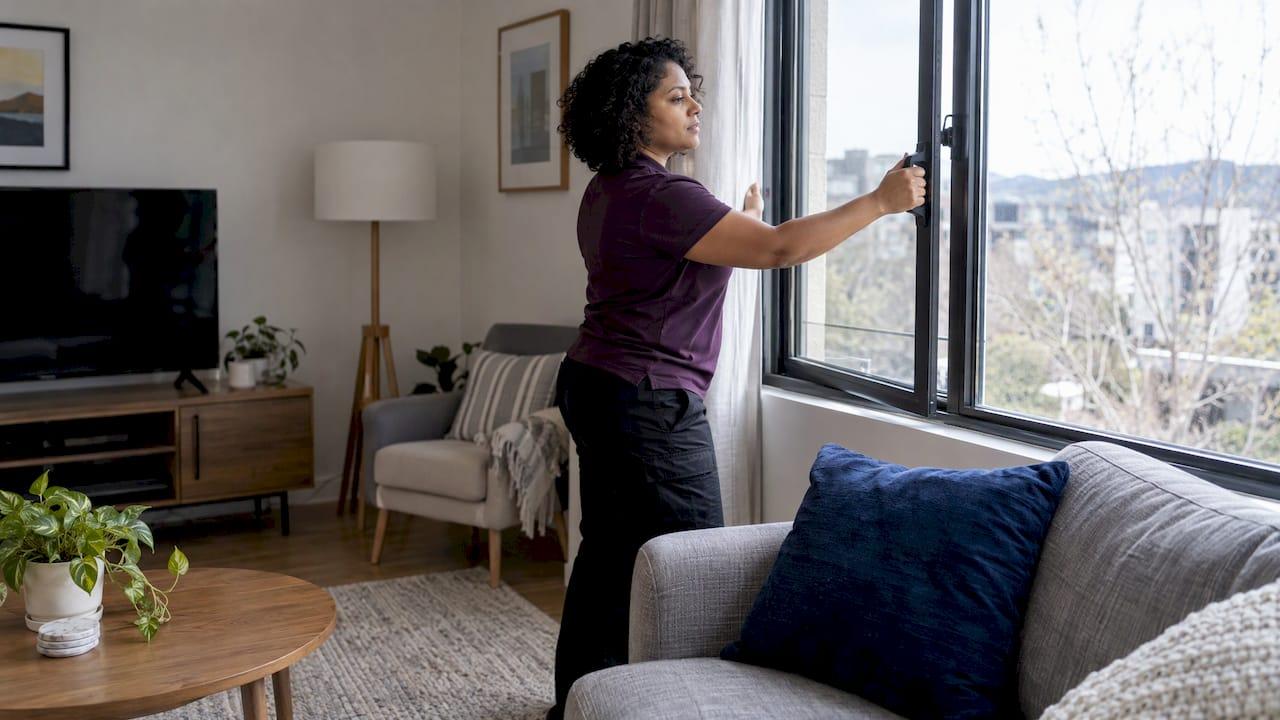
Airbnb's standard is simple to state and hard to keep: every listing must be clean and free of health hazards before each check-in, and from 20 November 2026 the cleaning is yours, not your guests'. Hosts in Canberra and across Australia can no longer lean on checkout chores to cover the gap. A repeatable, documented turnover done by trained, insured people is now the practical way to meet the standard. Our Airbnb cleaning service in Canberra is built for exactly that job.
This guide sets out what Airbnb requires, what changed in the checkout rules, what a turnover must cover, and how cleaners should work safely.
TL;DR
- Airbnb requires listings to be clean and free of mould, pests, extensive dust and dirty dishes before check-in, and hosts must clean between every stay. Repeated or severe breaches can lead to warnings, suspension or removal.
- For bookings made on or after 20 November 2026, checkout tasks are requests only. Only "lock up at checkout" remains a house rule, and hosts generally cannot ask guests to do work a cleaner would do.
- A proper turnover covers every surface, the bathrooms, the kitchen, linen, rubbish, floors and a final check against your listing photos.
- Cleaners should use approved disinfectants for the full contact time, never mix products, and wear suitable protective gear.
- A reliable cleaning team with no lock-in contract and a backup plan protects your reviews.
Table of Contents
- What Airbnb actually requires of hosts in Australia
- The 2026 checkout rule change: what it means for your cleaning
- What a turnover clean must cover
- Same-day turnovers and tight windows
- Safe cleaning: chemicals, protective gear and hazards
- When a property comes back damaged or very dirty
- What affects the cost of an Airbnb clean
- What we do for short-stay hosts
- Our view: the standard is a system, not a single clean
- FAQ
- Sources
What Airbnb actually requires of hosts in Australia
Airbnb's host ground rules say all listings must be clean and free of health hazards before check-in. That means no mould, pests, extensive dust, pet dander or dirty dishes. Hosts must clean between every stay, which Airbnb spells out as doing laundry, taking out the trash, vacuuming or sweeping and wiping surfaces. Repeated or severe violations can lead to warnings, suspension or removal from the platform.
Two points follow for Australian hosts.
First, this is a floor, not a target. Guests rate cleanliness as its own category, and a listing that merely avoids hazards still loses stars if a bathroom feels grubby. Airbnb's own cleaning guidance says hair in the bathroom or dirty dishes in the sink can disrupt a stay and lead to bad reviews or shortened bookings.
Second, Airbnb's Australian Apartment Hosting Guide, current as of February 2026, tells hosts to follow the Hosting Standards alongside local requirements. It points to Airbnb's five-step enhanced cleaning process and to Australian Department of Health resources on cleaning, disinfection and chemical labels. It also says to check regulations with a lawyer, town planner or local authority. If you host in an apartment building, that last step is worth doing before you worry about the mop.
The 2026 checkout rule change: what it means for your cleaning
Until now many hosts used a checkout list to push part of the cleaning onto guests: strip the beds, run the dishwasher, take the bins out. That has ended.
Airbnb's House Rules update, published on 20 October 2026 and updated on 3 November 2026, lists seven standard house rules: maximum overnight guests, quiet hours, events, pets, smoking, commercial photography and lock up at checkout. The free-text checkout instructions section has been removed from the listing editor. According to the GleamSync summary of the 2026 rules, for reservations booked on or after 20 November 2026 checkout tasks are requests that guests are encouraged, but not required, to follow.

What you can and cannot ask
Airbnb's guidance draws the line between small courtesies and cleaner's work:
| You can ask guests to | You cannot ask guests to |
|---|---|
| Put used dishes in the sink | Wash and put away dishes |
| Gather used towels in one place | Strip beds or start laundry |
| Separate trash and recycling into the indoor bins | Take rubbish off-site |
| Turn off the air conditioning when leaving | Avoid using an amenity you have listed |
Airbnb's checkout guidance adds that asking guests to do what a cleaner should handle can hurt stays and reviews, and that reasonable requests such as turning off the lights go in the Before checkout section. Airbnb itself has said it is reasonable to ask guests to turn off lights, throw food in the bin and lock the doors, as they would leaving their own home.
Guests still have a baseline
The guest ground rules require guests to leave the listing in a state that does not need excessive or deep cleaning, such as mouldy dishes, soiled carpets or pet stains. Cleaning fees are meant to cover standard cleaning between reservations, and hosts may not charge guests extra fees for failing specific cleaning or checkout tasks. You can still rate and review based on cleanliness.
The practical consequence
Plan every turnover on the assumption that the unit arrives back with unwashed dishes, used linen on the beds and rubbish in the kitchen. That adds time to each changeover. A cleaner's window sized for a tidy checkout will not stretch to cover a full reset. If you run same-day changeovers, our guide on how long an Airbnb changeover really takes helps you set realistic gaps between checkout and check-in.
What a turnover clean must cover
Airbnb's Resource Centre gives hosts a 12-point standard. Written as a working sequence, it looks like this.
1. Arrival and assessment
Walk the property before touching anything. Photograph damage, missing items or unusual mess first. Hostaway's turnover checklist places this departure assessment first, along with checking for left-behind items and noting low supplies. Photos taken in the first hour are far easier to rely on than a memory later.
2. Linen and laundry
Strip the beds, remove used towels and start laundry. Airbnb's standard is linen and towels that are clean, fresh and stain-free, with beds remade, fluffed and lint-rolled.
3. Kitchen
Dishes and cookware clean and put away. Fridge, stove and oven clean with no leftover food. With guests no longer able to be asked to wash up, expect more in the sink than before.

4. Bathrooms
Toilets, sinks, showers and bathtubs cleaned and disinfected, soaps refilled. This is where guests look first and where hair, limescale and mould spots cost you reviews.
5. Surfaces, high-touch points and air
All surfaces dusted and cleaned. Airbnb asks for special attention to high-touch surfaces such as remote controls and doorknobs, and suggests opening windows while cleaning if the weather allows. The space should smell fresh and clean, not heavily perfumed.
6. Floors and rubbish
All rubbish taken out. Floors vacuumed or swept and mopped last, so you are not walking dirt back over finished work. Check for bugs, cobwebs, mould and stains while you are down there.
7. Restock and reset
Restock consumables to a set level, store personal items out of sight and stage the rooms to match your listing photos. Hostaway describes this restocking to par levels and resetting as separate phases of a turnover.
8. Final walkthrough
Check lights, appliances, windows and access, then confirm the unit is guest-ready. Airbnb suggests that if you hire a cleaner, you run through the process once yourself and keep a backup cleaner on call.
For a printable version, use our complete Airbnb cleaning checklist for Australian hosts.
Same-day turnovers and tight windows
Hostaway advises setting checkout at least four to five hours before check-in for same-day turnovers, keeping a reliable cleaning team on standby and pre-staging backup supplies at the property. Those windows matter more now that guests cannot be asked to strip beds or wash up.
Three habits help:
- Build in a buffer. If your cleaner needs three hours on a full reset, a three-hour gap leaves no room for a late checkout or a larger mess.
- Keep spare linen sets. Laundry is the slowest part of a turnover. Spare sets let the cleaner make the beds now and wash later.
- Have a backup. One cleaner who is sick or double-booked should not cancel a guest's arrival.
Safe cleaning: chemicals, protective gear and hazards
Cleaners are workers, and the safety side of a turnover is part of the standard, not an extra.
Airbnb's supplies guidance recommends disposable gloves and a mask, disinfectants registered with the relevant government agencies and used for the full wet contact time on the label, and never mixing cleaners. Bleach and ammonia are the classic example of a dangerous combination. It also advises reading safety labels, keeping chemicals out of children's reach and not touching your face while cleaning.
Safe Work Australia's guidance on managing risks in accommodation services goes further. It sets out these controls:
- Eliminate risks where possible, for example cordless vacuums to remove trip hazards.
- Substitute hazardous cleaning chemicals with safer ones.
- Label and store chemicals correctly and provide current safety data sheets.
- Make sure workers wear appropriate protective equipment when using chemicals.
- Prevent slips, trips and falls with non-slip mats, warning signs, clean dry floors and non-slip footwear.
A practical order of work also helps hygiene: clean a surface with soap and water first, then disinfect, and keep it wet for the full contact time stated on the product label. A quick wipe with a sprayed cloth does not meet that standard.
If you host in the ACT, also confirm your obligations as an employer or person conducting a business with WorkSafe ACT before engaging anyone to clean, and check with your strata manager or an adviser for any building rules that apply to your apartment.
When a property comes back damaged or very dirty
Some stays leave more than a standard clean can fix: stains, smoke odour, pet damage or broken items. The standard response has three parts.
- Document first. Photograph everything before it is moved or cleaned.
- Report through Airbnb promptly. The TurnMyRental guide notes that hosts have 14 days after checkout to claim for damage, and that the guest then has 24 hours to respond before Airbnb steps in. Confirm the current claim process in your Airbnb account or Help Centre before relying on those periods.
- Separate cleaning from repair. A cleaner can restore a clean, ready unit, but broken fixtures need a tradesperson, and your insurer needs the photos.
The guest ground rules say hosts may not charge fees for missed cleaning tasks, so the route for excessive mess is the claims process, not a surprise surcharge.
What affects the cost of an Airbnb clean
We do not publish a fixed rate for Airbnb cleaning, because the right price depends on the property. The factors that move it are consistent:
- Size and bathrooms. Bedrooms and bathroom count set the baseline time.
- Linen volume. More beds means more laundry.
- Turnaround time. Tight same-day windows need more hands on site.
- Condition. A property used heavily or left in a poor state takes longer.
- Frequency. A regular schedule is easier to plan than irregular bookings.
- Access and travel. Key handover, parking and distance all count.
Since Airbnb stopped showing separate cleaning fees to guests, hosts must build cleaning costs into the nightly price. Work out your real cost per changeover first, then set the rate, rather than the other way round.
What we do for short-stay hosts
Our team cleans short-stay properties across Canberra and the ACT. Our Airbnb and short-stay cleaning sits alongside regular, one-off and emergency cleaning, so you can match the service to your booking pattern. Our staff are police-checked and insured, we use eco-friendly products, scheduling is flexible, and there are no lock-in contracts. We build custom cleaning plans around your property, and our work is backed by a 100% satisfaction guarantee.
If you are setting up a roster or changing it for the new checkout rules, see our Airbnb cleaning page or the full list of cleaning services, then book through our online booking interface.
If the same property also changes hands one day, we also offer end of lease, presale and post-construction cleaning, so one provider can cover the whole life of the property.
Our view: the standard is a system, not a single clean
We think hosts get Airbnb cleaning wrong when they treat it as a task instead of a system. A good clean on Tuesday means little if the next one depends on who happens to be free on Saturday.
The 2026 checkout change makes that plain. Guests are no longer part of your cleaning process, so the quality of a turnover rests entirely on the people you book. That is why we build custom cleaning plans around each property: what the listing photos show, how many beds and bathrooms need resetting, how tight your changeover windows run and which days you are busiest.
We also think hosts should not be locked in. Booking patterns change with the season, so our service runs without lock-in contracts and with flexible scheduling. Our cleaners are police-checked and insured, because you are handing them the keys to your property and your reputation. We use eco-friendly products, because guests notice what a place smells like and because the people cleaning shouldn't have to breathe harsh fumes all day.
Our aim is a unit that matches your listing photos every time a guest opens the door. Backed by a 100% satisfaction guarantee, that is the standard we hold ourselves to.
Deng
FAQ
Does Airbnb set an official cleaning checklist for Australian hosts?
Airbnb publishes cleaning guidance rather than a legal checklist. Its Resource Centre guide lists 12 points, from dusted surfaces and mopped floors to disinfected bathrooms, clean linen and a fresh-smelling space. Its ground rules make a clean, hazard-free listing before check-in mandatory, and breaches can lead to warnings or removal.
Can I still ask guests to strip the beds or take out the rubbish?
Not as a requirement. For reservations booked on or after 20 November 2026, checkout tasks are requests only, and Airbnb's House Rules guidance says hosts can ask guests to gather used towels or sort rubbish into indoor bins, but not to strip beds or take garbage off-site. Plan your cleaner's time as if guests will do none of it.
Can I charge guests extra if they leave the place dirty?
Not for missed cleaning or checkout tasks. Airbnb's guest rules say cleaning fees cover standard cleaning between stays, and hosts may not charge fees for failing specific tasks. If a guest leaves a property needing excessive or deep cleaning, document it and use Airbnb's claims process.
Do cleaners need protective equipment for an Airbnb turnover?
Yes. Airbnb recommends disposable gloves and a mask, and Safe Work Australia requires that workers wear appropriate protective equipment when using chemicals. Chemicals should never be mixed, and disinfectants should stay wet on the surface for the full contact time on the label.
How quickly can a property be turned around between guests?
It depends on size, linen volume and condition. Hostaway suggests leaving four to five hours between checkout and check-in for same-day changeovers. Our team can plan a schedule around your booking pattern, so you can set check-in times that are realistic.
Sources
- Airbnb host ground rules (Australia)
- Airbnb guest ground rules (Australia)
- Airbnb Apartment Hosting Guide, Australia
- Ensuring your place is sparkling clean, Airbnb Resource Centre
- Important changes to House Rules, Airbnb Resource Centre
- A clear and simple checkout, Airbnb Resource Centre
- Stock up on these cleaning supplies, Airbnb Resource Centre
- Accommodation services: managing risks, Safe Work Australia
- Excessive Airbnb fees frustrate guests, The New Daily
- Airbnb turnover checklist, Hostaway
- What is turnover, Hostaway
- Airbnb checkout instructions under the 2026 rules, GleamSync
- Airbnb turnover cleaning guide, TurnMyRental