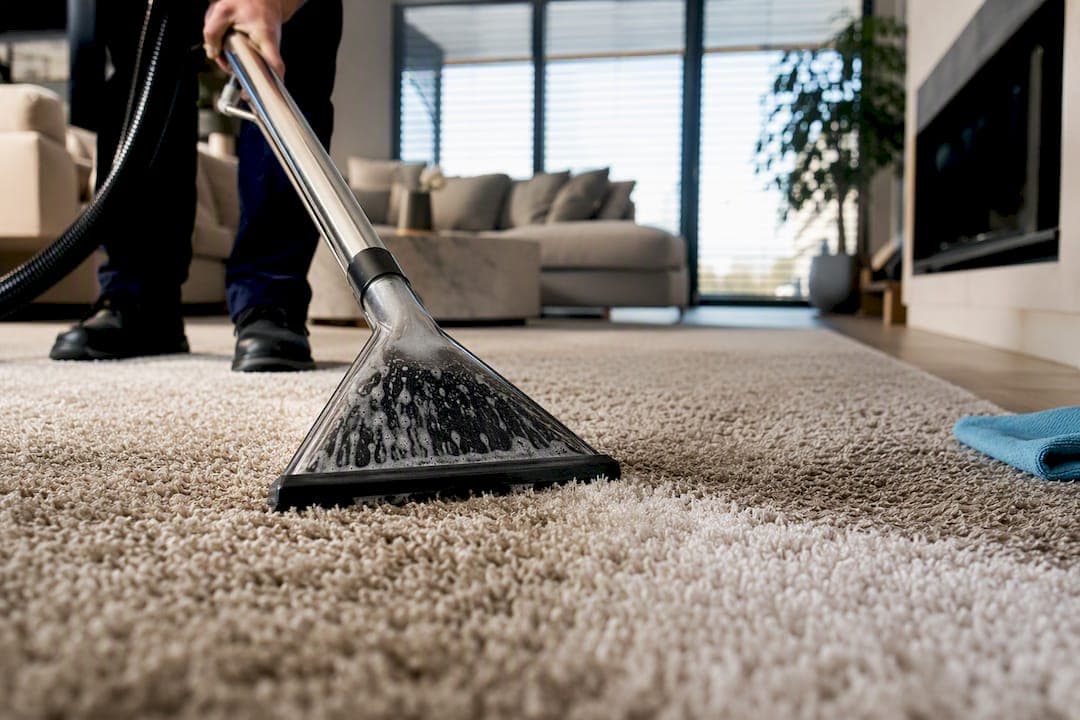
The routine that cuts carpet allergens is straightforward: vacuum with a HEPA-filtered machine several times a week, run a hot water extraction clean every few months, and keep indoor humidity under 50%. Skip any one of these and allergen levels creep back within weeks. Start today by vacuuming with a HEPA machine and checking your indoor humidity with a cheap hygrometer.
TL;DR:
- Regular deep extraction cleaning every three to six months significantly reduces embedded allergens, especially when paired with thorough vacuuming beforehand.
- Maintaining indoor humidity below 50 percent is crucial, as dust mites thrive in moisture, making dry air essential for long-term allergen control.
- Heavily fragranced or scented cleaning products can trigger reactions; hypoallergenic, fragrance-free solutions are safer options for allergy households.
- Using a HEPA-filtered vacuum monthly and replacing filters on schedule ensures effective removal of tiny allergen particles from carpets.
- A inexpensive hygrometer helps monitor humidity levels and guide dehumidification efforts to prevent mite development and recurrent allergies.
Table of Contents
- Carpet cleaning for allergies: choosing and using a vacuum properly
- Deep cleaning and extraction: why removal beats killing mites
- Cleaning solutions that won't trigger a reaction
- Humidity control and dust mite management
- A maintenance schedule that's actually realistic
- Drying and safety after a deep clean
- When it's time to call in a professional
- Practical perspective from a cleaning practitioner
- What the research actually tells allergy sufferers to prioritise
- How ACT Cleaning by Demand handles allergy-focused carpet cleaning
- Sources
- FAQ
Carpet cleaning for allergies: choosing and using a vacuum properly
A HEPA-certified vacuum captures roughly 99.97% of particles down to 0.3 microns, which covers most pollen grains, pet dander flakes and the faecal debris dust mites leave behind. A standard vacuum without sealed filtration just stirs that debris into the air you breathe, then drops it back onto the carpet a few minutes later.
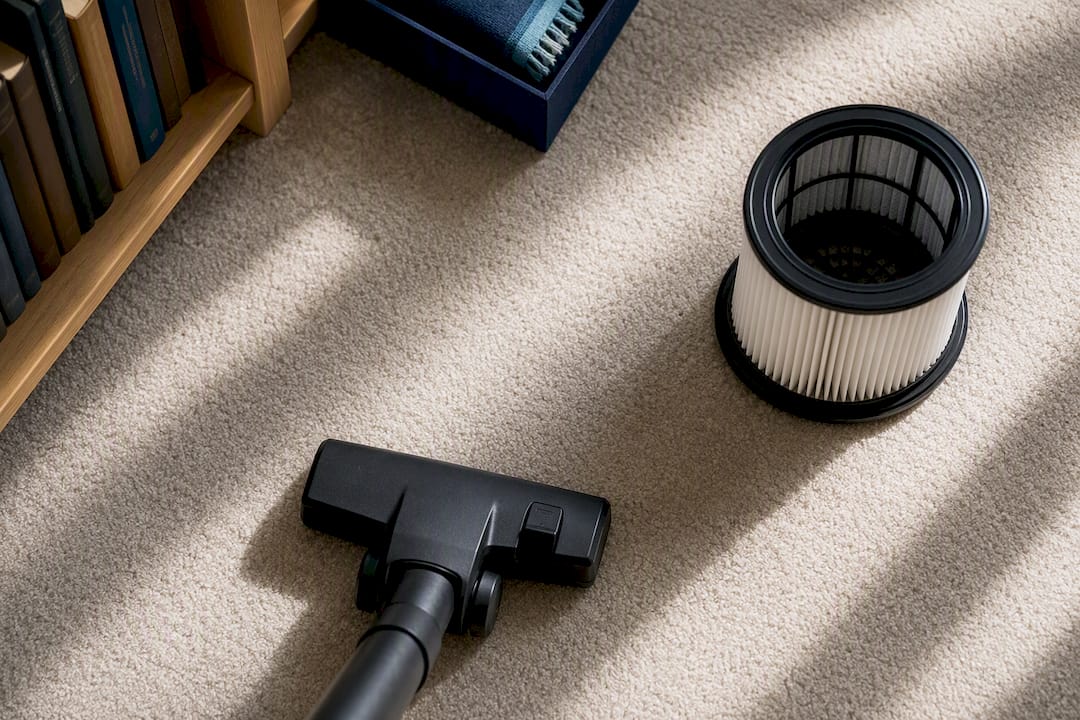
Run the vacuum regularly in bedrooms and anywhere with heavy foot traffic. Slow, overlapping passes lift far more embedded material than a quick once-over, especially along skirting boards and under furniture, where allergen levels are often highest because nobody bothers to move the couch.
A few habits make the difference between a vacuum that helps and one that just moves dust around:
- Empty canister filters outdoors, not over the kitchen bin.
- Replace or wash filters on the schedule the manufacturer sets, not "whenever it looks dusty".
- Clean the brush roll of hair and fibre buildup monthly.
- Watch for dropping suction or visible dust puffing from the exhaust. Both mean the filter's overloaded.
Pro Tip: If you can see dust in the air after vacuuming a sunlit room, your filter's already past its use-by date. Swap it before the next session.
Deep cleaning and extraction: why removal beats killing mites
Heat kills dust mites. It does not remove them, and the allergenic protein in their waste stays embedded in the pile whether the mite is alive or dead. This is the part most people get backwards: a steam-only pass can sanitise the carpet while leaving the actual allergy trigger sitting in the fibres.
Hot water extraction solves that because it flushes the debris out of the pile rather than just heating it. Robotin's guide on removing allergens and dust mites from carpet makes the same point: extraction plus proper drying is the combination that actually lowers allergen load, not extraction alone.
For allergy households, aim for extraction on this cadence:
- Every three to six months for a typical household.
- Closer to the three-month mark if you have pets, kids, or heavy shoe traffic.
- Immediately after any flare in symptoms that coincides with a musty or dusty smell from the carpet.
Deep cleaning on this schedule measurably reduces embedded dander, pollen and mite debris compared with vacuuming alone, with the biggest gains showing up when extraction is paired with consistent weekly maintenance.
A few things separate a good extraction clean from a wasted one. Vacuum thoroughly before the machine goes over the carpet, since extraction works on what's embedded, not on the surface fluff a vacuum would have caught anyway. Follow the machine's recommended water temperature and dwell time rather than pushing extra passes to feel thorough, because overwetting is the single biggest cause of the mould problems covered later in this guide. Use a quick dry setting where your machine has one, and always read more on steam cleaning and dust mite control if you are choosing between rental units and a professional service.
Cleaning solutions that won't trigger a reaction
Not every carpet formula is safe for a household with allergies or asthma. Heavily fragranced powders and scented aerosol sprays often add the exact volatile compounds that trigger a reaction in sensitive airways, even after the carpet looks and smells "clean".
Look for products labelled hypoallergenic, fragrance-free, or "free and clear" formulations. These remove soil and allergen residue without adding synthetic dyes or perfumes that can sit in the pile long after the carpet dries.
A few practical notes when shopping for one:
- Check that the formula is compatible with your specific extraction machine or upright, since some concentrated solutions foam excessively in older units.
- Spot-clean stains with a fragrance-free enzyme cleaner rather than a general-purpose carpet spray.
- Avoid deodorising powders altogether in an allergy household. They mask smell, not allergen.
For a broader rundown, our piece on non-toxic carpet cleaning options covers eco-friendly formulas that skip the harsher additives without losing cleaning power.
Humidity control and dust mite management
Dust mites thrive in moisture. Keep relative humidity below roughly 50% and you make the carpet inhospitable to them, which matters more for long-term allergen control than any single cleaning session.
A cheap hygrometer, the kind you'd buy for a wine fridge, tells you where you actually stand rather than guessing. Pair the reading with the right response:
- Run a dehumidifier or air conditioner when humidity creeps above 50%, particularly in warmer months.
- Ventilate bathrooms and laundries so damp air doesn't drift into carpeted rooms.
- Avoid indoor clothes drying near carpeted areas, since wet laundry can push a room's humidity up for hours.
Pro Tip: A $15 hygrometer from a hardware shop is one of the cheapest, highest-value purchases you can make for allergy control. Most people skip it and wonder why the mite problem keeps coming back.
A maintenance schedule that's actually realistic
Trying to do everything daily is how allergy routines fall apart within a fortnight. A workable schedule looks like this:
- Vacuum bedrooms and high-traffic rooms regularly with a HEPA machine.
- Wash small rugs, cushion covers and bedding at sufficiently hot temperatures to kill mites. (https://www.robotin.com/blogs/the-clean-home/how-to-get-allergens-dust-mites-out-of-carpet) to kill mites and rinse the allergen out.
- Book or run a full extraction clean every three to six months.
- Run an air purifier in bedrooms between deep cleans, since that's where you spend the most unbroken hours breathing whatever's in the air.
Between deep cleans, small habits carry a lot of weight. Groom pets regularly to cut dander shedding at the source, spot-treat any fresh stain before it sets into the pile, and adopt a no-shoes policy at the door. None of these replace the schedule above, but they buy you time between the bigger jobs.
Drying and safety after a deep clean
Damp carpet is a mould risk and a dust mite invitation, which cancels out most of the good an extraction clean just did. Aim to have carpet fully dry within 4 to 6 hours, and treat anything past 24 hours as a warning sign.
Speed drying up with a mix of these:
- Run ceiling fans or portable fans across the room.
- Switch on air conditioning or heating to pull moisture out of the air.
- Open windows on a low-pollen, low-humidity day rather than a still, humid one.
- Use your machine's quick-dry or low-moisture setting if it has one, especially in a home with limited airflow.
If a section still feels damp or smells musty after 24 hours, treat it as a re-clean job rather than waiting it out. Our guide on carpet drying time breaks down realistic timelines by carpet type and room ventilation.
When it's time to call in a professional
Some situations are genuinely beyond a rental machine and a Saturday afternoon. Heavy pet dander buildup, visible mould, carpet that hasn't had a proper deep clean in years, or a home with limited drying options (think a south-facing unit with no cross breeze) are all good reasons to book a professional clean rather than push through with a DIY unit.
Before you book, ask a few direct questions:
- What method do they use, extraction or steam-only, and can they explain the difference?
- Do they offer hypoallergenic, fragrance-free solutions as standard?
- What's the expected drying time, and what's their plan to speed it up?
- Are they insured, and what happens if the result doesn't hold up?
Watch for red flags too. A provider who can't explain their drying plan, leans on heavily perfumed products, or leaves carpet damp for most of a day isn't set up for allergy-focused work, whatever their marketing says.
Practical perspective from a cleaning practitioner
The mistakes we see most often are simple ones: vacuuming too lightly, skipping extraction because "it looks clean", and ignoring humidity entirely. Three fixes cover most of it. Vacuum with a HEPA machine on a real schedule, get a hygrometer and a dehumidifier working together, and book extraction every three to six months rather than "when it feels due". Our posts on pet urine carpet cleaning and drying timelines go deeper into the operational side of this if you want the specifics behind each step.
What the research actually tells allergy sufferers to prioritise
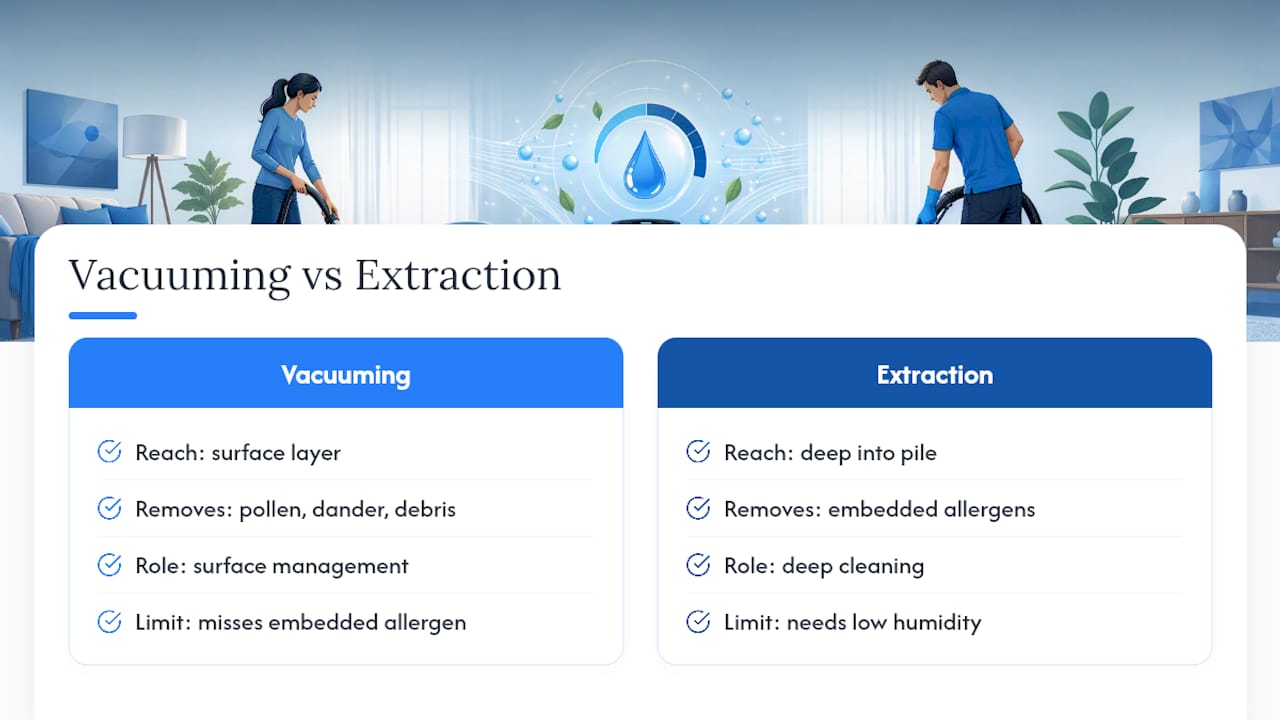
Most carpet cleaning advice treats vacuuming and deep cleaning as interchangeable, and that's the gap that causes the most frustration. They're not interchangeable. Vacuuming manages the surface; extraction reaches what's embedded in the pile. Treating one as a substitute for the other is why so many allergy sufferers clean religiously and still wake up congested.
The bigger miss in conventional advice is humidity. Plenty of guides mention vacuum frequency and extraction schedules, but few connect the dots on why mites keep coming back after a clean. A carpet at 60% relative humidity is a mite nursery no matter how often you run the vacuum over it. Fix the humidity first, or every other step is working against a headwind.
If you're prioritising one thing this week, make it the hygrometer, not a new vacuum. It costs less, tells you the actual problem, and shapes every decision after it, including how urgently you need that next extraction booked in. A carpet cleaned by an eco-friendly, allergy-aware process, using fragrance-free products and a proper drying plan, only holds its benefit if the room it sits in stays dry enough to keep mites from moving back in.
— Deng
How ACT Cleaning by Demand handles allergy-focused carpet cleaning
Some professional cleaning services run the routine described in this article: hot water extraction rather than steam-only, hypoallergenic and fragrance-free solutions, and a drying plan built around getting the carpet dry fast rather than leaving it damp overnight, following a low-dust door replacement process for homeowners to minimize indoor dust during renovations. That combination is what separates a clean that actually reduces allergens from one that just looks tidy.

When booking a professional cleaning, expect a quick inspection of your carpet's condition, a recommendation on the right extraction method for your fibre type and allergen load, and a clear plan for drying time before the crew leaves. Scheduling often works around households that need bedrooms prioritised or pet-heavy areas treated differently. If you're a renter working through a move-out clean, the end of lease cleaning service covers the same extraction standard alongside the rest of the bond clean checklist. Canberra and ACT households can check availability and book directly through the house cleaning service page to get a date locked in before the next allergy season builds up.
This article is general information, not a substitute for advice from a qualified doctor. Consult a qualified healthcare professional about your own circumstances before acting on anything here.
Sources
- How to Remove Pollen, Dust, Dander, and Dust Mite Matter Allergens from Carpet
- How to Get Allergens and Dust Mites Out of Carpet (2026)
- Indoor humidity levels (National Asthma Council Australia)
FAQ
Can a dirty carpet cause allergies?
Yes. Carpet traps pollen, pet dander and dust mite debris, acting like a passive filter that later releases those allergens into the air when disturbed by walking or vacuuming.
What kills dust mites in carpet?
Heat is the main killer, delivered through hot water extraction or washing textiles at 54°C or higher. Killing the mite alone isn't enough though; extraction is what physically removes the allergenic debris they leave behind.
How can you tell if your carpet has dust mites?
There's no visible sign of mites themselves, but persistent sneezing, itchy eyes or a stuffy nose that eases when you leave the house are strong clues. A humidity reading above 50% in the room is another red flag worth checking with a hygrometer.
What are the symptoms of a carpet dust allergy?
Common symptoms include sneezing, a runny or blocked nose, itchy or watery eyes, and in people with asthma, tightness in the chest or coughing. Symptoms typically worsen after vacuuming or sitting on the floor and ease once the room's aired out.