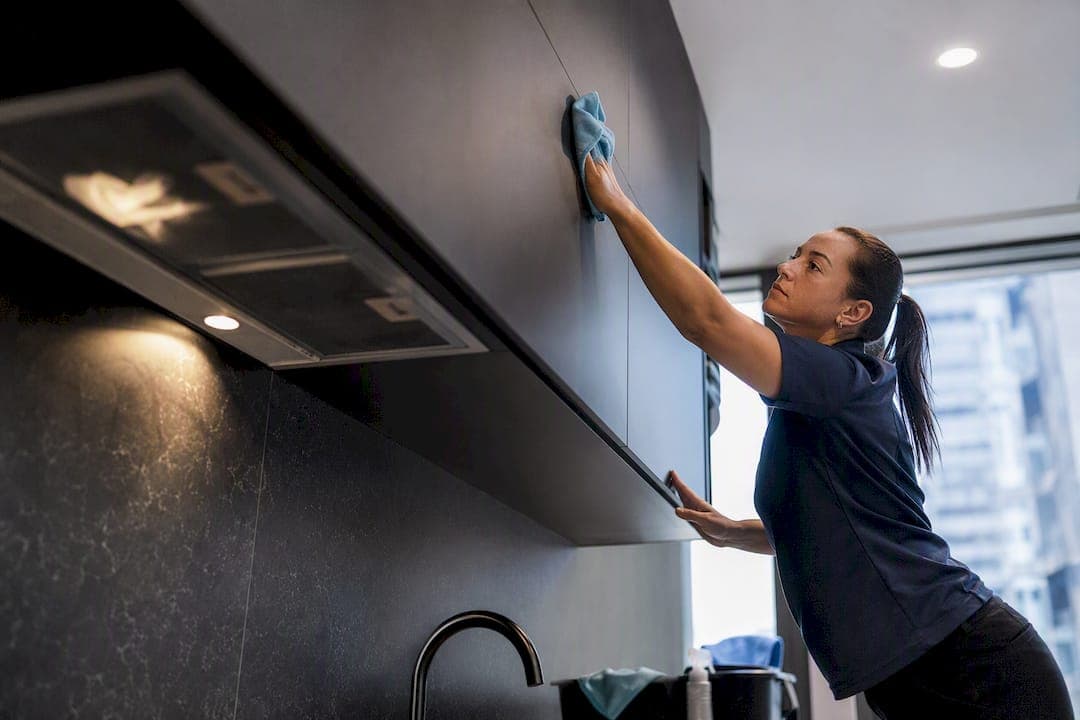
A regular clean keeps surfaces tidy day to day. A deep clean resets everything a regular clean normally skips, from grout to the inside of your oven. If your home or office has months of buildup, book a deep clean first, then maintain the result with regular cleaning on a weekly or fortnightly cycle. Both services are widely available from professional cleaning teams.
TL;DR:
- A deep clean targets hidden grime and buildup in appliances, grout, vents, and behind furniture, usually taking 1.5 to 3 times longer than regular cleaning.
- Deep cleaning costs about 1.5 to 2 times more than regular cleaning and is recommended every three to six months, especially after renovations or long neglect.
- Regular cleaning effectively maintains hygiene and appearance by cleaning surfaces and floors weekly or fortnightly, while deep cleaning addresses health-critical areas.
- Using eco-friendly cleaning products may extend deep cleaning duration slightly but reduces chemical residues and indoor air pollution.
- Initiating a deep clean before switch to regular maintenance reduces overall cleaning time, costs, and surface staining in the long term.
Table of Contents
- What is regular cleaning: tasks, time and when it's enough
- What is deep cleaning: what it covers and why it takes longer
- Key differences at a glance: scope, time, equipment, cost and health impact
- When to choose a deep clean (decision checklist)
- DIY vs hiring a professional: pros, cons and questions to ask
- Recommended frequency and maintenance tips between cleans
- Environmental considerations and use of green cleaning products
- What I've learned watching homes go from neglected to reset
- How ACT Cleaning by Demand can help
- Sources
- FAQ
What is regular cleaning: tasks, time and when it's enough
Regular cleaning is maintenance work. It keeps a home or office looking tidy and hygienic between the bigger resets, and it's what most people picture when they book a "clean." The tasks are consistent and repeatable, which is exactly the point.
A standard regular clean typically covers:
- Vacuuming and mopping floors throughout the property
- Wiping down kitchen benches, tables and visible surfaces
- Cleaning bathroom fixtures (toilets, sinks, showers) at surface level
- Emptying and replacing bin liners
- Dusting reachable surfaces and tidying general clutter
For a standard three or four bedroom house, this usually takes a few hours, typically under half a day. An office of similar size follows a similar window, though it depends on desk density and how many shared areas need attention.
Regular cleaning is genuinely enough for most households and workplaces most of the time. The CDC's guidance on home hygiene confirms that cleaning alone removes most germs from surfaces, and that sanitising or disinfecting is generally recommended only when someone in the home is sick or when there are vulnerable people around. If nobody's unwell and the space just needs to look and feel presentable, a regular clean does the job.
What is deep cleaning: what it covers and why it takes longer
Deep cleaning goes beneath the surface level a regular clean stops at. It targets the grime, buildup and hidden dirt that accumulates over weeks or months, using more time, stronger cleaning agents and sometimes specialised equipment like steam cleaners or descaling tools.
A thorough deep clean typically includes:
- Inside ovens, fridges and other major appliances
- Grout scrubbing in bathrooms and kitchens
- Baseboards, skirting boards and window tracks
- Air vents and exhaust fans
- Behind and underneath furniture and appliances
- Descaling taps, showerheads and kettles
These tasks take longer because they involve moving furniture, breaking down baked-on grease, and working into corners a weekly clean never reaches. According to TIDY's comparison of deep and regular cleaning, a deep clean usually takes 1.5 to 3 times as long as a regular clean on the same property, and a typical three-bedroom deep clean runs 3 to 6 hours against 1.5 to 3 hours for a standard clean. Cost follows a similar pattern. Compare Cleaning Quotes reports Australian deep cleans commonly priced at around 1.5 to 2 times the cost of a regular clean, reflecting the extra hours and product use involved.
Key differences at a glance: scope, time, equipment, cost and health impact
Comparing deep cleaning vs regular cleaning side by side makes the decision easier, because the two services solve different problems rather than one being a "better" version of the other.
| Factor | Regular cleaning | Deep cleaning |
|---|---|---|
| Scope | Surface level: floors, benches, visible bathroom fixtures | Full reset: appliances, grout, vents, behind furniture |
| Time (3 bed home) | A few hours | Several hours |
| Cost | Base rate | Significantly higher than regular clean cost |
| Frequency | Weekly or fortnightly | Every few months as needed |
| Equipment/chemicals | Standard sprays, vacuum, mop | Degreasers, descalers, steam equipment, grout brushes |
| Health impact | Maintains hygiene, limits everyday germ buildup | Removes trapped allergens, mould spores, grease residue |
The tasks exclusive to deep cleaning matter for health as much as appearance. Dust and pet dander settle inside vents and behind fridges, places a weekly wipe-down never touches, and that buildup keeps circulating through the air until someone physically clears it out. Offices face the same issue at scale. Clean Group's workplace guidance notes that accumulated grime and allergens in shared spaces can affect occupant comfort in ways daily cleaning misses entirely.
When to choose a deep clean (decision checklist)
Certain situations call for a deep clean rather than another round of the regular routine. The clearest triggers are:
- Moving into or out of a property, especially for bond or lease requirements
- After renovation or construction work, when fine dust settles everywhere
- Visible grime, sticky surfaces or grease buildup in kitchens and bathrooms
- Before hosting a major event or welcoming guests who'll notice detail
- Allergy or asthma flare ups linked to dust, pet hair or mould
If none of these apply and the space just needs freshening up, a regular clean is the right call. Most cleaning professionals suggest booking a deep clean whenever a property hasn't had one for an extended period, then settling back into a recurring schedule, a pattern My Pristine Home backs as standard practice.
Pro Tip: Walk through the property and run a finger along a skirting board or the top of a door frame. If it comes away grey, you're overdue for a deep clean, regardless of when the last regular clean happened.
DIY vs hiring a professional: pros, cons and questions to ask
DIY works for basic regular cleaning if you've got the time and the right products. Deep cleaning is where the cost benefit shifts, since professional teams bring commercial grade equipment, know how to safely handle stronger degreasers and descalers, and finish in a fraction of the time a first attempt takes.
Before booking, ask about:
- Insurance and police checks for staff entering your property
- Whether the quote covers a fixed scope or hourly billing
- What products they use, especially if you want eco-friendly options
- Availability for follow-up regular cleans on a set schedule
Pro Tip: Get the scope in writing before the job starts. "Deep clean" means different things to different providers, and a written checklist avoids disputes over what's included.
Recommended frequency and maintenance tips between cleans
Most homes do well with a deep clean every 3-6 months, adjusted for pets, kids and allergy sensitivity, alongside weekly or fortnightly regular cleaning to maintain the result. Households with heavier use benefit from sitting closer to the 3 month mark.
Small habits stretch that gap further:
- Wipe kitchen benches and stovetops daily rather than letting grease set
- Run exhaust fans and open windows to cut moisture buildup in bathrooms
- Vacuum high-traffic zones twice a week instead of once
A first deep clean also resets the baseline, which tends to shorten how long each following regular clean takes.
Environmental considerations and use of green cleaning products
Deep cleaning uses more product volume than regular cleaning simply because it covers more ground, which makes the choice of chemicals worth thinking about. Harsh degreasers and descalers cut through grime fast, but many contain ingredients that linger in indoor air or run off into waterways after rinsing.
Plant-based degreasers, enzyme cleaners and microfibre systems that need less chemical volume per surface are increasingly common substitutes, and they generally perform well on the grease and mineral buildup deep cleaning targets. Vinegar and bicarbonate solutions handle descaling tasks like showerheads and kettles without the fumes that stronger commercial products leave behind. For offices, switching to green products also reduces the chemical exposure of staff working in the space daily, which matters more in a commercial fit out than a home visited once a fortnight.
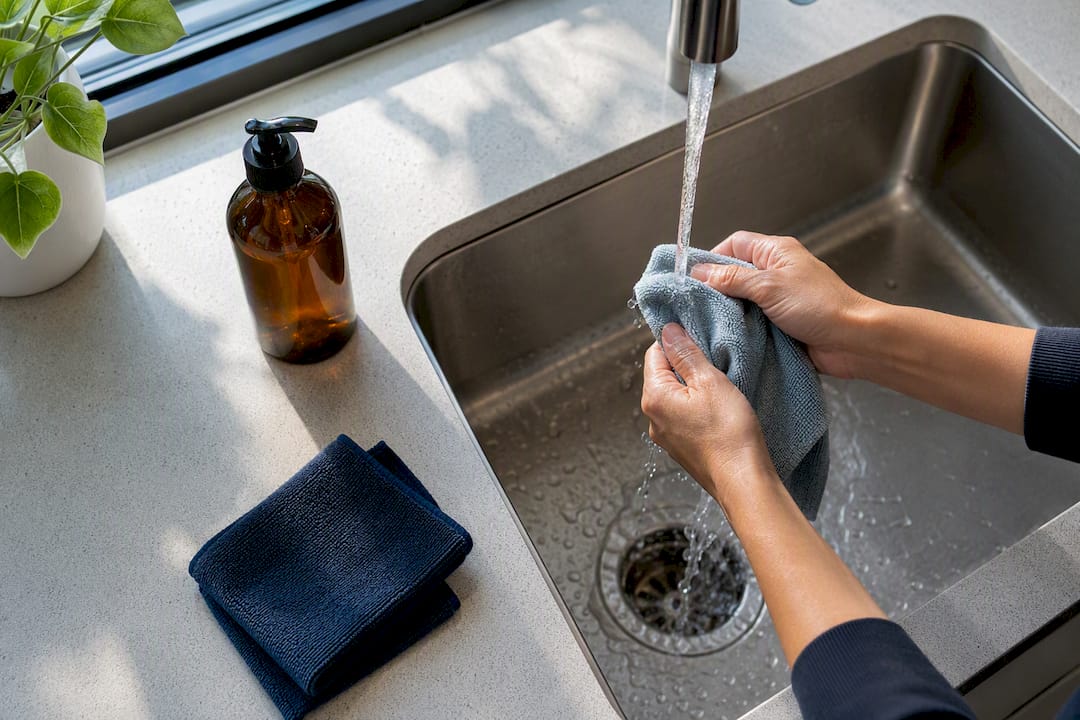
The trade off is usually time. Green alternatives sometimes need a second application or longer dwell time to match the speed of a heavy duty chemical, so a deep clean using eco-friendly products can run slightly longer than one using conventional agents. For most households and offices, that extra half hour is a fair swap for lower chemical residue on surfaces people touch, eat off, or breathe near every day.
What I've learned watching homes go from neglected to reset
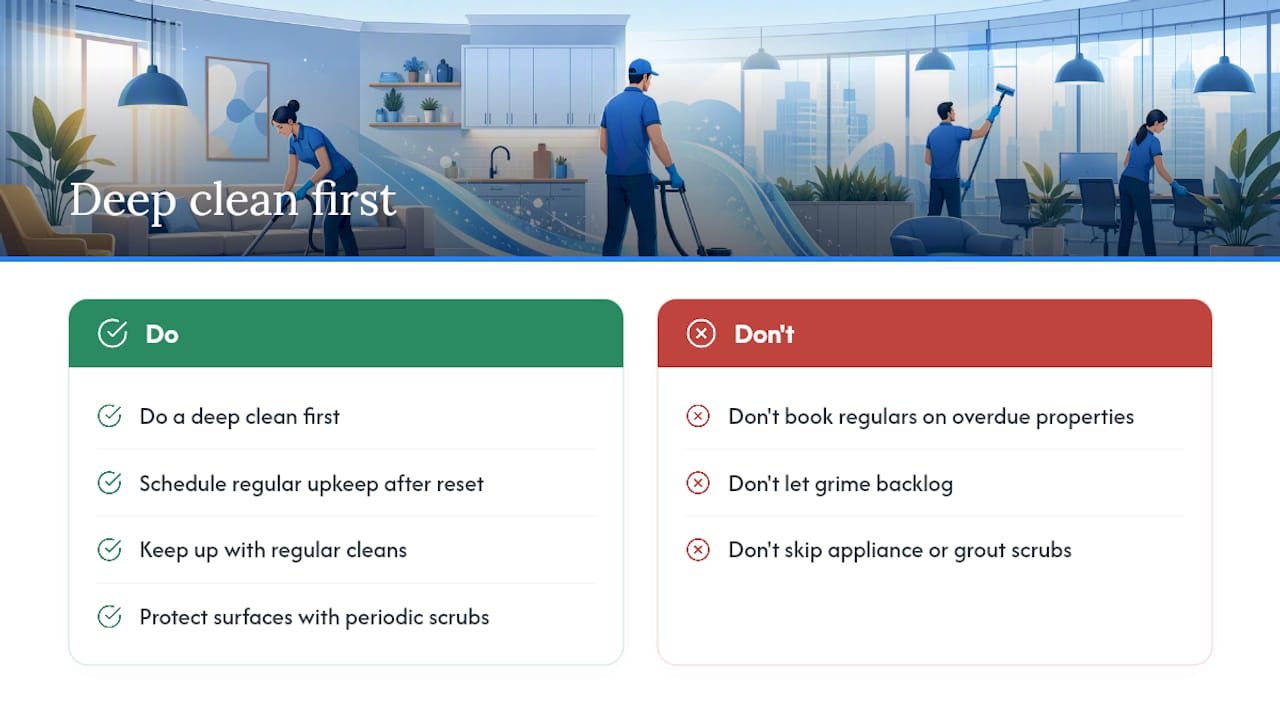
Start with a deep clean, then hold that result with regular upkeep. That order matters more than people expect: booking a regular clean on a property that's months overdue just spreads grime around rather than removing it.
The pattern shows up constantly. A property that gets a proper deep clean first sees its follow up regular cleans finish faster and cost less over time, because there's no backlog of grease and dust dragging out every visit. Surfaces last longer too, since grout and appliance interiors that never get scrubbed tend to stain permanently. It's not a complicated insight, but it's the one homeowners and office managers overlook most.
— Deng
How ACT Cleaning by Demand can help
If your place matches any of the triggers above, moving out, months of buildup, or an office that hasn't had a proper reset, a customised deep clean is the practical next move, followed by a regular schedule to hold the result.
Packages can be built around what a property actually needs rather than a fixed one size fits all list, sometimes using eco-friendly products and staff screened for security for both residential and commercial jobs. Before requesting a quote, have the property size, current condition and any specific problem areas ready, ovens, grout, vents, whatever's bothering you most, so the scope can be set accurately from the start. Homeowners can start with a house cleaning booking, tenants preparing to move can look at end of lease cleaning, and office managers can request a quote through office cleaning. Contracts may vary, allowing you to book a one-off deep clean and decide on a regular schedule afterwards.
Sources
- When and how to clean and disinfect your home — CDC
- Deep cleaning vs regular cleaning — TIDY blog
- Deep clean vs regular clean — Compare Cleaning Quotes (AU)
FAQ
Do I need a deep clean or a regular clean?
Book a deep clean if it's been months since a full reset, you're moving, or there's visible grime in grout and appliances; otherwise a regular clean maintains what's already clean.
What are the disadvantages of deep cleaning?
It costs more and takes longer than a regular clean, roughly 1.5 to 2 times the price and up to double the time, and it's overkill if the space is already well maintained.
Is it worth paying for a deep clean?
Yes, when there's genuine buildup: it removes trapped allergens and grease that regular cleaning can't reach, and it typically shortens and reduces the cost of the regular cleans that follow.
How often should I book a deep clean?
Most homes need one every 3 to 6 months, with heavier use households (pets, kids) sitting closer to the 3 month mark.
Should I disinfect as well as clean?
Not usually. The CDC notes that cleaning removes most germs on its own, and disinfecting is only recommended when someone in the household is sick or immunocompromised.