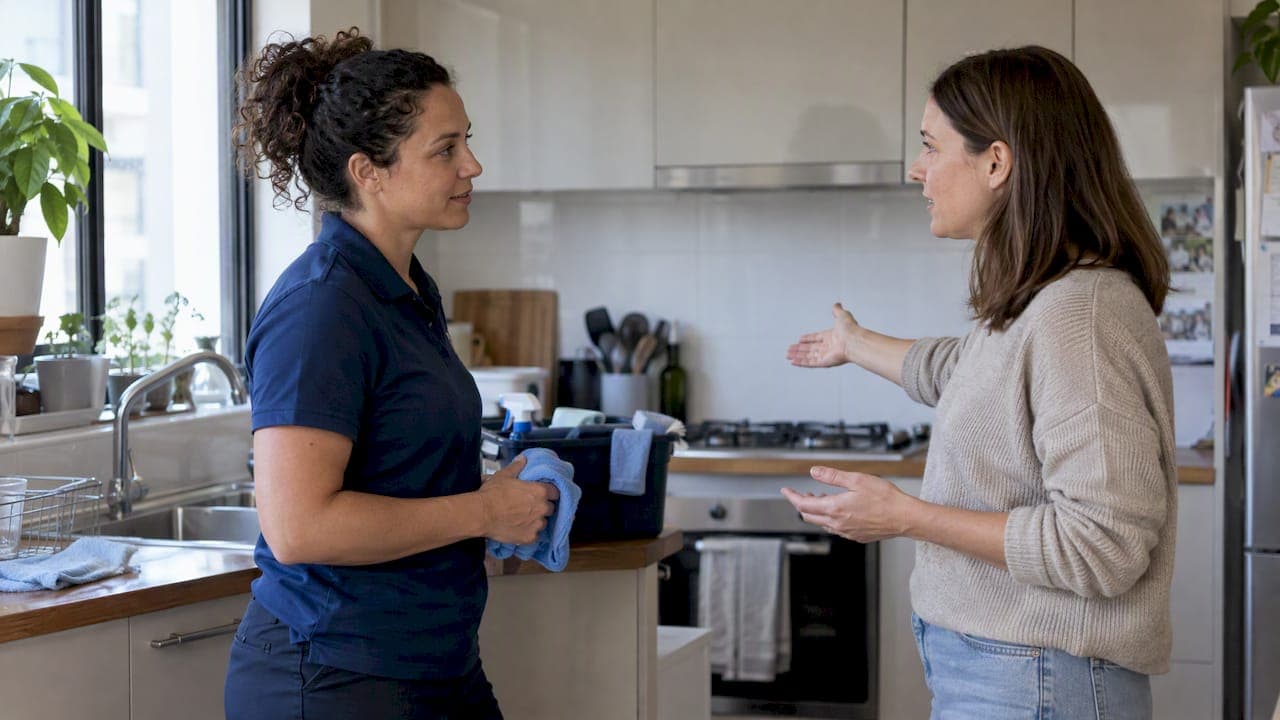
Yes, you can hire a professional cleaner to do a genuinely fragrance-free clean. The practical step is to ask for a verified fragrance-free package along with a product list or safety data sheet before you book, then confirm no air fresheners or perfumed sprays are used on site.
TL;DR:
- A genuine fragrance-free clean requires confirming that no scented products, air fresheners, or masking fragrances are used during the entire job, not just at the end.
- Verified fragrance-free products must have transparent ingredient lists or safety data sheets showing no added perfume compounds, including masking fragrances.
- Mechanical cleaning methods like HEPA vacuuming, steam cleaning, and microfibre tools significantly reduce chemical emissions and cross-contamination risks.
- Removing air fresheners and scented cleaning sprays from indoor environments can decrease airborne fragrance chemicals by a sharp margin within two weeks.
- Requesting written confirmation of product lists, equipment use, staff vetting, and no-spray policies helps ensure the provider can deliver a truly fragrance-free service.
Table of Contents
- What a fragrance-free clean actually includes
- How providers lower indoor emissions: the evidence and proven methods
- How to request and brief a fragrance-free cleaner
- Typical costs, scheduling and timeline for fragrance-free jobs
- Trust, safety and verification checklist
- Publisher perspective: what a genuinely fragrance-free clean should look like
- How ACT Cleaning by Demand can help with booking a fragrance-free clean
- FAQ
- Sources
What a fragrance-free clean actually includes
A genuinely fragrance-free clean removes scent from every stage of the job, not just the final wipe-down. That means no plug-in air fresheners, no perfumed surface sprays and no scented floor polishes, even when a provider markets them as "fresh" or "light".

It also means checking what "unscented" really means. Some products labelled unscented still contain masking fragrances added to cancel out a chemical smell, so an ingredient list or SDS is the only way to confirm a product is truly fragrance-free, as researchers at the University of Melbourne have noted. Real fragrance-free cleaning relies on plain, unscented detergents and degreasers with no added perfume compounds at all.
The mechanical side matters just as much as product choice:
- HEPA-filtered vacuums capture fine dust and allergens instead of just pushing them around.
- Steam cleaning and hot water extraction lift grime from carpets and upholstery without chemical sprays.
- Microfibre cloths and mop heads reduce the need for any chemical application at all on many surfaces.
Teams avoid cross-contamination by using dedicated tools and separate cloths for fragrance-free jobs, rather than switching products mid-shift while reusing equipment that has carried scented residue from a previous job.
How providers lower indoor emissions: the evidence and proven methods
The health case for fragrance-free cleaning is well documented. In a national Australian survey, about one in three people reported health problems from fragranced products, and close to 43% supported fragrance-free policies in shared workplaces.
Removing air fresheners and other fragranced products from a space can sharply reduce airborne fragrance chemical concentrations within two weeks, according to field studies summarised by NESP. That is a sharp drop for a fairly simple change.
Not every scented product carries equal risk. Continuous air fresheners and spray-applied cleaners are generally worse than wipe-on or pour products, because spraying increases how much of a substance gets inhaled rather than staying on the surface, a pattern noted in reviews of cleaning-related respiratory effects. Peer-reviewed research also links fragranced product exposure to migraines and breathing difficulties in sensitive people, with effects severe enough to be disabling for some with asthma.
Providers that take this seriously tend to apply a few consistent practices:
- A strict no-spray, no-air-freshener policy for the entire job.
- Active ventilation during and after cleaning rather than sealing a room up.
- Full product substitution rather than swapping just the obvious items like toilet cleaner.
How to request and brief a fragrance-free cleaner
Getting what you want starts with the brief, not the inspection afterwards. A short, specific message to any quote request avoids the vague back-and-forth that ends in a scented surprise.
- State the requirement plainly: "We need a fully fragrance-free clean, no air fresheners, sprays or scented polishes used anywhere on site."
- Ask for a product list or SDS in advance so you can check ingredients before the job starts.
- Confirm HEPA vacuums and steam or extraction equipment will be used rather than chemical sprays for carpets and upholstery.
- Ask whether staff are police-checked and whether the provider carries insurance, standard questions for any cleaning job but worth confirming alongside the scent request.
- Request written confirmation of a satisfaction guarantee or re-clean policy if the result doesn't match the brief.
Watch for red flags during this process: a provider who answers "we use mostly unscented products" without specifics, who won't share a product list, or who insists a light spray "won't be noticeable" is not set up for genuine fragrance-free work.
Pro Tip: Put the fragrance-free requirement in writing on the booking confirmation, not just in a phone call, so there's a clear reference point if anything needs fixing after the job.
Typical costs, scheduling and timeline for fragrance-free jobs
Fragrance-free cleaning doesn't usually carry a separate price category of its own. The bigger cost drivers are the type of job and its size, the same factors that shape any professional clean.
- One-off and regular cleans are generally priced by property size and condition.
- End-of-lease and bond cleans tend to cost more because they cover a deeper scope, including ovens, skirting boards and window tracks.
- Carpet steam cleaning is usually quoted separately from general cleaning because it needs dedicated equipment.
- Sourcing verified fragrance-free products or running HEPA equipment for an extended job can add modestly to the quote, depending on the provider.
Because exact pricing varies by job and isn't published as a flat rate, it's worth asking for a line-item quote so you can see what you're paying for rather than a single bundled figure. If lingering scent from a previous tenant or cleaner is a concern, factor in a few hours of ventilation time after the job before you move back in or host guests.
Trust, safety and verification checklist
Before booking, ask for documentation rather than taking "we're eco-friendly" at face value. A credible provider should be able to produce an SDS for any chemical used, proof of insurance and confirmation that staff have passed police checks.
Beyond paperwork, a few operational signals tell you a lot:
- A written, labelled list of every product used on the job, not just the main ones.
- Visible use of HEPA vacuums and steam or extraction tools rather than spray bottles.
- A clear no-spray, no-air-freshener policy stated upfront, not just implied.
Safe Work Australia's code of practice on safety data sheets sets the expectation that workplaces understand the chemicals used on them, which makes requesting an SDS a reasonable, ordinary ask rather than an unusual demand. The Australian Government's indoor air quality guidance also recommends avoiding high-VOC scented products in poorly ventilated spaces.
| What to check | How to verify |
|---|---|
| Chemical safety | Request SDS for every product used |
| Staff vetting | Ask for confirmation of police checks |
| Insurance | Ask for proof of current cover |
| Equipment | Confirm HEPA vacuums and steam/extraction tools |
| Product policy | Get a written no-spray, no-air-freshener commitment |
After the job, walk through with windows open and check for any lingering scent in soft furnishings or carpets. If something doesn't meet the brief, raise it immediately and ask for a re-clean under the provider's guarantee rather than living with it.
Publisher perspective: what a genuinely fragrance-free clean should look like
A fragrance-free clean is often judged on what's missing rather than what's done well, which means the bar for proof should be higher than a verbal assurance. Written product lists and a clear no-spray policy do more to build confidence than any marketing phrase like "naturally fresh". Readers researching this topic should treat an ingredient list as the minimum, not a bonus, and expect a provider to explain their mechanical cleaning methods as readily as their product choices.
— Deng
How ACT Cleaning by Demand can help with booking a fragrance-free clean
We build fragrance-free requests into our regular booking process. Whether you need an end-of-lease clean, a presale property clean, a regular residential clean or an office clean for a workplace with sensitive staff, we put together a customised plan based on exactly what you ask for.
- Our cleaners are vetted and insured, so vetting isn't left to guesswork on your end.
- We use products that meet relevant requirements and can confirm details before the job starts.
- Our bookings come with no lock-in contracts and a satisfaction guarantee.
If lingering odours or product sensitivities from a previous tenant or renovation are part of the concern, our guidance on post-renovation dust removal covers mechanical dust control that pairs well with a fragrance-free brief. To get started, browse our full list of services and mention your fragrance-free requirement when you request a quote.
FAQ
Can I actually get a cleaner to skip all scented products?
Yes, most professional cleaners can run a fully fragrance-free job when you ask clearly and provide the request in writing. Confirm it covers every product used, not just the main surface cleaner, and ask for a product list to check.
What should I ask for to confirm a product is truly unscented?
Ask for the SDS or full ingredient list rather than relying on a label that says "unscented," since some of these products still contain masking fragrances, as noted by University of Melbourne researchers. A genuine fragrance-free product will list no added perfume compounds at all.
Does fragrance-free cleaning cost more?
It doesn't usually have a separate price tier of its own, since cost is mainly driven by job type and property size rather than product choice. Sourcing verified fragrance-free products or using extra equipment like HEPA vacuums can add a modest amount in some cases, so it's worth asking for a line-item quote.
How long does fragrance smell linger after a scented clean?
Fragrance chemicals from sprays and air fresheners can persist in a space for some time after application, which is part of why removing them entirely leads to a sharp drop in airborne levels within weeks, as shown in field studies on air fresheners. Good ventilation after any clean speeds this up considerably.
What's the difference between fragrance-free and "naturally scented" cleaning?
Fragrance-free means no added scent of any kind, synthetic or natural, while naturally scented products still introduce fragrance compounds from essential oils or plant extracts that can trigger the same sensitivities for some people. If fragrance sensitivity is the concern, fragrance-free is the safer choice over a naturally scented alternative.
Sources
- Fragrance emissions and health (Springer)
- Health and societal effects from exposure to fragranced consumer products (Australia study)
- Indoor air quality | Australian Government Department of Health
- Review of spray cleaning substances and respiratory effects (PMC)