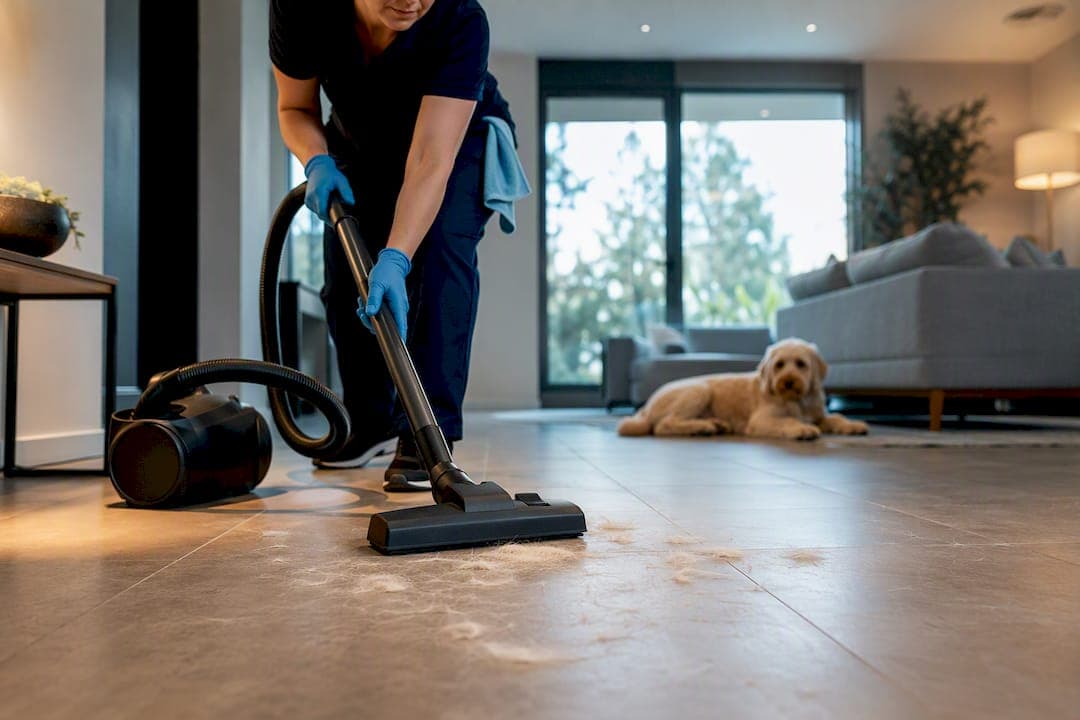
A pet‑friendly house clean uses non‑toxic, disclosed products with HEPA vacuuming or steam where needed, so dander, urine odour, and fur don't turn into a health problem. The safest route is hiring a vetted professional who names their products and equipment up front. For readers in Canberra and the ACT, some local cleaning services fit that brief with eco‑focused, customised packages. Check the product list and HEPA gear, then book a quote.
TL;DR:
- Professional pet‑friendly cleaning includes targeted dander removal with HEPA vacuuming and pet-safe solutions on floors and upholstery to reduce allergens effectively.
- Using enzyme or plant‑based cleaners labeled pet‑safe and avoiding bleach, ammonia, or toxic essential oils significantly minimizes health risks for pets and sensitive individuals.
- Equipment with sealed HEPA filters and steam cleaning tools are essential for removing embedded pet dander, dust mites, and organic stains from carpets and bedding.
- Proper home preparation, such as securing pets and clearing floors of clutter, improves cleaning efficiency and minimizes stress for animals during professional visits.
- Cost varies based on home size and scope, with added charges for odour treatment or stain removal, making customized packages a better choice than DIY cleaning for allergen control.
Table of Contents
- What does pet friendly house cleaning actually include?
- Which cleaning products are pet‑safe, and which should you avoid?
- What equipment actually reduces pet dander and allergens?
- How should you prepare your home and pets before a clean?
- How much does a pet‑friendly clean cost and what does it cover?
- Why a professional pet‑friendly clean usually beats DIY
- Get a pet‑friendly clean without the guesswork
- Sources
- FAQ
What does pet friendly house cleaning actually include?
A genuine pet‑friendly clean isn't just a regular clean with a nicer name. It targets the specific mess pets leave behind, room by room, with methods chosen because they won't irritate a dog's paws or a cat's respiratory system.
Expect these tasks in a standard visit:
- Damp dusting of skirting boards, shelves, and pet‑height surfaces where dander settles
- HEPA vacuuming of carpets, rugs, and upholstery, not just a quick pass with a household unit
- Wet‑mopping hard floors with a pet‑safe solution rather than a heavily scented one
- Cleaning and disinfecting litter trays and feeding stations separately from kitchen surfaces
- Pet bedding washed on a hot cycle, toys wiped down, and any urine or stain spots treated with an enzyme cleaner rather than masked with fragrance
A reputable service will also tell you which products they're using before they arrive, whether their vacuum runs a sealed HEPA system, and roughly how long each room takes. Extras like odour remediation or heavy stain removal usually cost more. If a quote doesn't mention any of this, that's worth asking about before you book.
Which cleaning products are pet‑safe, and which should you avoid?
Not every "eco" label on a bottle means it's fine around animals, and not every strong chemical smell means danger. Reading the fine print matters more than reading the marketing.
Look for these signals on the label or in the cleaner's product list:
- "Pet‑safe" or "non‑toxic" claims backed by an ingredient list, not just a logo
- Plant‑based or enzyme cleaners, which break down organic stains like urine rather than just perfuming over them
- Low‑VOC or unscented formulations, since scented products and aerosol sprays can irritate airways in both pets and people with sensitivities
Steer clear of bleach, ammonia, and phenol‑based disinfectants around pets, since cats in particular metabolise these poorly. Some essential oils commonly marketed as "natural", including tea tree and eucalyptus, are toxic to cats and dogs even in small amounts, despite sounding gentle. Strong fragrance generally, natural or synthetic, is a red flag rather than a selling point.
If you're hiring a cleaner, ask for the exact product names and, where relevant, a Safety Data Sheet (SDS). A provider that hesitates to share this is one to reconsider. Doing it yourself between professional visits, Australian retailers stock dedicated pet‑safe cleaning product ranges built around enzyme and plant‑based formulas.
Pro Tip: Keep one enzyme cleaner and one plain microfibre cloth set aside just for pet accidents. Mixing pet‑area cloths into your general cleaning rotation is one of the easiest ways odour spreads to carpets and furniture that were never soiled.
What equipment actually reduces pet dander and allergens?
Good intentions with the wrong tools won't shift dander embedded in carpet fibres. Equipment choice matters more than most people realise.
- HEPA vacuums with sealed systems trap the microscopic particles a standard vacuum recirculates into the air, which matters because pet dander and dust mites are among the most common indoor allergens in homes with pets
- Bagged or sealed canister models reduce your exposure when emptying, rather than releasing a cloud of dust back into the room
- Steam cleaning works well on mattresses, upholstery, and rugs, killing dust mites with heat rather than chemicals, though it's not suited to delicate or water‑sensitive fabrics
- Hot laundering of pet bedding, weekly where possible, alongside humidity control and an air purifier carrying a genuine allergy certification
Regular cleaning is one of the most effective and least expensive ways to reduce exposure to indoor allergens, according to the American Cleaning Institute. That's a useful reminder that consistency, a HEPA pass most weeks rather than a deep clean twice a year, beats any single piece of equipment on its own.
How should you prepare your home and pets before a clean?
A few minutes of preparation saves the cleaner time and keeps your pets calmer during the visit.
- Confine or secure pets in a quiet room, away from the areas being cleaned
- Remove food bowls, toys, and loose items from floors so nothing gets knocked over or accidentally cleaned with the wrong product, following guidance from expert home organising and decluttering services.
- Point out known accident spots so they get proper enzyme treatment rather than a quick wipe
- Open windows where it's safe to do so; people with asthma or allergies should stay out of the room during active dusting or vacuuming, since these actions temporarily lift allergens into the air
- Tell the cleaner about anxious pets, fragile or elderly animals, poisonous houseplants, and any rooms that are off‑limits
A short preparation checklist before cleaners arrive covers most of this in more detail if you want a printable version.
How much does a pet‑friendly clean cost and what does it cover?
Pricing usually runs one of two ways: an hourly rate or a flat fee based on home size and scope. Hourly suits smaller or irregular jobs; flat rate suits a full house that needs a consistent, repeatable clean each visit.
What pushes the price up is rarely the base clean itself. It's the add‑ons:
- Deep odour treatment for long‑standing pet smells
- Stain removal on carpet or upholstery
- Pet bedding laundering as a separate line item
- Call‑out fees for one‑off or first‑time bookings
As a rough guide to scope: one hour typically covers a single problem area, like a lounge room and its rugs. Two hours generally stretches to a full living area plus kitchen and pet zones. Three hours usually covers a whole small‑to‑medium home, including bathrooms, bedrooms, and pet bedding.
Before you accept a quote, ask what equipment is included, which products they'll use, how much time is allocated per room, and whether any call‑out fee applies.
Why a professional pet‑friendly clean usually beats DIY
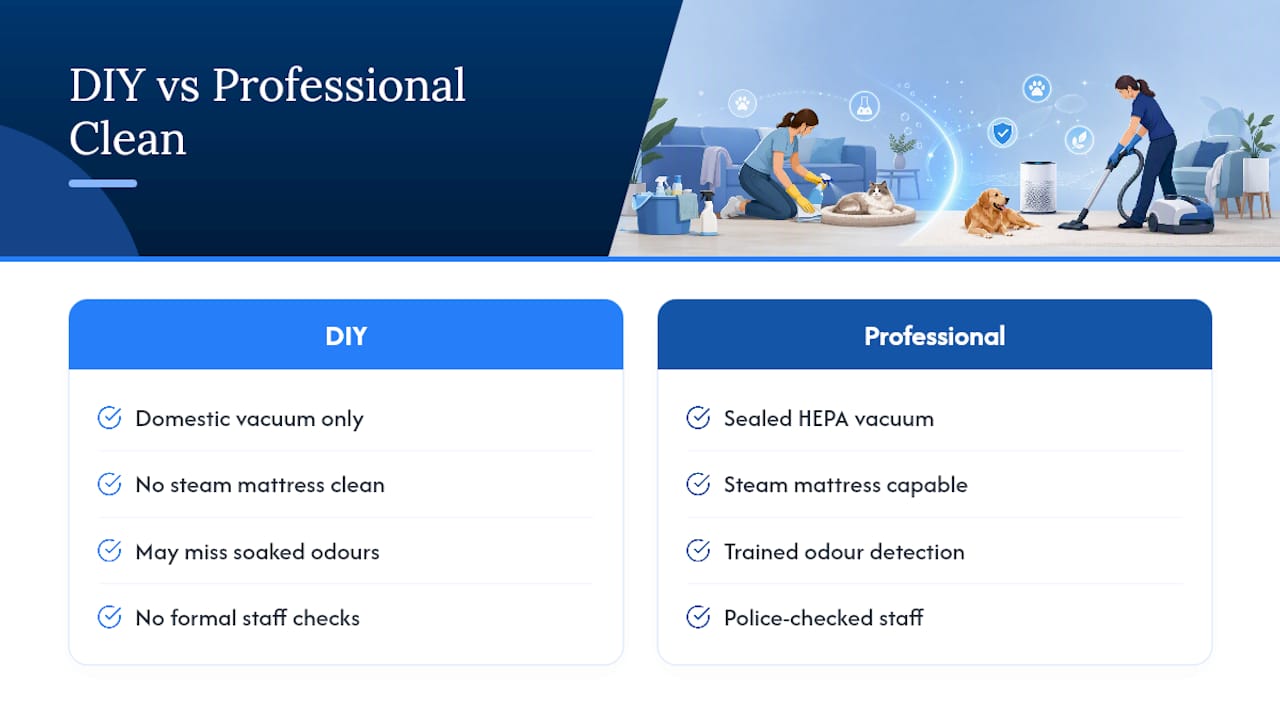
DIY cleaning has a ceiling. A domestic vacuum, even a good one, rarely matches the suction and filtration of a sealed HEPA system, and most households don't own a steam cleaner capable of treating a mattress properly. Professionals also bring trained eyes for odour sources you might miss, like urine that's soaked into underlay rather than just the carpet surface.
The trade‑off is trust. You're letting someone into your home and around your pets, so the provider's transparency matters as much as their equipment. Customised packages, a genuine commitment to eco‑friendly products, and police‑checked staff are the baseline worth checking for, alongside a booking process that doesn't require three phone calls to get a straight answer. Before booking anyone, ask for their product list, their HEPA vacuum's model or spec, and read a handful of independent reviews rather than relying on the provider's own testimonials page.
— Deng
Get a pet‑friendly clean without the guesswork
Some cleaning providers build customised house cleaning packages around exactly this brief: eco‑friendly products, HEPA and steam options where they're needed, and vetted staff rather than a one‑size‑fits‑all routine applied to every home regardless of pets.

That flexibility matters because pet households aren't all the same. A young dog that sheds heavily needs a different approach to a senior cat prone to accidents on soft furnishings. Regular house cleaning packages can be scheduled around shedding seasons or litter routines, while households moving out of a rental can pair a pet‑focused clean with end of lease cleaning to handle stain and odour remediation before a bond inspection. If you're comparing quotes and want to know what separates a thorough clean from a rushed one, the breakdown of why residential cleaning standards differ is worth a look too. Request a tailored quote through the booking page and ask directly about the products and equipment covered in this guide.
Sources
- Allergies & asthma | American Cleaning Institute
- Cleaning tips for allergy and asthma sufferers | AAAAI
- Pet safe cleaning products | Euclove
FAQ
How much is a 1 hour clean?
A one hour clean typically covers a single problem area, such as a lounge room with rugs or a pet zone needing a HEPA vacuum pass, rather than a whole house.
What is the safest cleaner to use around pets?
Enzyme‑based or plant‑based formulas labelled non‑toxic or pet‑safe are the safest choice, since regular cleaning with the right products reduces allergen exposure without introducing fumes that irritate pets.
What are some pet friendly floor cleaners available in Australia?
Australian retailers sell dedicated pet‑safe cleaning ranges built on enzyme and plant‑based formulas, which suit hard floors and are safer around paws than bleach or phenol‑based cleaners.
What should a cleaner do in 3 hours?
Three hours generally covers a full small‑to‑medium home, including bedrooms, bathrooms, living areas, and dedicated attention to pet bedding and litter zones, alongside the usual HEPA vacuuming and floor cleaning.
Does ACT Cleaning by Demand offer pet‑friendly cleaning packages?
Yes, some cleaning services build customised packages using eco‑friendly products and vetted staff, which can be tailored to pet households needing odour treatment or regular allergen control.