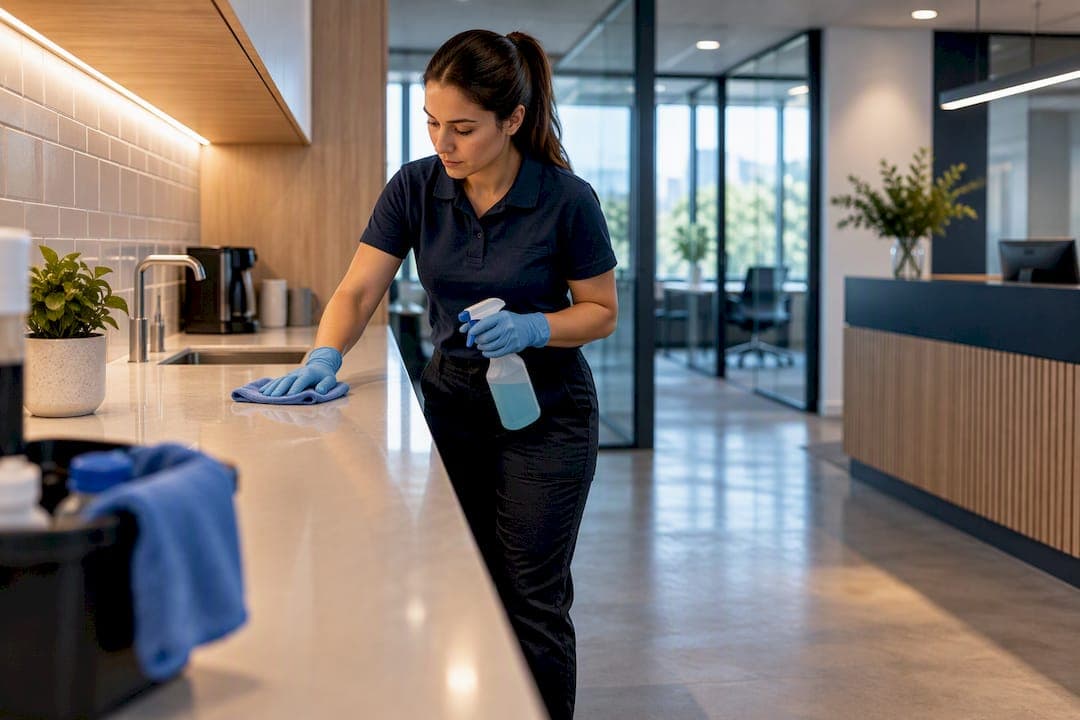
Clean every high-touch surface today, and disinfect any desk, phone or door handle a symptomatic staff member used within the past 24 hours. Pair that surface work with better ventilation, a clear sick-leave policy and reminders on hand hygiene. Follow the product label's contact time exactly, and keep a written record of what was cleaned, when, and by whom.
TL;DR:
- High-touch surfaces such as door handles, light switches, and shared devices must be cleaned and disinfected frequently, especially after use by an ill staff member.
- Always clean surfaces with detergent and water before applying disinfectant, ensuring the disinfectant remains wet for the full contact time specified on the product label.
- After an infected person’s presence, isolate affected areas for up to 24 hours before cleaning and trace their movements to focus disinfection efforts effectively.
- Ventilation is an essential complement to surface cleaning, requiring open windows and enhanced airflow to reduce airborne flu particles.
- Reliable long-term cleaning depends on documented procedures, staff training, and regular audits rather than one-time deep cleans.
Table of Contents
- What surfaces need post flu office cleaning first?
- Should you clean or disinfect after the flu?
- What's the right order for a post flu office clean?
- Does ventilation matter as much as cleaning?
- How do you keep post flu cleaning reliable long-term?
- What should you avoid after a flu outbreak?
- Why routine cleaning beats occasional deep cleans
- Book a post flu office clean without the guesswork
- Where to check the underlying guidance
- Sources
- FAQ
What surfaces need post flu office cleaning first?
Start with anything hands touch repeatedly through the day. Door handles, light switches, lift buttons and stair railings top the list because dozens of people touch them without thinking. Desks, keyboards, mice and phones come next, especially any workstation used by someone who was unwell.
Shared spaces need the same attention: kitchen benches, kettle handles, fridge doors, microwave buttons, and every tap and toilet fixture in the bathrooms. Meeting-room equipment, remote controls, whiteboard markers and shared laptops are easy to overlook but get handled by whoever books the room next.
- Door handles, light switches, lift buttons, handrails: wipe down regularly, more often in busy entry points
- Desks, keyboards, mice, phones: clean regularly and disinfect immediately if the user was unwell
- Kitchen surfaces, kettle, fridge, microwave: clean regularly, disinfect after any known illness
- Meeting-room tables, shared devices, remote controls: clean between bookings during flu season
- Taps, toilets, cubicle locks and flush buttons: clean routinely, disinfect if a sick staff member used the bathroom recently
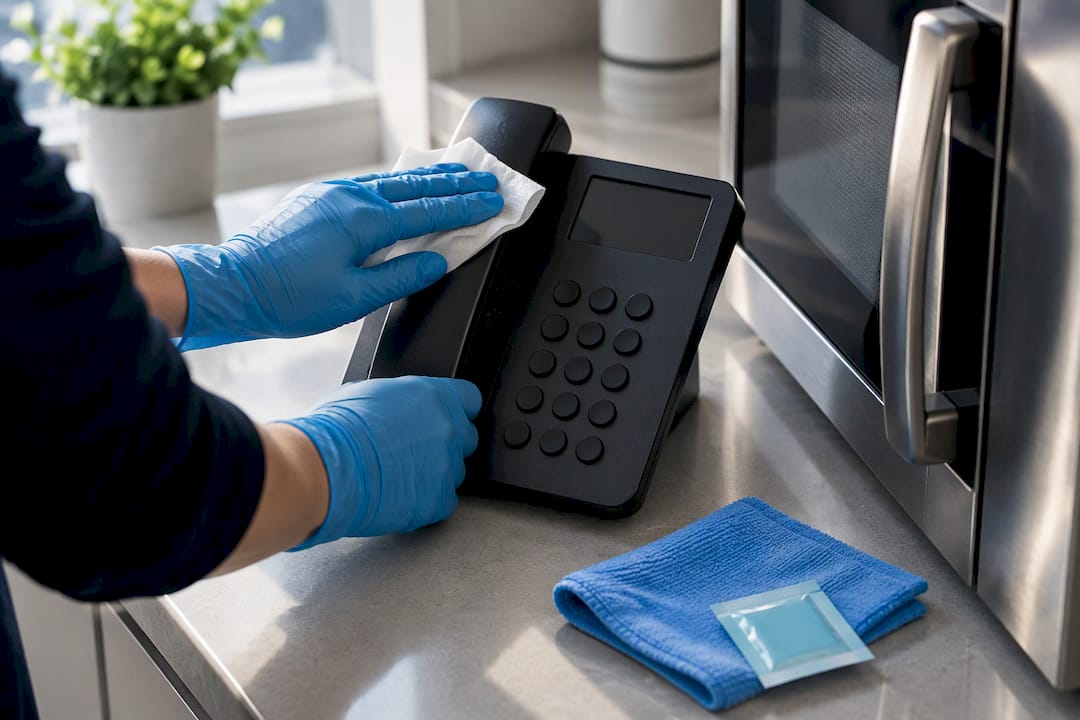
Electronics need a different approach to fabric or laminate. Use alcohol-based wipes rated for screens and keyboards rather than spray bottles, which push liquid into gaps and connectors. Soft furnishings like fabric chairs and couch cushions should be vacuumed regularly, with spot cleaning for any visible contamination and steam cleaning scheduled periodically for shared seating.
Pro Tip: Keep a spare pack of electronic-safe wipes at reception and in the kitchen. Staff are far more likely to wipe down a shared phone or microwave handle themselves if the wipes are sitting right there.
Should you clean or disinfect after the flu?
Clean first, every time. Detergent and warm water remove the dirt, oils and organic material that shield germs from disinfectant, and skipping that step is one of the most common reasons disinfection fails. Australian Department of Health guidance is explicit that thorough cleaning must happen before disinfection, with cleaning frequency stepped up and PPE used when managing suspected or confirmed illness.
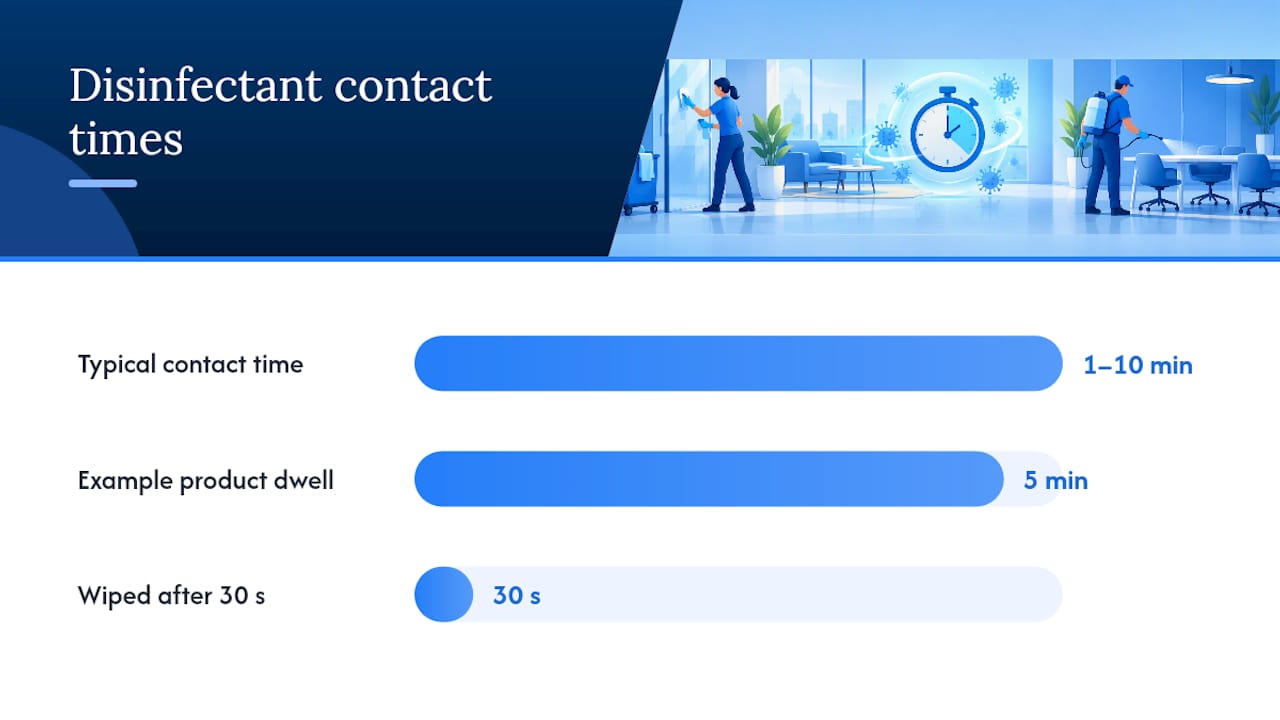
Disinfectants only work if the surface stays visibly wet for the contact time printed on the label, often somewhere between 1 and 10 minutes depending on the product. A quick spray-and-wipe rarely gets close to that window, which means the surface looks clean but the pathogen load barely drops.
- Clean visible soil with detergent and water first
- Apply disinfectant (or a combined detergent/disinfectant product used exactly as labelled)
- Leave the surface wet for the full contact time on the label, not just a wipe-and-move-on
- Ventilate the room while using chemicals and never mix bleach with other cleaning products
Contact time is the number that matters most, more than which brand of disinfectant sits on the trolley. A product with a five-minute dwell time wiped off after 30 seconds has done almost nothing.
What's the right order for a post flu office clean?
- Isolate the area. If a workstation or meeting room was used by someone with flu symptoms, keep others out where possible. Waiting up to 24 hours before cleaning reduces exposure risk for the cleaning crew, since CDC guidance notes that spaces a confirmed-ill person used within the past day need cleaning and disinfection, while spaces untouched for 72 hours generally need nothing beyond routine cleaning.
- Trace their movement. Follow where the unwell person actually went. Their desk, chair arms, phone, keyboard and mouse are obvious, but so are the bathroom they used, the meeting room they sat in, and the kitchen bench they touched making a coffee. Detailed CDC facility guidance recommends focusing resources this way rather than cleaning the whole floor evenly.
- Pre-clean, then disinfect every surface on that trail, keeping it wet for the labelled contact time.
- Handle soft items separately. Launder any fabric that can be washed hot, vacuum upholstery and carpet near the affected desk, and bin disposable items like used tissues immediately.
- Remove PPE correctly and wash hands thoroughly before touching anything else, then log what was done.
Pro Tip: Write the ill staff member's likely movements down as soon as you hear they're unwell. Memory fades fast, and a rough map beats guessing which meeting room they sat in three days ago.
Does ventilation matter as much as cleaning?
Cleaning surfaces does nothing for flu particles already floating in the air, which is why ventilation and filtration sit alongside disinfection rather than after it. Department of Health and Aged Care guidance recommends pairing surface cleaning with better airflow whenever respiratory-infection risk rises in a workplace.
Practical steps for most offices:
- Open windows where the building allows it, even for short bursts between meetings
- Push HVAC systems toward maximum fresh-air intake rather than full recirculation
- Add portable HEPA filtration units in meeting rooms with poor airflow or no windows
- Increase ventilation further during high-attendance days, all-day workshops, or any meeting running longer than an hour
Treat this as a second, independent control. A spotless desk in a stuffy, poorly ventilated room still leaves airborne risk in place.
How do you keep post flu cleaning reliable long-term?
A single deep clean after an outbreak feels productive but rarely changes anything if the next flu wave finds the same gaps. Reliability comes from documentation, not intensity.
- Write down who cleans what, how often, and with which products, so nobody is relying on memory
- Keep a simple change log noting when cleaning frequency was increased and why, tied to actual illness reports
- Require contractors to be trained on label contact times, correct PPE use and safe chemical handling, including never mixing bleach with ammonia-based products
- Run spot checks, photo verification or a signed checklist after each clean, and review it periodically rather than only after a complaint
An office cleaning checklist covering daily through annual tasks gives you a template to build this documentation around, and managing multiple cleaning crews efficiently is worth reading if more than one contractor touches your site. Operational reliability shows up in scopes, training records and audit logs, not in how expensive the last one-off treatment was.
What should you avoid after a flu outbreak?
Fogging machines, ultraviolet devices and antimicrobial surface coatings get pitched as instant fixes, but none of them replace manual cleaning and label-compliant disinfection. Fogging in particular carries real chemical-exposure risk and needs a trained operator, not a well-meaning staff member with a hired unit.
- Skip fogging as a stand-in for wiping down high-touch surfaces
- Don't rely on UV wands or boxes for anything beyond small personal items, and even then, treat manufacturer claims with caution
- Avoid trusting surface coatings to do the daily cleaning job for you
The safer alternative is unglamorous: detergent, correctly dwelled disinfectant, and a documented schedule. It works because it's checkable, not because it's exciting.
Why routine cleaning beats occasional deep cleans
Most offices treat cleaning as a reaction: someone gets sick, a "deep clean" gets booked, and the whole thing is forgotten until the next outbreak. That cycle misses the point. A documented, routine schedule that steps up frequency when risk rises catches far more than an occasional intensive clean ever will, because the gaps between deep cleans are exactly when transmission chains build.
ACT Cleaning by Demand builds its residential and commercial cleaning around custom, ongoing schedules rather than one-off spectacle jobs, with a sustained focus on eco-friendly products and local client relationships. That's the model worth copying even if you're managing an in-house team: consistency, not theatre.
— Deng
Book a post flu office clean without the guesswork
If you're staring down a flu-affected office and don't have the internal resources to run the full pre-clean-then-disinfect sequence properly, that's exactly the gap ACT Cleaning by Demand's office cleaning service is built to close. You get police-checked cleaners, eco-friendly products, and no lock-in contract, allowing flexible cleaning arrangements without long-term commitments.
When you request a quote, be specific: tell them which areas were affected, roughly how many staff were unwell, and whether you need a single disinfection visit or an adjusted regular schedule during flu season. That detail lets the crew scope the job properly instead of guessing. If your needs stretch beyond the office itself, the full range of cleaning services covers everything from carpet steam cleaning to end-of-lease jobs, so it's worth checking what else might apply to your building. Get in touch through the office cleaning page and ask for a scoped quote before the next wave of sick leave hits your floor.
Where to check the underlying guidance
- CDC facility cleaning and disinfecting guide: timing rules for when disinfection is required
- CDC seasonal influenza infection control: why sequence and contact time matter more than product marketing
Sources
- Cleaning and disinfecting your facility every day and when someone is sick (CDC)
- Infection control for seasonal influenza in healthcare settings (CDC)
FAQ
How do you clean your house or office after the flu?
Wash your hands thoroughly, then clean high-touch surfaces with detergent and water before disinfecting anything the unwell person used in the past 24 hours. Launder bedding, towels or fabric items on the hottest safe setting, and ventilate the space while you work.
How long should someone stay off work after having the flu?
There's no single fixed number, but most public health advice points to staying home until fever has resolved without medication and symptoms are clearly improving. Check your workplace's own sick-leave policy, since return-to-work rules vary between employers.
How long do flu germs survive in a workplace?
It varies by surface, but CDC guidance notes that if 72 hours have passed since a confirmed-ill person was in a space, routine cleaning is usually sufficient without extra disinfection. Within the first 24 hours, that same space should be cleaned and disinfected before others use it.
How do you disinfect a room after someone was sick?
Clean visible soil first with detergent and water, then apply a disinfectant and keep every surface visibly wet for the full contact time listed on the label. Skipping the pre-clean step or wiping the disinfectant off early are the two most common reasons this fails.
Does ACT Cleaning by Demand offer one-off post-illness office cleans?
Yes, alongside recurring commercial contracts, ACT Cleaning by Demand's office cleaning service covers one-off sanitisation jobs for offices dealing with a recent flu outbreak. Pricing details are not published; please visit the client's site for current pricing information and to request a quote.