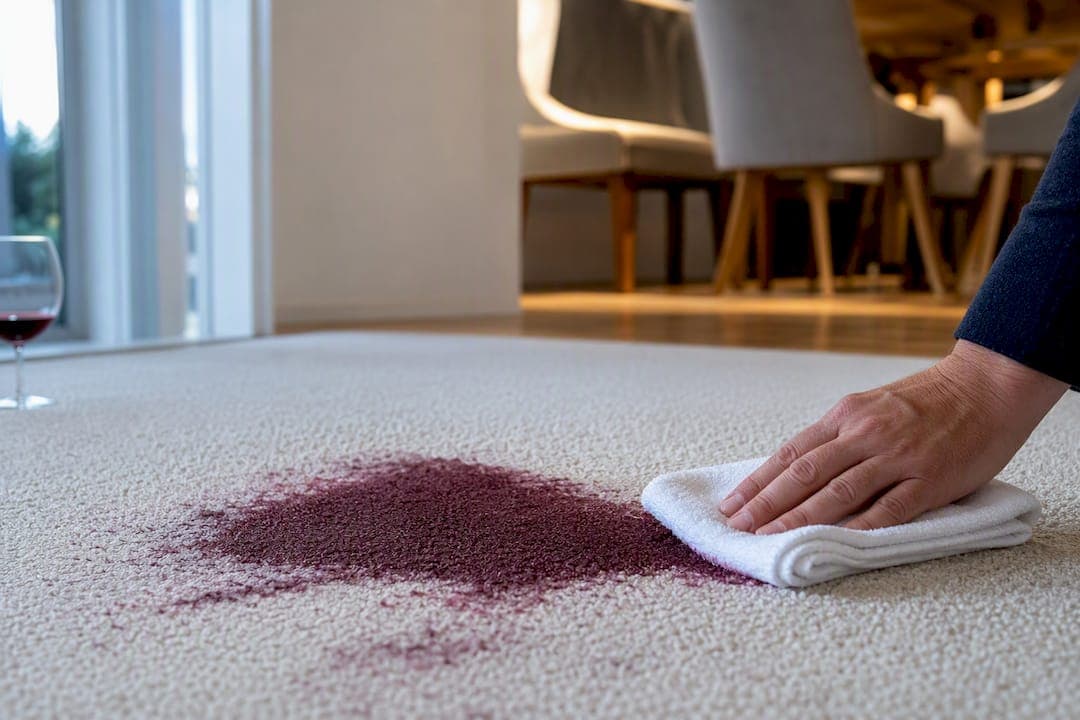
Blot the spill immediately with a clean white cloth, never rub, then dilute with cold water and keep blotting. Mild dish soap or a sprinkle of baking soda handles most fresh spills; reserve hydrogen peroxide for light-coloured carpets after a spot test. Old, large, or wool-carpet stains are a job for a professional carpet cleaner rather than another round of DIY.
TL;DR:
- Immediate blotting from the outside in is crucial, and avoid rubbing to prevent embedding the stain deeper into the fibers.
- Salt and baking soda work temporarily as absorbers on fresh spills but require thorough vacuuming afterward to remove residue.
- Dried wine stains are harder to remove and often need rehydration, baking soda paste, or professional oxygen or enzyme cleaners for better results.
- Applying hot water, steam, or vigorous scrubbing can set the stain permanently; gentle blotting and avoidance of heat are essential.
- Consider professional cleaning if the stain covers a large area, has dried, sits on delicate fibers, or persists after several DIY attempts.
Table of Contents
- Step-by-step first aid for a fresh red wine spill
- Which DIY remedies actually work, and where they fall short
- How to tackle a dried or old red wine stain
- Mistakes that turn a stain permanent
- When to stop DIY and call a professional carpet cleaner
- Removing red wine from loop, cut, and shag carpet pile
- A cleaner's honest view on prevention
- Book a professional clean when DIY has done its job
- Sources
- FAQ
Step-by-step first aid for a fresh red wine spill
Speed decides the outcome here. Wine pigment sits on the fibre surface for only a short window before it starts working its way down into the pile, so the first ten minutes matter more than any product you reach for afterwards.
Grab white cloths or paper towels (coloured fabric can transfer dye), cold water, plain table salt or baking soda, and a clean bowl before you start.
- Blot from the outside in. Press a cloth onto the spill working from the edges toward the centre, switching to a dry section or fresh cloth as soon as one soaks through. Blotting lifts the liquid out of the pile while rubbing pushes pigment deeper and spreads the mark.
- Dilute with small amounts of cold water. Sprinkle a little cold water over the stain and blot again. Diluting a fresh spill and continuing to blot reduces the pigment concentration and lifts more of it out with each pass. Never pour a cup of water over the spot; you'll just spread the stain further into the backing.
- Cover a still-wet spill with salt or baking soda. Either one will draw the remaining liquid up out of the fibres. Leave it for 10 to 15 minutes until it's dried and slightly pink, then vacuum thoroughly.
- Rinse and blot dry. Go over the area with a cloth dampened in cold water, then press dry with a fresh towel. Repeat steps 2 to 4 rather than scrubbing harder if a shadow remains.
Pro Tip: Keep a small "wine kit" (a stack of white cloths, a travel bottle of dish soap, and a shaker of salt) in a kitchen drawer if you entertain often. Reaction time beats product choice almost every time.
Which DIY remedies actually work, and where they fall short
Not every pantry trick deserves equal trust, and matching the remedy to the stain's age saves your carpet from unnecessary chemical exposure.
- Salt or baking soda work well as an absorber on a spill that's still wet, but they're best treated as a temporary emergency measure rather than a complete fix, since they often leave a fine residue behind that needs a thorough vacuum afterwards.
- Club soda relies on its fizz to lift pigment to the surface, though plain cold water does much the same job with less mess and no sticky sugar residue from flat soda gone wrong.
- Dish soap and white vinegar make a gentle all-purpose mix: one tablespoon of dish soap, one tablespoon of white vinegar, and two cups of warm (not hot) water. Apply with a cloth, blot, and repeat.
- Dish soap and hydrogen peroxide is a stronger option for tougher marks, but hydrogen peroxide has mild bleaching properties, so spot-test on an inconspicuous patch and stick to light-coloured carpets only.
A quick reality check: cleaning professionals refer to these methods as "first aid," useful for stopping a stain from setting but not a guarantee of full removal. If a faint shadow lingers after two or three passes, that's usually the point to stop and call in extraction equipment rather than keep escalating the chemicals.
Leave any treatment on for no more than a few minutes before blotting, and rinse thoroughly between applications. If a mix isn't lifting more colour after multiple attempts, move up to a stronger solution rather than repeating the same one indefinitely.
How to tackle a dried or old red wine stain
Dried stains behave differently because the pigment has bonded to the fibre, so the goal shifts from lifting liquid to gently loosening set colour.
- Rehydrate first. Dab cold water over the dried mark and let it sit for a couple of minutes to soften the pigment before you touch it with any product.
- Try a baking-soda paste. Mix baking soda with a small amount of water into a thick paste, spread it over the stain, and let it dry completely before vacuuming it off.
- Step up to oxygen or enzyme cleaners. Oxygen-based and enzyme formulas are commonly recommended for older, set-in stains and often succeed where a simple soap mix has stalled — follow the product's instructions on dwell time exactly.
- Go gently, repeatedly, rather than hard once. For dried stains on woven or deep-pile carpet, repeated light rehydration paired with oxygenation and gentle extraction is safer than one heavy chemical application, which cuts the risk of a bleached patch or a visible tide mark around the edge.
Realistic expectations matter here: a stain that's sat for weeks may lighten considerably without disappearing completely, and that's a genuine result, not a failure.
Mistakes that turn a stain permanent
A handful of instinctive reactions do more damage than the wine itself.
- Never use hot water, a hairdryer, or steam. Heat sets tannins into the fibre permanently, turning a treatable stain into a fixed one.
- Don't scrub. Vigorous rubbing spreads pigment sideways and frays the pile, especially on cut-pile carpet.
- Don't overload the area with salt. Excess salt left in the fibres attracts moisture later and can leave its own residue if you skip the vacuum step.
- Be careful with ammonia and strong oxidisers. These can bleach dye or damage certain fibres if left too long or used undiluted.
Pro Tip: If you're ever unsure whether a product will bleach your carpet, test it on a hidden corner or an offcut first. Thirty seconds of caution beats a permanent bleach spot in the middle of the lounge room.
When to stop DIY and call a professional carpet cleaner
Some stains are worth handing over before you make three more attempts.
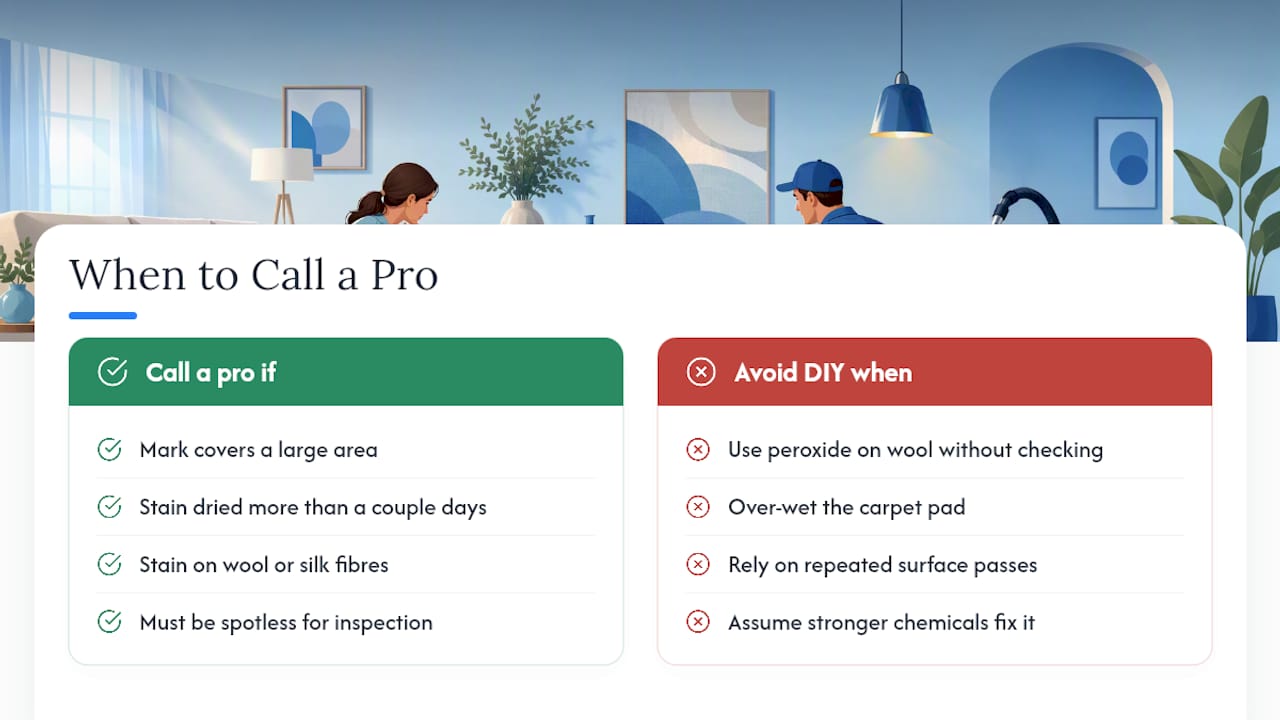
Call a professional if the mark covers a large area, has been drying for more than a couple of days, sits on a delicate fibre like wool or silk, or needs to disappear completely for an end-of-lease inspection. Wool in particular reacts differently to peroxide and oxidisers than synthetic pile, so fibre-specific guidance is worth checking before you self-treat.
Professionals typically reach for hot-water extraction, commercial-grade oxygen or enzyme treatments, and controlled spot extraction. The advantage isn't stronger chemicals, it's control: pros avoid over-wetting the pad underneath and test colourfastness before committing to a full treatment.
A lingering shadow after two or three DIY passes isn't a sign you did it wrong. It's usually a sign the pigment has moved past what surface treatment can reach, and extraction equipment is the next logical step, not a last resort.
Removing red wine from loop, cut, and shag carpet pile
Pile structure changes both how the wine sinks and how you should treat it.
Loop pile (the tight, level loops used in a lot of commercial and hallway carpet) resists staining reasonably well because the fibres sit close together, but that same tightness makes vigorous blotting harder. Press straight down rather than dragging the cloth sideways, or you'll unravel the loops.
Cut pile (the plush, upright fibres common in living rooms) absorbs wine faster because the open fibre tips soak it up like a wick. Blot more frequently here and resist the urge to press hard, since cut pile crushes and mats if you grind a cloth into it.
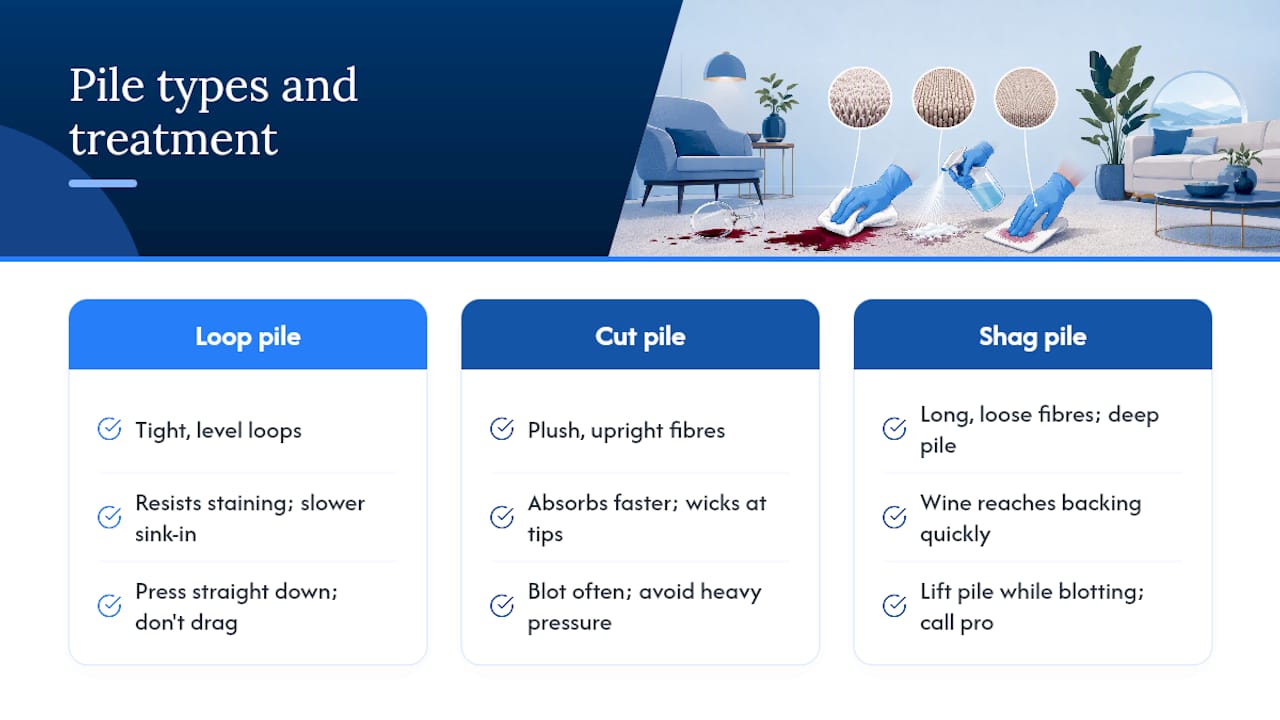
Shag pile is the trickiest of the three. Its long, loose fibres let wine travel down to the backing quickly, and the depth makes full extraction difficult by hand. Lift the pile with your fingers while blotting to reach fibres lower in the stack, and expect to need more rinse-and-blot cycles than with a shorter pile. If a shag carpet stain doesn't lift within a couple of attempts, it's one of the strongest candidates for a professional call, simply because DIY tools can't reach deep enough into that fibre length.
A cleaner's honest view on prevention
Most red wine disasters trace back to the same setup: drinks balanced on unstable surfaces near light carpet, with no plan for a spill. Fix the setup, not just the stain. Use coasters and a stable side table in entertaining areas, keep a doormat at entry points to cut down on general grit, and stick to a regular vacuum schedule between periodic professional deep cleans. A non-toxic cleaning approach keeps this routine safe for kids and pets too.
— Deng
Book a professional clean when DIY has done its job
If you've worked through the blot-dilute-treat sequence and a shadow still won't budge, that's the natural handoff point, not a failure on your part. Professional cleaners offer eco-friendly carpet and upholstery steam cleaning with customised packages tailored to specific carpet needs rather than a one-size treatment.

Bookings often run through an online scheduling system, with vetted staff and flexible contract options, so customers typically engage only for the services needed. If you're moving out and need a stain gone before a bond inspection, the end of lease cleaning service covers exactly that scenario alongside the rest of the property. For an ongoing carpet care plan or a one-off deep clean, the house cleaning service page has the details on what's included. Request a quote or check availability today, and get a second opinion on that stain before you decide it's permanent.
Sources
For fibre-specific guidance beyond this article, WoolSafe's supplier directory is the reference point for wool colourfastness, and the emergency wine-stain guide covers the core first-aid sequence in more depth.
- Your emergency guide on how to remove red wine stains from a carpet
- How to get red wine out of carpet
- Red wine stain removal: step-by-step and expert tips
- How to remove red wine from carpet
FAQ
How do you get old red wine stains out of carpet?
Rehydrate the dried patch with cold water, apply a baking-soda paste or an oxygen-based cleaner, and repeat gentle rounds rather than one heavy application. Deep-set or large old stains generally respond better to professional extraction than repeated DIY attempts.
How do I remove red wine from my carpet?
Blot immediately without rubbing, dilute with small amounts of cold water while continuing to blot, then treat with a mild dish-soap solution, salt, or baking soda. Rinse and blot dry, repeating as needed rather than scrubbing.
What pulls wine out of carpet?
Salt and baking soda absorb fresh liquid effectively, while a dish-soap and vinegar or dish-soap and hydrogen peroxide mix breaks down set-in pigment on tougher marks. Peroxide should be spot-tested first and used only on light-coloured carpet.
Are red wine stains permanent?
Not usually, if you act fast and avoid heat, but a stain left to dry for days or exposed to hot water can set the tannins permanently. A faint shadow after DIY treatment often still responds to professional oxygen or enzyme extraction.