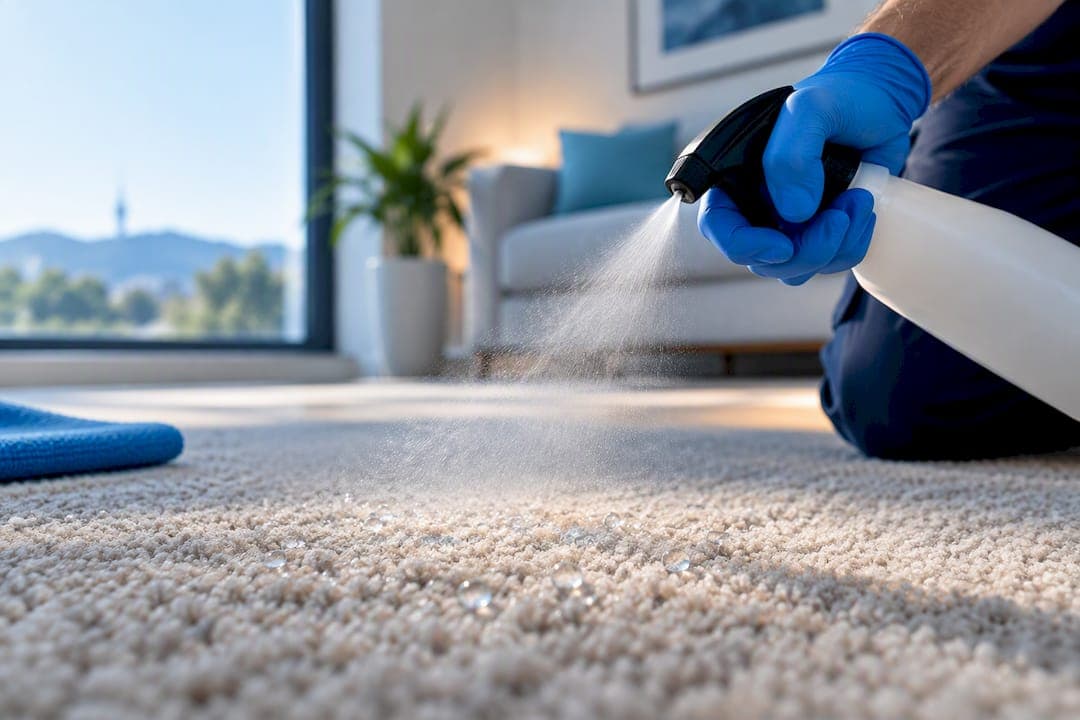
Yes, a post-cleaning protector is usually worth it as extra response time, provided the carpet or upholstery has been properly cleaned, is dry, and has been patch-tested against the specific product. Treat it as a buffer that buys you minutes to blot up a spill, not a shield that stops staining outright. Before you buy anything, check fibre compatibility, read the safety data sheet, and confirm the protector will not void a manufacturer warranty.
TL;DR:
- Carpet and upholstery protectors only offer a delay in staining, and their effectiveness depends on proper application, fibre compatibility, and drying time.
- Patch testing in an inconspicuous area before full application is essential to prevent damage, especially on natural or delicate fibres.
- Protection lasts from a few months to two years, with reapplication recommended after deep cleaning or when bead formation diminishes.
- Applying protector on uncleaned or residue-laden fibres wastes money and can cause damage, making professional service advisable for valuable or sensitive fabrics.
- Regular maintenance, including vacuuming and blotting spills promptly, extends protector lifespan and preserves stain resistance.
Table of Contents
- What stain protection is and how it works
- Types of protectors and how the application method matters
- Safety, patch testing and compatibility with fabric types
- How long protection lasts and when to reapply
- When you should not use stain protection or when it can cause issues
- DIY versus professional application: how to decide
- Maintenance and daily care after protection is applied
- What tradies get wrong about stain protection
- How ACT Cleaning by Demand can help
- Where to check product specs and training standards
- Sources
- FAQ
What stain protection is and how it works
A topical protector is a liquid treatment, usually water-based or solvent-based, applied to fibres after cleaning. It coats the surface of each strand so liquids bead up instead of soaking straight in.
This buys time, not immunity. The coating slows absorption long enough for you to blot a spill before it sets, but it does not make fibres stain-proof, and pigmented spills or prolonged contact can still leave a mark.
CPPCLO4110 treats this as a defined step in the cleaning process rather than an optional extra sprayed on at the end. Under this training unit, protection is:
- Applied after restorative cleaning, once soil and residue have been removed
- Selected and prepared according to the manufacturer's own specifications
- Matched to the fibre type and the job's specific conditions, including WHS requirements
Types of protectors and how the application method matters
Not all protection comes from a bottle you buy after the fact. Some carpets and upholstery fabrics are mill-treated at the factory, which tends to be more even and durable because it happens before the fibre is woven into carpet or cut into furniture covers. Post-cleaning topical treatments are applied later, by you or a cleaner, and their performance depends heavily on how well the surface was cleaned first.
Formulation matters too:
- Water-based aerosols dry faster and have less odour, which suits homes and offices where downtime matters
- Solvent-based systems can penetrate more thoroughly on some fibres but need better ventilation while drying
- Branded options such as Scotchgard are widely available and marketed to repel liquids on household fabrics, but suitability still depends on the specific fibre and finish
Always check the product label against your carpet or upholstery type before buying, rather than assuming one formula suits every surface.
Safety, patch testing and compatibility with fabric types
Skipping a patch test is the most common mistake homeowners make, and it is also the easiest to avoid. CPPCLO3110 sets out patch testing for colourfastness as a standard step before any stain treatment, precisely because fibres react differently to the same product.
- Choose an inconspicuous spot, ideally somewhere hidden by furniture or a rug edge.
- Apply a small amount of the protector exactly as directed on the label.
- Let it dry fully, then check for colour change, texture change, or residue.
- Only proceed to the full surface once the test area looks and feels unchanged.
Wool, nylon, and many synthetic blends generally respond well to topical protection. Some natural fibres and delicate weaves show little benefit or can react poorly, so the test step is not optional.
Pro Tip: Keep the room ventilated while the product dries, and store the SDS somewhere you can find it again if you ever need to check ingredients or first aid advice.

How long protection lasts and when to reapply
Most topical protectors lose effectiveness gradually rather than failing all at once. Lifespan can range from a few months to roughly two years, depending on foot traffic, how often the area is cleaned, and general abrasion from furniture and pets.
Manufacturers generally recommend reapplying after any restorative extraction clean, since deep cleaning strips the existing coating along with the dirt. Watch for these practical signs that it is time to top up:
- Water no longer beads on the surface and instead soaks in quickly
- Traffic lanes look duller or more worn than the surrounding area
- Spills that once blotted away cleanly now leave a faint mark
3M's own product information states that Scotchgard is designed to repel liquids and help prevent stains on household fabrics without changing how the fabric feels, which is a useful benchmark for what a well-applied protector should actually do.
When you should not use stain protection or when it can cause issues
Applying protector over dirty carpet, or over fibres still carrying residue from a previous chemical treatment, is a common way to waste money and trap problems under a fresh coating. Training guidance is clear that residues need to be removed before any topical treatment goes on.
- Never apply protector to carpet that has not been properly cleaned and dried first
- Check any manufacturer warranty before self-applying, since some warranties specify approved products or professional-only application
- Treat "test in an inconspicuous area" instructions as more than a suggestion
A tribunal decision involving Chrisis v Duluxgroup Aust Pty Ltd found that instructing consumers to test in an inconspicuous area was a reasonable warning, and that skipping it contributed to the damage in dispute. It is a useful reminder that the patch test protects you as much as the fabric.
DIY versus professional application: how to decide
Professional application generally wins when the fabric is valuable, the fibre type is uncertain, or a warranty is on the line. A cleaner trained under Australian competency units brings correct product selection, patch testing, residue extraction, and workplace safety compliance to the job, which reduces the chance of an expensive mistake.
DIY is reasonable for smaller, lower-risk jobs if you take the same precautions a professional would.
- Read the SDS and label fully before opening the product.
- Patch test in an inconspicuous area and let it dry completely.
- Treat a small visible section first and check the result before covering the whole room or piece.
If you do hire someone, ask these questions before they start:
- What product and brand are you using, and can I see the SDS?
- Has a patch test been done on this specific fabric?
- What is your policy on reapplication if it wears off early?
- Will you provide a record of the product and application date?
Pro Tip: Ask for that record in writing. It is the easiest way to support a warranty claim or a bond-clean dispute later.
Maintenance and daily care after protection is applied
A protector only performs as well as the care around it. Regular vacuuming lifts grit before it grinds into coated fibres and wears the treatment down faster than normal use would.
- Vacuum on a schedule that matches foot traffic, more often in high-use areas
- Blot spills immediately rather than rubbing, since rubbing pushes liquid deeper and abrades the coating
- Avoid dragging furniture or heavy scrubbing on treated areas, which mechanically strips protection faster than time alone
- Book a professional follow-up clean when beading stops or traffic lanes start looking dull, since that is usually when reapplication is due
Our guide to carpet wicking after cleaning covers why fibres need to be fully dry before any protector goes on, which matters just as much for maintenance cycles as for the first application.
What tradies get wrong about stain protection

The two mistakes I see most often are skipping the patch test to save time and spraying protector straight onto carpet that still has old chemical residue sitting in the fibres. Both cause problems that show up weeks later, when they are harder to trace back to the cause.
Professionals avoid this by documenting the product, the SDS, and the patch test result before they ever pick up the sprayer. Keep those receipts yourself too, since they matter for warranty claims and bond-clean disputes.
— Deng
How ACT Cleaning by Demand can help
If you would rather leave the product selection and patch testing to someone else, professional cleaning services can offer restorative carpet and upholstery cleaning with protector application handled according to manufacturer instructions and workplace safety guidance.

What that looks like in practice:
- Product and SDS details documented for your own records
- Patch testing carried out before full application, on your specific fabric
- A clean, dry surface guaranteed before any protector goes near it
This matters most for renters preparing a bond clean, where documented evidence of a proper job can support a claim later. Browse our carpet cleaning and other services to book a restorative clean with protector application included, or check our end of lease cleaning page if bond evidence is your main concern.
Where to check product specs and training standards
For competency expectations, see the national training units CPPCLO4110 and CPPCLO3110. For product specifics, check the Scotchgard product page, and for green-marketing claims, see the ACCC's guidance.
Sources
- CPPCLO4110 - Perform restorative carpet cleaning
- Scotchgard™ Fabric and Upholstery Protector, Aerosol, 297 g | 3M Australia
- Green marketing and the Australian Consumer Law (ACCC)
- Chrisis v Duluxgroup Aust Pty Ltd (NSW CTTT 2013)
FAQ
Is there anything better than Scotchgard?
No single product is universally better, since performance depends on the fibre, the formulation, and how well it was applied. Water-based and solvent-based systems each have trade-offs in drying time and odour, so the right choice depends on your specific carpet or upholstery.
What do you put on carpet after cleaning?
A topical fabric protector is applied after the carpet is cleaned and fully dry, never before or during. Products like Scotchgard are designed to repel liquids and help prevent stains on household fabrics without changing how the fabric feels.
Is carpet stain protection worth it?
It is generally worth it as an added layer of response time, giving you longer to blot a spill before it sets in. It does not make carpet stain-proof, so realistic expectations matter more than the marketing claims on the bottle.
Does Scotchgard help protect against stains?
Yes, according to 3M Australia's own product information, Scotchgard is designed to repel liquids and help prevent stains on a range of household fabrics. It works best when applied to clean, dry fibres that have been patch-tested first.