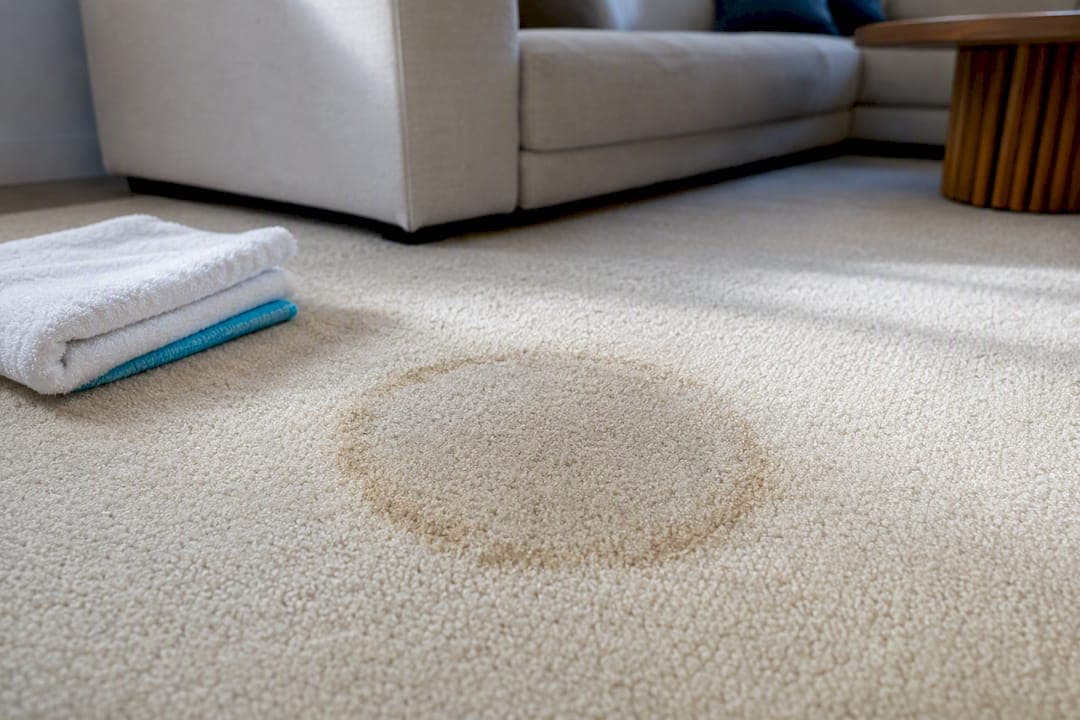
If a cleaned spot reappears 24 to 48 hours later, that's almost always wicking. Moisture and dissolved soil are rising from the backing or pad below. Stop pouring anything else onto it. Blot the spot and press a weighted absorbent towel over it to catch the moisture as it surfaces, then book professional extraction if the stain keeps coming back.
TL;DR:
- Wicking occurs when residual moisture and soil rise from the backing or pad after cleaning, often visible as a dull, brownish patch that reappears days later.
- Over-wetting during cleaning, slow drying conditions, and deep contamination in the padding are primary causes of persistent wicking, especially with low-powered equipment.
- To fix wicking, it’s essential to blot gently, use a weighted towel overnight, and re-extract with proper equipment, avoiding additional liquids or heat until the area is thoroughly dry.
- Professional intervention becomes necessary when stains persist after multiple extraction attempts, or if there are signs of odors, large spills, or spreading stains indicating pad contamination.
- Good airflow, dehumidification, and moisture measurement are critical to prevent recurrence, and replacing contaminated padding is often the only lasting solution for deep-seated moisture issues.
Table of Contents
- What does carpet wicking look like?
- What causes wicking after a carpet clean?
- How do you fix wicking when a stain comes back?
- What equipment and conditions actually prevent wicking?
- When should you call a professional for wicking?
- Why wicking callbacks happen more than people admit
- Getting wicking sorted properly with ACT Cleaning by Demand
- Sources
- FAQ
What does carpet wicking look like?
Wicking usually shows up as a faint ring or dull patch on a spot you were sure was clean, appearing after a delay following cleaning. It often looks browner or duller than the original stain, and it can feel slightly damp underneath even when the surface fibres seem dry.
The mechanism is straightforward capillary action/Physical_Properties_of_Matter/States_of_Matter/Properties_of_Liquids/Capillary_Action): the same physics that lets a paper towel soak up a spill also pulls moisture upward through carpet fibres as the surface dries. Carpet backing and underlay act like a sponge, holding onto old spill residue, cleaning solution, or pet accidents. As the top layer dries first, it draws that trapped moisture and dissolved grime up to the tips of the fibres.
A few signs help separate true wicking from other problems:
- Wicking: a stain that vanished after cleaning but returns days later, often browner than before.
- Detergent residue: a sticky or crunchy feel and re-soiling that attracts dirt fast, without the delayed reappearance.
- Dye migration: colour bleeding from a rug or fabric nearby, usually visible immediately rather than after a delay.
What causes wicking after a carpet clean?
Wicking almost always traces back to moisture that never fully left the carpet system. A few habits and conditions make it far more likely.
- Over-wetting during cleaning. Flooding the fibres with solution without matching it to strong extraction leaves excess water sitting in the backing.
- Slow drying. Closed windows, low airflow, or high indoor humidity give capillary action hours or days to keep pulling contamination upward.
- Deep contamination. Old pet urine, food spills, or drink stains that soaked into the pad long before the clean act as a hidden reservoir, regardless of how well the surface was treated.
- Fibre and backing type. Dense pile or heavy jute backing holds moisture longer than lighter synthetic backings, extending the drying window.
- Underpowered equipment. Domestic rental machines often lack the vacuum strength of truck mounted or professional extraction units, leaving more residual moisture behind than a proper deep clean would.
A carpet that still feels heavy or squishy underfoot an hour after cleaning is a strong sign extraction fell short.
How do you fix wicking when a stain comes back?
The moment you spot a returning stain, resist the urge to grab a spray bottle. Adding more liquid, whether it's water, vinegar, or a shop-bought stain remover, just feeds the same reservoir that caused the problem in the first place. Heat is also off the table for now: a hairdryer or heater on a damp spot can set residue rather than lift it.
Work through the fix in order:
- Blot, don't scrub. Use a barely damp white cloth to lift surface moisture without pushing more liquid into the pile.
- Weight it down. Fold a clean, absorbent white towel over the spot and place something heavy on top, then leave it overnight. This weighted towel technique draws rising contamination into the towel instead of the fibre tips. Swap in a fresh towel if the first one comes away heavily soiled.
- Re-wet and extract, if needed. If the mark is still visible, lightly re-wet with clean water and run an extraction pass, followed by two or three dry passes with the same machine to pull out as much moisture as possible.
- Force the air. Point an air mover at the damp patch and run a dehumidifier nearby to pull the moisture out of the air before it re-settles into the carpet.
Each dry pass matters more than people expect. A single extraction pass rarely removes everything; repeated passes with the vacuum head moving slower each time lift progressively more moisture, which is why professional technicians rarely stop at one.
Pro Tip: Keep a spare white towel just for this job. Coloured towels can transfer dye onto damp carpet, adding a whole new stain to the one you're trying to fix.
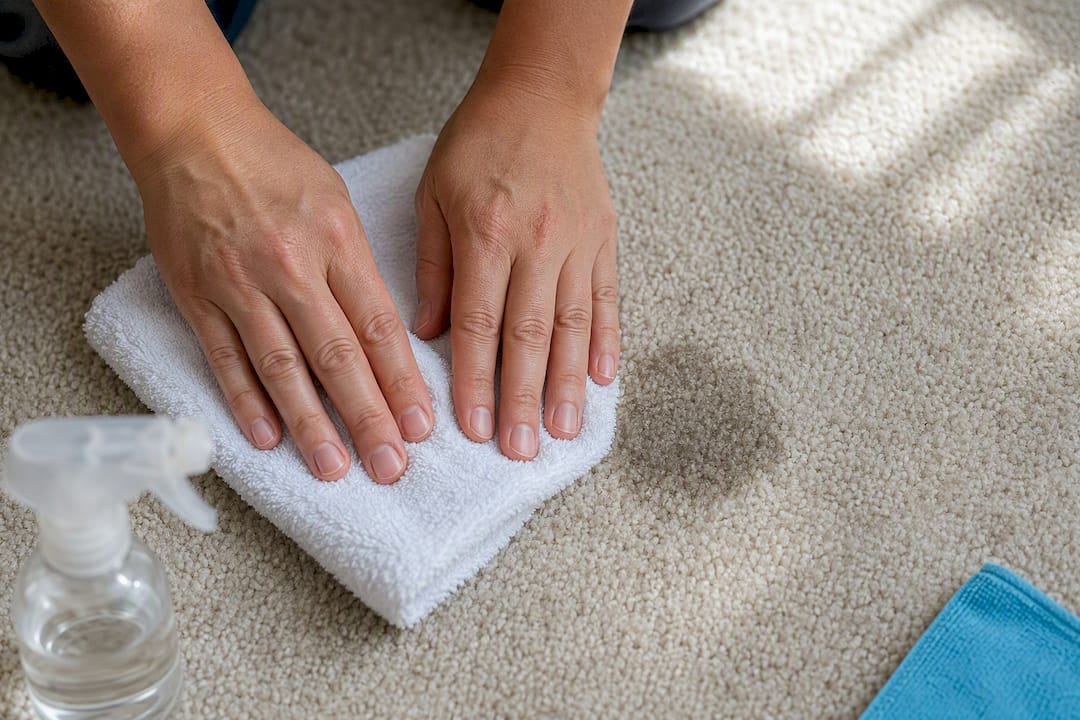
If the spot returns a second or third time despite this sequence, or if it's spreading rather than shrinking, that's your cue to stop DIY attempts. Persistent wicking after proper extraction usually means the pad itself is contaminated, and no amount of surface drying fixes that.
What equipment and conditions actually prevent wicking?
Getting a carpet properly dry is less about one powerful gadget and more about the right combination running long enough. Air movers, dehumidifiers, and temperature control each do a different job, and skipping one usually undoes the other two.
- Air movers should sit at a low angle across the damp area, spaced at roughly one unit per 10 to 14 linear feet of wall area, according to IICRC guidance. This flashes the surface dry quickly, which limits how long capillary action has to pull moisture upward.
- Dehumidifiers need to run alongside the movers, not instead of them. Air movers lift moisture off the fibres into the surrounding air, and a dehumidifier captures it before it can settle back down as the air cools.
- Ambient temperature matters more than most people realise. The same IICRC guidance points to an optimal drying range that encourages evaporation without pushing humidity back up.
Touch is not a reliable dryness test. A carpet can feel dry on the surface while the underlay stays saturated for days, which is exactly the setup that produces wicking. Professionals rely on moisture meters and hygrometers to check relative humidity and confirm the pad and subfloor have actually dried, not just the pile.
Under good airflow, the surface will typically flash-dry within 2 to 6 hours. The underlay and subfloor take considerably longer unless they're actively targeted with air movers and dehumidification, and mould can start developing in under 48 hours in warm, damp conditions. That window is the real reason speed matters more than any single piece of equipment. For more on typical drying windows and how humidity extends them, see this guide to carpet drying time.
When should you call a professional for wicking?
DIY fixes handle most surface-level wicking, but a few warning signs mean it's time to bring in a specialist rather than repeating the towel-and-air-mover cycle. Persistent staining after two or three proper extraction attempts, any smell of urine or mildew, or a large-volume spill from months ago are all signals that the pad or subfloor is contaminated rather than just damp.
Under IICRC-style category guidance, in-place drying only works reliably for clean (Category 1) water. Category 2 contamination often calls for cushion replacement, and Category 3 water, think sewage or long-standing pet urine, typically means both carpet and cushion need removing. A professional visit for this kind of job usually includes deep extraction, moisture testing with a calibrated meter, pad removal and replacement where the padding can't be saved, and anti-mould treatment if the area has been damp for a while.
Before booking anyone, ask a few direct questions:
- What moisture-meter readings are you working from, and will you share them?
- What's the drying plan, and what's the estimated dry time?
- Is there a satisfaction guarantee if the stain returns?
If the source is pet urine that's soaked into the pad, this guide to pet urine carpet cleaning explains why replacement is often the only real fix.
Why wicking callbacks happen more than people admit
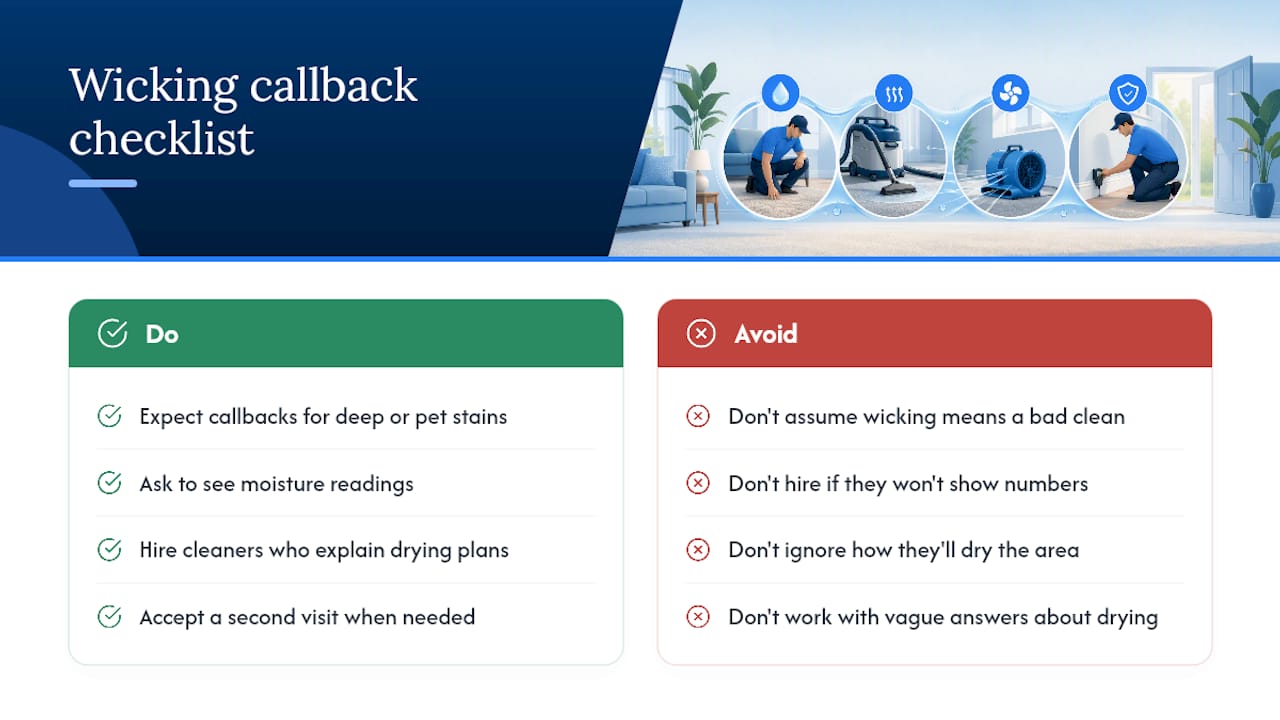
Wicking gets treated like a mystery or a sign of a bad clean, but it's rarely either. It's a drying and extraction limitation, and it shows up whether the technician was careful or careless. Deep contamination in a pad that's been there for years doesn't always announce itself until the surface starts drying and pulls it back up.
Reputable cleaners expect callbacks on deep spills and pet stains. They measure moisture rather than guess, and a fair one will tell you upfront that a bad spot might need a second visit. If a cleaner can't explain how they'll dry the affected area or won't discuss moisture readings, that's worth noticing. Ask for the numbers. A cleaner with nothing to hide will have them.
— Deng
Getting wicking sorted properly with ACT Cleaning by Demand
Some professional cleaners treat wicking as an extraction and drying problem, not a mystery callback. Bookings for house cleaning that include carpet and upholstery work start with an inspection of the affected area, a documented drying plan, and eco-friendly cleaning products rather than harsh chemicals that can add to the residue already trapped in the pad.

Where a spot has soaked deep into the padding, pad removal and replacement is discussed upfront, not discovered after a second failed visit. Landlords and property managers dealing with carpets before a changeover can find the same approach through the end of lease cleaning service, which covers deep extraction where inspection-grade drying matters most. If a stain has come back after your own clean or someone else's, book an assessment and get a proper moisture reading before doing anything else to the carpet.
Sources
For more detail on drying windows and humidity, see carpet drying time and carpet cleaning for allergies. For immediate stain treatment before deeper extraction is needed, check red wine stain removal and non-toxic carpet cleaning.
- Host dry extraction cleaning system (Floorlife / The Andrews Group)
- Professionals' guide to moisture meters in Australia (Restore Solutions)
- Why do stains come back after carpet cleaning? (The Carpet Guys blog)
FAQ
How do you reverse carpet wicking?
Blot the spot with a barely damp white cloth, then weight a dry absorbent towel over it overnight to draw the moisture out. If the stain persists, re-wet lightly and run an extraction pass followed by several dry passes with an air mover and dehumidifier running nearby.
Why isn't my carpet drying after cleaning?
Poor airflow, high indoor humidity, or over-wetting during the clean are the usual causes, and underlay often stays damp long after the surface feels dry. Running an air mover with a dehumidifier, and keeping the room between 20 and 27°C, speeds this up considerably.
How do you fix carpet ripples after cleaning?
Ripples usually come from the carpet expanding as it absorbs moisture and not being re-stretched before it dries flat again; light ripples often settle once the carpet is fully dry, but persistent ripples need a carpet layer to re-stretch and re-fit the carpet.
How do you get wicking out of carpet for good?
Full extraction paired with fast, forced drying, using air movers and a dehumidifier together, stops most wicking from recurring, but contaminated pad usually needs replacing rather than repeated drying attempts. A professional moisture check confirms whether the pad is salvageable before you spend more time on DIY fixes.