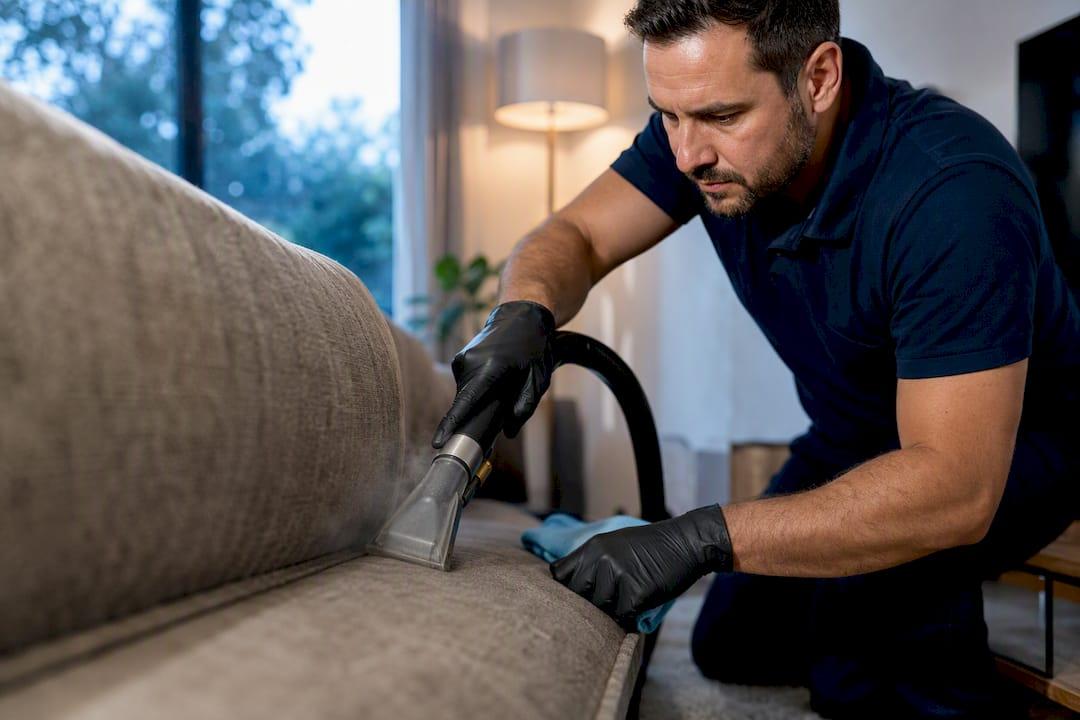
Steam cleaning kills a large share of adult fleas and some larvae on contact, but it will not wipe out an infestation by itself. It's a strong tool inside a bigger plan that also treats every pet in the house with a vet-approved product and follows up with repeat cleaning. Never point a steam cleaner at an animal.
TL;DR:
- Steam cleaning can kill adult fleas and some eggs when high temperatures are maintained, but consumer machines often struggle to reach or sustain the necessary heat in deep or tight areas.
- For effective flea control, steam cleaning should be combined with vet-approved pet treatments, regular laundering, thorough vacuuming before steam, and repeated efforts over several weeks.
- Professional equipment maintains higher and steadier temperatures, allowing for better penetration into upholstery seams and skirting boards, which are common hiding spots for fleas.
- Steam should never be used directly on animals, and the room must be fully ventilated and dried to prevent burns, respiratory irritation, or mold growth, especially for sensitive households.
- The recommended sequence is to steam clean first, allow surfaces to dry completely, then apply chemical insecticides if advised, to preserve the residual effectiveness of treatments.
Table of Contents
- Does steam cleaning kill fleas? The science behind the heat
- Where steam cleaning falls short against fleas
- How do you steam clean a house to get rid of fleas?
- Should you steam before or after chemical flea treatment?
- Is it safe to steam clean around pets and delicate fabrics?
- What a professional cleaning service actually adds
- Book a professional steam clean instead of guessing
- Sources
- FAQ
Does steam cleaning kill fleas? The science behind the heat
Fleas die when their body temperature climbs above a critical threshold and stays there. Research summarised by Hepper puts that threshold around 95°F (35°C), with mortality rising the longer the exposure lasts. Steam cleaners routinely exceed that at the nozzle, which is why the US EPA lists carpet steam cleaning as a legitimate control measure against fleas at every life stage when it's done properly.
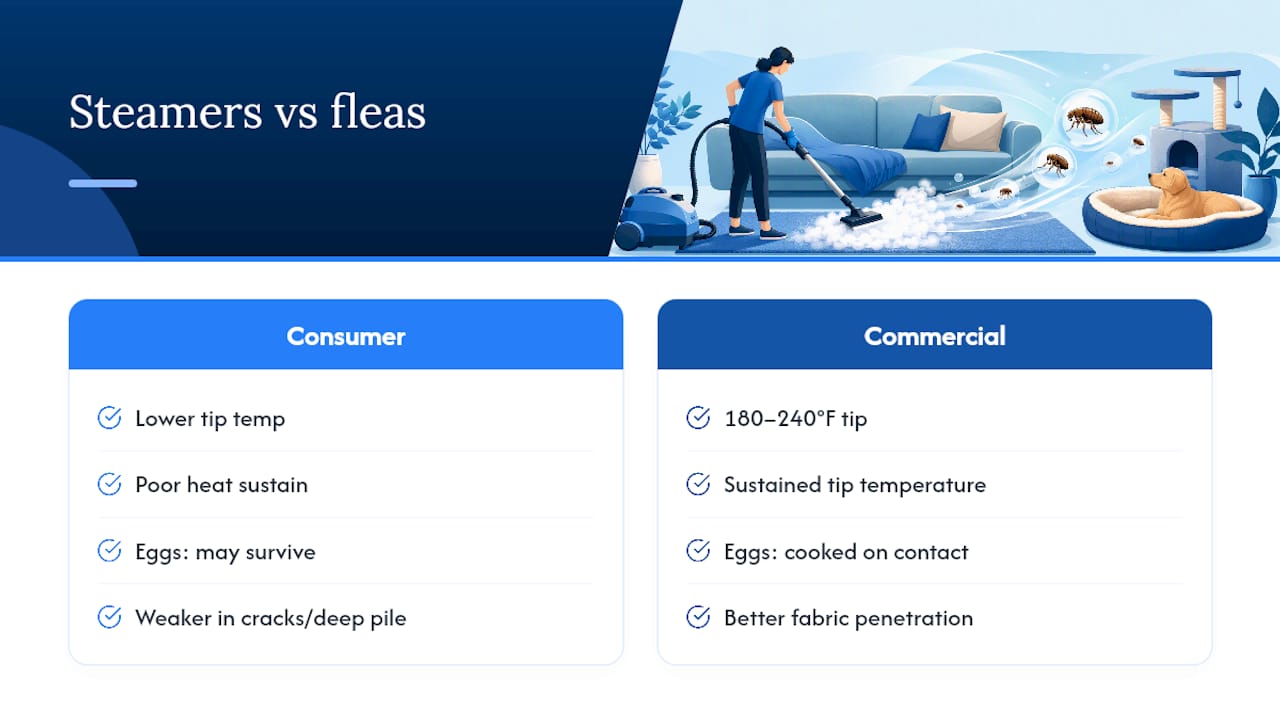
The catch is in that phrase "when it's done properly." A flea egg has a waxy coating that buys it a few extra seconds against heat, so the steam has to make direct contact and hold it long enough to cook through that layer. This is where the gap between a handheld consumer steamer and a professional dry-vapour unit shows up. Consumer machines often run cooler and lose heat fast once the steam hits open air, while commercial dry-vapour systems maintain sustained tip temperatures in the range of 180 to 240°F, according to Therma-Kleen's technical data.
Steam also does something dry vacuuming can't: it penetrates fabric and carpet fibre rather than just lifting surface debris. That's genuinely useful against fleas hiding in pile carpet or upholstery seams. It's also exactly why steam struggles in tight cracks, skirting board gaps and deep pile, where the vapour cools before it reaches the target.
Where steam cleaning falls short against fleas
Steam is not a cure on its own, and the biggest reason is timing. Catster's review of the evidence notes that while steam kills many adult fleas and some eggs, a portion of eggs typically survive, especially those tucked into crevices the nozzle never fully reaches.
Deep pile carpet is the classic failure point. Steam loses heat as it travels through thick fibre, so eggs and larvae nestled near the carpet backing often escape the temperature spike that kills them near the surface. Furniture seams, skirting board gaps and the underside of pet bedding behave the same way. Practitioner experience backs this up: consumer steamers regularly miss what professional dry-steam units catch, simply because they can't sustain heat as long.
The other limitation matters just as much: steam leaves no residual protection. Once the carpet dries, there's nothing left behind to stop a flea that hatches next week or hitches a ride in on your dog. That's why a single steam session, however thorough, isn't the end of the job. Expect to repeat the process and pair it with pet treatment, because the flea life cycle can run for several weeks and eggs laid before your first pass will keep hatching regardless of how clean the carpet looks.
How do you steam clean a house to get rid of fleas?
Follow this sequence and you'll get real results instead of a false sense of "done."
- Treat every pet first. Talk to your vet and apply a vet-approved flea treatment to every animal in the house, not just the one that seems affected. Skipping this step means the infestation just re-seeds itself.
- Launder everything soft. Wash bedding, pet beds, cushion covers and soft toys on the hottest setting the fabric allows.
- Declutter and move furniture. Pull couches and beds away from walls so you can reach skirting boards, corners and the floor underneath.
- Vacuum before you steam. Vacuuming first lifts loose eggs and debris the steam would otherwise just push around. Seal the vacuum bag or empty the canister into a sealed bag and put it straight in an outdoor bin.
- Steam methodically. Work in slow, overlapping passes rather than quick sweeps, giving each patch of carpet or fabric several seconds of direct contact. Concentrate on edges, baseboards, upholstery seams and anywhere a pet sleeps.
- Let it dry, then vacuum again. A second vacuum pass once the surface is dry picks up anything the heat killed but didn't dislodge.
- Repeat and monitor. Plan on steaming again within a week or two, since eggs that survived the first pass will keep hatching.
- Aim for a machine that holds steam output steady rather than sputtering between bursts.
- If you're renting equipment, test it on an inconspicuous patch first to check the fabric can handle the heat.
- Keep pets out of the room until surfaces are completely dry.
Pro Tip: Wrapping a cleaning bonnet or thick cloth around the steam nozzle for a slow pass over upholstery seams traps heat against the fabric longer, which noticeably improves kill rates in exactly the spots consumer steamers usually miss.
Call a licensed pest controller if you're still seeing fleas two to three weeks after this full cycle, if the infestation covers multiple rooms, or if a household member is being bitten repeatedly despite treating pets and cleaning thoroughly.
Should you steam before or after chemical flea treatment?
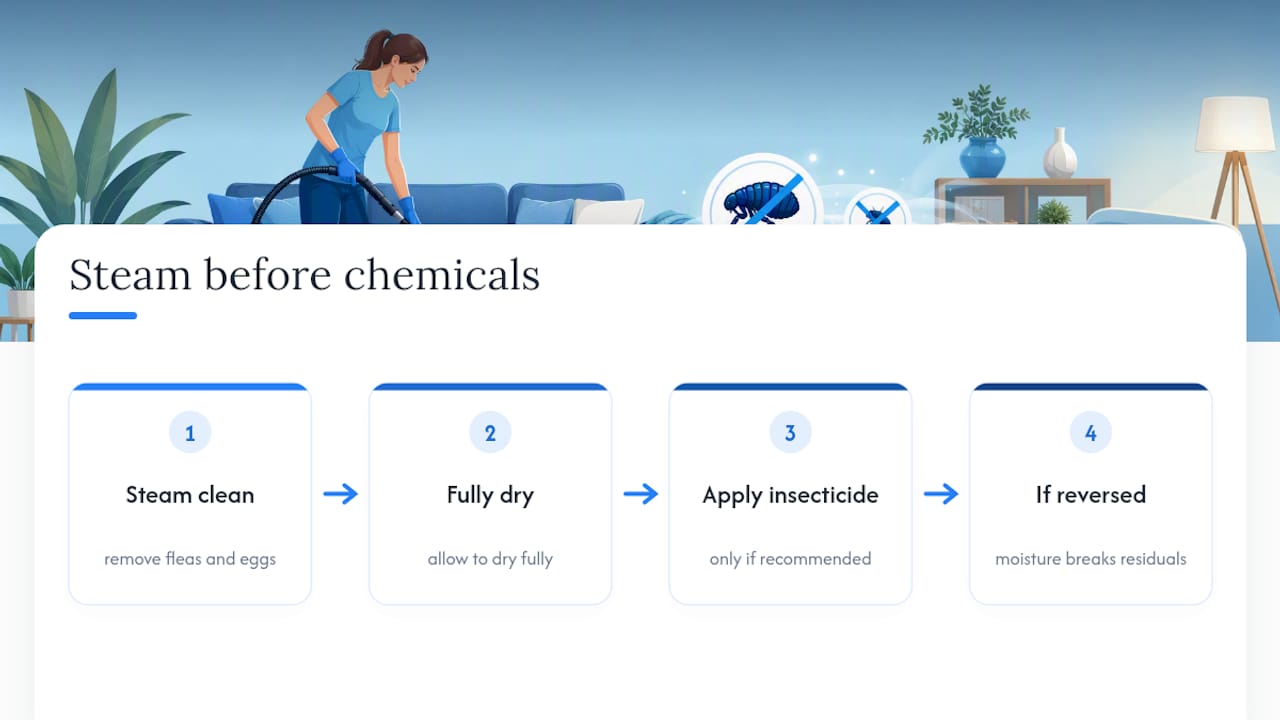
Sequence matters more than most people realise. FleaScience's guidance is blunt about it: steam and moisture can break down insecticide residuals, so steaming an area you've already treated chemically undoes some of that product's ongoing protection. The safer order is to steam clean first, let everything dry fully, then apply any insecticide afterwards if your pest controller recommends it. An Australian pest-control source backs this same order, and always checking the product label before mixing methods is worth the two minutes it takes.
Steam and chemicals only address the environment, though. The bigger reservoir is often the animal. Every pet in the house needs a vet-approved treatment, applied on the schedule your vet sets, or the fleas simply re-seed the carpet you just cleaned. Beyond the pet, look at non-chemical basics: wash pet bedding weekly during an active infestation, keep the yard mowed if fleas could be coming from outside, and check whether visiting animals or a shared laundry are bringing fleas back in.
Is it safe to steam clean around pets and delicate fabrics?
Steam is a genuinely useful tool, but it comes with real hazards if you rush it.
- Never run a steam cleaner over an animal. The heat can burn skin and the vapour can irritate a pet's airways.
- Check your steam cleaner's manual and the fabric care label before treating leather, silk or antique upholstery, since high heat can warp, discolour or crack some finishes.
- Ventilate the room and allow full drying time before anyone walks on treated carpet, particularly with kids or pets around.
- If anyone in the house has asthma, dry the area completely and quickly. Damp carpet left too long is a mould risk, and mould is a well-known asthma trigger.
What a professional cleaning service actually adds
A domestic steamer does a decent job, but professional dry-vapour equipment sustains higher tip temperatures for longer, which is the difference between killing fleas near the surface and reaching the ones tucked into upholstery seams and skirting board gaps. Industry standards from bodies like the IICRC exist precisely because equipment and technique vary this much between a hire-shop machine and a properly maintained commercial unit.
There's also the unglamorous stuff a professional handles by default: sealing and disposing of vacuum waste properly, timing the job around any pest-control treatment instead of guessing, and managing drying time so damp carpet doesn't turn into a mould problem. Com has written separately about the drying steps that prevent mould after steam cleaning, and the same principles that protect against dust mites apply directly to flea eradication.
— Deng
Book a professional steam clean instead of guessing
We provide an integrated service option combining carpet steam cleaning, pest coordination, and drying management. Our teams use commercial-grade equipment designed to maintain steady heat output, which is important for targeting fleas hiding in upholstery seams and skirting board gaps as well as on carpet surfaces.

For households with kids, asthma, or pets, proper drying and waste disposal are handled carefully to avoid issues like damp carpet or vacuum bags containing live fleas. We also work with vet-approved pet safety in mind, and we can talk through non-toxic options if you'd rather avoid chemical treatments altogether through our non-toxic carpet cleaning approach. For heat-treatment logic that applies just as well to other pests, Bespoke Environmental's guide to heat treatment is worth a read too.
Renters preparing for inspection can book our end of lease cleaning service, which includes carpet steam cleaning as standard. If you're in the inner south or Sutton area, check our Inner South cleaning services or Sutton cleaning services pages to see availability and get a quote.
Sources
- Controlling Fleas and Ticks Around Your Home | US EPA
- Does Steam Cleaning Kill Fleas? Vet-Approved Effectiveness & Safety Explored - Catster
- Does steam cleaning kill fleas? – FleaScience
- THERMA-KLEEN TECH SHEET - KILLING PESTS
FAQ
Can you get rid of fleas with a steam cleaner?
Steam cleaning kills many adult fleas and some eggs on contact, but it won't eliminate an infestation by itself. You need to pair it with vet-approved pet treatment and repeat cleaning over several weeks.
What kills fleas instantly in the house?
Direct steam contact at sufficient heat kills adult fleas almost immediately, but "instantly" only applies to the fleas the steam actually touches. Eggs in carpet crevices or deep pile often need repeated passes or professional equipment.
How long does it take for steam to kill a flea?
Fleas start dying once surface temperature passes roughly 95°F (35°C), and mortality increases the longer that heat holds against the flea's body, according to Hepper's research on heat and fleas. A slow, deliberate pass rather than a quick sweep gives the heat time to work.
What can I mop my floors with to kill fleas?
Hot, soapy water on hard floors can kill fleas on contact in the same way steam does, though it lacks the sustained heat and fabric penetration of proper steam cleaning. For carpeted areas, steam cleaning remains the more effective non-chemical option.
Should I steam clean before or after using flea spray?
Steam clean first, let the area dry completely, then apply any insecticide, since research on sequencing shows steam and moisture can reduce how long chemical residuals stay active.