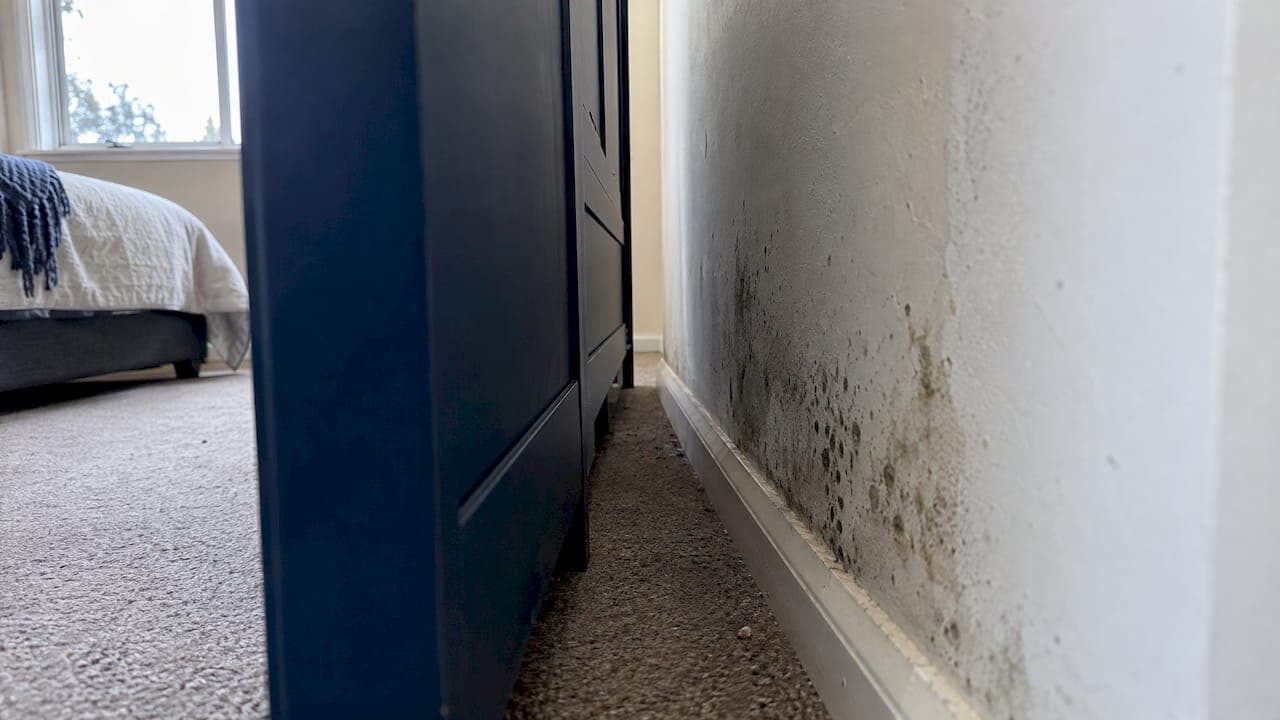
Small patches of mould on bathroom grout, window frames or a wardrobe wall can be cleaned with detergent or diluted vinegar, the right protective gear and a thorough dry. Large areas, regrowth, or a musty smell with nothing visible need a professional assessment first. In every case the mould only stays away if the moisture behind it is fixed. This guide covers how to tell which situation you have, how to clean the first kind safely, and how to keep mould from coming back in a Canberra home.
TL;DR
- Look first: water damage, condensation and a mouldy smell are the main signs, and the moisture source matters more than the stain.
- Small areas: clean with a microfibre cloth and mild detergent or diluted vinegar, never a dry brush, and wear a P2 or N95 respirator, gloves and eye protection.
- Large areas, regrowth, or a smell with no visible mould: get a professional to assess it rather than scrubbing.
- Soft, porous materials such as carpet may need professional cleaning or replacement.
- Dry everything completely and fix the leak or ventilation problem, or the mould will return.
Table of Contents
- Why mould shows up in Canberra homes
- How to assess mould before you clean
- Cleaning small areas of mould safely
- What can be cleaned and what should be removed
- When to stop and call a professional
- Drying out and stopping mould from returning
- Mould in rentals and end-of-lease cleans
- Our perspective
- Book a clean for the surfaces and carpets
- FAQ
- Sources
Why mould shows up in Canberra homes
Mould needs moisture. Health authorities list condensation, plumbing leaks and inadequate ventilation as the usual sources of dampness in buildings, according to the WA Department of Health mould guidelines. Those apply anywhere in Australia, and they are the same culprits we see in Canberra properties: a bathroom with a weak exhaust fan, a wardrobe pushed against a cold external wall, a slow leak under a sink, or a closed-up rental over a cold winter.
That is why mould cleaning is never only about the visible stain. If you wipe a patch away but the wall keeps getting damp, you will be wiping it again within weeks.
The ACT Government's mould advice for homes is the local reference point, and the steps below follow it alongside national health guidance.

How to assess mould before you clean
A first assessment is mostly visual. The WA Department of Health guidelines say a preliminary mould assessment should primarily involve looking for water damage, condensation or a mouldy odour. Walk through the property with those three things in mind.
What to look for
- Water marks and staining on ceilings, around windows, and below wet areas such as bathrooms and laundries.
- Condensation on windows and cold walls, especially in the morning.
- Peeling paint, bubbling plaster or warped skirting, which point to moisture inside the wall.
- A musty smell in a room, wardrobe or cupboard, even if you cannot see anything.
- Black, green or grey spotting on grout, silicone seals, window tracks, curtains and the backs of furniture.
Find the moisture, not just the mould
For each patch, ask where the water is coming from. Is the patch near a shower, a window, a pipe, a roof line or a cold corner? Is the room regularly closed up with no airflow? Your answer decides the fix. A condensation problem is solved with ventilation and moisture control. A leak needs a repair.
A note on symptoms: the enHealth guidance says the health effects of mould exposure are varied and non-specific, so symptoms alone are not a good indicator that mould or dampness is present. Inspect the property rather than guessing from how anyone feels. If someone in the home has health concerns, speak to their GP.
Cleaning small areas of mould safely
For small patches, the official advice is straightforward. The Australian Centre for Disease Control says to use a microfibre cloth with mild detergent or a white vinegar solution and to avoid dry brushing, which can disperse spores.

Protective equipment
Before you start, put on the gear the same guidance lists:
- an N95 or P2 respirator
- gloves
- eye protection
- a shower cap
- overalls
- suitable footwear
It looks like a lot for a patch of grout, but spores that become airborne are exactly what you are trying to avoid breathing in.
Step by step
- Ventilate the area. Open windows and doors before you start, and keep them open while you work and afterwards.
- Mix your solution. For routine mould clean-up, the ACT Government suggests mild detergent, or vinegar diluted in water at 4 parts vinegar to 1 part water.
- Wipe, don't brush. Use a damp microfibre cloth and wipe the surface. Do not use a dry brush: it can flick spores to other areas.
- Step up only if needed. If mould is not readily removed and the item cannot be thrown out, the ACT Government says a diluted bleach solution of 250 mL of bleach in 4 litres of water can be used on the surface, with the area well ventilated. Use one product at a time and never mix cleaning products.
- Dry the surface completely. The CDC guidance is explicit that you should dry the surface completely after cleaning. A damp surface invites mould straight back.
- Bag and dispose of cloths used on the mould, and wash your hands and any reusable gear afterwards.
What can be cleaned and what should be removed
Hard, non-porous surfaces such as glazed tiles, shower screens, sealed benchtops and painted walls can usually be cleaned with the method above. Porous and absorbent materials are a different story.
The ACT Government notes that absorbent materials such as carpet may need professional cleaning or replacement if they are contaminated. The WA Department of Health goes further: mould is hard to remove from porous materials such as carpet or raw wood, and these items are often not worth salvaging and need to be thrown out.
A practical way to sort it:
| Material | Usual approach |
|---|---|
| Glazed tiles, shower screens, glass | Clean with detergent or diluted vinegar, then dry |
| Painted walls and sealed surfaces | Wipe clean, dry, then fix the moisture source |
| Grout and silicone seals | Clean; heavily stained silicone may need replacing |
| Carpet and underlay | Professional cleaning or replacement if contaminated |
| Raw wood, plasterboard, soft furnishings | Often discarded rather than cleaned |
If a carpet has been wet or mouldy, it is worth having it assessed by a professional carpet cleaner rather than treating it yourself. Our carpet cleaning service covers steam cleaning for carpet and upholstery, which is the right call for stale odours and general contamination, while badly affected material may simply need to go.
When to stop and call a professional
Do not push on with a cloth and vinegar when the problem is bigger than the surface. The ACT Government advises consulting a professional for large areas of mould or mould that keeps coming back.
The other trigger is the one people miss. The enHealth guidance notes that mould can hide in roof spaces, behind walls or under floor coverings, and that you should consult a professional if you can smell mould but cannot see it.
So call for an inspection when:
- the affected area is large
- mould returns after you have cleaned and dried it
- there is a persistent musty smell but nothing to see
- there has been flooding, a burst pipe or a long-running leak
- walls, ceilings or flooring are visibly swollen, stained or sagging
A specialist assessment tells you what is happening inside the structure. Once the building problem is dealt with, a professional clean takes care of the surfaces, the carpets and the finish.
One more point on health: according to the ACT Government, there is no exposure limit or health guideline value for mould, but exposure should be kept to a minimum, especially for sensitive people. If a household member has asthma, allergies or a weakened immune system, treat even moderate mould as a job for protective gear or for someone else to handle.
Drying out and stopping mould from returning
Cleaning removes the mould. Moisture control keeps it away. The ACT Government's prevention advice is to fix leaks and keep areas well ventilated. The enHealth guidance adds that you need to address the source of mould or dampness so it will not recur.
Ventilation is the cheapest fix
EnHealth describes opening a door or window as the cheapest and easiest way to reduce indoor moisture and humidity. Canberra winters make that a hard habit to keep, because nobody wants to let the heating out. A few minutes of cross-ventilation after a shower or cooking, with the bathroom fan running, is usually enough to make a difference.
Habits that help
- Run the exhaust fan during and after showers, and wipe down wet shower screens and tiles.
- Leave a gap between furniture and external walls so air can move.
- Open wardrobes and cupboards periodically, especially in unheated rooms.
- Dry laundry outdoors or in a ventilated room, not on racks in a closed bedroom.
- Wipe condensation off windows and sills in the morning before it soaks into frames and curtains.
If your windows fog up every winter, it is worth reading about cutting indoor humidity to stop window condensation. The advice comes from a cold-climate US setting, but the principle of keeping indoor humidity down applies to a Canberra winter too.
Leaks and failed seals
Water getting in through a window or door is another common starting point for mould around frames and sills. A checklist for preventing window leaks is a good way to see what to inspect: seals, sills and drainage points. For plumbing leaks, a licensed plumber is the right person to find and repair them before any cleaning starts.
Mould in rentals and end-of-lease cleans
Mould is one of the most stressful issues at the end of a tenancy, because tenants worry about the bond and landlords worry about the condition of the property. If you are renting in the ACT, read our guide on checking your rights over rental mould before you vacate. Whether the mould came from a building defect or from how the property was lived in is often the real question, and it is better settled before the final inspection than after.
For tenants who want a thorough exit clean, our end of lease and bond cleaning comes with a bond-back guarantee, and we clean bathrooms, tiles, grout and carpets to inspection standard. Landlords and agents preparing a property for sale or a new tenant can use our presale and property inspection cleaning for the same purpose.
Our perspective
Most mould calls we hear about are not really about mould. They are about a bathroom that never dries, a rental that has been shut up all winter, or a carpet that got wet and was never properly treated.
That is why we think about mould cleaning as a clean plus a handover. We clean the surfaces, tiles, grout and carpets with eco-friendly products, and we tell the owner or tenant what we noticed: where the damp seems to be coming from, and whether it looks like a job for a ventilation fix, a plumber or a mould specialist.
We would rather be honest about where cleaning ends and building repair begins than promise a result that a damp wall will undo in a month. Our cleaners are police-checked and insured, our plans are tailored to each property, there are no lock-in contracts, and we stand behind our work with a 100% satisfaction guarantee.
For landlords, agents and strata managers, a regular clean of wet areas and a quick look for early signs is the cheapest way to avoid a big problem later.
Deng
Book a clean for the surfaces and carpets
If you have dealt with the moisture source and need the property properly cleaned, we can help. ACT Cleaning by Demand cleans homes, offices, rentals and strata properties across Canberra and the ACT, including bathroom and toilet cleaning, carpet cleaning, spring cleaning, end of lease cleaning and emergency cleaning. We use eco-friendly products, offer flexible scheduling and do not lock you into contracts.

See everything we offer on our cleaning services page, or get in touch through our site to book a clean around your timetable.
FAQ
Can I clean mould with vinegar?
Yes, for small areas. The ACT Government suggests mild detergent or vinegar diluted in water at 4 parts vinegar to 1 part water for routine clean-up. Wipe with a microfibre cloth, then dry the surface completely.
Is a dry brush okay for scrubbing mould?
No. Health guidance says to avoid dry brushing because it can flick spores into other parts of the room. Use a damp cloth and wear a P2 or N95 respirator, gloves and eye protection.
What if I can smell mould but can't see it?
That suggests mould may be hidden in a roof space, behind a wall or under flooring. The enHealth guidance recommends consulting a professional in this situation instead of trying to find and clean it yourself.
Do I need to replace mouldy carpet?
Not always, but it is often the outcome. Absorbent materials like carpet may need professional cleaning or replacement, and porous materials can be hard to salvage. A professional carpet clean can tell you which applies.
Will cleaning stop mould coming back?
Only if the moisture problem is fixed as well. Dry surfaces fully, repair leaks and keep the area ventilated, as the ACT Government advises. If mould regrows after cleaning, get it professionally assessed.
Sources
- Mould, ACT Government
- Preventing mould exposure, Australian Centre for Disease Control
- enHealth guidance: potential health effects of mould in the environment
- Guidelines for managing mould and dampness-related public health risks in buildings, WA Department of Health
- Cut humidity to stop winter window condensation
- Prevent window leaks: the essential checklist