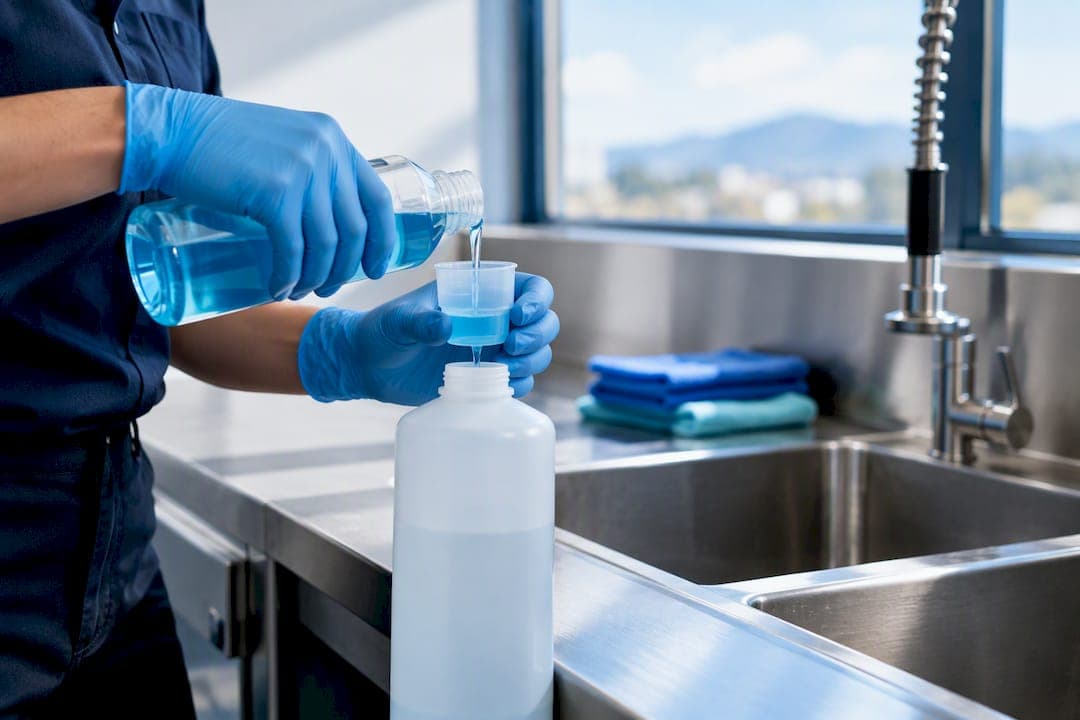
Microfibre cloths with plain water, steam cleaning, baking soda, white vinegar and concentrated refillable cleaners handle most household jobs without harsh chemicals. Some "natural" sprays still release volatile compounds that irritate the lungs, so application method matters as much as ingredients. For deep carpet work, post-construction grime or allergy-sensitive households, a professional eco cleaning service is often the safer, more effective choice.
TL;DR:
- Using microfibre cloths, steam cleaning, baking soda, and vinegar can handle most household cleaning tasks effectively without harsh chemicals.
- Refillable concentrates and durable tools like washable cloths reduce packaging waste and long-term costs.
- Application methods matter, with damp cloths and proper ventilation minimizing chemical exposure and indoor air pollution.
- Deep cleaning and post-construction jobs are better suited for professional eco-friendly services with verified product certifications.
- Beware of vague eco claims; choose products with recognized third-party labels and transparent ingredient disclosures for genuine safety.
Table of Contents
- 1. Top eco-friendly cleaning methods that actually work
- 2. Applying eco methods room by room
- 3. Safe DIY recipes and mixing rules
- 4. How to spot genuinely eco products among the marketing claims
- 5. Cutting waste with refills, concentrates and durable tools
- 6. Health risks from sprays, wipes and indoor air quality
- 7. When a professional eco-friendly clean makes more sense
- 8. A realistic eco cleaning kit worth keeping
- 9. A convenient eco-friendly option when you would rather not DIY
- Sources
- FAQ
1. Top eco-friendly cleaning methods that actually work
Not every green claim holds up under testing, but a handful of methods consistently perform well across kitchens, bathrooms and floors. The list below covers what each one does best and where it falls short.
- Microfibre and mechanical cleaning: the fine fibres create friction that lifts dirt and bacteria using mostly water, cutting the need for chemical cleaners on everyday dusting and wiping.
- Steam cleaning: heat and moisture loosen grime and kill many surface germs without chemical residue, though it is not suited to unsealed timber or some delicate fabrics.
- Baking soda: a mild abrasive that scrubs grease and burnt-on food from cookware and also absorbs odours in fridges, bins and carpets.
- White vinegar and citric acid: effective at dissolving limescale and mineral build-up on taps, kettles and showerheads, but they can etch natural stone and dull some metal finishes.
- Washing soda: a stronger alkaline cousin of baking soda, useful for grease-heavy jobs like oven trays and stovetops where a gentler scrub will not cut it.
- Concentrated, refillable cleaners: diluted at home, these cut packaging waste and often match or beat off-the-shelf sprays on grease and grime, according to independent testing of eco cleaning products.
- Plain water: for floors and many glass surfaces, water alone often performs as well as a specialised spray, per the same independent testing.
- Targeted disinfecting: reserved for high-risk situations such as illness in the household, raw meat contamination or shared bathroom fittings, where a registered disinfectant does a job that vinegar and soda cannot.
Pro Tip: Buy one good multipurpose cleaner and one bathroom cleaner rather than a cupboard full of niche "eco" sprays: fewer, tested products beat a shelf of unproven ones.
2. Applying eco methods room by room
The right method changes depending on the surface and the risk involved, particularly around food contact and mould.
- Kitchen: wipe benchtops with diluted vinegar or a concentrated eco cleaner, then rinse food-contact surfaces with water; save baking soda paste for burnt pots and washing soda for greasy stovetops.
- Bathroom: vinegar and citric acid handle limescale and soap scum well, but persistent black mould in grout usually needs a proper disinfectant rather than a natural substitute.
- Laundry: concentrated or eco-labelled detergents perform comparably to conventional ones when loads are full and water temperature matches the fabric; pre-treat stains with a paste of washing soda and water before washing.
- Floors: hot water with a microfibre mop suits tiles and sealed timber; steam cleaning works well on grout but should be avoided on unsealed wood and some vinyl.
- Upholstery and carpet: vacuum thoroughly before any wet treatment, spot-test any solution on a hidden patch first, and lean on steam or a dedicated non-toxic carpet clean for deep-set stains and odours.
3. Safe DIY recipes and mixing rules
Homemade cleaners are cheap and effective when the proportions and pairings are right, and dangerous when they are not.
- All-purpose spray: mix one part white vinegar with one part water in a spray bottle for benchtops, glass and tiles; avoid it on marble, granite and other natural stone, which the acid can etch.
- Glass cleaner: combine two tablespoons of white vinegar with two cups of water and a few drops of dish soap, then wipe with a lint-free cloth for a streak-free finish.
- Oven paste: blend baking soda with a small amount of water into a spreadable paste, apply to cooled oven surfaces, leave overnight and scrub off with a damp cloth.
- Carpet deodoriser: sprinkle plain baking soda over dry carpet, leave for at least 30 minutes, then vacuum thoroughly.
- Stain pre-treatment: dissolve one tablespoon of washing soda in a cup of warm water and dab onto fresh stains before laundering.
Pro Tip: Never mix vinegar with bleach: the combination releases chlorine gas, which is dangerous even in small amounts. Keep homemade mixes in labelled, child-proof containers and store them away from pets and food.
4. How to spot genuinely eco products among the marketing claims
Ecolabels vary widely in what they actually verify, so it pays to know which ones carry weight and which are mostly branding.
- Look for recognised third-party certifications rather than vague terms like "natural" or "eco" printed with no supporting seal.
- Check that disinfectant labels disclose the active ingredient by its approved name, the concentration and clear dilution instructions, as required under Australian labelling standards for these products.
- Favour concentrated or refillable formats over single-use bottles, since they cut packaging waste per clean.
- Treat "chemical-free" claims with scepticism: every cleaning product, including vinegar and baking soda, is a chemical, and the phrase usually signals marketing rather than a genuine safety distinction.
- Where possible, check independent test results rather than relying on the label alone, since consumer testing has found some eco-labelled cleaners perform no better than water.
Readers wanting a deeper walkthrough of ecolabels and greenwashing red flags can see how to book a genuinely eco-friendly cleaner for a fuller checklist.
5. Cutting waste with refills, concentrates and durable tools
The biggest waste reduction often comes from the system you choose, not the ingredient.
- Refill stations and concentrate tablets dilute at home, cutting the plastic and transport footprint of buying pre-mixed sprays repeatedly.
- Durable tools such as washable microfibre cloths, natural-bristle brushes and refillable spray bottles replace disposable wipes and single-use packaging over time.
- For everyday dusting and light grime, plain hot water with a microfibre cloth or a steam mop often does the job without any product at all.
- Sourcing ingredients like vinegar, citric acid and washing soda in bulk from ethical suppliers reduces both packaging and cost per clean.
A practical spring cleaning checklist can help turn these choices into a repeatable seasonal routine.
6. Health risks from sprays, wipes and indoor air quality
Application method affects exposure as much as the ingredient list does. A large cross-sectional study of French adults found that weekly use of disinfecting wipes and sprays was linked to higher rates of current asthma, while associations for green and homemade products were smaller once spray and irritant use was excluded.

Statistic Callout: Weekly use of disinfecting wipes was associated with higher odds of current asthma in a large cohort study of adults. This points to application mode, not just ingredient choice, as a meaningful factor in respiratory risk.
Separately, chemical testing found some green cleaners emit more monoterpenes than regular cleaners, which can react indoors to form secondary pollutants such as formaldehyde.
- Ventilate the room by opening windows or running an extractor fan while cleaning, especially with any spray product.
- Prefer damp cloths and pastes over aerosol or trigger sprays wherever the task allows it.
- Limit disinfectant use to situations that genuinely call for it, rather than as a daily habit.
7. When a professional eco-friendly clean makes more sense
Deep carpet cleaning, post-construction dust and grime, and homes with allergy-sensitive occupants often need more than a weekend of DIY effort. A professional service should be able to name the products it uses, point to an ecolabel or certification, and explain what makes those products safer around children and pets. Ask about dilution practices, drying times and whether non-toxic carpet options are available, since these details separate a genuine eco service from one using the label loosely. For readers weighing the DIY versus professional decision on carpets specifically, this non-toxic carpet cleaning guide sets out what safe options look like, and this piece on why professional cleaners use chemicals explains how efficacy and safety get balanced at scale.

8. A realistic eco cleaning kit worth keeping
A workable kit is smaller than most people expect: microfibre cloths, a spray bottle for diluted vinegar, baking soda, washing soda and a steam mop cover almost every weekly task. Skip anything sold on vague claims rather than results, keep sprays to a minimum, and open a window while you work.
— Deng
9. A convenient eco-friendly option when you would rather not DIY
Some jobs are worth handing over, particularly end-of-lease cleans where a bond depends on the result, or carpets and offices that need consistent, repeatable care. ACT Cleaning by Demand builds customised cleaning packages around eco-friendly products and non-toxic carpet options, with police-checked, insured cleaners and no lock-in contracts.
-
Customised packages for homes, offices and presale properties, built around the specific job rather than a fixed template.
-
A guarantee aimed at meeting end-of-lease cleaning standards, supported by the use of eco-friendly products.
-
Flexible scheduling with no lock-in contracts, so you book only what you need.
Readers wanting a fuller sense of the environmental case can see the claimed lower emissions and hygiene outcomes behind this approach. To book a clean, visit the full range of services and choose the package that fits your property.
Sources
This article draws on peer-reviewed emissions and toxicity research, Australian disinfectant labelling requirements and independent consumer testing from CHOICE, alongside room-specific technique guidance from Livingdeco and tool recommendations from Adclic Services.
- Does green mean clean? Volatile organic emissions from regular versus green cleaning products - Environmental Science: Processes & Impacts
- Household use of green and homemade cleaning products, wipe application mode, and asthma among French adults from the CONSTANCES cohort - PMC
- Compilations—Agency prepared template (Australian disinfectant standards / labelling requirements)
- The eco-friendly household products that actually work – and the ones that don't | CHOICE
FAQ
What are some effective eco-friendly cleaning solutions?
Diluted white vinegar, baking soda paste and washing soda handle most household jobs, from limescale to burnt cookware, without harsh chemicals. Microfibre cloths and steam cleaning add mechanical cleaning power using mostly water, which reduces the need for any product at all on many surfaces.
What are simple ways to help keep your home and environment cleaner?
Using refillable or concentrated cleaners, durable tools like microfibre cloths, and reserving disinfectants for genuine need all cut waste and chemical exposure. Ventilating while cleaning and choosing products with clear ecolabels rather than vague marketing terms also make a meaningful difference over time.
What is the 5:5:5 rule for cleaning?
Definitions of this rule vary online and it is not tied to a recognised standards body or peer-reviewed source, so treat any specific version with caution. In general use it refers to spending five minutes each on five tasks in five different areas, but no authoritative definition confirms this.
Are natural cleaning products always safer than regular ones?
Not necessarily: peer-reviewed testing has found that green household products are not universally less toxic or more biodegradable than conventional ones, and results depend heavily on formulation and certification. Separate chemical analysis also found some green cleaners release more monoterpenes than regular cleaners, so "natural" fragrance is not a guarantee of cleaner indoor air.