This checklist gives you a room-by-room, top-to-bottom spring clean you can finish without burning out, built around real Australian conditions like pollen, humidity, and mould. Print it, pick one room, and set a 20-minute timer before you touch anything else.
Working top-to-bottom in each room stops dust and debris landing on surfaces you have already cleaned. Pair that with the 20/10 rule (20 minutes cleaning, 10 minutes resting) and even a full house feels manageable in a weekend.
- Print the checklist and tick off rooms as you finish them.
- Start with the room that bothers you most, not the easiest one.
- Set a phone timer for 20 minutes per task block.
- Keep three boxes nearby: keep, donate, bin.
Key Takeaways
A room-by-room, top-to-bottom spring clean with timed 20-minute blocks gets an Australian home properly reset without a single overwhelming weekend.
| Point | Details |
|---|---|
| Follow top-to-bottom order | Clean ceilings and high surfaces before floors to avoid redoing finished work. |
| Use the 20/10 rule | Work in 20-minute blocks with 10-minute breaks to avoid burnout on large jobs. |
| Watch mould and pollen | Prioritise bathroom vents, grout, and curtains early, since spring humidity and pollen peak together. |
| Declutter with a timebox | Sort into keep, donate, and recycle piles, giving each item seconds, not minutes, of deliberation. |
| Outsource the hardest jobs | ACT Cleaning by Demand handles ovens, carpets, and bond cleans with police-checked staff and eco-friendly products. |
Table of Contents
- How to prepare your spring cleaning checklist for Australian homes
- What supplies do you need before you start?
- Room-by-room spring cleaning checklist
- What outdoor spring cleaning tasks should you tackle?
- How do you declutter and dispose of items during a spring clean?
- How does the 20/10 rule fit into your cleaning schedule?
- Pro tips and mistakes to avoid
- Why does Australia's spring weather complicate cleaning?
- How do you handle spiders and ants during a spring clean?
- When should you call in a professional cleaner?
- Sources
- FAQ
How to prepare your spring cleaning checklist for Australian homes
Decide upfront whether you're doing a full deep clean or tackling two or three problem rooms. A full house realistically needs a weekend; targeted rooms can be knocked over in an afternoon.
- Walk through the house and list rooms by urgency, not size.
- Test any new cleaning product on a hidden patch first, especially on stone benchtops or timber floors.
- Open windows for ventilation and glove up before using bleach or oven cleaners.
- Block out realistic time per room and rope in family members for the big jobs.
Pro Tip: Book the oven, carpet steam clean, or gutter job for a separate day if you're short on hands. Trying to squeeze everything into one Saturday is how spring cleans get abandoned by lunchtime.
What supplies do you need before you start?
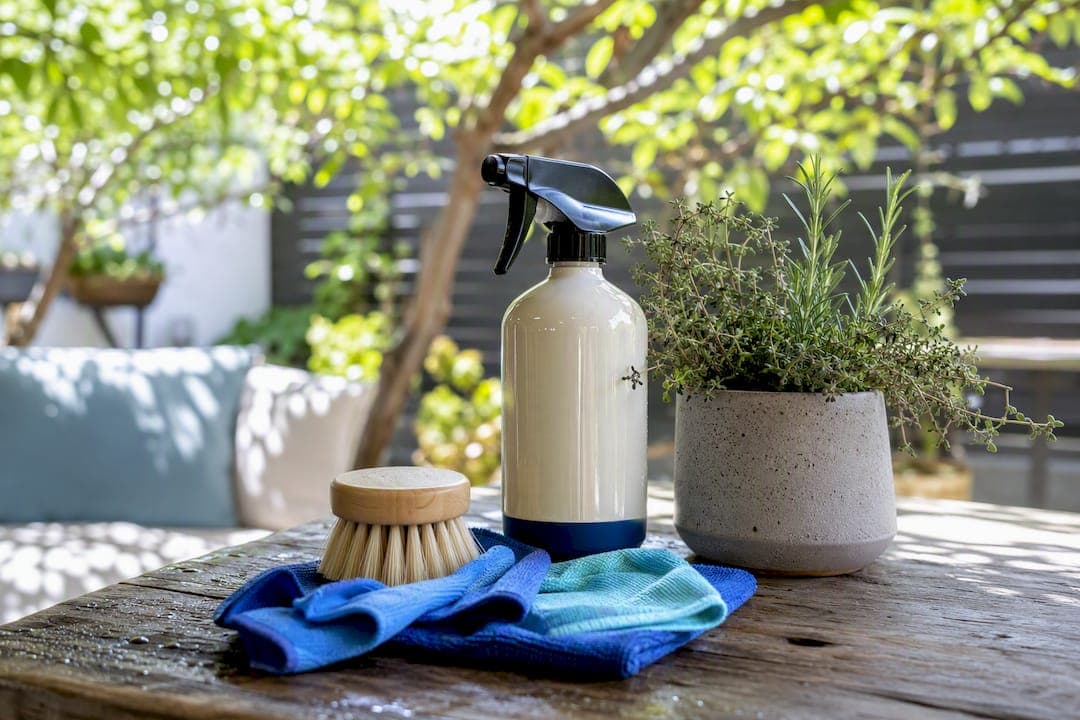
Good Housekeeping's guide to seasonal cleaning points to a short list of tools that cover almost every job: microfibre cloths, a decent vacuum with attachments, and a mop and bucket handle most surfaces without streaking or scratching.
- Microfibre cloths, scrub brushes, rubber gloves.
- A vacuum with crevice and upholstery attachments.
- White vinegar and bicarb soda for DIY eco cleaning, but skip vinegar on stone benchtops and never mix bicarb with bleach.
- Hire a carpet steam cleaner or extension pole for gutters from a local hardware store if you don't own one.
Room-by-room spring cleaning checklist
Work through each room from ceiling to floor. Cobwebs and dust fall; if you vacuum first and dust second, you're doing the job twice.
Kitchen (allow a few hours)
- Empty the fridge, wipe shelves with warm soapy water, and check use-by dates in the pantry.
- Degrease the rangehood filter and wipe down the exhaust fan.
- Run the oven's self-clean cycle or scrub with a paste of bicarb and water, then wipe the racks separately.
- Wipe cabinet fronts and handles, where grease and fingerprints build up fastest.
- Clean benchtops, then mop floors last.
For grout, stone, and splashback specifics, our kitchen deep-clean guide covers the trickier stains most checklists skip.
Bathrooms (allow about an hour each)
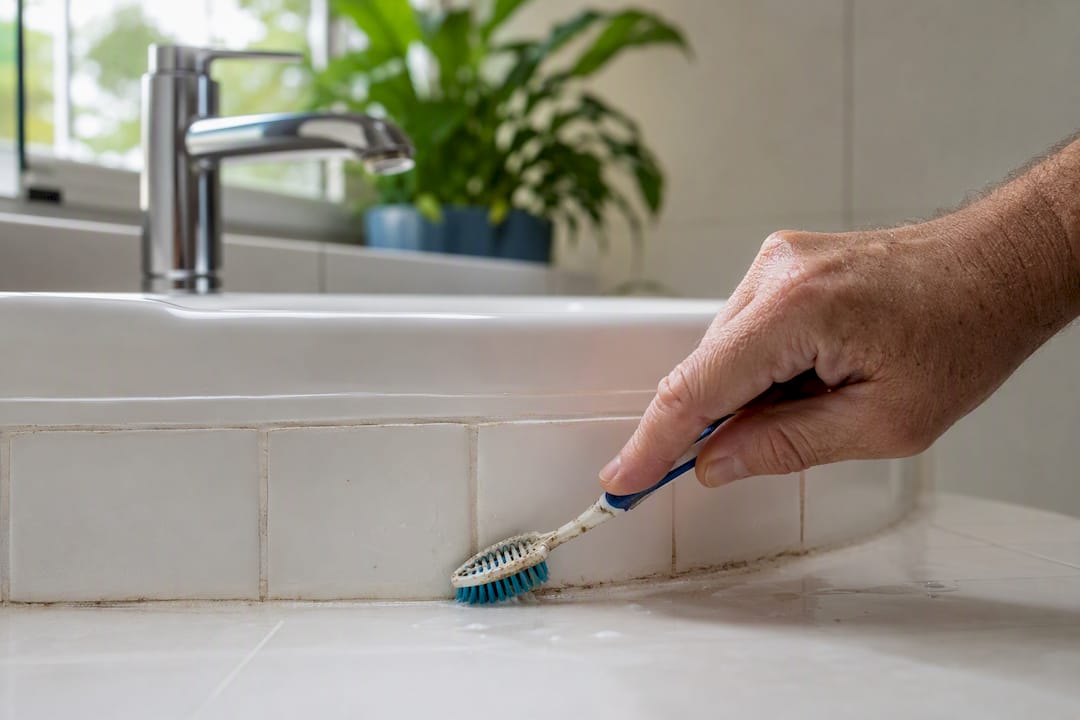
Descale the showerhead by soaking it in a vinegar and water solution, then scrub grout lines with an old toothbrush. Wipe exhaust vents (a common mould trap in Australian bathrooms), clean mirrors with a lint-free cloth, and wash bath mats and hand towels on a hot cycle.
Living and dining areas (allow a couple of hours)
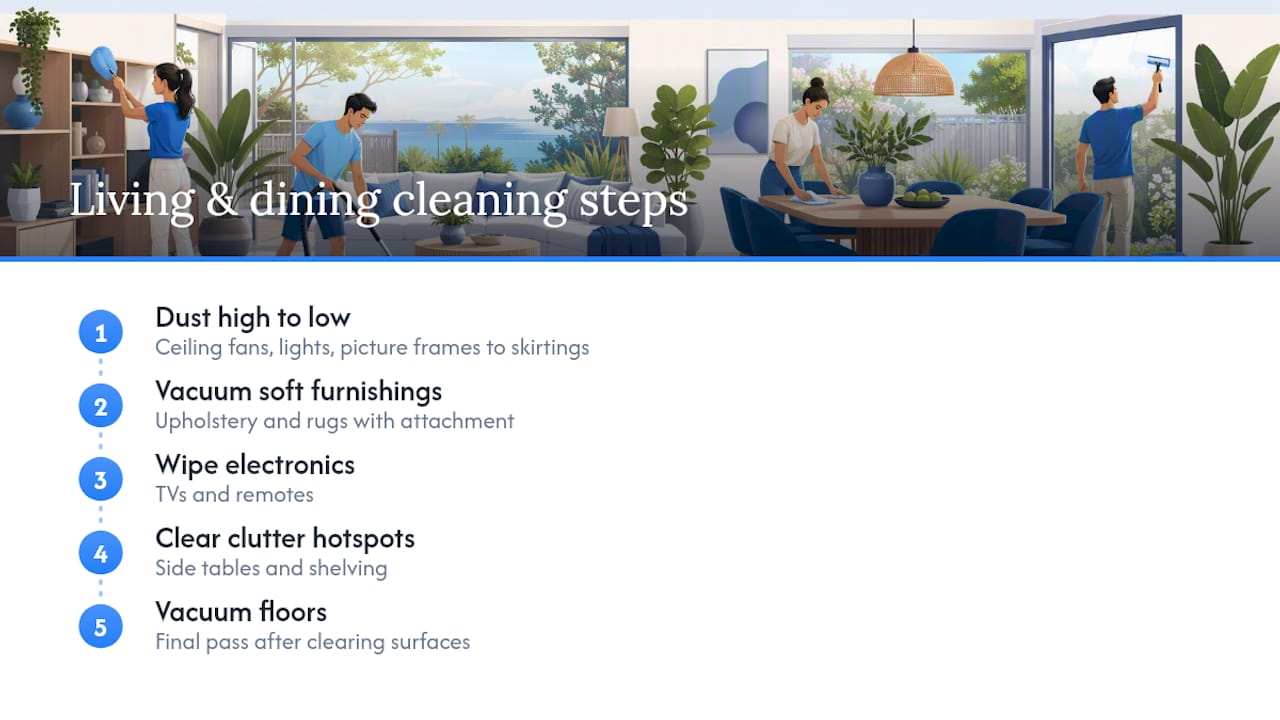
Dust ceiling fans, light fittings, and picture frames first, working down to skirting boards. Vacuum upholstery and rugs with an attachment, wipe down TVs and remotes, and clear the clutter hotspots on side tables and shelving before you vacuum floors.
Bedrooms (allow about an hour each)
Wash all bedding on a hot wash, vacuum the mattress (both sides if it's turnable), and sort wardrobes as you go. Wipe down blinds or take curtains down for a wash. This is also the easiest room to combine cleaning with decluttering, since wardrobes tend to hide the most forgotten items.
Laundry and utility areas (allow less than an hour)
Clear the dryer's lint trap completely, then run an empty hot wash with half a cup of white vinegar through the washing machine to clear odours and residue from the drum. Wipe down door seals, where mould loves to hide, and check shelving for expired detergents.
A full house across these five zones typically takes a solo cleaner one long weekend. Splitting tasks between two or three people cuts that closer to a single day, which is roughly what most Australian households report when they compare notes on a full spring clean.
What outdoor spring cleaning tasks should you tackle?
- Clear gutters of leaves and debris, and use a stable ladder with a spotter, or hire a gutter service if your roof is steep.
- Scrub decking and patios for mildew, and check for loose or splitting timber before summer traffic starts.
- Wipe down and air outdoor furniture, and store cushions somewhere dry.
- Weed garden beds, coil hoses properly, and wipe down tools before they go back in the shed.
How do you declutter and dispose of items during a spring clean?
Spring cleaning works better as a psychological reset when it's paired with a genuine declutter, not just a dust-and-polish exercise.
- Sort into three piles: keep, donate, recycle, and give yourself two minutes per item, not twenty seconds.
- Donate clean, wearable clothing and working homewares to local charities and op shops; skip stained textiles and broken electricals.
- Check your local council's website for hazardous waste drop-off points for paint, batteries, and chemicals.
How does the 20/10 rule fit into your cleaning schedule?
Breaking cleaning into short, timed blocks rather than open-ended sessions is what stops most people abandoning a spring clean halfway through.
- One-day blitz: four 20/10 blocks in the morning covering kitchen and bathrooms, four more after lunch for bedrooms and living areas.
- One-week plan: one room or zone per evening, with the weekend kept free for outdoor tasks and the laundry deep clean.
- Assign each family member a room and tick off a shared checklist on the fridge so nobody's guessing what's left.
For anyone unsure how often to repeat this, our guide on deep cleaning frequency breaks down realistic schedules by household size.
Pro tips and mistakes to avoid
Cleaning from ceiling to floor isn't a fussy rule, it's the difference between vacuuming once and vacuuming three times. Dust and cobwebs always fall, so tackle fans and shelves before floors.
Roll winter linens instead of folding them for storage, and make sure everything is completely dry first. Folded fabric creases permanently over months in a cupboard, and any lingering dampness invites moths and mildew.
Pro Tip: Store pantry staples like flour and rice in sealed glass or hard plastic containers, not their original packaging. It's one of the simplest ways to stop pantry moths taking hold over spring.
ACT Cleaning by Demand deals with exactly these jobs daily across Canberra and the ACT, from oven degreasing to full bond-back deep cleans, using eco-friendly products and police-checked staff.
Why does Australia's spring weather complicate cleaning?
Spring in Australia isn't a gentle transition. It's the season where three separate problems collide: rising humidity, pollen counts climbing, and the first real heat pushing dust and allergens through the house via open windows and air conditioning vents.
Mould and pollen-related cleaning become genuine priorities this time of year, not optional extras. Bathrooms and laundries with poor ventilation are the first places mould reappears after a damp winter, particularly around exhaust fans, window seals, and shower grout. If you've noticed a musty smell returning each spring, that's usually moisture trapped behind tiles or in unsealed grout lines, not a one-off cleaning miss.
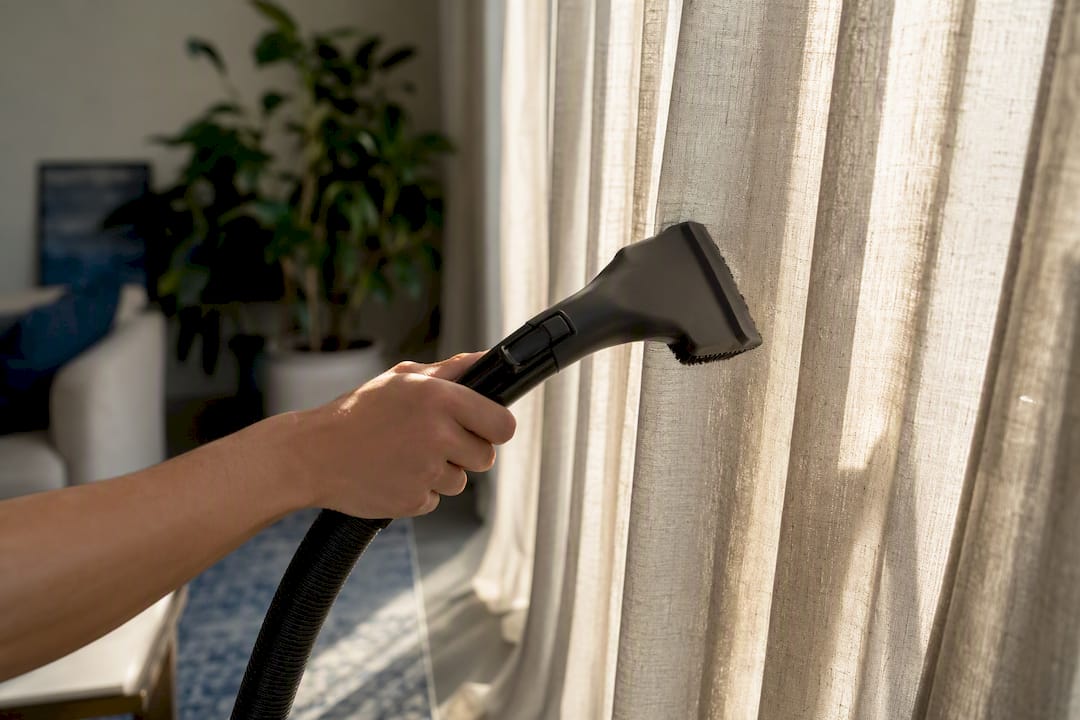
Pollen is the other seasonal culprit. Wattle, grasses, and privet all peak through September and October in most of southern and eastern Australia, and pollen settles on curtains, blinds, and soft furnishings just as easily as on outdoor surfaces. Vacuuming blinds and washing curtains earlier in your spring clean, rather than leaving them for last, reduces how much pollen circulates through the house while you're still working through the rest of the checklist.
Air conditioning and ceiling fan filters deserve a specific mention here too. They pull double duty in spring, clearing humidity and pollen from the air, and a dirty filter just redistributes both. Wipe or replace filters before the weather really warms up, not after you've noticed the air feels thick.
How do you handle spiders and ants during a spring clean?
Spring is peak activity season for spiders and ants across most of Australia, and a thorough clean often disturbs both without meaning to.
Check under eaves, in garden sheds, and behind outdoor furniture before you start moving things, since huntsman and other spiders commonly shelter in these spots over winter. Wear gloves when clearing gutters and garden debris, and use a torch to check dark corners before reaching in.
For ants, the usual trigger is food residue left in pantry corners or under appliances during the kitchen clean. Wipe crumbs and spills immediately rather than leaving them until the end of the session, and check under the fridge and stove, two spots ant trails commonly follow. Sealing gaps around skirting boards and window frames as part of your outdoor tidy-up also helps keep both spiders and ants from re-entering once you've finished.
If an infestation is already established rather than just seasonal wandering, that's a pest control job, not a cleaning one. A spring clean is a good moment to spot the problem early, but treating it properly usually needs a professional.
A quick word on why this matters every year
Skipping a proper spring clean doesn't just mean a dustier house. Mould left unchecked over a Canberra winter gets worse before it gets better, and pollen-laden soft furnishings make allergy season rougher than it needs to be. My advice: block out the time now rather than waiting for a smell or a sneeze to force the issue. If gutters, ovens, or carpets are the sticking point, that's exactly when it's worth calling in help rather than letting the whole job stall.
— Deng
When should you call in a professional cleaner?
Some jobs on this checklist are the ones people put off every single year, oven interiors, gutters, carpet steam cleaning, and end-of-lease bond cleans, because they need equipment or time most households don't have spare. Many Australians outsource exactly these tasks rather than lose a whole weekend to them.

ACT Cleaning by Demand is a direct, local alternative to figuring it out yourself, servicing Canberra and the ACT with eco-friendly products, police-checked staff, and no lock-in contracts. Before booking anyone, check three things: are staff police-checked, are products eco-friendly if that matters to your household, and is the quote clear upfront with no surprise add-ons. If you're moving out and need the place bond-ready, our end of lease cleaning service is built around real estate standards. For a regular seasonal reset, browse house cleaning and get a quote based on your home's size and condition.
Sources
- Spring Cleaning Checklist: Room-by-Room Guide | Homes To Love
- The Spring Cleaning Checklists Experts Follow | Good Housekeeping
- Architectural Digest spring-cleaning checklist
- Choice: Spring cleaning tips
FAQ
What should you include on a spring cleaning checklist?
Cover every room from ceiling to floor: fridge, oven, and rangehood in the kitchen; grout and vents in bathrooms; bedding, mattresses, and wardrobes in bedrooms; plus gutters, decking, and outdoor furniture.
What is the 20/10 rule for cleaning?
It means cleaning in focused 20-minute bursts followed by a 10-minute break, which keeps quality high across long sessions and prevents the burnout that stalls most spring cleans.
What does a proper spring clean include?
It includes deep-cleaning tasks skipped in a weekly routine, oven interiors, window tracks, gutters, mattress vacuuming, and washing curtains, alongside a genuine declutter of each room.
What items should you get rid of during a spring clean?
Remove expired pantry items, stained or unwearable clothing, broken homewares, and anything you haven't used in over a year; donate what's still in good condition and recycle the rest.
How often should you deep clean your house in Australia?
Most Australian households manage well with one full deep clean each spring and a lighter refresh before summer, though homes in humid or high-pollen areas may need bathroom and vent checks more often.