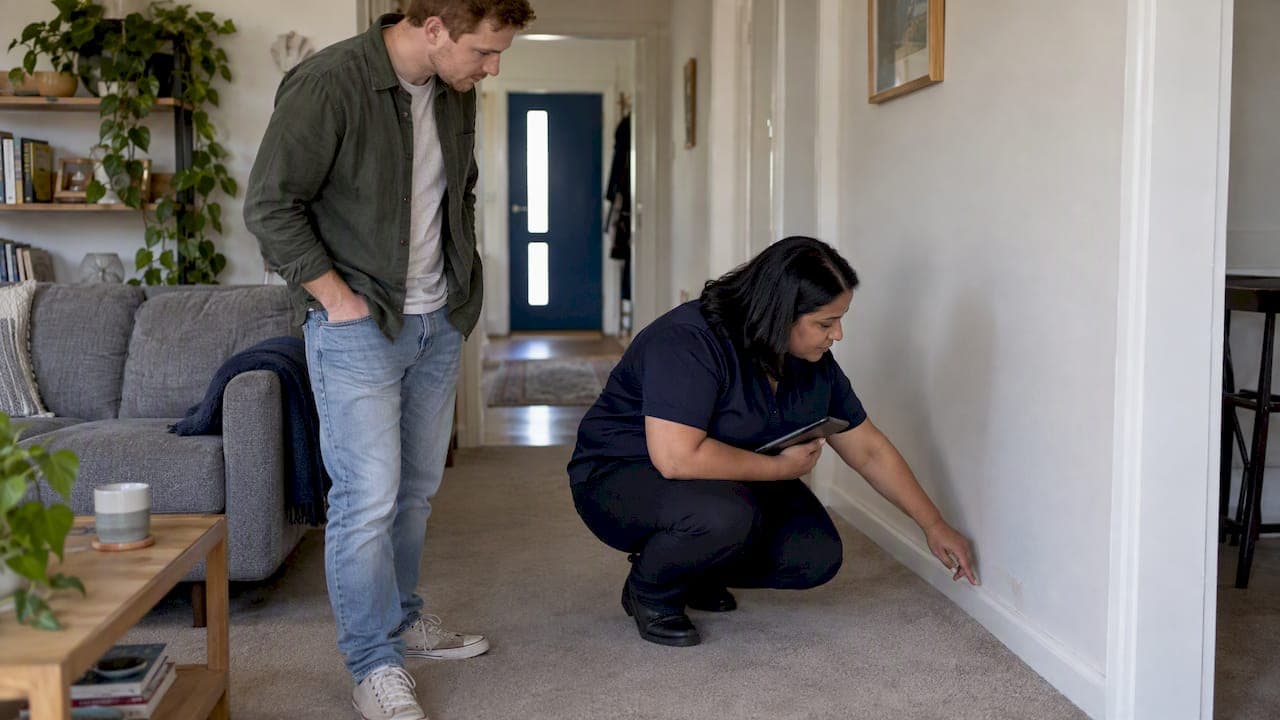
You pass an ACT bond inspection by handing the property back in about the same condition as your entry condition report records, allowing for fair wear and tear, then attending the inspection, noting any disagreement on the final report and returning every key. The standard is not "spotless". It is "as you found it", and your paperwork is what proves it.
This guide walks through what the inspector looks at, how to prepare in the last two weeks, what to do if your landlord claims part of the bond, and the deadlines that follow.
TL;DR
- The final inspection compares the home with your signed entry condition report, room by room. Cleanliness, damage, repairs, included goods and keys are all checked, with allowance for fair wear and tear.
- ACT law asks for "reasonably clean", not professionally cleaned. What that means depends on the age and type of the property and what you received at move-in.
- Your best evidence is the entry report plus dated photos or video from move-in and move-out.
- After the inspection the landlord should confirm a full refund within three days or send an itemised claim within ten. If you disagree, respond quickly and the matter can go to ACAT.
- If time is short, a bond clean can take the cleaning risk off your plate, but only if it targets what your entry report says.
Table of Contents
- What the final inspection actually checks
- "Reasonably clean" is the standard, not spotless
- Your entry condition report is your strongest asset
- Fair wear and tear: what a landlord can and cannot claim
- Your two-week checklist before the final inspection
- The cleaning checklist that matters most
- Should you use a professional bond cleaner?
- Promo: bond cleaning from ACT Cleaning by Demand
- Our perspective: clean to the report, not to a showroom
- After the inspection: timelines and what to do if there is a claim
- Common reasons tenants lose bond money
- FAQ
- Sources
What the final inspection actually checks
The ACT Residential Tenancies Act 1997 sets up the process. At the end of the tenancy the property is assessed against its starting condition: cleanliness, repair, damage, included goods and returned access devices, allowing for fair wear and tear. The lessor and tenant then complete and sign an end-of-tenancy condition report after the inspection.
In practice, expect the property manager or landlord to walk through with your entry report in hand and go room by room:
- Kitchen: oven, rangehood filter, cooktop, inside the fridge if supplied, cupboards, sink and splashbacks.
- Bathrooms and laundry: tiles and grout, shower screen, toilet, vanity, exhaust fan, tub.
- Floors: carpet stains, vacuum lines, hard floors free of marks and residue.
- Walls and ceilings: marks, blu-tack residue, holes from hooks or shelves, mould.
- Windows, tracks and blinds: dust, insect debris, cobwebs, glass marks.
- Outside: lawns, garden beds, driveways, bins, balconies and any storage areas.
- Keys and devices: every key, remote, fob and security item you were given.
The comparison is the whole point. A landlord who notes a mark on a wall has to be able to say it was not there at the start. That is why your entry report matters more than the clean itself.
"Reasonably clean" is the standard, not spotless
The ACT Government says tenants must take care of the property and keep it reasonably clean, report damage and required repairs, and get consent before making changes. Nothing in that wording demands a professional clean at the end.
The tribunal has said the same in plain terms. In Faulder v Tran, ACAT explained that what is reasonably clean varies with the premises' nature, age, proposed rent and circumstances, so a universal professional-clean standard cannot automatically be imposed. The same decision held that a tenant who accepts premises without asking the lessor to fix alleged initial uncleanliness generally cannot later claim compensation just for cleaning to a higher personal standard.
Two practical lessons follow:
- Flag problems at the start. If the place was grubby when you moved in, say so on your entry report. Silence is read as acceptance.
- Aim to match, not to impress. An older rental with worn carpets will not be held to the standard of a new build. Your target is the condition on the entry report.
We go deeper on this in our piece on ACT tenant cleaning obligations and why spotless is the wrong standard.
Your entry condition report is your strongest asset
Most failed inspections are really paperwork failures. Under the ACT's renting rules, the initial condition report must be supplied by the day after move-in, and the tenant has two weeks to return it with comments. Photos can be attached. If you do not return it, you are taken to accept it as written.
If you are still inside your tenancy, check these now:
- Do you hold a signed copy of the original report?
- Did you add comments where you disagreed, and did you return it on time?
- Do you have dated photos or video from move-in?
The Renting Book advises keeping the signed report, writing detailed comments on anything you disagree with, and using the final report to compare the two conditions. Legal Aid ACT calls photographs and video taken at move-in and move-out, including close-ups of disputed areas, the best evidence of the premises' condition.
If you never took move-in photos, you can still protect yourself at the other end. Photograph every room, cupboard, appliance interior and outdoor area on the day you finish cleaning, with the date visible on the file. Our guide on matching your entry report at inspection explains how to work through it room by room.

Fair wear and tear: what a landlord can and cannot claim
The bond is there to cover unpaid rent and damage, not the ordinary ageing of a home. Claims can concern reasonable repair costs, unpaid rent, missing keys or security costs, replacement fuel and other properly authorised deductions, and they need evidence behind them.
Legal Aid ACT draws the line by cause and severity. Examples likely to count as fair wear and tear include high-traffic carpet wear, minor wall scuffs, sun-faded curtains and minor driveway oil marks. A large carpet hole, large oil stains or a large red-wine carpet stain likely do not qualify. The outcome still depends on the facts, the age and the condition of the property.
| Issue | Usually fair wear and tear? | What to do |
|---|---|---|
| Flattened carpet along hallways | Yes, if ordinary use | Vacuum; no need to replace |
| Light scuffs on walls | Yes | Spot clean if it lifts without damage |
| Sun-faded curtains | Yes | Leave as is |
| Large red-wine stain on carpet | Probably not | Treat early; consider steam cleaning |
| Substantial holes in plasterboard | Probably not | Agree repair in writing |
| Greasy oven and rangehood filter | Cleanliness issue, not wear | Clean properly |
| Missing keys or remotes | Not wear | Return every item |
Where it is borderline, photos taken early and a written note from the landlord beat any argument afterwards.
Your two-week checklist before the final inspection
The Renting Book's guidance on leaving is simple: remove your belongings, return the property to substantially the same cleanliness and repair as at move-in, agree with the landlord whether any modifications should be undone or may stay, attend the final inspection, note disagreements on the final report and return keys and security devices. Legal Aid ACT adds that you should return keys at the inspection and get a receipt, and record any agreement about cleaning or repairs in writing.

Here is how that turns into a schedule.
Two weeks out
- Dig out the entry report and photos. Mark every pre-existing issue.
- Ask in writing whether any modifications (picture hooks, shelves, a painted wall you had consent for) should be reversed or may remain.
- Book any tradie, carpet cleaner or bond cleaner now. Good slots near month end go first.
- Report any damage you have not yet reported. If you track requests, a simple maintenance request by text record shows the issue was raised and when.
The week of moving out
- Remove everything, including items in the shed, balcony and under the house.
- Patch small nail holes only if the landlord has agreed, and in a matching paint if you do.
- Replace blown globes and smoke alarm batteries if that was the condition at entry.
- Wash walls where marks lift easily, and check skirting boards and light switches.
The day of the inspection
- Do a final walk-through with the entry report, not from memory.
- Attend in person. Your comments on the final report carry weight only if you are there to make them.
- If you disagree with a note, write your reasons on the report before you sign.
- Hand over all keys and devices and get a receipt.
- Take your own photos of each room immediately after.
The cleaning checklist that matters most
The items most often marked down are the ones people forget because they are out of sight:
- Oven and cooktop: racks, glass door, burner trays and the grease trap area.
- Rangehood filter: soak and scrub; replace only if it was new at entry.
- Bathroom grout and shower screens: soap scum and mould build up fast.
- Window tracks and sills: dead insects and dirt in the runners.
- Carpets: vacuum thoroughly and treat stains. If the entry report notes carpets as clean, steam cleaning is often the safest move.
- Skirting boards, vents and fan covers: dust shows up under inspection lighting.
- Garage and outdoor areas: oil spots, cobwebs, weeds and pet waste.
For what a professional clean typically covers in Canberra, see our breakdown of bond cleaning inclusions.
Should you use a professional bond cleaner?
You are not legally required to hire one. If you have time, a few free weekends and a clear entry report, doing it yourself is entirely valid. A professional makes sense when:
- you are moving across town, interstate or starting a new job in the same week;
- the entry report describes the home as clean throughout and the property is large;
- carpets need steam cleaning to match the entry condition;
- you want a clean you can show was done, with an invoice, and some recourse if something is missed.
The key is briefing the cleaner against your report, not a generic list. Tell them what the report says about the oven, carpets and windows, and show them any pre-existing marks you do not want blamed on you.
Promo: bond cleaning from ACT Cleaning by Demand
We offer end of lease and bond cleaning across Canberra and the ACT, with carpet cleaning available alongside it on our services page. Our cleaners are police-checked and insured, we use eco-friendly products, there are no lock-in contracts, and end-of-lease cleans come with a bond-back guarantee. Here is what the bond-back guarantee means in practice, including how quickly to report an issue. We do not publish prices, so request a quote for your property.
Our perspective: clean to the report, not to a showroom
We clean a lot of Canberra rentals, and the pattern is consistent. Tenants who lose part of their bond are rarely the ones who left a messy home. They are the ones with no record of how it started, no written comments, no photos and no receipt for the keys.
That is why we tell customers to start with the entry report. A clean that ignores it either does too little (a missed oven, dirty tracks) or fixes things you were never responsible for. Our custom-tailored cleaning plans exist for exactly this reason: a one-bedroom unit with new carpet is not a four-bedroom house in a family suburb with worn floors, and the inspection will not treat them the same.
We also think the bond should be settled in the open. Walk through with your property manager, ask for anything they flag to be written down, and fix small items on the spot where you can. If something does come up afterwards, you want a clear paper trail and a cleaner who will come back. We back our end-of-lease work with a 100% satisfaction guarantee for that reason. Pairing a pre-tenancy record with a vacate clean is the strongest position, which is why we wrote about bond claims starting at entry.
— Deng
After the inspection: timelines and what to do if there is a claim
The Renting Book sets out the sequence. The landlord should confirm a full refund within three days of the final inspection or provide an itemised partial claim within ten days.
| Step | Timeframe | What you do |
|---|---|---|
| Final inspection | Day of handover | Attend, note disagreements, return keys |
| Full refund confirmed | Within 3 days of inspection | Check that the bond release is lodged |
| Itemised claim from landlord | Within 10 days of inspection | Read each item against your evidence |
| Response to Revenue Office request | 14 days | Reply with agreement or dispute |
| Unsigned release application | 10 working days to dispute | Dispute if you disagree |
If the landlord claims part of the bond, send a bond-refund form to rb@act.gov.au as soon as possible. If you do not respond when the ACT Revenue Office asks, payment can be made as requested. If you dispute the claim and it is not resolved through the bond process, it is referred to ACAT.
Building your response
- Put the claim next to the entry report and photos, and answer item by item.
- Point to fair wear and tear for ageing, fading and light marks.
- Ask for quotes or receipts for any repair the landlord wants paid, and check the property's age against the item.
- Quote any written agreement made at the inspection.
Check the official pages for forms and current processes before you lodge anything. Complex disputes, or large claims, are worth raising with Legal Aid ACT or a tenancy advice service before you sign away any part of the bond.
Common reasons tenants lose bond money
- No entry report comments. Issues that existed at the start are then treated as yours.
- Skipping the inspection. Without you there, the landlord's account stands alone.
- Unapproved changes. Painting, new fixtures or a removed item without consent.
- Missing keys or devices. Replacement or security costs are a standard claim.
- Garden neglect. Overgrown lawns and weeds, particularly where the lease puts the garden on you.
- Leaving rubbish or items behind. Removal is a straightforward deduction.
- Unreported damage. Small problems reported late look like neglect.
FAQ
Do I have to hire a professional cleaner to pass a bond inspection in the ACT?
No. The standard is that the property is reasonably clean and comparable to the entry condition, allowing for fair wear and tear. A professional clean is one way to reach it, not a legal requirement. Many renters do it themselves and succeed.
What if I never returned my entry condition report?
If you did not return it within the two-week window, you are taken to accept it as written. You can still use photos, messages, the final report and any written agreements to show the condition, but your position is weaker. Starting now with dated photos of the current state is the best repair.
How long does the landlord have to claim my bond?
The landlord should confirm a full refund within three days of the final inspection or provide an itemised partial claim within ten days. If the Revenue Office asks you to respond, you have 14 days. Check the Renting Book for the current process before you act.
Can the landlord charge me for carpet wear?
Not for ordinary wear. Legal Aid ACT lists high-traffic carpet wear as an example likely to be fair wear and tear. A large hole or major stain is different and may be claimed, depending on the carpet's age and condition.
Where does a dispute go if I can't agree with my landlord?
If your dispute is not resolved through the bond process, it is referred to ACAT. Bring your entry report, photos, final report, receipts and any written agreements.
Sources
- Residential Tenancies Act 1997 (ACT)
- Faulder v Tran, ACAT 2018
- During a tenancy, ACT Government
- The Renting Book, January 2026
- Legal Aid ACT, bond guide
- Tenant maintenance requests by text