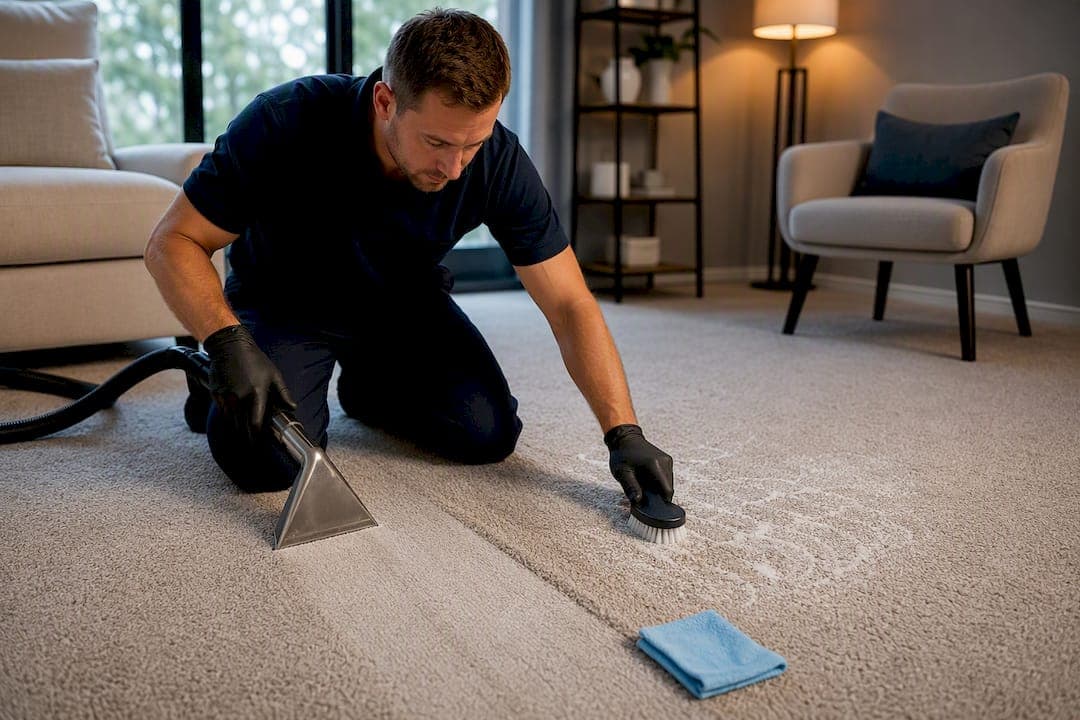
Steam cleaning, properly called hot water extraction, wins for deep sanitisation and stubborn stains, but it can leave carpet damp for most of a day. Dry or low-moisture cleaning trades some of that depth for speed, often drying within a couple of hours. Most households end up needing both at different times, and the right call usually comes down to how dirty the carpet is and how soon you need to walk on it again.
TL;DR:
- Deep cleaning with steam is best for heavily soiled carpets, pet odours, and allergy relief, but it requires 6 to 24 hours to dry thoroughly.
- Low-moisture cleaning methods dry within 1 to 3 hours, making them ideal for quick refreshes and delicate fibers like wool.
- Households with pets or allergy sensitivities should prioritize steam cleaning annually, while dry cleaning serves as a regular maintenance option every few months.
- Proper extraction technique and pre-vacuuming are critical for effective steam cleaning, especially with truck-mounted equipment, to prevent lingering dampness.
- Cost varies based on stain severity and furniture, with steam generally more expensive per job, but both methods often billed by room or hour.
Table of Contents
- Steam vs dry carpet cleaning at a glance
- How hot water extraction actually cleans your carpet
- What dry and low-moisture cleaning involves
- Pros and cons: steam and dry cleaning side by side
- Matching the method to your carpet and household
- What steam and dry carpet cleaning actually cost
- How to choose: a five-point checklist before you book
- Why trust this guide
- Our honest recommendation on carpet cleaning jobs
- How ACT Cleaning by Demand handles carpet cleaning in Canberra
- Sources
- FAQ
Steam vs dry carpet cleaning at a glance
The core trade-off is depth versus drying time. Hot water extraction pushes hot water and cleaning solution deep into carpet pile, then pulls almost all of it back out with strong suction, reaching soil and allergens sitting near the backing. Low-moisture methods work mostly on the surface and upper fibres, using far less liquid, which is exactly why they dry faster.
- Cleaning depth: Steam reaches deep into pile and near the backing; dry methods mainly lift surface and near-surface soil.
- Drying time: Steam typically takes 6 to 24 hours with good airflow; low-moisture systems are often walk-on ready in 1 to 3 hours.
- Best for: Steam suits pet accidents, allergy management, and end-of-tenancy resets; dry cleaning suits rental inspections, offices, and delicate wool rugs.
- Fibre and residue risk: Steam carries a small overwetting risk on thick underlay; some dry compounds can leave powder residue if not fully vacuumed out.
- Cost shape: Steam jobs tend to price by room or by hour, rising with heavy staining or awkward furniture access; dry cleaning often prices similarly but usually skips any padding-drying surcharge.
A few quick scenarios show how this plays out. A family with a dog that occasionally has accidents on the lounge room carpet needs the deeper extraction steam offers, because odour-causing bacteria sit below the surface. Someone hosting a dinner party in three hours needs the low-moisture option, full stop. An allergy sufferer wants steam's heat-driven allergen reduction. A hallway runner in delicate wool is safer with a gentle dry method than with heavy water and agitation.
How hot water extraction actually cleans your carpet
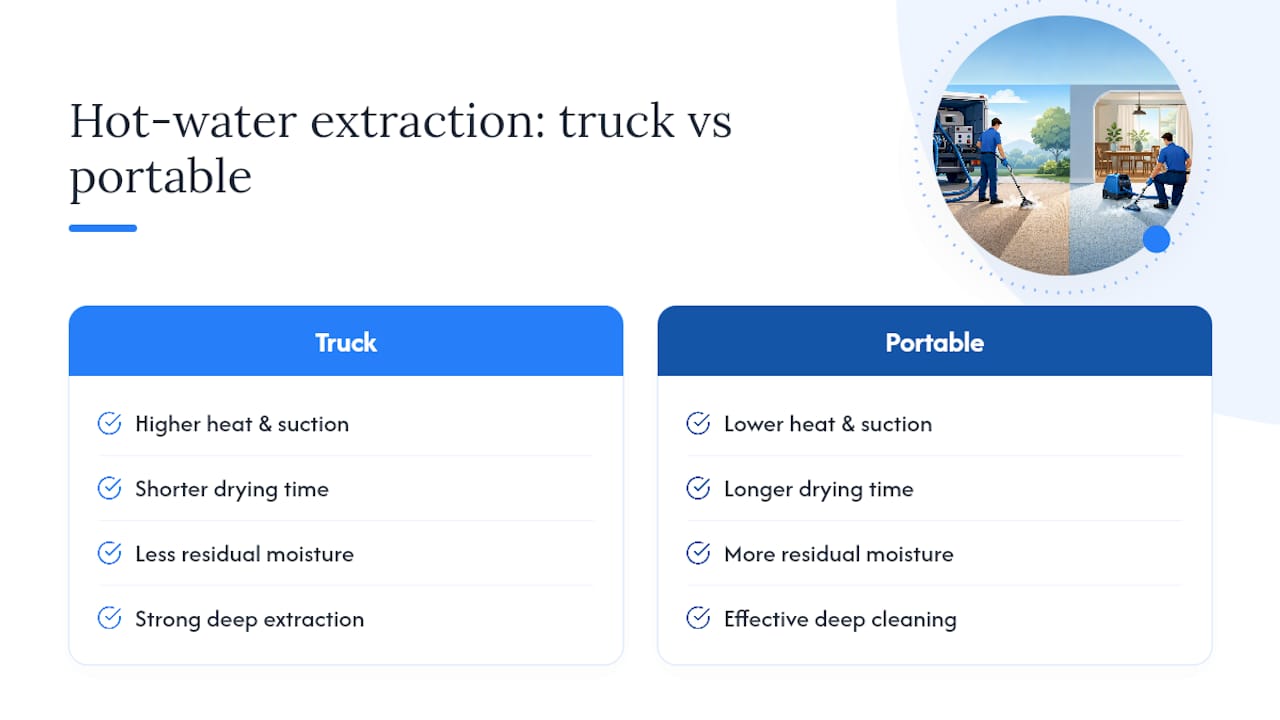
"Steam cleaning" is a bit of a misnomer. There's no actual steam involved. Hot water extraction injects heated water and detergent into the pile under pressure, agitates it to break up embedded dirt, then extracts nearly all of that moisture with a powerful vacuum pass.
Truck-mounted units generate more heat and suction than portable machines, which shortens drying time when the job is done properly. Portable rigs are still effective but leave slightly more residual moisture behind.
The upside is real depth: embedded soil, dust mites, and bacteria get physically flushed out rather than just loosened. The Carpet Institute of Australia lists hot water extraction among the standards professionals rely on for genuine deep cleaning. The downside is time and risk. Poor extraction technique or high humidity can push drying past 24 hours, raising the chance of dampness lingering in thick pile or underlay.
What dry and low-moisture cleaning involves
Dry cleaning is a loose umbrella term for several low-moisture techniques: absorbent compound cleaning, encapsulation, bonnet cleaning, and carbonated cleaning. Each applies a small amount of moisture, either as a dry powder, a foaming polymer, or a carbonated solution, then works it through the fibres before vacuuming or buffing it away.
Because so little liquid goes in, there's very little to dry out. Encapsulation crystallises soil into a residue that vacuums up clean; absorbent compounds physically soak up grime and get extracted with a machine pass. The trade-off is reach. These methods clean the visible pile well but don't penetrate to the backing the way hot water extraction does, and sloppy application can leave a faint powdery residue behind if the carpet isn't vacuumed thoroughly afterwards.
Pros and cons: steam and dry cleaning side by side
Steam cleaning (hot water extraction) pros:
- Deepest available clean, reaching soil near the backing
- Strong allergen and dust mite reduction from combined heat and extraction
- Best option for ground-in stains and pet odour
- Often preserves carpet warranty terms set by manufacturers
Steam cleaning cons:
- Long drying window, sometimes a full day
- Overwetting risk if extraction technique is poor
- Not ideal for moisture-sensitive wool or antique rugs
- Requires furniture to stay off carpet for hours
Dry/low-moisture cleaning pros:
- Fast turnaround, often walk-on ready within a couple of hours
- Gentler on delicate natural fibres
- Good for maintenance cleans between deep resets
- Minimal disruption for offices or occupied rental properties
Dry cleaning cons:
- Shallower clean that misses deep soil and backing residue
- Can leave compound residue if vacuuming afterwards is rushed
- Less effective against heavy pet staining or odour
- Not a substitute for a full deep clean once or twice a year
Pro Tip: After a dry clean, run the vacuum over the carpet at least twice in different directions to lift every trace of compound. After a steam clean, open windows and run a fan for several hours, since ventilation cuts drying time more than almost anything else you can do.
Matching the method to your carpet and household
Synthetic carpets (nylon, polyester, polypropylene) handle either method well, since they tolerate moisture and heat without much risk. Wool and other natural fibres are more sensitive to heat and over-wetting, so a low-moisture approach is often the safer default unless a professional confirms the wool can handle extraction.
Households with pets usually need steam for the deep sanitisation urine and dander require, particularly for dust mite and odour control. Allergy sufferers benefit the same way. Busy households facing a same-day inspection or event should default to dry cleaning. The smartest long-term approach for most homes is a hybrid rhythm: dry cleaning for regular upkeep between a proper steam clean once or twice a year.
What steam and dry carpet cleaning actually cost
Pricing for both methods is usually set per room or per hour, and the number moves based on how bad the staining is, how much furniture needs shifting, and whether padding underneath needs extra drying time. Heavy pet staining or a full furniture removal job will push either quote higher.
Drying times and how to speed them up: Steam cleaning typically needs 6 to 24 hours to fully dry, while low-moisture methods are usually ready to walk on within an hour or two. Open windows, run ceiling fans, or bring in a dehumidifier to cut steam drying time noticeably, especially in Canberra's cooler, drier months when airflow helps more than heating does.
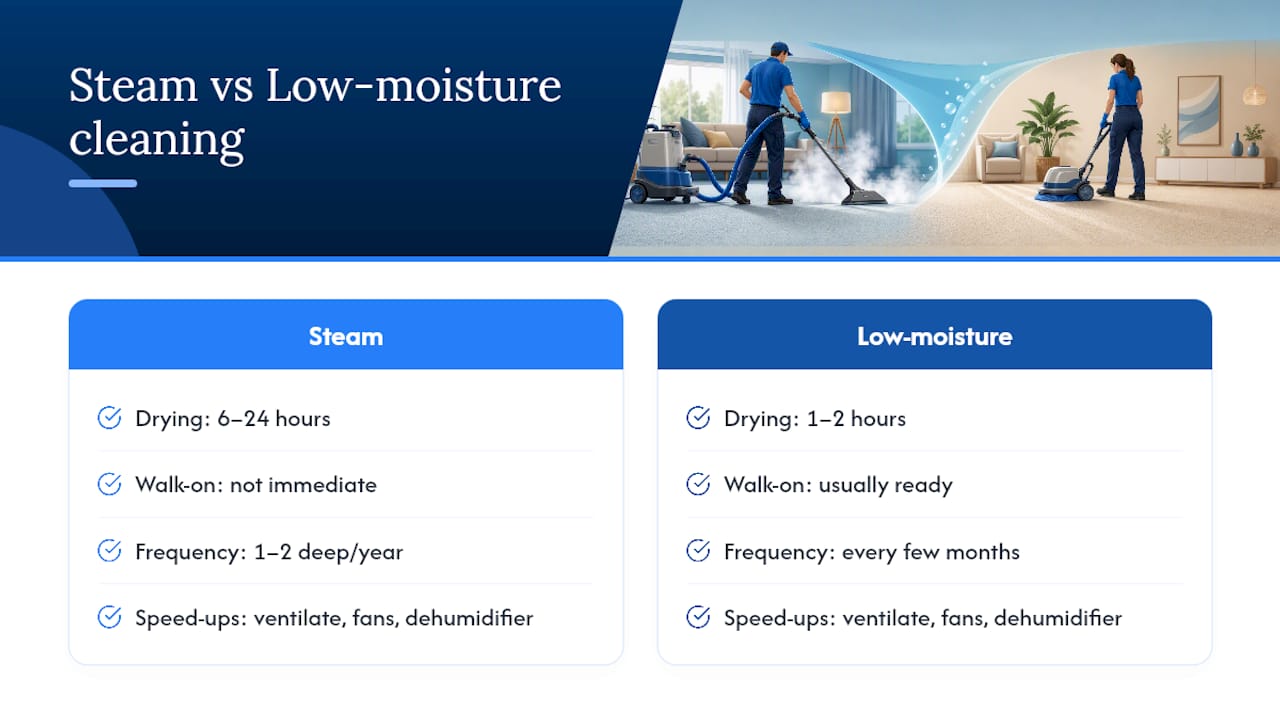
How often to book each: A practical rhythm many professionals recommend is one to two hot water extractions a year for a deep reset, with dry cleaning filling the gaps every few months. Households with pets or allergy concerns often push the deep clean to twice yearly rather than once.
How to choose: a five-point checklist before you book
- Assess the soil level. Visible ground-in dirt, pet accidents, or old stains point to steam; light surface dust points to dry cleaning.
- Check the fibre type. Confirm whether your carpet is synthetic or a natural fibre like wool before agreeing to a method.
- Set your drying tolerance. If you need the room usable same-day, say so upfront and let that drive the choice.
- Flag pets or allergies. Mention both, since they usually tip the decision toward steam regardless of drying inconvenience.
- Ask direct questions. Confirm the machine type (truck-mounted or portable), an honest drying-time estimate, the cleaning agents used, and whether pre-vacuuming is included.
Watch for red flags: a cleaner who won't give you a straight drying-time estimate, skips pre-vacuuming entirely, or pushes an expensive add-on treatment you didn't ask about. Straight answers on all of the above are a decent proxy for a professional who knows the job.
Why trust this guide
This guide draws on established industry standards from the Carpet Institute of Australia alongside practical field knowledge from cleaning professionals who work across Canberra homes and offices every week. ACT Cleaning by Demand builds custom cleaning packages rather than one-size-fits-all jobs, which means matching method to carpet type is part of the standard process rather than an afterthought.
For carpets with unclear fibre content, heavy staining, or suspected underlay damage, a short professional inspection before booking saves money and avoids picking the wrong method. Read more on dust mite reduction through steam cleaning or carpet drying times for deeper detail on either approach.
Our honest recommendation on carpet cleaning jobs
Our working rule is simple: steam for a deep reset, pets, or allergy concerns, and dry cleaning for a quick refresh or delicate fibres that can't handle heavy moisture. Most homes genuinely benefit from both across a year. If your situation doesn't fit neatly into either box, run through the checklist above or ask for a quick inspection rather than guessing.
— Deng
How ACT Cleaning by Demand handles carpet cleaning in Canberra
Choosing between hot water extraction and a low-moisture clean is easier when the same team offers both and tells you honestly which one your carpet needs. ACT Cleaning by Demand runs carpet and upholstery steam cleaning using eco-friendly products, with police-checked staff and no lock-in contracts tying you to ongoing visits.

Whether you're refreshing a rental before inspection or resetting a pet-heavy lounge room properly, the booking process is straightforward through the online scheduling system, with flexible timing built around your household rather than a fixed roster. If you're also preparing a property for sale or lease, the same end of lease cleaning service can bundle carpets into a full bond-ready clean. Have a look at the full service list and get a plan matched to your carpet, your timeline, and your budget.
Sources
This guide draws on standards from the Carpet Institute of Australia, drying-time data from Polivac and Steamaster, and combined-method guidance from Carpet Advisors. For related reading, see our guide on non-toxic carpet cleaning and, for outdoor areas around the home, Pave N Turf's guide to cleaning artificial turf.
- Carpet Institute of Australia
- Polivac: Carpet steam cleaning vs dry cleaning
- Steamaster: Steam vs Dry Carpet Cleaning
- Carpet Advisors: Steam vs Dry Carpet Cleaning
FAQ
Is steam cleaning as effective as it's made out to be?
Yes, when done correctly with proper extraction. Hot water extraction is recognised by the Carpet Institute of Australia as the professional standard for deep cleaning because heat and suction physically remove embedded soil and allergens rather than just masking them.
What are the disadvantages of steam cleaning carpets?
The main drawback is drying time, typically 6 to 24 hours depending on ventilation and carpet thickness. Poor extraction technique can also lead to overwetting, which raises the risk of lingering dampness in underlay.
Why is my carpet still dirty after steam cleaning?
This usually points to weak extraction, insufficient pre-vacuuming, or deeply set stains that need a second pass. Truck-mounted machines generally extract more thoroughly than portable units, which affects both cleanliness and drying speed.
What is the most effective carpet cleaning method?
For deep sanitisation and heavy soil, hot water extraction is the more effective option. For speed and fibre safety on delicate carpets, low-moisture dry cleaning wins, which is why many households use both across the year rather than picking one permanently.