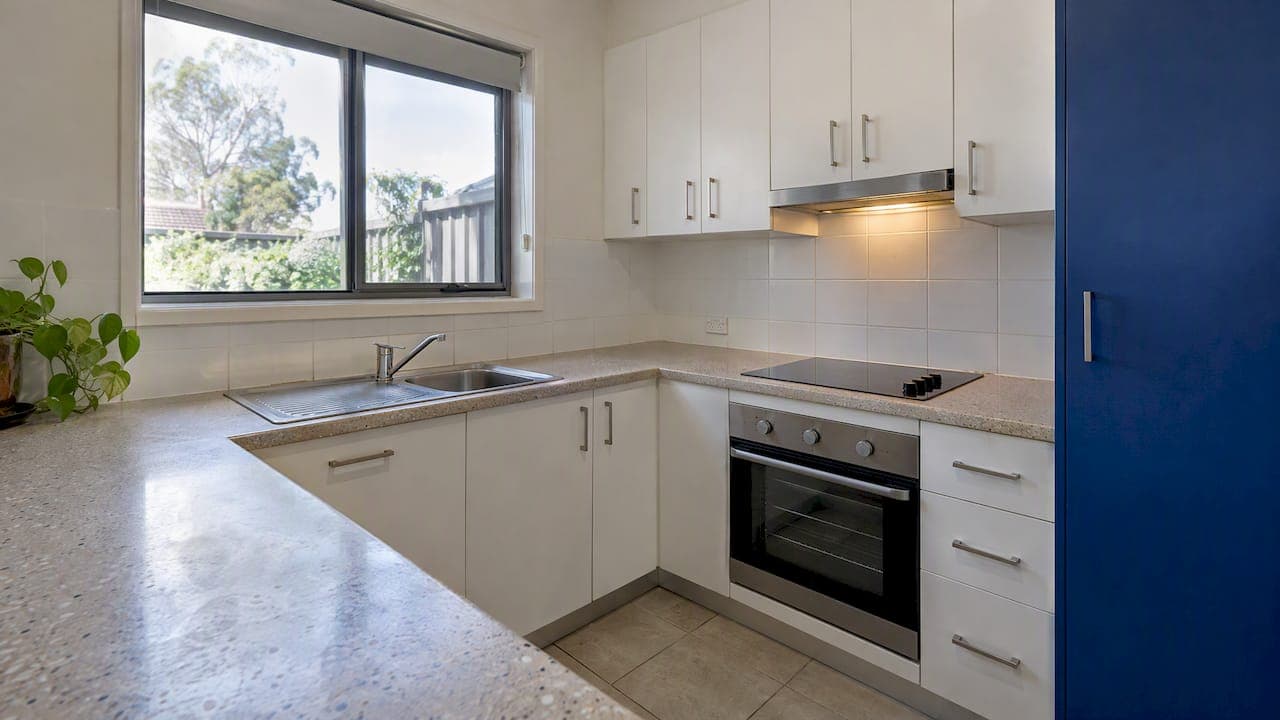
In the ACT, you must leave the kitchen in substantially the same state of cleanliness and condition as it was at the start of your tenancy, allowing for fair wear and tear. That is a term of every ACT tenancy agreement under the Residential Tenancies Act 1997, as set out in The Renting Book. In practice, that means a clean oven, cooktop, rangehood filters, cupboards, sink and benchtops, measured against your entry condition report. This guide covers the kitchen checklist, how the law frames "clean", and how to protect your bond.
TL;DR
- The ACT standard is the kitchen's condition at move-in, not a showroom finish. Your entry condition report is the benchmark.
- There is no automatic legal requirement to hire professional cleaners when you vacate in the ACT.
- The oven, cooktop, rangehood filters, cupboards (inside and out) and appliances are where most kitchen disputes start.
- Take dated photos or video after cleaning, and put any final-inspection agreement in writing.
- If you would rather hand the kitchen to someone else, we offer end of lease and bond cleaning in Canberra with a bond-back guarantee.
Table of Contents
- What the ACT actually requires of your kitchen
- Do you need a professional clean in the ACT?
- The vacate kitchen checklist, item by item
- Quick reference table
- How the entry condition report decides "reasonably clean"
- Document your clean and protect your bond
- Common kitchen mistakes at vacate
- Our view: what we see in Canberra kitchens
- Let us handle the kitchen
- Timing your kitchen clean
- What if the landlord is unreasonable?
- FAQ
- Sources
What the ACT actually requires of your kitchen
The rule is shorter than most tenants expect. The Renting Book says every ACT tenancy agreement requires you to return the property in substantially the same state of cleanliness and condition as at the start, accounting for fair wear and tear. During the tenancy you also have a general duty to keep the property reasonably clean, having regard to its initial condition.
Notice what is missing. There is no list of tasks in the Act, no rule that the oven must be spotless, and no requirement for a receipt from a cleaning company. The kitchen is judged against how it was when you moved in.
That has two practical consequences:
- A kitchen that was grubby at move-in is not yours to perfect. According to Legal Aid ACT's bond guide, if something was not clean at the start, you only need to return it to that state, not improve it.
- A kitchen that was spotless at move-in has to go back spotless. If your entry report records a clean oven and clear rangehood filters, that is what the property manager will compare against.
Do you need a professional clean in the ACT?
No. According to Legal Aid ACT, there is no automatic legal requirement for a property to be professionally cleaned when a tenant leaves. The one notable exception concerns carpets: a landlord can require professional carpet cleaning only if the tenancy agreement explicitly says so and the landlord can show the carpets were professionally cleaned before you moved in.
So you can clean the kitchen yourself, and plenty of tenants do. The question is whether you can reach the standard in the time you have. Kitchens are the room where DIY attempts most often fall short, because grease in an oven and rangehood needs time, the right products and a lot of elbow work.
If your lease does contain a professional cleaning clause, read it against the Act before you pay for anything you are not obliged to. The free Tenancy Advice Service ACT can help with most tenant and landlord disputes, and it is confidential.
The vacate kitchen checklist, item by item
The research behind this checklist comes from the MCCG Tenant Handbook, which sets out what a vacate-clean kitchen should include. We have added the practical detail from what we see on Canberra jobs.
Oven
The oven is the biggest single item. The handbook lists the interior, racks and trays, and notes that the door glass, grill element and base often need attention to meet standard expectations.
- Remove racks and trays and soak them. Burnt-on residue lifts far more easily after a long soak than after scrubbing dry.
- Clean the door glass, including between the panes where the door allows access. Do not force the door apart if it does not come apart easily.
- Wipe the grill element and the oven base, where fallen food collects.
- Clean the seals and the outer edge of the door, which people routinely skip.
Oven cleaner is caustic. Follow the label, ventilate the room, wear gloves, and never use it on surfaces the manufacturer says to avoid.
Cooktop and stovetop
The cooktop and benchtops should be free of grease. Remove burnt-on food, lift off burners, trivets or knobs where they come off, and clean underneath. For ceramic or induction tops, use a product designed for glass-ceramic so you do not scratch a surface that may count as damage rather than wear.
Rangehood
The handbook is specific: rangehood filters themselves need cleaning, not just the exterior. Metal mesh filters usually soak in hot water and degreaser. Wipe the underside of the hood, the canopy and the surrounding wall. Grease on a rangehood filter is one of the easiest things for an inspector to spot with a torch.

Cupboards and drawers
Clean the inside and outside of all cupboards. Empty them, wipe shelves, clear crumbs from drawer runners and wipe handles. Check the cupboard under the sink for residue and any sign of leaks, and tell your property manager about leaks rather than hiding them.
Sink, benchtops and splashback
Scrub the sink and taps, clear the plughole, and remove limescale from around tap bases. Wipe benchtops and the splashback. Walls near the cooktop should be wiped clean of grease.
Dishwasher and fridge
If these come with the property, they are cleaned inside and out. For the dishwasher, clear the filter and wipe the seal and the door edge. For the fridge, empty it, wipe shelves and drawers, and clean door seals. Leave it switched on or off as your agreement and agent direct.
Floors, walls and bins
Sweep and mop the floor, including under any movable appliances you can safely shift. Wipe light switches, power points and door frames. Empty and wash any bins supplied with the property.
Quick reference table
| Kitchen item | What inspectors look for | Common miss |
|---|---|---|
| Oven | Clean interior, racks, trays, door glass, grill element, base | Oven base and grill element |
| Cooktop | No burnt-on food or grease | Under burners and trivets |
| Rangehood | Filters degreased, canopy wiped | The filters themselves |
| Cupboards | Clean inside and out | Drawer runners and top edges |
| Sink and taps | No limescale or residue | Tap bases and plughole |
| Walls | Free of splatter and grease | Wall behind the cooktop |
| Dishwasher and fridge | Clean inside and out, if supplied | Filter and door seals |
How the entry condition report decides "reasonably clean"
The entry condition report is the document that settles most arguments. As Legal Aid ACT explains, the kitchen's recorded state at the start of the tenancy is the primary benchmark for what the end-of-tenancy clean should achieve.
Before you start cleaning, find your copy and read the kitchen section line by line. Look for notes such as existing stains on the benchtop, oven marks, a worn cupboard door or a cracked splashback tile. Anything noted there cannot fairly be charged to you.
Fair wear and tear is excluded from your obligation. Legal Aid ACT's guidance treats minor scuff marks on walls as often acceptable, while significant damage such as large stains or holes generally is not. A faded benchtop edge is wear. A burn mark from a hot pan left on a laminate bench is more likely damage.
If you never received a condition report, or you disagree with it, raise that early and in writing. A landlord's own records matter, so keep every email.

Document your clean and protect your bond
Photos and video are your best evidence. According to Legal Aid ACT, the condition report plus photos or videos taken at move-in and move-out can help document the property's condition if there is a bond dispute.
A simple routine works well:
- Photograph each kitchen item after cleaning: oven interior, racks, cooktop, rangehood filters, cupboards open and closed, sink, floor.
- Take a short walk-through video with the date visible on your phone.
- Store the files somewhere that is not the old property's shared drive or a phone you are about to replace.
- Attend the final inspection if you can, and ask for any concerns to be listed on the spot.
If you and the landlord cannot agree on cleaning or repairs at the final inspection, The Renting Book says the agreement should be recorded in writing, and it may involve a partial bond release to cover further cleaning. Do not sign anything you do not understand.
If the dispute continues, bond disputes can go to the ACT Civil and Administrative Tribunal (ACAT), which considers the property's condition at the start and end of the tenancy as recorded in condition reports. The Tenancy Advice Service ACT is the free place to start for advice before it gets that far.
Common kitchen mistakes at vacate
- Cleaning only what you can see. Rangehood filters, oven bases and cupboard tops are the places property managers check because tenants forget them.
- Starting too late. An oven needs product contact time. Begin with the oven and rangehood, then work down to benchtops and floors, so grease does not fall onto surfaces you have already finished.
- Using abrasives on glass or stainless steel. Scratches can count as damage. Choose products suited to the surface. If you want a refresher on routine technique, these kitchen cleaning tips cover everyday surfaces and appliances.
- Ignoring the entry report. You might clean for hours to a standard the report never required, or fall short of one it clearly did.
- Skipping photos. A beautifully cleaned kitchen with no evidence is hard to defend.
Our view: what we see in Canberra kitchens
We clean a lot of rental kitchens across the ACT, and the pattern is consistent. Tenants rarely lose bond money over a dirty benchtop. It is the oven, the rangehood filters and the insides of cupboards, the parts that take hours and are easy to put off until the last night.
Our approach is to treat your entry report as the brief. We match the clean to what was recorded at move-in, because that is the standard your agent is checking against. We use eco-friendly products, our staff are police-checked and insured, and there are no lock-in contracts. For end-of-lease cleans we stand behind the result with a bond-back guarantee and a 100% satisfaction guarantee.
Our honest advice: if you have time, the energy and a clear entry report, a DIY kitchen clean is entirely legal and often fine. If you are juggling a move, work and handover keys, the kitchen is the room most worth handing over. We also have a guide on end of lease inspection cleaning and matching the entry report if you want the whole-property view.
— Deng
Let us handle the kitchen
If you want the oven, rangehood and cupboards done properly without losing your last weekend, our end of lease cleaning in Canberra covers the whole property, kitchen included, with flexible scheduling and cleaners who are police-checked and insured. You can tell us about your entry condition report when you book, so the clean is matched to it.

We also do carpet steam cleaning, which matters if your agreement requires it. Browse everything on our services page or get in touch for a quote.
Timing your kitchen clean
A sensible order for the final week:
- Several days before: Find your entry condition report and tenancy agreement. Note anything on the kitchen list and any cleaning clauses.
- Two to three days before: Soak oven racks, trays and rangehood filters. Run the oven clean-up first, while it is still easy to access.
- Day before handover: Empty and wipe cupboards, drawers, fridge and freezer. Clean the dishwasher filter.
- Handover day: Wipe benchtops, sink, splashback and cooktop, then mop the floor last. Take your photos and video.
This order keeps you from re-cleaning. Kitchens are usually done from the top down: rangehood, cupboards, benchtops, appliances, then floors.
What if the landlord is unreasonable?
Property managers sometimes ask for more than the law requires. A request for a professional receipt where your agreement has no such clause, or a demand that a kitchen be left cleaner than your entry report records, is worth challenging politely and in writing. Point to the entry report and to the ACT standard in The Renting Book.
Keep the conversation factual: say what the report records, attach your photos, and offer to correct anything specific. If that does not settle it, ask the Tenancy Advice Service ACT before agreeing to a bond deduction.
Landlords have their own duties too. During a tenancy they must keep the property in a reasonable state of repair, including amenities supplied with it, according to Legal Aid ACT's maintenance guide. A worn-out oven element or a broken cupboard hinge reported during the tenancy is a repair issue, not a cleaning one.
FAQ
Do I have to clean the oven when I move out in the ACT?
Yes, if the oven was clean at the start of your tenancy, you need to return it in the same state, allowing for fair wear and tear. That generally means the interior, racks, trays, door glass and base. Check your entry condition report to see how the oven was recorded.
Is professional cleaning compulsory in the ACT?
No. There is no automatic legal requirement to hire professionals when you vacate. A landlord can require professional carpet cleaning only if the tenancy agreement says so and they can prove the carpets were professionally cleaned before you moved in.
What if the kitchen was dirty when I moved in?
You only need to return it to the condition it was in at the start, not improve it. Make sure the dirty areas are noted in your entry condition report, and keep any move-in photos to back that up.
Do I need to clean the rangehood filters?
Yes. The filters themselves should be degreased, not only the outside of the hood. Metal filters can usually be soaked in hot water and degreaser, then rinsed and dried before refitting.
What evidence helps if there is a bond dispute?
The entry and exit condition reports, plus dated photos or video from move-in and move-out. If you and the landlord reach an agreement at final inspection, get it in writing. Bond disputes can be taken to ACAT.
Sources
- The Renting Book, January 2026 (ACT Government)
- Bond guide (Legal Aid ACT)
- Tenant Handbook, May 2024 (MCCG)
- Tenancy Advice Service ACT (Legal Aid ACT)
- Tenancy: Maintenance and Repairs (Legal Aid ACT)