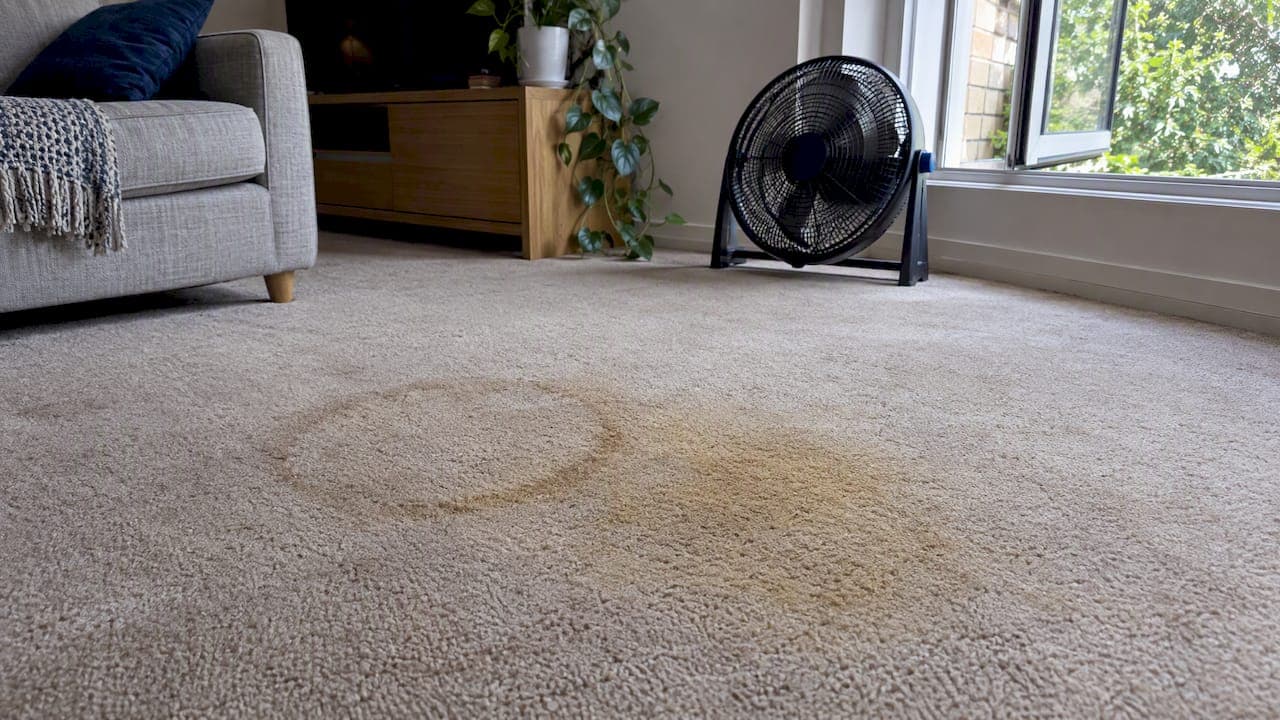
Carpet stains fall into six working groups: water-soluble, protein, oil and grease, tannin and dye, pet-related, and adhesive or wax. The moment a spill happens, blot it with a clean white cloth, avoid heat, and test any cleaner on a hidden patch before using it. Some marks lift completely with the right sequence; others, especially bleach damage or old browning, may need a professional to correct.
TL;DR:
- Water-soluble stains like coffee and juice should be blotted and treated with diluted detergent using cool water to prevent setting.
- Protein stains such as blood and milk require cool rinses and enzyme cleaners, avoiding heat to prevent permanent fiber damage.
- Oil and greasy marks benefit from powder absorption followed by solvent or degreaser application, with outdoor stains needing matching solvents based on severity.
- Tannin and dye stains, including wine and artificial colorings, are among the hardest to remove and often require acid-based spotters and thorough rinsing.
- Persistent stains, odours, or browning often need professional cleaning, especially when the stain reappears due to wicking or cellulosic browning.
Table of Contents
- Common stain types with step-by-step treatment advice
- Fibre considerations: wool, silk, cotton and synthetics
- Quick do's and don'ts for fresh spills
- Why stains return and what to do about wicking and browning
- Common mistakes homeowners make with carpet stains
- How professional carpet cleaning services help and how to book one
- Sources
- FAQ
Common stain types with step-by-step treatment advice
Knowing what you're dealing with changes everything about how you treat it. Coffee, tea, soft drink and juice are water-soluble stains: blot up the excess, work a few drops of diluted dishwashing detergent into the area with a white cloth, blot again, and repeat until the mark fades. Hot water sets some of these stains further into the pile, so always start cool.
Protein-based stains such as blood, milk and vomit respond badly to heat, which can permanently fix the proteins into the fibre. Rinse with cool water first, blot rather than rub, then apply an enzyme-based cleaner formulated for protein and biological soiling. Never reach for hot water or a steam iron on a fresh blood or milk spot.
Oil and grease, from cooking oil, butter or cosmetics, need a different approach entirely. Scrape or blot off any excess first, then smother the area in baking soda or cornstarch to draw out what's left. Once the powder has absorbed as much as it can, vacuum it up and follow with a solvent-based grease spotter or a proprietary degreaser, finishing with a mild detergent rinse. For stubborn grease on outdoor surfaces like pavers, age and severity change which solvent works best, and the same logic of matching absorbent to oil type carries over indoors.
Tannin and dye stains, including red wine, cordial and artificial food dye, are some of the trickiest because the colour itself is the problem, not just the residue. Blot immediately, then use an acid-based spotter or a small amount of oxidising cleaner, testing colourfastness on an inconspicuous patch first. Oxygen-based boosters can leave the carpet looking fine initially but need thorough rinsing and neutralising, or a pale ring can reappear later as the chemical residue reacts with remaining soil. A step-by-step method for treating red wine specifically walks through the timing that makes the biggest difference.
Pet accidents, urine, faeces and vomit, carry both a stain and an odour problem, and the two need separate treatment. Remove solid matter first, then apply an enzyme cleaner that breaks down the biological compounds rather than masking them, rinse, and extract as much moisture as possible. Avoid ammonia-based cleaners on urine stains: ammonia smells similar to a component of urine, and cleaning with it can actually encourage pets to remark the same spot. A detailed pet-stain and odour guide covers the extraction step in more depth, and the difference between enzyme cleaners and bleach is worth understanding before you reach for either.
Ink and marker need a careful hand. Test isopropyl alcohol on a hidden section of carpet first, then dab, never rub, at the ink with an alcohol-dampened cloth, working from the outside in. Finish with a mild detergent solution to clear any remaining residue.
Wax and chewing gum respond best to cold rather than chemicals. Hold an ice cube or ice pack against the wax or gum until it hardens, then gently chip it away before vacuuming the fragments. Any waxy film left behind usually lifts with a small amount of solvent cleaner.
Bleach and other harsh chemical damage sit in a different category altogether: once the dye in the carpet fibre is stripped, no cleaning product brings it back. At that point, dye correction or a professional patch is the only real fix, something worth knowing before experimenting with strong whiteners on a stain you can't identify.
- Water-soluble stains: blot, dilute detergent, repeat, keep water cool.
- Protein stains: cool rinse first, then an enzyme cleaner, never heat.
- Oil and grease: absorb with powder, then solvent or degreaser.
- Tannin and dye: acid-based spotter, test colourfastness, fully neutralise oxidisers.
- Pet stains: enzyme cleaner for both stain and odour, skip ammonia.
- Bleach damage: irreversible dye loss needs professional correction, not more cleaning.
Fibre considerations: wool, silk, cotton and synthetics
The fibre underneath the stain changes what's safe to use on it. Wool and other protein-based fibres need low-alkali, wool-safe products and minimal scrubbing, since harsh oxidisers and heavy agitation can damage the fibre structure itself. Woolsafe guidance sets out specific stepwise treatments for common stains on wool, including occasional use of solvents such as surgical spirit, always tested first. Woolmark's own care advice adds practical detail, like using diluted detergent on fruit stains and alcohol on ink, while stressing gentle handling throughout.

Silk and other delicate fibres need even more restraint: use the smallest amount of moisture possible, favour distilled water over tap water to avoid mineral spotting, and get professional advice before attempting anything beyond a light blot.
Synthetics such as nylon, polyester and olefin tolerate water and alkaline spotters better than natural fibres, though some synthetic dyes can migrate or bleed if a cleaner sits too long. Across every fibre type, heat is the common enemy: it can permanently set protein-based stains, so cool or tepid water is always the safer starting point, regardless of what the carpet is made from.
Quick do's and don'ts for fresh spills
A fast, correct first response decides whether a stain lifts cleanly or becomes a permanent feature.
- Blot immediately with a white cloth or paper towel, working from the edge of the spill toward the centre.
- Test any cleaner or spotter on a hidden patch of carpet before applying it to the stain.
- Use cool water if you're not sure what caused the mark.
- Apply your chosen cleaner in small amounts, blotting between applications rather than soaking the area.
- Stop and call a professional if the stain hasn't lifted after two or three attempts, or if it's spreading.
Don't scrub or rub at a stain, since that pushes it deeper into the pile and can fray the fibres. Don't use hot water on anything that might be protein-based, and never apply undiluted bleach or an untested oxidiser directly to carpet.
Why stains return and what to do about wicking and browning
A stain that keeps reappearing after you've cleaned it isn't necessarily dirt coming back. Two common culprits are wicking, where residual soil trapped in the carpet backing or underlay rises to the surface as the carpet dries, and cellulosic browning, a yellow or brown discolouration caused by sugars or lignin in plant-based fibres surfacing during slow drying, according to IICRC consumer guidance. Leftover spotter residue, trapped moisture and incomplete rinsing after using oxygen-based cleaners are frequent causes of pale rings reappearing days later.
Thorough rinsing after any treatment, faster drying with fans or open windows, and avoiding repeated heat all reduce the risk. Speeding up drying time matters more than most people realise for preventing both problems.
Pro Tip: If a stain reappears as a yellow or brown patch after cleaning, stop treating it yourself, the IICRC recommends professional evaluation because browning involves fibre chemistry that home remedies can't correct.
Persistent reappearance, odd discolouration after cleaning, or a visible ring left by a bleach-based product are all signs it's time to stop DIY and get the wicking addressed properly.

Common mistakes homeowners make with carpet stains
The damage we see most often isn't from the stain itself, it's from what happened afterwards. Scrubbing hard enough to fray the pile, reaching for hot water on a blood or milk spot, or layering an oxidiser on top of a solvent without rinsing in between all turn a manageable mark into a lasting one. Treating a spill the moment it happens, reapplying fabric protector after a professional clean, and keeping up with regular vacuuming all cut down how often stains become a problem in the first place.
— Deng
How professional carpet cleaning services help and how to book one
When a stain has sat for days, covers a large area, or keeps coming back as odour or browning, DIY has usually reached its limit. That's where a trained carpet cleaning visit earns its cost: proper inspection of the fibre and stain type, a method suited to the carpet (hot water extraction or a low-moisture alternative where the fibre calls for it), and a realistic estimate of drying time before you walk on it again.

- Persistent or recurring stains that won't lift after repeated attempts.
- Large-area contamination, strong odours, or visible browning and dye damage.
- A property that needs to pass an inspection or bond return on a deadline.
Professional carpet cleaning services are available that use eco-friendly products and police-checked staff, offer no lock-in contracts, and provide flexible scheduling built around your timeline. Check the full range of cleaning services and book a visit when a stain has gone past what a cloth and a bit of patience can fix.
Sources
The guidance above draws on established cleaning industry standards rather than guesswork.
- IICRC Consumer Floor and Furnishings Care Information
- Woolsafe: Cleaning and maintenance of wool carpets
FAQ
What stains carpet the worst?
Tannin and dye stains such as red wine and cordial, along with bleach damage, tend to be the hardest because the colour itself has altered the fibre rather than just sitting on top of it. IICRC guidance notes that bleach-related dye loss often can't be reversed with cleaning and may need professional dye correction or patching.
Why do carpet stains keep coming back even after I clean them?
Reappearing marks are usually wicking or cellulosic browning rather than fresh dirt, caused by residue, trapped moisture or plant-based sugars rising to the surface as the carpet dries. Thorough rinsing and faster drying reduce the risk, though persistent cases often need a professional visit to correct properly.
What is the best for carpet stains?
There's no single best product, since the right choice depends on the stain's chemistry and the carpet's fibre. Diluted detergent suits water-soluble marks, enzyme cleaners work best on protein and pet stains, and wool needs low-alkali, wool-safe products as outlined in Woolsafe's care guidance.
What are the four types of carpet?
This question usually refers to carpet fibre types rather than stain types: wool, silk and other protein fibres, cotton, and synthetics such as nylon, polyester and olefin. Each fibre reacts differently to heat, alkalinity and moisture, which is why stain removal steps change depending on what the carpet is made from.