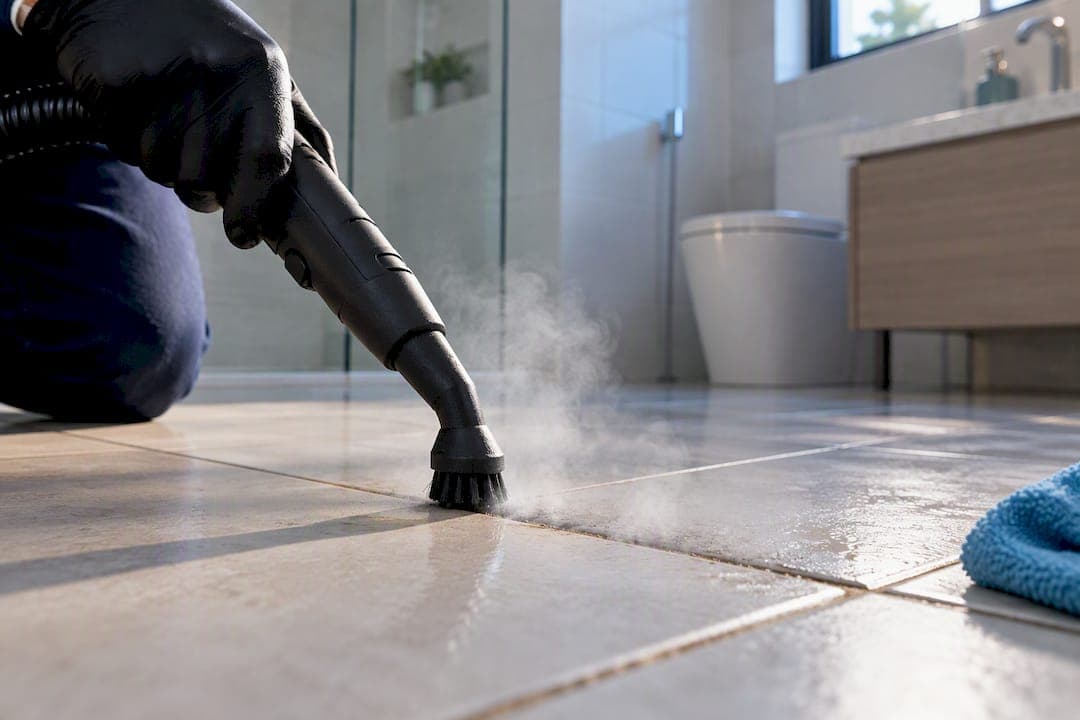
Steam is often preferred for routine grout maintenance on sealed ceramic and porcelain tile, because it lifts grime and can kill surface bacteria without leaving residue behind. Chemicals still earn their place against heavy grease, hard-water scale or deep, set-in staining that steam alone can soften but not fully dissolve. Whichever you pick, test a hidden patch first and follow basic safety steps before tackling the whole floor.
TL;DR:
- Steam is ideal for weekly maintenance of bathroom mold and general grime due to its cleaning and sanitizing power without residue.
- Chemical cleaners are better suited for heavy grease, mineral scale, and stubborn stains that steam alone cannot fully dissolve.
- Always test a small, hidden area first and avoid mixing chemicals with steam to prevent damage or safety hazards.
- Resealing grout every 12 to 24 months is essential, especially if frequent steam cleaning accelerates sealant breakdown.
- For heavily soiled or damaged grout, professional cleaning and inspection can provide more effective and safer restoration.
Table of Contents
- Tile grout steam cleaning vs chemical: comparing the trade-offs
- How does steam cleaning grout actually work?
- Is steam cleaning safe for grout, kids and pets?
- How often should you clean and reseal grout?
- What does the publisher's real-world approach to grout look like?
- Your three-step grout action plan
- Book a professional grout and tile clean
- Sources
- FAQ
Tile grout steam cleaning vs chemical: comparing the trade-offs
Steam and chemical cleaning solve different problems, and the mistake most homeowners make is picking one method and using it for everything.
Steam works best on embedded dirt, mould and general grime because heat does the job mechanically rather than through a reaction. Applied at a high enough temperature, steam can sanitise surfaces and kill the vast majority of germs, bacteria and mould spores on contact, without leaving a chemical film that attracts new dirt. That is a genuine advantage for bathroom grout, where mould keeps returning no matter how often you scrub.
Chemical cleaners earn their keep against grease, soap scum and mineral deposits from hard water. Ultra Clean Floor Care notes that steam can soften a heavy grease film or limescale build-up without fully dissolving it, whereas the right pH-matched chemical breaks the bond outright. The trade-off is residue. Leftover cleaner sits in porous grout and, according to the Tile Council, attracts dirt faster if it isn't rinsed thoroughly.
Cost shapes the decision too. A grout steam cleaner requires a one-off upfront investment that can vary, with ongoing costs mainly limited to water and electricity. Chemical cleaning means buying bottles repeatedly, and speciality grout formulas aren't cheap when you're refilling every few months. Steam costs more upfront and less overtime; chemicals are the reverse.
Here's a fast way to decide which one to reach for on a given job:
- Choose steam for weekly bathroom mould, general kitchen floor grime, or any job where you want zero chemical residue around kids or pets.
- Choose chemicals for years of built-up grease near a stove, hard-water scale in a shower recess, or grout that has gone from grey to black.
- Choose neither, alone if the grout is unsealed, crumbling, or you're not sure what it's made of. Test first.
- Choose a professional if a full room is affected and DIY hasn't worked twice already.
How does steam cleaning grout actually work?
Steam cleaning and chemical cleaning attack dirt through completely different mechanisms, which explains why one method sometimes leaves the other looking useless.
- Steam relies on heat and pressure. A steam cleaner heats water past boiling point and forces it through a narrow nozzle at high pressure. The heat loosens grime physically, softening it enough for a brush attachment to lift it out of the grout's texture. McCulloch's guidance on grout steam cleaners recommends a small brush or narrow nozzle for grout lines rather than a broad mop head, since concentrated heat on a narrow line does far more work than diffuse steam across a whole floor.
- Chemical cleaners rely on pH. Alkaline cleaners break down grease and protein soils. Acidic cleaners dissolve mineral scale and hard-water deposits. Neutral pH cleaners are the safe default for routine maintenance because they won't etch grout or strip sealant over time.
- Manufacturers draw a hard line on mixing the two. Never add cleaning chemicals to a steam cleaner's water tank. It voids most warranties and can damage internal components, and it changes how the unit disperses heat and moisture. Dyson's grout cleaning guidance also recommends testing an inconspicuous patch before running steam over an entire floor, since some finishes react badly to sustained heat.
Is steam cleaning safe for grout, kids and pets?
Both methods carry real risks if you skip basic precautions, and the risks aren't the same. For experts handling delicate and heritage properties, see the exterior cleaning comparison for Melbourne heritage homes to understand specialist cleaning approaches.
Chemical cleaners bring fume exposure, skin and eye irritation, and the genuine chance of an accidental reaction if you mix an acidic bathroom cleaner with something containing bleach. Ventilation matters more than most people think. CDC hygiene guidance recommends good airflow and careful handling of cleaning agents in the home, plus a proper rinse afterward so residue doesn't sit against skin or bare feet.
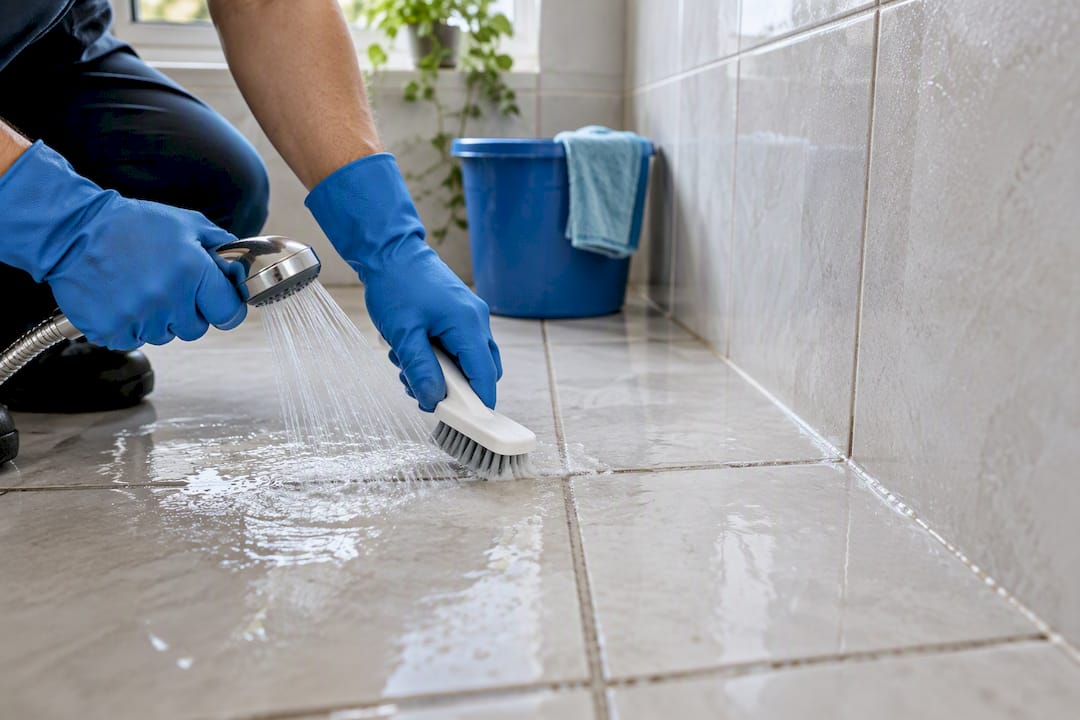
Steam's risks are different: scalding from the wand, and moisture trapping in grout that's already unsealed or crumbling. Push steam into a compromised grout line and you can drive damp behind the tile, which sets up mould you can't see. Natural stone, coloured grout and anything you can't identify deserve extra caution with both methods, since acids etch stone and some pigments fade under aggressive heat or chemicals.
Run through this before starting either method:
- Test a small, hidden patch and wait to check for discolouration or damage.
- Wear gloves and eye protection when using chemical cleaners; a mask if fumes are strong.
- Open a window or run an exhaust fan the whole time you're cleaning.
- Dry the grout completely afterward, especially with steam, so no moisture lingers.
Pro Tip: If you're not sure whether your grout is sealed, run a few drops of water onto it. Water that beads up means it's sealed; water that soaks straight in means treat it gently and skip steam until you know more.
How often should you clean and reseal grout?
A cleaning method is only half the job. What you do afterward decides whether the grout stays clean or slides straight back to where it started.
- Set a maintenance rhythm. Steam-clean high-moisture areas like showers weekly or fortnightly since mould returns fast in damp conditions. Spot-treat with chemicals only where a specific stain or scale build-up appears, rather than blanket-treating the whole floor every time.
- Reseal on a schedule, not a guess. Grout sealant typically needs reapplying every 12 to 24 months, and frequent steam use can shorten that window because heat gradually breaks down sealant faster than gentle chemical mopping does. If water stops beading on the grout, it's time to reseal.
- Know when to call a professional. Persistent staining that survives two cleaning attempts, grout that's crumbling or pulling away from the tile, or any natural stone you're unsure how to treat are all reasons to stop DIY-ing. Professionals inspect the grout, run a test patch, and pick the least aggressive method that will actually work, often using industrial steam units that restore heavily soiled grout more consistently than a household unit ever could.
What does the publisher's real-world approach to grout look like?
Deng, who covers cleaning technique for Com, has written specifically about safe steam use across different fabrics and about why professional cleaners still reach for chemicals in certain jobs, rather than treating one method as always superior. That's consistent with how Com approaches a real grout job: eco-preferred methods first, a test patch before anything goes wide, and a reseal recommendation when the grout's condition calls for it. A typical booking starts with someone assessing the tile and grout in person before deciding what actually needs to happen.

Your three-step grout action plan
Inspect the grout first, checking whether it's sealed and where it's damaged. Pick steam for general grime and mould, chemicals for grease or scale, and test either on a hidden patch before going wider. Finish by drying the area fully, resealing if water no longer beads, and noting the date so you know when to repeat it.
The one thing homeowners skip most is the test patch, and it's the step that prevents almost every disaster story in this space.
— Deng
Book a professional grout and tile clean
If your grout has gone past what a weekend with a steam wand or a bottle of cleaner can fix, that's the point where a professional visit pays for itself. Com's floor cleaning service covers exactly this kind of job: an inspection, a test patch on your specific tile and grout, and a method recommendation instead of a one-size-fits-all approach, with resealing offered where the grout needs it.

This sits alongside broader offerings like Spring Cleaning, Regular Cleaning and End of Lease & Bond Cleaning, so a grout refresh can be bundled into a bigger clean if you're already booking one, and Eco-preferred cleaning products aim to avoid trading one health concern for another. Landlords and tenants managing an end of lease clean often find grout condition is exactly the detail that decides a bond dispute. Check current availability and get a quote through the services page, and mention your grout concern when you book so the right method gets scheduled from the start.
Sources
FAQ
Does a steam cleaner actually clean grout?
Yes. Steam's heat physically loosens embedded dirt and mould in grout lines, and at sufficient temperature it can sanitise surfaces on contact. It's less effective against heavy grease or mineral scale, where a targeted chemical usually finishes the job faster.
What is the best steam cleaner for tiles and grout in Australia?
Look for a unit with a narrow nozzle or small brush attachment designed specifically for grout lines, since manufacturer guidance points out that broad mop heads waste heat across too wide an area. Beyond that, prioritise adjustable pressure and a decent-sized water tank so you're not refilling constantly.
What do professionals use to clean grout?
Professionals typically inspect the grout and run a test patch before choosing between steam, chemicals or a combination, often using industrial-grade steam units that outperform consumer models on heavily soiled floors. A recommended professional approach involves inspecting first before choosing a cleaning method on residential and commercial jobs.
Do I need to reseal grout after steam cleaning?
Often, yes, especially if you steam-clean regularly. Sealant typically lasts 12 to 24 months, and frequent heat exposure can wear it down faster, so check whether water still beads on the grout surface and reseal once it stops.