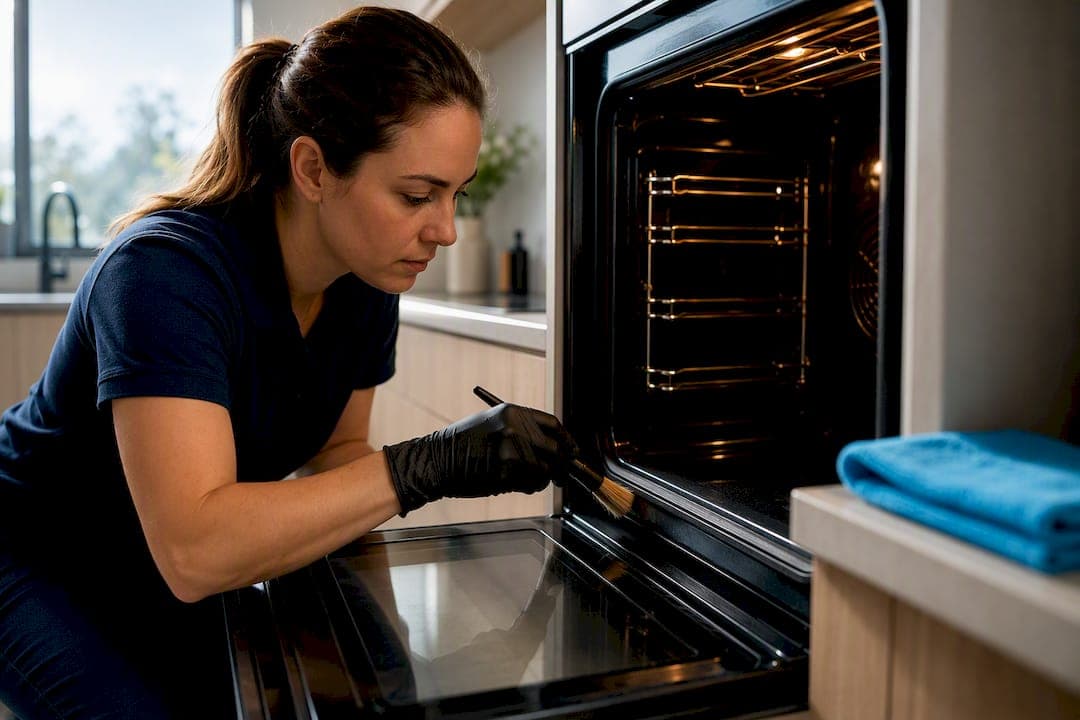
A spring clean refreshes and declutters your home; a deep clean is a top-to-bottom hygienic reset. Choose a spring clean for a seasonal freshen-up, and a deep clean when you're dealing with built-up grime, moving house, or recovering from renovation. If you're short on time or the job involves ovens, grout, or mould, book a professional rather than guessing at scope.
TL;DR:
- Deep cleaning includes tasks such as oven scrubbing, grout restoration, vent cleaning, and carpet extraction, which are not covered by a spring clean.
- Deep cleaning typically takes 4 to 7 hours for a three-bedroom home and costs between $200 and $600 depending on condition; a spring clean lasts roughly half a day.
- Choose a deep clean after renovation, moving, or when allergy symptoms persist despite regular vacuuming, especially if grime or allergens have built up in hidden areas.
- Book a professional for deep cleaning when addressing specific issues like mold, grease buildup, or extensive dust, to ensure thorough scope and proper equipment use.
- Schedule one to two deep cleans annually for households with pets, allergies, or recent renovations, while routine spring cleans focus on decluttering and light refreshment.
Table of Contents
- Deep vs spring clean: what a spring clean actually covers
- What is deep cleaning and what does it involve?
- Comparison of cleaning methods: tasks, time, and cost
- When should you choose spring cleaning vs deep cleaning?
- DIY or hire a professional: how to prepare and what to ask
- A note from ACT Cleaning by Demand on scoping the job right
- Common misconceptions about deep and spring cleaning
- Practical yearly cadence: one recommended schedule
- How ACT Cleaning by Demand handles your spring or deep clean
- Sources
- FAQ
Deep vs spring clean: what a spring clean actually covers
A spring clean is a seasonal refresh, not a deep sanitisation. It's built around decluttering, airing out stale rooms, and knocking over the dust and grime that piles up in spots your weekly routine skips, according to Ideal Home.
Typical spring-clean tasks include:
- Dusting high shelves, light fittings, and cornices
- Moving furniture to vacuum or mop underneath
- Wiping down interior window sills and tracks
- Airing out bedding, curtains, and closed-up rooms
- Sorting wardrobes and pantries and bagging up what you don't need
A spring clean is usually enough if you keep on top of regular cleaning and just want the house to feel lighter and brighter after winter. If your home already gets a weekly once-over, this is the level of effort that resets it without overkill. Our spring cleaning checklist for Australian homes breaks this down room by room if you want a working list.
What is deep cleaning and what does it involve?
Deep cleaning targets what a spring clean leaves behind: built-up grime, allergens, and bacteria hiding in places routine cleaning never reaches, according to The Mess Masters. It's a hygiene job first, an aesthetic one second.
Hallmark deep-clean tasks include:
- Scrubbing inside the oven and behind the fridge
- Getting grout, tile lines, and bathroom seals back to their original colour
- Clearing dust and grime from vents, exhaust fans, and baseboards
- Wiping out the inside of cabinets and drawers
- Steam extraction on carpets and upholstery
Deep cleaning is the right call after a renovation (dust gets everywhere, including places you'd never think to check), before or after illness in the house, when moving in or out of a property, or when allergens keep flaring up despite regular vacuuming. If pet dander or dust mites are a recurring problem, our guide to carpet cleaning for allergy sufferers covers what a deep clean adds on top of normal vacuuming.
Comparison of cleaning methods: tasks, time, and cost
Here's the difference between deep cleaning and spring cleaning laid out side by side, based on typical scope and provider estimates.
| Factor | Spring clean | Deep clean |
|---|---|---|
| Typical tasks | Surface dust, decluttering, airing, sills | Ovens, grout, vents, behind appliances, carpet extraction |
| Time required | Roughly half a day for most homes | 4–7 hours for a 3-bedroom home, per Otesse |
| Frequency | Once a year, usually with the seasons | 1–2 times a year, more often for high-need households |
| Cost shape | Lower, closer to a standard clean rate | Higher fixed rate reflecting extra time and equipment |
| Best for | Maintained homes wanting a refresh | Post-renovation, move-out, allergy flare-ups, first-time bookings |
Cost bands vary a lot by region and home size, and industry write-ups place a mid-sized deep clean anywhere from roughly $200 to $600, though local quotes are the only reliable figure, per National Cleaner Connect. Homes with pets, damp problems, recent renovation dust, or someone with allergies or asthma tend to need the deep-clean tier more often than the once-a-year default.
When should you choose spring cleaning vs deep cleaning?
Match the job to your situation rather than the calendar. These rules cover most of the calls homeowners get wrong:
- If the house smells musty, has visible grout discolouration, or grease has built up around the stove, that's a deep clean, not a spring one.
- If you're just after a lighter, brighter feel and nothing looks or smells off, a spring clean will do the job.
- Moving out of a rental almost always needs a deep clean to meet bond or inspection standards.
- Fresh off a renovation, deep clean first. Dust from sanding and cutting settles inside cupboards and vents that a spring clean won't touch.
- Allergy symptoms getting worse indoors, even with regular vacuuming, point to a deep clean and possibly carpet extraction.
- A pre-holiday tidy-up before guests arrive is a spring clean unless the bathroom grout or oven hasn't been touched in months.
Seasonal triggers (start of spring, end of a tenancy period) call for a spring clean. Condition triggers (smell, visible grime, illness, renovation dust) call for a deep clean regardless of what month it is.
Pro Tip: If you're not sure which one you need, book the deep clean. It resets the baseline, and every spring clean after that goes faster and gets you closer to a truly clean home.
DIY or hire a professional: how to prepare and what to ask
DIY works fine for a straightforward spring clean if you've got a free weekend and the usual gear. Deep cleaning is where hiring a professional starts to make more sense. Ovens, grout, and carpet extraction need specific tools and chemicals most households don't keep on hand, and bond-back standards for end-of-lease cleans leave little room for error.
Before a booked clean, do this:
- Declutter surfaces and floors so the crew can actually get to the grime
- Confirm access (keys, security codes, parking)
- Put away valuables and anything fragile
- Arrange for pets to be elsewhere or secured
When vetting a cleaner, ask about exact scope and exclusions, a realistic time estimate, insurance and police checks for staff, whether they use eco-friendly products, and what guarantee backs the work. Be wary of a very low fixed quote for a full deep clean. It usually means shortcuts on the hard jobs like inside ovens or grout, or extra charges once they're on site. Our post on deep cleaning vs regular cleaning pricing has more detail on what a fair quote should include.
A note from ACT Cleaning by Demand on scoping the job right
We build every quote around what a home actually needs, not a fixed package. The scheduling and pricing process can involve setting custom cleaning plans using eco-friendly products and police-checked staff, booked through an online system. If you want a starting point, read our spring cleaning checklist or check deep clean scheduling before requesting a quote.
— Deng
Common misconceptions about deep and spring cleaning
The biggest myth is that spring cleaning and deep cleaning are the same job at different times of year. They're not. Spring cleaning is about decluttering and freshening; deep cleaning is about hygiene and grime removal in spots you rarely touch. Treating them as interchangeable means either overpaying for a spring tidy-up dressed up as a deep clean, or underdoing a job that actually needed the full treatment.
Another common mistake is assuming a deep clean is a one-off luxury rather than a periodic necessity. Providers generally recommend one to two deep cleans a year depending on the household, and skipping this lets allergens and grime build up in ovens, grout, and vents where routine cleaning never reaches, according to The Mess Masters.
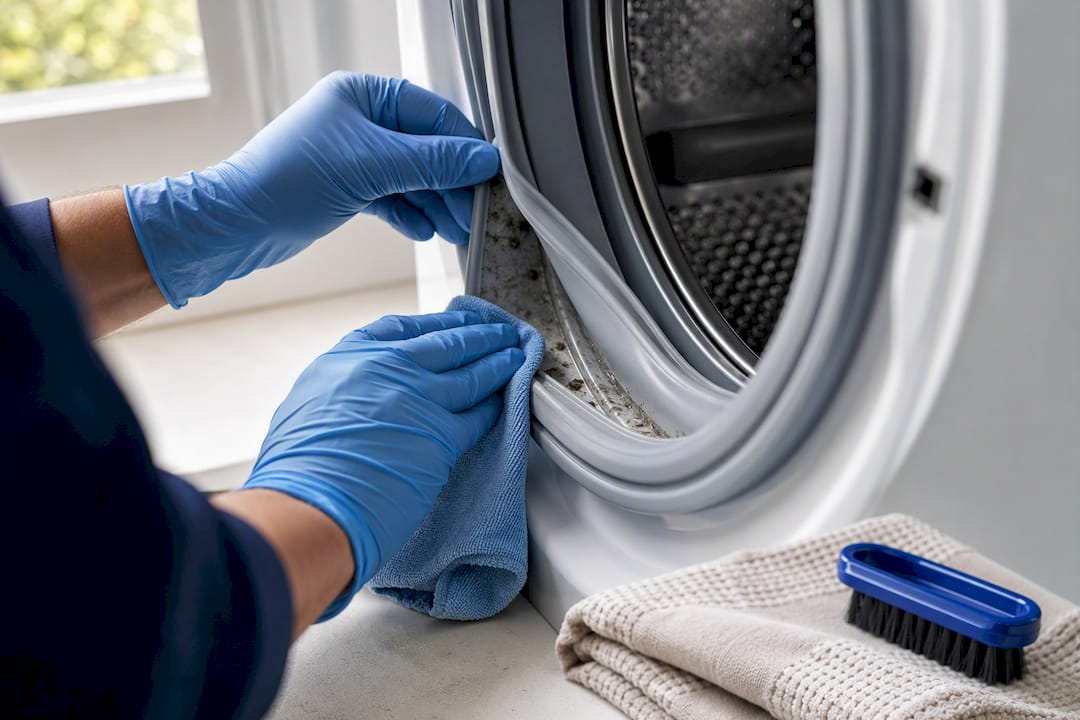
Some people also assume spring cleaning has fallen out of fashion. It hasn't. Plenty of households still do an annual spring clean simply because they want a lighter, brighter home after winter, even without any hygiene problem driving it, per the same source. And a fair few homeowners think a quick surface wipe qualifies as a deep clean because the room "looks" clean. Looking clean and being hygienically clean are different things. Dust on a shelf is visible; bacteria on a cutting board or mould behind a washing machine seal is not, and that's precisely the gap deep cleaning is meant to close.
Practical yearly cadence: one recommended schedule
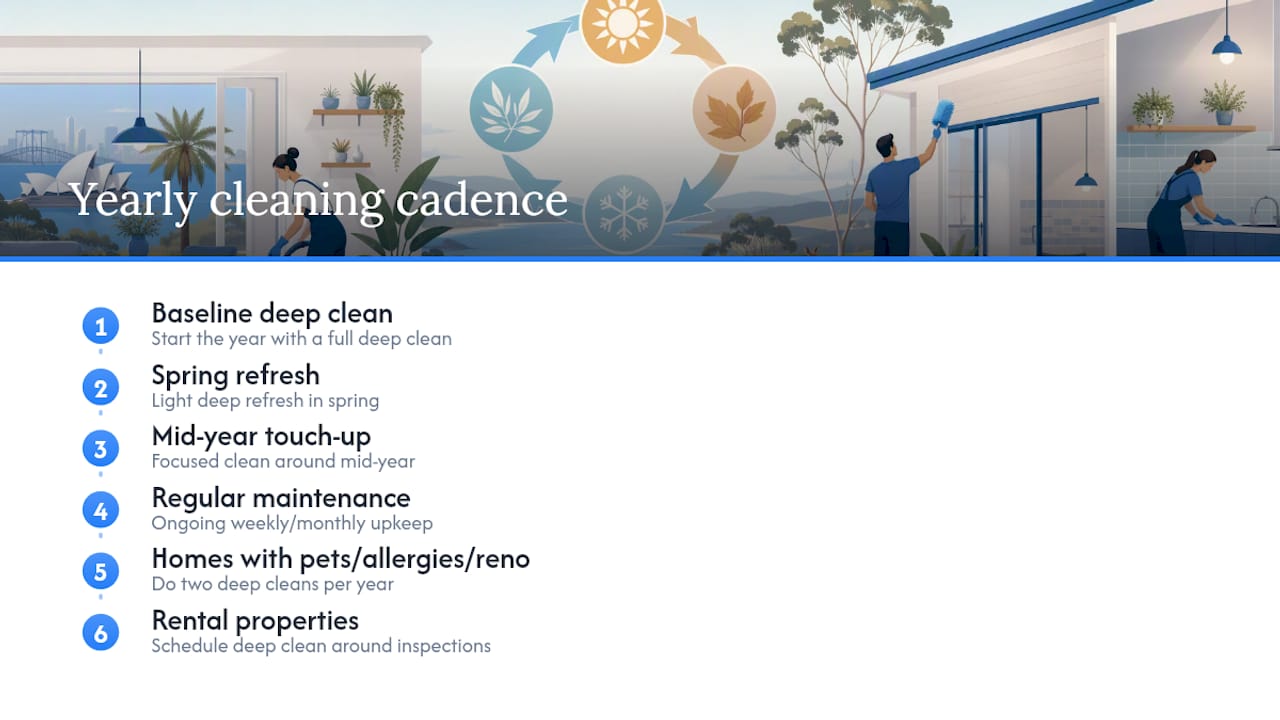
Start with one baseline deep clean, then a spring refresh, a mid-year touch-up, and regular maintenance in between. Households with pets, allergies, or a recent renovation should shift toward two deep cleans a year rather than one, and rental properties need one scheduled around every inspection.
How ACT Cleaning by Demand handles your spring or deep clean
Whether you need a seasonal refresh or a full grime reset, ACT Cleaning by Demand builds the job around your home rather than a fixed package, unlike flat-rate competitors who charge the same regardless of condition. That means you're not paying deep-clean prices for a spring tidy-up, or getting a surface wipe when what you actually need is inside-the-oven, behind-the-fridge work.

Cleaning services often use eco-friendly products and police-checked staff, and may offer flexible contract options for changing needs. That flexibility matters most for renters facing bond inspections, landlords prepping a property for sale, and anyone who's just had renovation dust settle into every vent in the house. Our end-of-lease cleaning service is built specifically around bond-back standards, while the broader services page covers everything from spring cleans to post-construction jobs. Get a quote through our online booking system and tell us the condition of the place. We'll tell you honestly whether you need a spring clean or a deep one.
Sources
- Spring Cleaning vs Deep Cleaning: What’s the Difference? - The Mess Masters
- Deep clean vs spring clean — Ideal Home
- Deep Cleaning vs Regular Cleaning: What's the Difference? (2026 Guide) - National Cleaner Connect
FAQ
What is the difference between a spring clean and a deep clean?
A spring clean is a seasonal refresh focused on decluttering, airing rooms, and dusting neglected spots. A deep clean is a thorough hygiene reset covering ovens, grout, vents, and behind appliances, according to Ideal Home.
Is it worth paying for a deep clean?
Yes, if it's been a while since ovens, grout, or vents were properly tackled, or you've got allergy symptoms that regular cleaning isn't fixing. A professional deep clean typically takes 4 to 7 hours for a 3-bedroom home, according to Otesse, which is more thorough than most households manage on their own.
Do people still do spring cleaning?
Yes. Many households still do an annual spring clean simply to freshen the home after winter, even without a specific hygiene problem driving it, per The Mess Masters.
What's the difference between clean and deep clean?
A standard or "regular" clean maintains what's already tidy, wiping visible surfaces and vacuuming floors. A deep clean goes further into hidden grime and allergen build-up in places routine cleaning skips entirely, like inside cabinets and behind the fridge.
How much does a professional deep clean cost?
Costs vary by region and home size, with industry estimates placing a mid-sized deep clean roughly between $200 and $600, though local quotes are the only reliable figure, per National Cleaner Connect. Pricing at ACT Cleaning by Demand depends on the property's condition and is available through a quote request.