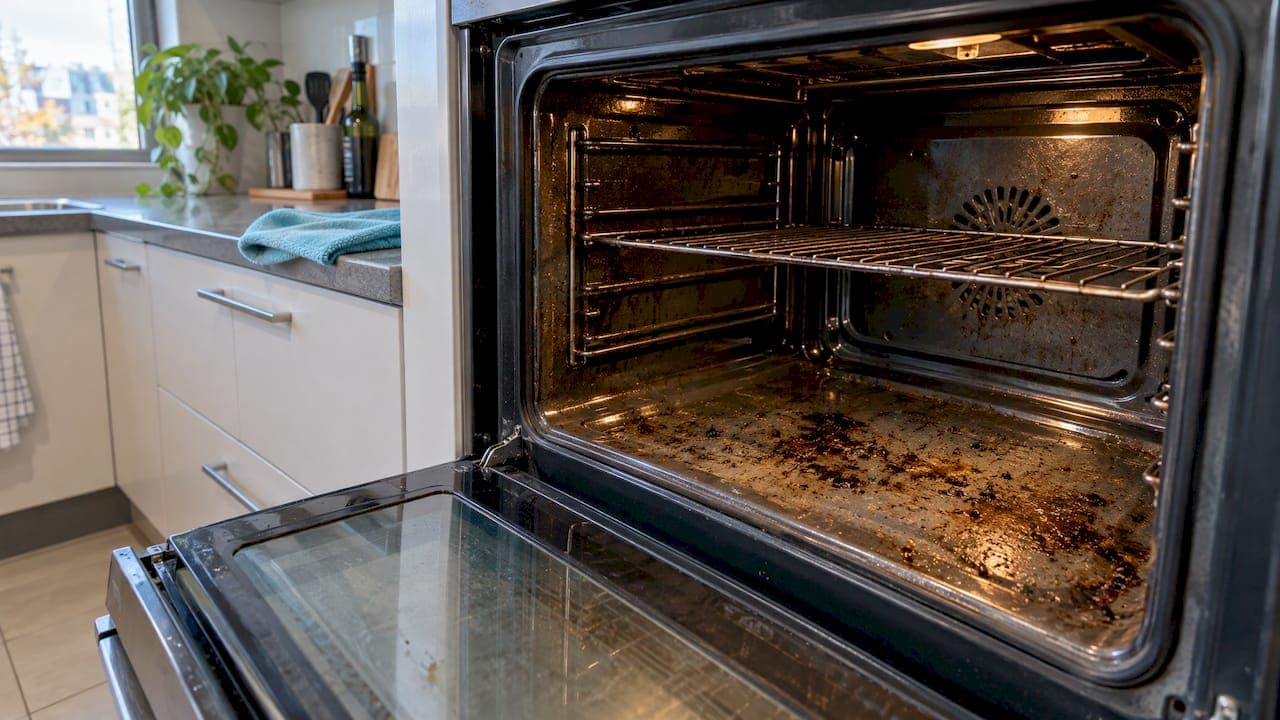
In the ACT, you must leave the oven in substantially the same state of cleanliness as it was when you moved in, fair wear and tear excepted. You don't have to hire a professional, and you don't have to make the oven better than the entry condition report says it was. In practice, though, the oven is one of the first things checked at the final inspection. Here is what the rules say, what to clean, and how to protect your bond if there is a dispute.
TL;DR
- The legal test in the ACT is "substantially the same state of cleanliness" as at the start of the tenancy, not spotless and not showroom new.
- Your entry condition report is the baseline. Check what it says about the oven before you start scrubbing.
- Clean the whole oven: interior, door glass, racks, trays and the exterior, plus the rangehood above it. Don't wet the heating elements.
- Take dated photos or video of the finished oven. They are your best evidence if a deduction is disputed.
- A professional clean is optional unless your agreement requires something specific, such as professionally cleaned carpets.
Table of Contents
- What the ACT rules actually require for an oven
- Start with your entry condition report
- What gets checked on an oven at the final inspection
- How to clean an oven safely
- Protect your bond: evidence that holds up
- DIY or a professional clean?
- The rest of the move-out checklist
- Our perspective
- Book an oven and bond clean in Canberra
- FAQ
- Sources
What the ACT rules actually require for an oven
The standard residential tenancy terms in the ACT require tenants to leave the premises in substantially the same state of cleanliness as at the start of the tenancy. That is clause 64 of the terms that apply to agreements commencing from 25 August 2020. There is no separate oven clause. The oven is part of the premises, so the same test applies to it as to every other fixture.
Legal Aid ACT explains the practical side: the benchmark is the state of the property recorded in the entry condition report, and you are not required to improve the condition of the property beyond its original state. If the report noted a greasy oven on day one, a landlord can't fairly expect a gleaming one on the last day.
The same Legal Aid ACT guide says damage from normal, everyday use counts as fair wear and tear and is not your financial responsibility. Think of an enamel lining that has dulled with age, or a door seal that has softened over the years. Baked-on spills, burnt grease and carbon you left behind are different. That is cleanliness, and it is your job.

Do you legally have to book a bond clean?
No. Legal Aid ACT states that you don't have to get a professional bond clean. You only have to meet the cleanliness standard above. There is one exception worth checking: the ACT Civil and Administrative Tribunal (ACAT) accepts that carpets must be professionally cleaned at the end of the tenancy if your agreement says so and they were professionally cleaned at the start. The landlord has to provide a receipt. The oven has no equivalent rule, so the question is whether your agreement contains a special term about it. Read your agreement before you decide.
Many renters still book a professional clean for the whole property. It saves a weekend and removes the guesswork. That is a choice, not a legal duty.
Start with your entry condition report
Before you pick up a sponge, find the condition report you received at the start. Look for three things:
- What it says about the oven. Notes like "clean", "marks on door glass" or "grease build-up inside" set your target.
- Any comments you added. If you wrote your own notes or attached photos when you moved in, those carry weight now.
- The appliances listed. A second oven, a grill tray or a separate cooktop may be listed on their own lines.
If you never kept a copy, ask your property manager for one. The condition report is the document that decides what "the same state" means, and the final inspection is meant to be measured against it. Legal Aid ACT says the tenant and lessor should go through the original report at the final inspection and try to agree on any cleaning or repairs needed.
What gets checked on an oven at the final inspection
There is no official ACT list of oven parts that inspectors must tick off, so treat the following as a sensible walk-through rather than a legal schedule. Agents and property managers generally look at what any tenant would see when they open the oven door:
| Oven part | What a reasonable standard looks like |
|---|---|
| Interior walls, roof and floor | No baked-on spills, carbon crust or pooled grease |
| Door glass (inside and out) | Clear enough to see through, no brown film or drip marks |
| Racks and shelf runners | Free of burnt-on residue, runners wiped |
| Trays and grill pan | Washed, not blackened with old fat |
| Door seal and edges | Wiped, no food debris stuck in the rubber or frame |
| Control knobs and panel | Wiped, no sticky residue or fingerprints |
| Exterior, sides and handle | Degreased, no splashes or grime |
| Cooktop and rangehood above | Clean surfaces; filter washed or replaced if it is a removable type |
Note the last row. The oven rarely stands alone in an inspection. If the cooktop is dirty or the rangehood filter is thick with grease, the kitchen looks neglected, and the oven gets scrutinised harder. Our guide to vacate cleaning kitchen requirements in the ACT covers the whole room.
How to clean an oven safely
You don't need harsh chemicals for a typical rental oven. CHOICE recommends a paste of baking soda and water spread inside the oven, keeping it away from the heating elements. Leave it for a few hours or overnight. Then spray with vinegar and wipe away the residue with a damp microfibre cloth. For the racks, CHOICE suggests soaking them for up to an hour in warm water with washing powder.
Here is a practical order that keeps the mess under control:
- Switch off and cool. Make sure the oven is off at the wall if you can reach the switch, and completely cold.
- Remove racks, trays and any loose parts. Soak the racks in the bath or a large tub.
- Apply the paste. Cover the interior surfaces and door, but not the elements or any fan opening.
- Wait. Overnight gives the paste the most time to loosen grease.
- Wipe out and rinse. Use a damp microfibre cloth, then wipe with clean water so no residue is left to bake on next time.
- Scrub the racks. After soaking, residue should lift with a non-scratch pad.
- Do the glass and exterior last. Check the glass from several angles in daylight.
- Put everything back and run a final check. Open the door and look inside with a torch, as an inspector would.
If you prefer a plant-based approach for the rest of the kitchen, we've written about green bond cleaning products that work in Canberra.
Mistakes that cost renters money
- Leaving it to the last day. A paste needs hours. If you start in the morning of the inspection, you will rush.
- Using abrasive pads on the enamel. Scratches can look like damage rather than dirt.
- Wetting the elements or fan. It can damage the appliance and turn a cleaning job into a repair bill.
- Forgetting the door glass. Grease between glass panes is hard to reach. If your oven door can't be opened for cleaning, don't force it. Note it and ask the property manager.
- Overlooking the rangehood. It sits above the oven and is often judged with it.
Protect your bond: evidence that holds up
An oven dispute usually comes down to one argument: it was this clean when I arrived, and it is this clean now. Legal Aid ACT notes that a copy of your condition report with your comments, plus photos or video of the property at move-in and move-out, can be useful evidence. Build your file like this:
- Photograph the inside of the oven from the front, with the door open, then each wall, the roof, the glass and the racks.
- Photograph the exterior, including the knobs and the cooktop.
- Make sure your phone records the date and time, and back the images up.
- Take the same shots at move-in if you still can, or find the ones you took then.
The ACT standard terms also require an end-of-tenancy inspection with both the lessor and tenant present, and a condition report based on it, completed and signed by both. Attend it if you can. Walk the kitchen with the agent, open the oven together, and raise any difference with the entry report on the spot. Before you sign the exit report, check that every note about the oven matches what you both just saw.
If you disagree with a deduction afterwards, those photos and the original report are what you take to the next step. Our article on how to pass a bond inspection in the ACT walks through the inspection itself, and ACT tenant cleaning obligations explains why aiming for spotless is the wrong goal.
DIY or a professional clean?
Both meet the legal standard if the result matches the entry report. The choice is about time, effort and risk.
DIY suits you when the oven was in decent shape at move-in, you have a day to spare, and the build-up is light to moderate. Use the method above and start early.
A professional clean suits you when the oven has years of carbon, you are moving interstate, you have kids and boxes to manage, or you don't want an argument at the inspection. A cleaner who works to a bond clean scope will cover the oven alongside the rest of the property, so everything is done to a consistent standard. See what is typically covered in bond cleaning inclusions for a Canberra clean and use the end of lease cleaning checklist for Australian renters to compare scopes.
Whoever you choose, ask for the oven to be listed in writing. Our guide on six questions to vet a Canberra cleaner covers what to ask before you pay.

The rest of the move-out checklist
The oven is one line in a longer list. Carpets, windows, bathrooms, walls and the garden all get looked at, and pests can matter too. The rules differ from state to state. If you are leaving a rental in New South Wales rather than the ACT, the tenant duties around end of lease pest control are explained separately. For Canberra rentals, work from your own entry report and the ACT terms above.
Our perspective
We clean ovens in Canberra rentals every week, and the pattern is consistent: renters lose bond money not because the oven was impossible, but because nobody agreed what "clean" meant before the inspection.
That is why we work from the entry condition report, not a generic checklist. The ACT test is the same state of cleanliness as at the start, and a good cleaner treats that as the brief. We take the oven apart, clean racks, trays, glass, seals and exterior, and do the rangehood and cooktop with it, using eco-friendly products.
Our cleaners are police-checked and insured, there are no lock-in contracts, and we tailor each clean to the property. Our end of lease cleans come with a bond-back guarantee and a 100% satisfaction guarantee. If something is missed, we want to hear about it and put it right.
Our advice: don't leave the oven until the last night. Book early, keep your photos, and attend the final inspection.
Deng
Book an oven and bond clean in Canberra
If you would rather hand the kitchen over to someone else, our team at ACT Cleaning by Demand handles end of lease and bond cleans across Canberra and the ACT, oven included. Cleans are tailored to your property, with flexible scheduling and no lock-in contract.

See how it works on our end of lease cleaning page, or browse all our cleaning services if you also need carpet cleaning or a one-off clean before you hand the keys back.
FAQ
Do I have to clean the oven when I move out of a rental in the ACT?
Yes, as part of leaving the property in substantially the same state of cleanliness as at the start of the tenancy. The oven is judged against your entry condition report. Fair wear and tear is not your cost, but grease and burnt-on food you caused is.
Does the oven need a professional clean?
Not by law. Legal Aid ACT says you don't have to get a professional bond clean. The exception is where your agreement requires something specific, as with carpets that were professionally cleaned at the start. Check your agreement, then decide on convenience.
What if the oven was already dirty when I moved in?
Then your entry condition report and any photos you took become your evidence. You are only required to return it in the same state, not a better one. Raise this at the final inspection and make sure the exit report records it accurately.
How do I clean oven racks without scrubbing for hours?
Soak them in warm water with washing powder for up to an hour, as CHOICE suggests, then wipe or scrub lightly. A bath or large tub works well. Heavily burnt racks may need a second soak.
Can the agent deduct from my bond if they say the oven is dirty?
They can claim it, but it has to be consistent with the condition report and the standard terms. If you disagree, show your photos or video and the entry report. Settle what you can at the inspection and don't sign anything that doesn't match what you both saw.
Sources
- Legal Aid ACT: Bond guide
- ACT Revenue Office: Standard residential tenancy terms, commencing 25 August 2020
- CHOICE: How to clean an oven