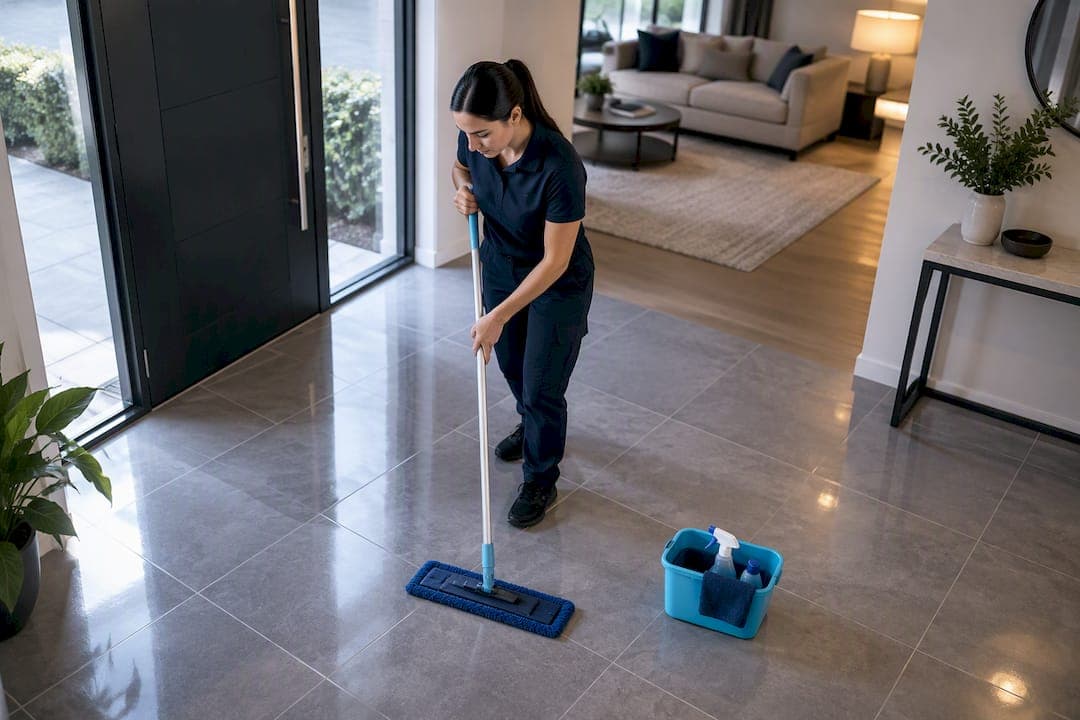
Weekly cleaning suits households with kids, pets, allergies, or heavy entertaining, where mess builds up fast enough to justify the extra spend. Fortnightly suits smaller households and anyone budget-conscious, since it holds a high standard for less annual outlay. If you're unsure, model both costs against your lifestyle and consider a short trial. A cleaning service can set up either schedule with a tailored plan.
TL;DR:
- Weekly cleaning fits households with high mess frequency due to kids, pets, allergies, or frequent entertaining, preventing grime buildup and reducing deep cleaning needs.
- Fortnightly cleaning suits smaller households, low traffic homes, travelers, and budget-conscious clients, offering cost savings despite increased maintenance between visits.
- Australian average cleaning costs range from $55 to $90 per hour, with typical two-hour minimums, making weekly visits significantly more expensive annually than fortnightly options.
- Homeowners should assess household size, allergies, and lifestyle mess levels before choosing a schedule and prioritize initial deep cleans for neglected homes to prevent mismatched expectations.
- Custom cleaning plans, including trial periods and flexible scope options, are offered without lock-in contracts, ensuring schedules match actual household needs and conditions.
Table of Contents
- Weekly vs fortnightly cleaning: the case for weekly
- Weekly vs biweekly cleaning: the case for fortnightly
- Cost comparison and practical pricing examples
- How do I choose between weekly and fortnightly cleaning?
- What's included in a typical cleaning visit?
- Why a one-off deep clean should come first
- Balancing cost against convenience
- Book a schedule that fits how you actually live
- Sources
- FAQ
Weekly vs fortnightly cleaning: the case for weekly
Weekly cleaning earns its higher price tag in homes where mess accumulates fast. If your household ticks two or more of the boxes below, weekly visits usually make more sense than stretching to a fortnight.
- Young kids or teenagers generating daily mess in bathrooms and living areas
- Pets shedding hair or tracking dirt through the house
- Someone with allergies or asthma who needs dust and allergens kept low
- Frequent entertaining, guests, or a home office with heavy daily use
The real benefit isn't just a cleaner house. It's efficiency. A home cleaned every week never builds up the grime that turns a routine visit into a scrub-fest, so each visit tends to run faster and cheaper per hour than a fortnightly catch-up job. Fewer intensive deep cleans get triggered over the year because surfaces never get the chance to deteriorate.
The trade-off is straightforward: you're paying for twice the visits, and you're locking into a tighter routine.
Pro Tip: If allergies are the main driver, ask your cleaner to prioritise dusting and vacuuming with a HEPA-filter machine on every weekly visit rather than saving it for a monthly deep clean.

Weekly vs biweekly cleaning: the case for fortnightly
Fortnightly is the default for a reason. It suits smaller households, people who spend more time out of the house than in it, and anyone watching the budget who still wants a professional standard maintained.
- Couples or singles with low daily mess and no pets
- Households that travel often or work long hours away from home
- Budget-conscious homeowners who want quality without a weekly bill
- Homes with low foot traffic (spare rooms, rarely-used spaces)
The cost advantage is real. Halving the number of visits per year cuts your annual spend significantly while still keeping the home at a solid, presentable standard between cleans. The trade-off is more work falls on you between visits, and homes that get heavy use may need an annual deep clean to reset areas that build up faster than the schedule allows, like oven interiors or grout lines.
Cost comparison and practical pricing examples
Here's where the fortnightly cleaning advantages and the weekly cleaning benefits actually get tested against your wallet. Australian cleaners typically charge $55 to $90 an hour, averaging $55.37 nationally, and most enforce a two-hour minimum booking to cover travel and setup.
Rough modelling for a standard clean at $60/hour with a two-hour minimum:
- 1 to 2 bedroom home: around $120 to $150 per visit. Weekly cleaning costs significantly more annually than fortnightly due to the doubled visit count.
- 3 bedroom home: around $150 to $210 per visit, closer to 2.5 to 3 hours. Weekly cleaning costs significantly more annually than fortnightly due to the doubled visit count.
- 4+ bedroom home: around $210 to $300 per visit for larger properties. Weekly cleaning costs significantly more annually than fortnightly due to the doubled visit count.
Weekly bookings often attract a per-visit discount of 10 to 15% below fortnightly rates, because recurring, well-maintained homes take less time to clean. That discount rarely offsets the doubled visit count, and recurring cleaning is generally cheaper per visit than one-off deep cleans either way.
Quick formula: hourly rate × hours per visit × visits per year = annual cost. Run your own numbers before committing to either schedule, and see how cleaning quotes work for Australian homeowners if you want to understand what shapes the quote you're given.
How do I choose between weekly and fortnightly cleaning?
Start with an honest audit of your household, then ask the right questions before you book.
Step 1: Check your household factors.
- How many people and pets live in the home day to day?
- Does anyone have allergies, asthma, or respiratory sensitivities?
- How often do you entertain guests or host events?
- Is your lifestyle high mess (renovations, small kids) or low mess (empty-nesters, frequent travel)?
Step 2: Ask cleaners these exact questions.
- What's included in a standard visit versus a deep clean?
- Is there a two-hour minimum, and how is pricing structured beyond that?
- Are staff police-checked and insured?
- Can the scope flex between visits if my needs change?
Step 3: Watch for red flags. Vague scope descriptions, no willingness to provide references, and unclear minimum booking terms are all signs to keep looking.
Pro Tip: If you're torn, pick by required standard first (health needs, allergies, heavy use) and let budget decide the frequency second, not the other way around.

What's included in a typical cleaning visit?
A standard weekly or fortnightly visit covers the maintenance basics: vacuuming, mopping, dusting, kitchen and bathroom wipe-downs, bins, and general tidying. Deep cleans, by contrast, tackle oven interiors, grout, skirting boards, window tracks, and behind appliances, work reserved for periodic or one-off deep cleans rather than a routine visit.
- Between visits, handle spot cleaning, dishes, and rubbish yourself to stop small mess becoming big mess
- The 20/10 method, 20 minutes cleaning, 10 minutes resting, works well for fortnightly upkeep
- Visit length and the two-hour minimum generally match scope to a 1 to 3 bedroom home; larger homes need longer bookings
Why a one-off deep clean should come first
Homes that haven't seen a professional clean in months don't fit neatly into a maintenance schedule from day one. A reset clean first prevents the classic mismatch where a client expects a deep clean's results from a maintenance-priced visit.
Providers commonly recommend an initial one-off deep clean to reset a neglected home before shifting to a recurring schedule, because otherwise the first few "regular" visits end up doing deep-clean work at maintenance pricing, leaving both parties frustrated.
Com tailors the ongoing scope after that reset, using eco-friendly products suited to the home's actual condition. Even on a fortnightly plan, scheduling an annual deep clean keeps things from sliding backward.
Balancing cost against convenience
Money isn't the only variable worth weighing. When your time is genuinely scarce, or a health condition makes dust and allergens a real problem, weekly cleaning often earns back more in stress reduction than it costs in dollars. If you're not sure, commit to a two to three month trial at one frequency, then reassess against how your week actually felt. Cleanliness baselines are personal, and that's fine.
— Deng
Book a schedule that fits how you actually live
Com is the practical alternative to guessing your way through cleaner quotes. It builds custom-tailored cleaning plans around your household, whether that's weekly, fortnightly, or a one-off reset first, with no lock-in contracts binding you to a schedule that stops suiting you.
Every booking runs through police-checked, insured cleaners using eco-friendly products, and end-of-lease cleans come with a bond-back guarantee. A first booking typically starts with scope-setting, understanding your home's condition and priorities, before locking in a recurring rhythm that actually matches how the household lives. If your home needs a reset before settling into recurring visits, the end of lease and bond cleaning service works well as a starting point, and offices considering office cleaning can request the same tailored approach.
Ready to compare your options? Get a quote across all services and set a schedule that fits your household, not the other way around.
Sources
For pricing benchmarks, see the Airtasker cleaning cost guide, Webblend's hourly rate data, and TheQuoteYard's weekly vs fortnightly modelling. For scope guidance, browse the Canberra homeowner's cleaning guide.
- House Cleaning Cost Guide 2026 | Airtasker AU
- Webblend
- Weekly vs Fortnightly Cleaning 2026 NSW | TheQuoteYard
FAQ
What Is a Realistic Schedule for House Cleaning?
For most households, fortnightly cleaning is the realistic default because it balances cost against a maintained standard. Households with kids, pets, allergies, or frequent entertaining often find weekly cleaning more realistic despite the higher annual cost.
What Is the 20/10 Rule for Cleaning?
The 20/10 method means cleaning in focused 20-minute bursts followed by a 10-minute break, a practical way to maintain a home between professional visits. It works particularly well for fortnightly schedules where some homeowner upkeep is expected in between.
What Is the 5-5-5 Rule for Cleaning?
Definitions of the 5-5-5 rule vary across cleaning blogs, and there's no single agreed standard for it. Broadly it refers to spending a short, focused time each on three quick tasks, useful as a daily habit rather than a substitute for a professional visit.
How Much Does Professional Cleaning Cost Per Hour in Australia?
Professional cleaners in Australia typically charge $55 to $90 an hour, with a national average of $55.37, and most require a two-hour minimum booking. That minimum covers travel and setup time rather than functioning as a separate call-out fee.
Does ACT Cleaning by Demand Offer Both Weekly and Fortnightly Plans?
Yes, Com builds customised recurring cleaning packages on either a weekly or fortnightly basis, tailored after an initial scope assessment. Pricing is provided on request based on home size and required scope.