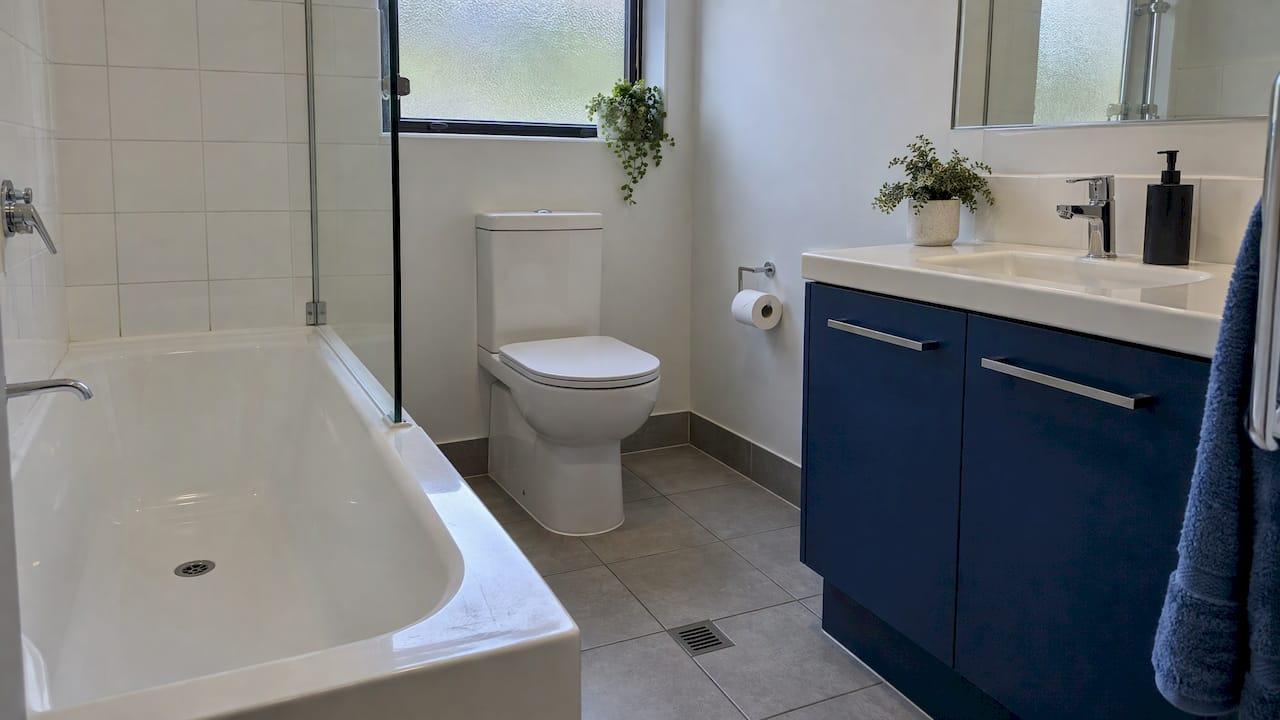
In the ACT, your bathroom has to go back in substantially the same condition and level of cleanliness as when you moved in, allowing for fair wear and tear. It does not have to be better than the day you arrived. In practice, agents look closely at the shower, grout, taps, toilet, vanity and exhaust fan, so those are the places to spend your time.
This guide explains the legal standard, walks through the bathroom surface by surface, and shows what to do if an agent or landlord disagrees with your clean.
TL;DR
- The ACT standard is the condition recorded in your entry condition report, fair wear and tear excepted. It is not "spotless" and it is not "better than new".
- Agents commonly check shower screens, grout, taps, the toilet (including behind it), the vanity and cabinets, mirrors, the exhaust fan cover and mould on silicone or ceilings.
- Professional cleaning is not required by law, unless your agreement says so and the carpets were professionally cleaned before you moved in, with a receipt.
- Photos and video taken on move-out are your best protection in a bond dispute.
- If you would rather hand the job over, we clean bathrooms as part of our end of lease service.
Table of Contents
- What the ACT standard actually is
- Do you need a professional clean?
- Bathroom standards, surface by surface
- Quick reference table
- Mould, limescale and wear: whose problem is it?
- How the entry condition report sets your bathroom standard
- Protect your bond: evidence and timing
- How property managers describe bathroom problems
- Our perspective
- Get the bathroom done properly
- FAQ
- Sources
What the ACT standard actually is
The test in the ACT is comparison, not perfection. Legal Aid ACT states that a tenant must return the property in substantially the same condition and level of cleanliness as when they moved in, except for fair wear and tear, and cannot be made to leave it better than it was at the start.
During the tenancy, the ACT Renting Book (January 2026) says tenants must take reasonable care of the property and keep it reasonably clean, having regard to its condition at the start. Its move-out checklist repeats the same idea: belongings removed, and the property in substantially the same state of cleanliness and repair, fair wear and tear excepted.
For your bathroom, this means two things:
- The benchmark is your entry condition report and any photos you attached to it, not a generic checklist from a cleaning company.
- A bathroom that was a bit tired and marked when you moved in is allowed to be a bit tired and marked when you leave.
We go deeper on the legal side in our guide to ACT tenant cleaning obligations and on the practical side in what ACT tenants must do for bond cleaning.
Do you need a professional clean?
No, not as a general rule. Legal Aid ACT's bond factsheet says there is no requirement to use professional cleaning or carpet cleaning services at the end of a tenancy. The exception is carpets: ACAT accepts that they must be professionally cleaned if the tenancy agreement says so and they were professionally cleaned at the start, and the landlord must provide a receipt showing this.
That exception is about carpet, not bathrooms. Your bathroom can be cleaned by you, provided it reaches the same standard it had at the start. Many tenants still book a professional because they are moving house, working full time or simply do not want a dispute over grout. That is a sensible choice, and it is what our end of lease service is for.
Bathroom standards, surface by surface
No ACT law lists the surfaces in a bathroom. What follows is what Canberra property managers and agents publish in their own vacating checklists, so it shows what is likely to be looked at. Maloneys Canberra's vacating checklist and Just Rentals Real Estate's vacating guide both cover the same ground.
Shower screen, recess and tiles
The shower is where most bathroom disagreements start. Agents look at the shower recess, wall tiles and grouting, and mould is the item they call out most often.
- Glass or screen: remove soap scum and water spotting on both sides, including the track at the bottom and the door seals.
- Walls and tiles: wash the full tile surface, not just eye height. Soap film often shows on the lower rows.
- Grout: scrub the lines with a stiff brush. If the grout was clean in your condition report, it should look clean on the way out.
- Shower head and taps: descale any limescale. A soak in a vinegar-based solution is a common approach, but check the finish first. Brushed or coated fixtures can mark.
- Drain: clear hair and residue from the grate.
Bath
Maloneys and Just Rentals both list the bath. Clean the inside and the outside, the overflow and the tap surrounds, and wipe down the side panel and the edge where it meets the wall.
Toilet
Maloneys specifically mentions cleaning the toilet thoroughly, including the cistern, seat, bowl and the skirting tiles behind the toilet. Lift the seat and clean the hinges, wipe the base and the floor behind the pan, and clean the outside of the cistern and the flush button.
Vanity, basin and cabinets
The vanity gets cleaned inside and out. Empty it, wipe the shelves and drawers, clean the basin and overflow, polish the taps, and check the bench for toothpaste and soap residue. Soap dishes are on Maloneys' list too.

Mirrors, walls and the exhaust fan
Polish mirrors until they are streak free. Wipe down walls and doors, particularly around the light switch and door handle. Then look up. Maloneys also notes that mould must be removed from ceilings, especially in wet areas, and Just Rentals lists the bathroom exhaust fan. The fan cover is easy to forget, and it collects dust within a year of normal use. Wipe the cover (switch the power off first) and the ceiling around it.
Floor
Sweep or vacuum, then mop, taking in the corners and the edge along the shower base where grime builds up. Check the grout lines on the floor as well.
Quick reference table
| Area | What agents typically look for | Common miss |
|---|---|---|
| Shower screen | No soap scum or water marks | Bottom track and seals |
| Tiles and grout | Clean lines, no visible mould | Lower rows and corners |
| Taps and shower head | No limescale | Base of the taps |
| Bath | Inside, outside, overflow | Side panel and edges |
| Toilet | Bowl, seat, cistern, base, behind | Floor behind the pan |
| Vanity | Basin, bench, inside cabinets | Drawers and shelves |
| Mirror | Streak free | Edges and corners |
| Exhaust fan | Cover wiped, no dust build-up | Ceiling around the fan |
| Floor | Swept and mopped | Edges and grout |
Mould, limescale and wear: whose problem is it?
The line between dirt and damage matters here. Legal Aid ACT explains that fair wear and tear depends on how the damage happened and how bad it is, and that it must come from normal everyday use. Its examples of fair wear and tear include worn carpet in high traffic areas and small scuff marks on walls. Examples that are not include knife damage on bench tops and broken windows or glass.
Applied to a bathroom, this is a reasonable way to think about it:
- Surface mould and soap scum that builds up from day-to-day use is a cleaning matter, and a tenant who is required to keep the property reasonably clean should deal with it.
- Chipped tiles, cracked basins or a loose vanity caused by an impact are damage, not wear.
- Ageing grout, faded silicone or fixtures that were already marked at the start are most likely wear or a pre-existing issue, and your condition report is what shows that.
If mould keeps returning because of a ventilation fault or a leak, tell your agent in writing during the tenancy, with photos. The Renting Book says the condition report is used as evidence in end-of-tenancy disputes, and a dated record of a maintenance problem sits well alongside it.
Tribunal decisions turn on the facts. In one reported case, ACAT found a former tenant liable for floorboard damage because it fell outside the wear and tear exception. Floors are not bathrooms, but the reasoning is the same: the question is how the damage came about.
How the entry condition report sets your bathroom standard
Legal Aid ACT's bond factsheet explains that the landlord or agent must provide the condition report within one day of move-in, and the tenant has two weeks to return a signed copy. It is evidence of the property's condition at the start, and it is the benchmark for the final inspection.
If you are still early in a tenancy, go back to the report now and check the bathroom entries:
- Does it say the grout was clean, or does it mention mould, staining or limescale?
- Is the exhaust fan described?
- Are the silicone seals recorded as sound or discoloured?
If something is missing or wrong, you can still add comments and photos when you return it. Once you are moving out, take the report with you and clean to it. Our post on matching the entry report at inspection shows how.
Protect your bond: evidence and timing
Legal Aid ACT says the best evidence of a property's condition is video or photographs. Take them in every room when you move in and when you move out, and add close-ups of anything raised at the final inspection.
For the bathroom, a good set of move-out photos covers:
- The shower screen, tiles and grout, with the bottom track visible.
- The inside of the bath and the basin.
- The toilet, including the floor behind it.
- The inside of the vanity cabinet.
- The exhaust fan cover and ceiling.
- The mirror and taps.
At the end of the tenancy, an inspection is done with both lessor and tenant present, and a condition report is completed and signed by both, under the standard terms of the Residential Tenancies Act 1997 (ACT). Bonds are held by the Rental Bonds Office, and the Renting Book says the landlord must confirm within 3 days of the final inspection that the bond will be refunded in full. If they claim part of it, the Residential Tenancies Act 1997 (ACT), section 31 allows a lessor to deduct the reasonable cost of repairs and certain other items. "Reasonable" is the word to hold on to. A claim should reflect the actual condition against your entry report and an honest cost, not a blanket cleaning charge.
If you disagree with a deduction, do not sign a bond release you are unhappy with. Contact Legal Aid ACT or the ACT tenancy advice services, and bring your reports and photos.
How property managers describe bathroom problems
Agents are trained to write what they see rather than give a verdict. PMVA's inspection guide gives the example of recording black mould along the shower grout, spreading into the silicone, rather than just noting that something "needs cleaning". For you, it means a specific note is hard to argue with in the abstract but easy to answer with a specific photo.
PMVA also lists the bathroom items its inspectors look at: shower screen and recess, bath, vanity and basin, toilet, exhaust fan, nearby walls and floors, and taps. That matches the list above, so there should be few surprises on the day.
Our perspective
We clean a lot of Canberra bathrooms at the end of a tenancy, and the same thing comes up again and again. People either do far too little because they think the shower "looks fine", or far too much because they have been told it must be spotless.
The ACT standard sits between the two. The aim is to return the bathroom to the condition in the entry report, so we clean to that. We work through the shower screen, tiles and grout, taps, bath, toilet, vanity, mirror, fan cover and floor, and we pay particular attention to the spots people forget, like behind the toilet and the bottom track of the screen.
We also think a custom plan beats a one-size-fits-all checklist. A rental with a very tired bathroom needs a different plan from a near-new apartment, and our packages are tailored to the property. We use eco-friendly products, our cleaners are police-checked and insured, and there are no lock-in contracts. For end of lease cleans we stand behind the job with a bond-back guarantee and a 100% satisfaction guarantee.
Deng
Get the bathroom done properly
If you would rather not spend your last weekend scrubbing grout, our End of Lease & Bond Cleaning service covers bathrooms and toilets as part of a tailored package for Canberra and the ACT. You can see what a clean covers in our guide to bond cleaning inclusions, or look at the full range of services if you need carpets or other rooms done too.

Booking is online, scheduling is flexible, and we can work around your handover date. Send us your entry condition report when you book and we can clean to it.
FAQ
Does the bathroom have to be spotless to get my bond back in the ACT?
No. The standard is substantially the same condition and cleanliness as at the start of the tenancy, apart from fair wear and tear. A bathroom that was clean at move-in should be clean when you leave, but you are not required to improve on it.
Can my landlord make me use a professional cleaner?
There is no general legal requirement to use professional cleaners at the end of an ACT tenancy. The exception is carpet, where a lease clause can be enforced if the carpets were professionally cleaned before you moved in and a receipt shows it. Bathrooms are not covered by that exception.
Is mould in the shower my responsibility?
Surface mould from everyday use is usually treated as a cleaning matter, so remove it before you leave. If it comes from a leak, poor ventilation or was already noted in your condition report, tell your agent in writing with photos and keep a copy.
What evidence helps if the agent disputes my bathroom clean?
Dated photos or video of every room at move-in and move-out, plus your signed entry condition report. Add close-ups of anything raised at the final inspection.
Do I need to clean the exhaust fan?
It is worth doing. Agents list the bathroom exhaust fan on their vacating checklists, and the cover collects dust over a year. Turn the power off at the switch, then wipe the cover and the ceiling around it.
Sources
- Legal Aid ACT: Condition Reports factsheet
- ACT Government: The Renting Book, January 2026
- Legal Aid ACT: Bond factsheet
- Residential Tenancies Act 1997 (ACT)
- Maloneys Canberra: Vacating rental property checklist
- Just Rentals Real Estate: Vacating the property
- PMVA: Routine inspection checklist
- Landlord Wise: ACT Tenancy Agreement Guide
- Region Canberra: ACAT property damage decision