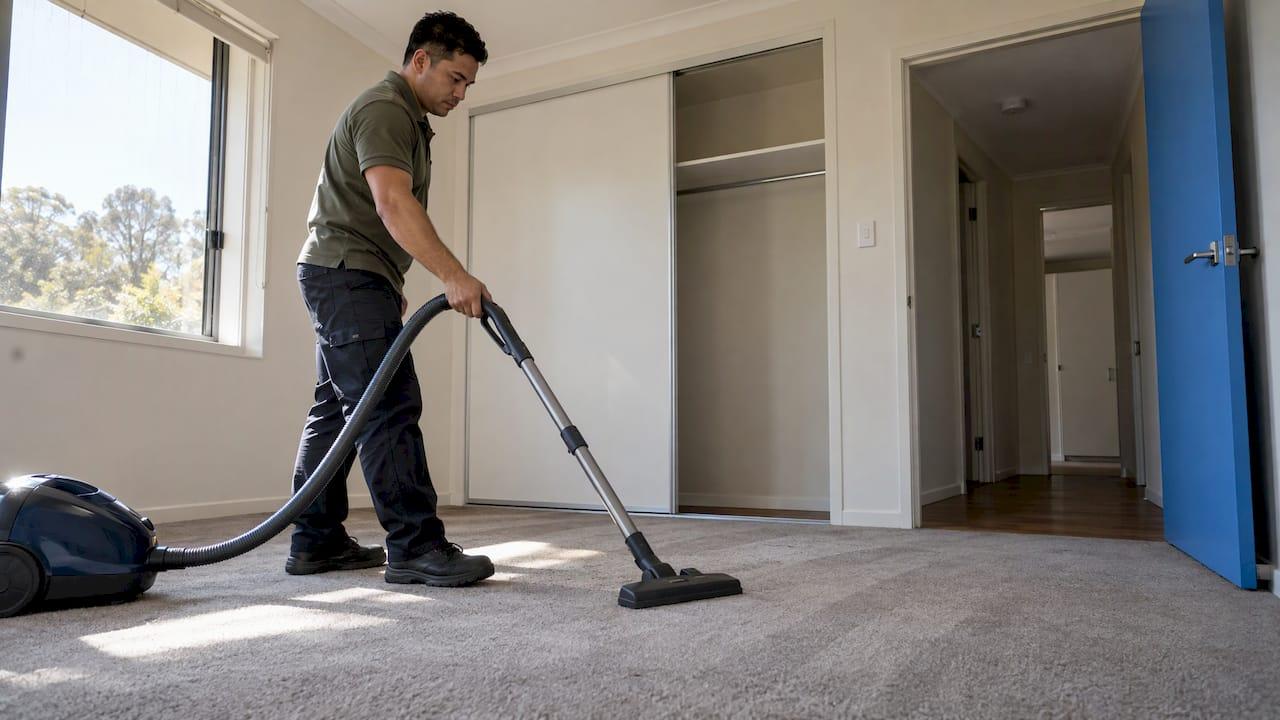
In the ACT, the law sets a standard, not a method. You must hand the property back in substantially the same state of cleanliness and repair as at the start of the tenancy, allowing for fair wear and tear. Nothing in the Act says you must hire a professional cleaner. This guide explains what the standard means in practice, when carpet cleaning can become a requirement, what happens at the final inspection and how bond claims are handled.
TL;DR
- The legal test is the condition you received the home in, less fair wear and tear. It is not "spotless" and it is not "better than when you arrived".
- ACT Legal Aid says there is no general requirement to use professional cleaners or carpet cleaners. Carpets are the exception when your agreement says so and they were professionally cleaned before you moved in.
- Your entry condition report and move-in photos are the main evidence in any dispute, so keep them close.
- At the final inspection, walk every room with the agent and record any agreement in writing.
- If a bond claim is disputed, the Office of Rental Bonds gives the other party 10 working days to respond, and unresolved matters go to ACAT.
Table of Contents
- What the ACT standard actually says
- Cleaning during the tenancy counts too
- Do you have to hire a professional cleaner?
- What counts as fair wear and tear
- The entry condition report is your best evidence
- A room-by-room plan for the final clean
- The final inspection
- Bond claims and what the landlord can deduct
- Perspective
- Book an end of lease clean in Canberra
- FAQ
- Sources
What the ACT standard actually says
The rule sits in the Residential Tenancies Act 1997. Under Schedule 1, clause 64, a tenant must return the premises in substantially the same state of cleanliness and repair as at the start, fair wear and tear excepted. Clause 65 means you cannot be made to improve the property beyond the condition it was in when you moved in.
The ACT Government's own checklist says the same thing in plain language. Before you go, remove all belongings and leave the property in substantially the same state of cleanliness and repair as when you moved in, wear and tear excepted.
Two practical points follow from this:
- Your starting point matters. A home that was tired and marked at the start is not expected to be pristine at the end.
- Cleanliness is measured against the entry condition report, not against a real estate agent's personal idea of presentable.
We go deeper on why "spotless" is the wrong target in our piece on ACT tenant cleaning obligations.
Cleaning during the tenancy counts too
The end-of-lease standard is easier to meet if you have kept up with the home along the way. The ACT Government states that tenants must keep the property reasonably clean during the tenancy. Landlords can inspect in the first month, the final month and twice in each 12-month period, with at least one week's written notice for a standard inspection.
ACT Legal Aid adds a duty of care. A tenant should take reasonable care and not negligently or wilfully cause damage, for example by avoiding spilling coffee on carpets or damaging polished floors.
Do you have to hire a professional cleaner?
No, not as a general rule. ACT Legal Aid states there is no requirement to use professional cleaning or carpet cleaning services at the end of an ACT tenancy. You can do the work yourself, as long as the result meets the standard above.
Why do many Canberra renters book a professional anyway? Usually because of time, a tight handover, or the wish to avoid a second round of cleaning if the agent is not satisfied. Moving day is busy, and a cleaner who knows what agents look for can take a big task off your list. If that is you, our end of lease cleaning service is built around exactly that handover.
The carpet exception
Carpets are where the rule gets a condition attached. ACAT accepts that carpets must be professionally cleaned at the end of the tenancy if the tenancy agreement says so and the carpets were professionally cleaned at the beginning. The landlord has to provide a receipt as proof.
So check two things before you book anything:
- Does your lease include a carpet cleaning clause?
- Can the landlord or agent show the carpets were professionally cleaned before you moved in?
If both answers are yes, steam cleaning is a sensible step, and keeping your own receipt gives you a clean paper trail. If the agent names one mandatory carpet cleaner, the Legal Aid position above is what to measure that demand against. For when a carpet clean makes sense in Canberra, see when to hire a carpet cleaner.
What counts as fair wear and tear
Fair wear and tear is the ordinary ageing of a home from normal living. It is not damage. ACT Legal Aid's Condition Reports factsheet, last reviewed in March 2026, gives examples of fair wear and tear:
| Likely fair wear and tear | Likely not fair wear and tear |
|---|---|
| Worn carpet in high traffic areas | A red wine stain on carpet |
| Small scuff marks on walls | Knife damage on a bench top |
| Light scratches on timber floors | Lawn damage from car parking |
| Overgrown trees | Broken windows or glass |
The same factsheet family notes that what counts depends on the facts, and ACAT decides if the parties cannot agree. In one reported case, ACAT found that floorboard damage fell outside the wear and tear exception and held the former tenant liable to restore the premises to substantially the original condition.
The practical split is simple. Dirt, grease, dust and marks that come off with cleaning are your job. Ageing that cleaning cannot reverse generally is not.
The entry condition report is your best evidence
The ACT Renting Book explains that the condition report is used as evidence to resolve end-of-tenancy disputes about damage and bond return. It also says that if you do not sign and return your copy within two weeks, you are taken to agree with it.
If you are reading this mid-tenancy, do this now:
- Find your entry condition report and the photos you took at move-in.
- Save copies in a folder you can reach from your phone.
- Note any area where the report understates dirt or damage that was already there.
If you did not photograph the home at the start, the report is still your anchor. Our guide to matching the entry report at inspection shows how to compare each room against it, and the piece on pre-tenancy versus vacate cleans explains why bond claims often begin on day one.
A room-by-room plan for the final clean
The ACT Government's Ending a tenancy page tells you to remove all items, return the property to its starting cleanliness, disconnect utilities, return keys at the final inspection and give a forwarding address. Within that, here is how to approach the cleaning itself.

Kitchen
The kitchen is where most disputes start. Degrease the rangehood filter, cooktop and splashback, clean inside the oven and microwave, wipe the inside of cupboards and drawers, and empty and wipe the fridge if it belongs to the property. Our vacate cleaning kitchen requirements page lists what agents commonly check.
Bathrooms and toilets
Remove soap scum, limescale and mould from tiles, grout, screens and silicone as far as cleaning allows. Clean the exhaust fan cover, mirrors, vanity and the inside of drawers, and disinfect the toilet, including behind the pan.
Living areas and bedrooms
Dust skirting boards, light fittings, door frames and window sills. Wipe marks from walls where they come off without damaging paint, and remember that small scuffs may be fair wear and tear. Clean wardrobe interiors and inside the tracks of sliding doors and windows.
Floors and carpets
Vacuum thoroughly, mop hard floors and spot-treat marks on carpet. Take care with any product you use on polished or timber floors, since damage from the wrong cleaner is a problem cleaning will not fix. Carpet steam cleaning is covered in the carpet section above.
Outdoor areas
Sweep balconies and patios, clear cobwebs and remove rubbish. If the garden was yours to maintain, tidy it to the standard shown in the entry report. Overgrown trees are listed by Legal Aid as a fair wear and tear example, but a neglected garden is a different matter if the report showed it tidy.

Choosing what goes into your cleaning bucket matters as well. If you want to know what to look for on the bottle, this guide to eco-friendly cleaner label checks is a handy reference before you shop. For a fuller list of what a Canberra clean typically covers, see our bond cleaning inclusions and our end of lease cleaning checklist.
The final inspection
The law requires the lessor to carry out an inspection at the end of the tenancy together with the tenant and for both to complete and sign a condition report based on it. A party can complete and sign it without the other only if they have given the other a reasonable opportunity to be present.
So turn up, and prepare:
- Bring the entry condition report and your move-in photos.
- Walk through each room with the agent.
- Write any disagreement on the report itself and photograph anything in dispute, as the Renting Book advises.
- If the agent raises something, try to agree what to do on the spot.
ACT Legal Aid suggests going through the original report together and agreeing what cleaning or repairs are needed, then recording it in writing. Examples are a cleaner returning to a specific area, or a set amount released from the bond for further cleaning. A written note prevents "he said, she said" later.
Bond claims and what the landlord can deduct
Section 31 of the Act lets a lessor deduct from the bond the reasonable cost of repairs or restoration after damage other than fair wear and tear caused by the tenant. It also covers the reasonable cost of securing the premises if keys are not returned, rent owing, the reasonable cost of replacing fuel, and ACAT-endorsed deductible terms.
The word "reasonable" does a lot of work. A claim should reflect a real cost for a real problem, not an agent's preference.
If the final condition report shows damage or changes, the ACT Government says you are responsible for fixing it or paying for it to be fixed, and any agreement should be in writing. If you disagree with a claim, the Legal Aid factsheet says you can contact the Tenancy Advice Service for help.
If the other party disputes the release
When the Office of Rental Bonds receives a release application not signed by everyone, the other party has 10 working days to dispute it. With no dispute, the bond is paid as the application says. With a dispute, the matter goes to ACAT. Check the dates on any notice you receive and respond inside the window.
Perspective
Most of the stress we see at ACT handovers comes from a mismatch of expectations. Tenants think they have to leave the place immaculate. Agents sometimes act as if they do. The law is more measured than either: back to the starting condition, less fair wear and tear.
That is why we build our end of lease cleans around the standard rather than around a one-size-fits-all list. We work through kitchens, bathrooms, floors, glass and the details agents look at, and we tailor the plan to the property and to what your entry report shows. Our cleaners are police-checked and insured, we use eco-friendly products, and there are no lock-in contracts.
Our end of lease cleans come with a bond-back guarantee and our 100% satisfaction guarantee. If you want a cleaner on the job so you can focus on the move, we can take the whole task off your hands. If you prefer to do it yourself, use the checklist above and keep your paperwork tidy. Either way, the best protection is evidence, so photograph the finished result before you hand back the keys.
Deng
Book an end of lease clean in Canberra
If you would rather spend your last weekend packing than scrubbing, we can handle the clean. Our team covers Canberra and the ACT with end of lease and bond cleaning, carpet steam cleaning and a flexible booking process, tailored to the size and condition of your rental.

See the details on our end of lease and bond cleaning page or browse all our cleaning services. If you are weighing up cleaners, our list of questions to ask before you book is a good place to start.
FAQ
Does my landlord in the ACT have to accept a clean I do myself?
Yes, provided the result meets the standard: substantially the same cleanliness and repair as at the start, allowing for fair wear and tear. ACT Legal Aid says there is no requirement to use professional cleaners. The carpet exception applies only when your agreement requires it and the carpets were professionally cleaned at the start.
Can the agent make me use their recommended carpet cleaner?
The test is the lease and the evidence, not the agent's preference. Professional carpet cleaning is accepted by ACAT when the agreement says so and the carpets were professionally cleaned at the beginning, with a receipt provided. Check your lease, and ask the Tenancy Advice Service if the demand does not match it.
Can a landlord deduct a cleaning fee from my bond?
Section 31 allows deductions for the reasonable cost of repairs or restoration after damage beyond fair wear and tear, along with rent owing, key and fuel costs. If a claim looks unreasonable, you can dispute the bond release and the matter can go to ACAT.
What should I take to the final inspection?
Bring your entry condition report and move-in photos, and walk each room with the agent. Note any disagreement on the report and photograph anything in dispute. Return all keys and give a forwarding address.
How long do I have to respond to a bond dispute?
If the Office of Rental Bonds receives an application you have not signed, you have 10 working days to dispute it. If you do not, the bond is paid as the application states.
Sources
- The Renting Book, January 2026 (ACT Government)
- Ending a tenancy (ACT Government)
- During a tenancy (ACT Government)
- Bond factsheet (ACT Legal Aid)
- Condition Reports factsheet (ACT Legal Aid)
- Maintenance and Repairs factsheet (ACT Legal Aid)
- Residential Tenancies Act 1997, October 2025 version
- Residential Tenancies Act 1997, February 2025 version
- Region Canberra report on an ACAT property damage decision
- Eco-friendly cleaner label checks (Cozee Bay)